Archive Page 112

The Perfect Office Note? SOAP, APSO or aSOAP?

I’ve been toying with this dilemma for a while: SOAP notes (Subjective, Objective, Assessment, Plan) are too long; APSO just jumbles the order, but the core items are still too far apart, with too much fluff in between. We need something better – aSOAP!

Electronic medical record notes are simply way too cumbersome, no matter in what order the segments are displayed, to be of much use if we quickly want to check what happened in the last few office visits before entering the exam room.

It is time we do something different, and I believe the solution is under our noses every day, at least if we read the medical journals:

I can be aware of what’s going on in the medical literature without reading every article. How? Think about it…

A patient note, like a scientific article, should not present the information in reversed or scrambled order. It should follow logic. But, just like any long research paper worth considering, we should simply create an ABSTRACT and put it up top. Enter the aSOAP; abstract, Subjective, Objective, Assessment, Plan.

In many ways, EMR office notes are created so automatically and by more than one individual, that the author’s (clinician’s) logic can be elusive when you read the note. There are also click boxes that could be used to document the “story” but which many of us avoid because they don’t offer enough variety to distinguish one scenario from another. A free-form “abstract” can be a perfect complement to a more consistent use of this kind of structured data entry.

The abstract is not the same as putting the assessment and plan up top. It mixes all the elements of the progress note in concise form: Past history, new symptoms, Objective findings, immediate and next-step plans. It reveals how the clinician thinks.

I believe the slight amount of time it takes to Dragon or Siri (are those verbs yet?) an “abstract” is regained in multiples every time we later have to look back in our own or a colleague’s progress note.

Here are some imaginary examples:

“Former smoker with 3 week history of cough, recent weight loss. Azithromycin, inhaler, lab, x-ray when available and FU 2 weeks, CT prn at Cityside if creatinine still ok.”

“DM, HBP, migraine, psoriasis fu, all stable. Foot exam wnl. Offered Shingrix and colonoscopy, wants to wait. Refill all meds. FU 3 mo.”

How many more seconds would we need to spend on reading the rest of such notes? Probably zero.

Time saved. Move on. Here’s my marketing slogan: aSOAP makes ASAP!

(For those of you who weren’t there…this is what entire office notes used to look like. I’m proposing that the future lies in the past.)

A Country Doctor Reads: January 13, 2019

The Making of the Picky Eater – The Wall Street Journal

Picky eaters are said to be a newish phenomenon among children. An article in The Wall Street Journal gives some interesting history, from children being fed scraps to medically suggested bland diets to letting children eat whatever they wanted:

Doc­tors scram­bled to find so­lu­tions. One of the most widely noted re­sponses came from the Cana­dian pe­di­a­tri­cian Clara Davis, who con­ducted a se­ries of ex­per­i-ments in the 1920s and ’30s to see what would hap­pen if small chil­dren, in­clud­ing ba­bies, were al­lowed to pick their own foods. For her study, Davis was able to round up 15 in­fants from in­di­gent teenage moms or wid­ows and su­per­vise all of their eat­ing for pe­ri­ods rang­ing from six months to 4½ years, ac­cord­ing to ar­ti­cles she pub­lished in 1928 and 1939 in the Cana­dian Med­ical As­so­ci­a­tion Jour­nal and a 2006 re-ex­am­i­na­tion of her work in the same pub­li­ca­tion.

The chil­dren were al­lowed to choose among 34 items, in­clud­ing milk, fruit, veg­eta­bles, whole grains and beef, both raw and cooked. They made some rather ec­cen­tric choices, in­clud­ing fist­fuls of salt, and most were ap­par­ently fond of brains and bone mar­row. Some-times they ate lit­tle, and some­times more than an adult (no­tably, six hard-boiled eggs on top of a full meal, or five ba­nanas in a sin­gle sit­ting). The tiny sub­jects var­ied widely in their self-cho­sen menus, but the idio­syn­crasies evened out over time, and each child, Davis re­ported, ended up eat­ing a bal­anced and com­plete diet.

Sickly and scrawny at the start of the study, they be­came healthy and well-nour­ished, she wrote, sup­port­ing a con­cept that was be­com­ing known at the time as body wis­dom. “For every diet dif­fered from every other diet, fif­teen dif­fer­ent pat­terns of taste be­ing pre­sented, and not one diet was the pre­dom­i­nantly ce­real and milk diet with smaller sup­ple­ments of fruit, eggs and meat that is com­monly thought proper for this age,” she wrote. “They achieved the goal, but by widely var­i­ous means, as Heaven may pre­sum­ably be reached by dif­fer­ent roads.”

https://www.wsj.com/articles/the-making-of-the-picky-eater-11547222243?emailToken=80100119fadefc742677f724403aa150cbvUY9r2u42phXe/xLqWogESDE2LVV9s63YhE1cBAjC76RZ3aiqGOnAdmPVYJfP2d8RZyN8IAkeUG6dOlgjOuw%3D%3D&reflink=article_email_share

https://www.ncbi.nlm.nih.gov/pmc/articles/PMC1626509/

The Grace of Denial – The New England Journal of Medicine

This week’s “Perspective” essay is by a physician who has sympathy for patients and families who fail to accept a terrible disease diagnosis until well after it should have been obvious. Dr. Heather Sher insisted and believed her father had Lyme Disease instead of Amyotrophic Lateral Sclerosis.

So yes, I am familiar with denial. When I see patients who cannot face the prospect of a terrible diagnosis, I understand their delay, their reluctance, their trepidation on a deep level — a level that perhaps only someone who has witnessed a loved one’s slow demise from a terminal illness can appreciate. In the face of a diagnosis for which there is no effective treatment and no cure, our denial allowed my family 6 months of relative peace before things became unbearable. We had a few extra months with my father without the constant awareness that his death was imminent. My medical inexperience, clouded clinical judgment, and desperate desire for more time with my dad extended our denial of medical reality for longer than is typical.

Today, when I hear detached descriptions of patients who’ve waited too long to address a devastating illness, I understand. “Denial helps us to pace our feelings of grief,” Elisabeth Kübler-Ross explained. “There is a grace in denial. It is nature’s way of letting in only as much as we can handle.”

https://www.nejm.org/doi/full/10.1056/NEJMp1810685

How I Will Work Smarter in 2019

Last year I put down ten things I intended to do better in my role as a doctor, and as I look back at that post, I think I made headway in most of those areas.

This year, I don’t really feel up to making a long, detailed list. I’m more thinking about “the big picture”.

There are two kinds of philosophies, two diametrically opposed ways of looking at the world, expansive and reductive.

We move back and forth along that spectrum. Many forces are at work to push us to one of the extremes: Touch as many aspects of a patient’s medical situation as possible. This is manifested in our mandated and self imposed checklists. We screen for depression, smoking, alcohol use, cancers and a host of preventive care gaps every time we see a patient.

The expansive approach has been viewed as desirable while “reductive” has become something negative, even described as “crude” by several dictionaries.

I think, and I will cultivate this in the coming year, that medicine has brought us too far in the expansive direction and that we aren’t seeing the forest for all the trees.

We aren’t seeing the patient behind the multitude of measurements; we aren’t seeing the connection between their various ailments; we aren’t seeing the connection between their emotions and their bodies.

I believe that whatever success I have had in filling my appointment schedule through four decades with loyal patients who travel great distances or wait longer than I’d like to see me isn’t from me covering a million things in each visit. I believe, and many tell me, that it is because I dig deep into their concern of the day, and because I zero in on who they really are.

In order to get to know somebody, do you step back for some kind of “birds eye view” and ask many wide ranging questions, or do you lean in, look them in the eyes, lower your own voice and invite them to speak freely?

Ours is a vocation founded in relationship. I aim to strengthen my patient relationships, and I aim to use my available technology and my team members to help with the laundry lists of today’s health care duties so that I can know my patients even better and be the glue that connects my patients to the clinics I work for.

Stop Trying to Hijack Medical Huddles! Haven’t You Heard of Constant Contact?

I’ve huddled since before we used the word for it: You want to be prepared for the patients coming in that day. “Followup MRI” – did they have it and what did it show? “Ankle pain” – do we have X-ray today? “Eye pain” – be sure to check her acuity and put her in a windowless room, and did the new fluorescein strips come in? All fast paced, to the point and here-and-now items.

I’m no sports fan, but I think I know that when sports teams have a brief huddle on the playing field, they speak rapid-fire about the most necessary aspects of play that will help them advance in the game.

I don’t think sports teams huddle about new colors on team uniforms or need for extra practice on how to dribble. So why should medical teams?

But in healthcare these days, quality jocks and others are trying to also fit health maintenance issues into our fast paced huddles. Does the woman with acute grief need a Pap smear? Is the man with high fever and splitting headaches overdue for his colonoscopy? Is the diabetic with an appointment for chest pains due for tetanus and pneumonia shots, eye and foot exams?

I’m sorry, but we’ve only got fifteen minutes. People come in for a reason and expect us to handle that issue. The unsolicited, often time-insensitive health maintenance agenda items are ill suited for the hustle and bustle of primary care visits and their daily huddles.

I have kvetched about this before, but today I have a better argument and a better analogy for how to get the quality work done without slowing down the clinic flow or offending patients any more than we have to:

There is a different way to do this besides putting more and more on harried provider teams’ shoulders.

Hasn’t anybody in healthcare ever heard of Constant Contact? Mailchimp? Auto Responders? We live in a new era of connectivity, and everybody else is trickling information, tips and reminders to their customers or communities via email.

My chocolatier sister-in-law doesn’t wait for her customers to drop in to her shop or tasting rooms to tell them about her Valentines Day or Easter chocolates. She sends automated, season-appropriate emails every so often.

It is time for us in primary care to seriously reconsider how we interact with our patients. It’s no longer all about the brief provider visit. It’s about an ongoing partnership for better health. We can send season specific general reminders via regular emails, and we can post patient specific reminders on our patient portals. Most of us have hardly begun looking into the potential of this secure form of communication.

Let’s get with the times, automate that which can be automated and make the face-to-face visits count for dealing with the personal stuff!

Blogging While Driving

It’s no secret that I have two jobs 220 miles apart and I recently revealed that my eight-year-old eight cylinder SUV has 256,000 (now 257,000; update, 259,000) miles on it (you get what you pay for).

A while ago I recorded a 15 minute monologue based on my very first blog post, Cholesterol Guidelines and the Bachelor with Platform Shoes, on Rev, an app that also offers remote transcription. All this while driving the trailer to pick up a load of hay early one Sunday morning.
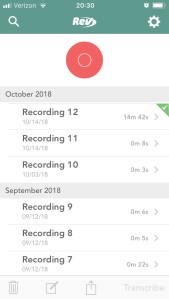
Last night I decided to upload my recording for transcription at a fee of $1 per minute (with a first-time discount of $10). Below is the unedited copy. I think my commutes will be even more productive than just listening to audiobooks from now on:

More on Cholesterol Guidelines and the Bachelor with Platform Shoes

So, what does ABBA have to do with cholesterol? I’ll tell you in a minute.

40 years ago, I realized I was never going to make it as a composer of popular music, when I got the rejection letters from the record companies saying my music sounded moldy and why couldn’t I write something more like ABBA? So, I was kind of jealous of ABBA. I thought their music was a little stilted, plus the guys were almost on stilts with their platform shoes. I figured that would go out of fashion pretty soon, and it did, sort of, but not quite then. Now it’s back again, at least the music. I don’t know about the shoes.

In 2008 when I started my blog, my very first blog post was about cholesterol, and it was called Cholesterol Guidelines and the Bachelor with Platform Shoes. The idea was that cholesterol treatment was a numbers game. You had to reach certain targets. But already then we knew there were drugs that could lower cholesterol that didn’t seem to cut heart attack risk at all. So my analogy there was that if you put a short guy in platform shoes, he may look like a tall guy, but he really isn’t, and he doesn’t get the benefits of being tall, because that seems to convey popularity, and riches, and authority, and all kinds of things. And here we are 10 years later, and even though in 2013 the American Heart Association and the American College of Cardiology issued new cholesterol guidelines based on what we knew back when I wrote my first post about this topic. This thing doesn’t go away, just like ABBA doesn’t go away. So, let me explain.

This goes back to the 80s and Scandinavia figures here and there in this story. There was a study called the 4S Study, the Scandinavian Simvastatin Survival Study. It showed that people who took simvastatin had fewer heart attacks and lived longer than people who did not. And simvastatin was invented to lower cholesterol, and there have been lots of studies about the benefits of these drugs, but there’s still some controversy about that.

There was a study a long time ago with Lipitor, where they had checked the buildup of the inner layer of the arteries in the neck on people who seemed to be at risk for strokes. They found that if you didn’t do anything, didn’t prescribe any Lipitor, the buildup in the carotid arteries got worse over a period of a couple years when they followed patients. If you have them a little bit of Lipitor you could slow down that progression of buildup, and if you gave more, it could stop and stay the same. And if you prescribed a high dose of Lipitor, the thickening of the innermost layer of the carotid arteries of that cholesterol buildup, plaque buildup, actually got better.

That led to guidelines, because people looked at what cholesterol lowering was achieved when you prescribed higher and higher doses of Lipitor, and it seems pretty logical that if the cholesterol drops, people are better off. That was one of the reasons we now had target numbers. In American measurements, the target numbers were, LDL, the bad cholesterol, should be less than 130 in most people, less than 100 in high-risk people, and less than 70 in people who already have cardiovascular disease.

That is still what the lab reports print out many years later, but we’ve actually known since before I wrote my post in 2008 that it really isn’t the cholesterol lowering at all. And in 2008, we already knew there was another drug called Zetia or ezetimibe that lowered cholesterol through a completely different mechanism from the statin drugs, but it really didn’t lower heart attack risk hardly at all. Therefore, more research has been done, and it has shown that the statin drugs have four other mechanisms, and those are the real reasons why they seem to lower heart attack risk as much as they do. Depending on which study you look at, it’s 30 to 50% lowering that’s possible with them.

The four other mechanisms, or the four other actions of the statin drugs are stabilizing plaque walls, and that’s very important, because 85% of all heart attacks happen not because the cholesterol plaque get bigger, and bigger, and bigger, and finally one day shut off the faucet. They happen because a plaque, that isn’t critical, ruptures, and when the wall of the plaque breaks, the gooey stuff inside mixes with the blood, and a clot forms around it, and that’s how a heart attack happens. Almost everybody has heard of somebody who passed a stress test with flying colors, and still went and had a heart attack soon afterwards, and the reason for that is plaque rupture. So, stabilizing plaque is the first mechanism besides the cholesterol lowering here, that doesn’t seem to mean so much, with the statin drugs.

And then the second thing that the statin drugs do that affects heart disease outcomes is that they prevent buildup of plaque in the first place. The third one is an anti-clotting affect that is different from the other blood thinners like aspirin and clopidogrel and so forth. And then the last effect that the statins have is that they can decrease coronary spasm, and coronary spasm can be the tipping point if somebody has partial blockages, and then the little muscles in the walls of the arteries tighten up. That can reduce blood flow enough to cause damage. So, we can measure the cholesterol lowering, but we really can’t measure the four other affects.

This was actually put into the new guideline, 2013, by the American College of Cardiology and the American Heart Association. They said because the arteries are living, changing things, it really doesn’t make sense anymore to assume that once you have a little buildup, it’ll continue to get worse no matter what you do. And that was a huge relief for a lot of doctors, because prior to the new guideline, we were encouraged to treat children with high cholesterol with statin drugs. Now the only children who are recommended treatment are children with a genetic type of cholesterol problem that causes sky-high cholesterols, and very early heart disease. But your average, perhaps, obese child with poor dietary habits does not need to be on cholesterol pills based on our new understanding.

So, the guideline in 2013 introduced a 10-year risk calculator where you put in age, sex, blood pressure, smoking, whether or not a person has the diagnosis of hypertension and takes medicine, whether the person has diabetes, and what their cholesterol numbers are. Based on that calculation, you get a 10-year cardiovascular risk estimate, and the beauty of this one, and the only real thing about it, is that an individual patient can see what their risk is compared to the best you could ever hope for. Because even if all the numbers are perfect, the older you are, the greater the risk. And, I mean, let’s face it, we’re all going to die sometime, and we’re not going to die because we get hit by meteors or we fall off a cliff. We’re going to die from heart disease or cancer.

So, that was 2013, and listen to this. They said that you treat based on the risk, and you treat with the statins, and there is no need to follow the cholesterol numbers since even bogus drugs can lower cholesterol. So they said, use the statins, don’t use Zetia. By the way, we’ve been treating low levels of the good cholesterol, HDL, with niacin for decades, and it’s a very unpleasant drug to take for many people with flushing and so forth. And guess what? Three major studies have shown that niacin, even though it increases the good HDL, does not improve heart attack risk, so it’s a waste of time.

So, here we are. We now have started our patient on a statin drug, and the guideline says the only reason to check cholesterol again is basically to prove that the patient is taking their medicine. I’m sorry. I don’t babysit. If somebody says they’re going to take it, I’ll take their word for it. Since the target numbers are gone, then why would I do blood tests to prove that my patient is doing what they decided to do in the first place? ‘Cause I certainly didn’t tell them to do it. I just gave them the option.

The thing about the guideline and the recommendation is, they have picked, arbitrarily, risk percentages that would make it a good idea to treat with a statin drug. And they set these numbers. If you have a 10-year risk between 5% and 7.5%, consider a low to moderate dose of the statin. If you have a greater than 7.5% risk, consider a moderate to high dose. The problem with this, even Mr. and Mrs. Perfect, once they get up there in age, so mid to late 60s, they should be on drugs no matter how good their numbers are, and no matter how favorably they compare to other people, and that’s expert opinion. That is not science.

So I think we need to be very careful as doctors that we lay out the facts and we look at the facts, and then I think we need to use our judgment if we should trust the expert opinion, because in many conditions, expert opinion is that things can happen to everybody are diseases and need drugs, so I have a hard time swallowing that. But I do like the idea that you can compare your risk to the best case scenario.

That’s where we stand with the guideline and the numbers. We still get lab reports that have the old target number on them, and we are still being measured doing annual cholesterol testing. It’s still a quality measure for diabetes care, for example. Even though the science pooh-poohed that about five years ago. That is one example of how elusive the concept of quality in healthcare can be.

(Transcribed by Rev)

https://itunes.apple.com/us/app/rev-voice-recorder/id598332111?mt=8


I just realized none of the posts show on an iPad or a computer, but they do show on an iPhone. WordPress is working on this. In the meantime, please visit my Substack.


Osler said “Listen to your patient, he is telling you the diagnosis”. Duvefelt says “Listen to your patient, he is telling you what kind of doctor he needs you to be”.


BOOKS BY HANS DUVEFELT, MD

CONDITIONS, Chapter 1: An Old, New Diagnosis

Top 25 Doctor Blogs Award

Doctor Blogs

Enter your email address to subscribe to this blog and receive notifications of new posts by email.

Mailbox

contact @ acountrydoctorwrites.com
Bookmark and Share
© A Country Doctor Writes, LLC 2008-2022 Unauthorized use and/or duplication of this material without express and written permission is strictly prohibited. Excerpts and links may be used, provided that full and clear credit is given.


