Archive Page 51

Labor and Delivery

(For some reason, Labor Day this year makes me think of my first experiences on the Labor and Delivery unit – 40 years ago this month!)

“Please call 2350 STAT” were the most dramatic pages I got during my residency. It was Labor and Delivery at Central Maine Medical Center in Lewiston. I can still feel the mixed worry and excitement that call gave me. I never felt anything positive being called to a code or other medical urgency. I don’t revel in the drama of disease, even though I, obviously, handle it. Delivering babies, with or without the drama, had its own magic.

I had a reasonable education in office gynecology in medical school. But obstetrics is more of a carve-out in Sweden, something family doctors, or allmänläkare (general physicians) don’t really come in contact with. Prenatal care and Infant care are (or were, at least back then) centralized at clinics that sometimes, but not always, were housed in a primary care office building. They are still viewed as their own specialties and mostly nurse-run under protocols with physician supervision.

Because my medical school was 5 1/2 years compared with the US 4 year curriculum, I felt better prepared, medically, than my fellow residents. I started my American residency having already had hands-on experience in the “smaller” specialties people think of as surgical sub-specialties: otolaryngology, orthopedics, ophthalmology and so on. But I had a fair amount of cultural catching up to do, learning where the Americans did things differently than the Swedes. I knew the diseases, but drug choices and general approaches were sometimes very different.

Obstetrics was an entirely new field for me. The Lewiston program was known for its strong OB experience, which is not why I picked it. I was looking for a program in Maine and liked what I saw in Bangor and Lewiston more than Augusta or the urban Portland. But Bangor seemed so far north – and here I am, practicing almost 200 miles further north of Bangor today! I also resonated with the faculty in Lewiston.

So there, wouldn’t you know it, OB was one of my first rotations. It was a trial by fire. I learned so much, so fast. And, wouldn’t you know it, the fist delivery I did on my own, with the summoned obstetrician guiding me from the delivery room doorway, still in his street clothes, was a double footling breech. Everything turned out just fine, but I decided right then and there that I would not be doing obstetrics in my own practice.

But, even though I never practiced obstetrics after I left Lewiston, some of my OB experiences have etched themselves in my mind and helped form me as a physician.

I still think about the woman in tears about her unwanted pregnancy that turned out to be a beautiful baby boy that strengthened her whole family. And I still remember the woman who thought she was too old to become pregnant and the magical moment when we listened to her fetal heart tones, both of us holding the Doppler in silence.

Knowing how to deliver a baby made me a better doctor, even though I chose not to continue doing it. It made me comfortable during snowstorms with closed roads in northern Maine. It made me comfortable doing my routine well woman care. The number is only my best estimate, but I can honestly say to a female patient, “I’ve delivered close to a hundred babies”.

Off The Record

Good, Strong Heart Beat – 140 and Regular

Anxiety, Worry or Fear? Disappointment, Grief or Depression?

Especially in these strange and uncertain times, many people feel uneasy. Some of them come to us with concerns over their state of mind.

In primary care, our job is in large part to perform triage. We strive to identify patients who need referral, medication or further evaluation. We also strive, or at last should strive, to reassure those patients whose reactions are normal, considering their circumstances.

A set of emotions we consider normal during the first weeks of the loss of a loved one may constitute pathology if protracted or if there is no apparent trigger.

But what is normal in today’s reality?

People today often have a low tolerance for deviations from the mean. They measure their heart rates, sleep times, steps taken, calories eaten and many other things on their smartphones. They compare their statistics to others’ or to their own from different circumstances.

Is it normal to sleep less when the last thing you do before bed is take in the latest disaster news? Is it normal to have a higher resting heart rate when you are threatened by eviction? Is it normal to feel sadness that life as we knew it doesn’t seem to be within our reach right now?

The worst thing we can do is tell people there is something wrong with them if we see them doing and hear them expressing what many other people also do.

It’s bad enough to feel bad, but even worse if you think your reaction is a sign of psychiatric illness or psychological or constitutional inferiority.

Not everyone checks in with other people if they feel the same way, and not everyone gives themself permission to feel bad.

Just like some people expect their body metrics as measured with their devices to be “normal”, many in today’s culture don’t expect to feel the ups and downs that life brings us. And right now, the “downs” seem to be piling up, to coin an oxymoron.

Just like there are people who prefer to live where all seasons have the same weather, there are those whose tolerance for emotional winters is low.

Well, snowstorms happen in Texas and hurricanes hit New York City these days. The Bell curves for all kinds of things are shifting.

We must find ways to help people see the difference between endogenous and exogenous states of emotion, and we must help each other accept that you cannot expect to feel “normal” when the world and the times are not.

We must find ways to be supportive without medicalizing valid and appropriate emotional reactions. We should probably not pin new diagnoses of anxiety and depression lightly on people right now.

Adjustment reaction with [this or that] mood seems like the way to go under these circumstances.

Friday Afternoon: Elevated D-dimer. Ho, Hum

I was telling Autumn in the last few minutes of my “early dismissal” Friday before the Labor Day weekend that this was so much easier than in the earlier parts of my career.

Thursday I saw a man with a strange leg pain and swelling halfway down the lower leg as well as tenderness on the inside aspect of his thigh. The knee was a little swollen but moved just fine and the tenderness there was both above and below the joint.

He had already been to the ER and their workup included an X-ray but no labs.

I did some inflammatory markers that were mildly positive, a normal CPK, suggesting no muscle damage and a normal uric acid level, speaking against but not ruling out gout.

I had also ordered a D-dimer because there was tenderness over the femoral vein but no pain with testing the nearby adductor muscles against resistance. My strongest clinical impression was that this was an inflammatory process, so I prescribed prednisone.

2 pm Friday, going through labs before the big weekend, there was the D-dimer result: Mildly elevated.

The X-ray department had no openings for an ultrasound.

In the old days the choice would have been do nothing or send him to the emergency room where they would either commandeer an emergency ultrasound before releasing him or admit him for a heparin drip until a clot could be ruled in or out. Then, if he had a DVT, he would have been on heparin until his warfarin became therapeutic.

Today, I just called him up and explained about the test not being able to rule out a clot but could be a false alarm, for example due to inflammation. He had less pain, but no decrease in swelling.

I explained today’s choices, doing nothing until we could get an ultrasound or playing it safer and take samples of apixiban over the weekend as if he did have a clot and staying on it until we could get an ultrasound.

He chose the latter. I bagged up some samples and left them at the front desk. I walked out the back door almost on time, thinking again how much easier some things have become since I started out.

UPDATE, DAY AFTER LABOR DAY: THROMBUS IN PROXIMAL GREATER SAPHENOUS. “KEEP TAKING THE ELIQUIS THE WAY WE TALKED ABOUT AND SEE ME NEXT WEEK FOR A FOLLOWUP.”

Cold Feet

Muriel complained of cold feet but they felt warm to me. Martha’s cold feet had bluish, red blotches on most of her toes, which hurt so much she begged for pain medication. Mary’s feet were cold with steadily darkening blue toes and they hurt so much she refused to wear shoes.

In each of my clinics I have a pocket Doppler, good for recording peripheral blood pressures and listening to fetal heart tones. That little device has made it easier to triage the symptom of cold feet.

Muriel’s calf blood pressures, recorded at the posterior tibial artery with my Doppler, was 160, greater than in her arms. “Water pressure in the basement is usually higher than on the top floor”, I always explain as I do the procedure. But she had decreased monofilament sensation, so in her case it turned out to be a search for the cause of her peripheral neuropathy.

Martha’s painful, discolored toes felt only a bit cold, and the rest of her feet had normal temperature. Her calf blood pressures weren’t bad, but she had femoral bruits and a CT angiogram showed severe atherosclerosis of her aorta and iliac arteries; she was throwing emboli into her toes, causing the pain and the discoloration. The vascular surgeon explained to me on the phone “we call them trash toes”. The emboli aren’t pure blood clots, but more plaque fragments. So anticoagulation, he answered my question, doesn’t do much. What she needed was a new aorta. One vascular surgeon wanted to stent her, but she ended up with a second opinion from the one who told me about “trash toes”. He said she was too young to expect a stent would last her lifetime. He recommended a graft. She went for it and did well.

Mary had Raynaud’s disease, a manifestation of scleroderma. She eventually developed dry gangrene. This was early during the pandemic when specialty consultations were hard to come by. The rheumatologist I talked to approved of my nifedipine prescription, encouraged me to treat the pain and said, “don’t let the surgeons near her”. He ended up leaving the state and she eventually saw another rheumatologist and a vascular surgeon. The two of them decided together to amputate the affected toes.

Two men who presented with more than just cold feet are vivid memories from my career. They were screaming with pain from sudden onset of pain in only one foot. The first one happened to come in just after we purchased a Doppler at my downstate clinic. He lived very close to our clinic. His foot wasn’t all that cold, but he had no dorsal pedal pulse by Doppler due to major embolization. He did well with his surgery. The second one was up north, where I had asked for a Doppler shortly after I arrived. He had the same classic presentation. It helps to know that there is absolutely no pulse, because your fingers often can’t palpate a weak pulse accurately. In both of these cases the diagnosis was firm. We called the ambulance and the hospital was ready for action.

Today I saw a woman with foot pain, bluish toes and excellent blood pressure at her calves. She carries a diagnosis of rosacea, and when she removed her mask for me, her cheeks looked much worse than I remember them. “It’s this mask”, she said.

“Maybe, but I’d like to do a bunch of blood tests to see if you have an autoimmune disease”, I explained. Was this an innocent Raynaud’s phenomenon or Raynaud’s disease secondary to previously unrecognized lupus? We will soon know. I started her on nifedipine while we wait for the blood test results.

A common symptom we may not always pursue can be big trouble:

“Feet cold, huh, let me see…”

Progress Note: August 31, 2021

This is just what the title says. All doctors know that a progress note is our way of documenting the development of a diagnostic or therapeutic process. In fact, for the longest time I pictured my default post category, “progress notes”, would be the title of my first book. It will instead be the title of another book later on in my A Country Doctor Writes series.

A commenter called yesterday’s post “the best post of your career”. I won’t try to top that right away today, but will instead take that as a reason to stop and reflect on where I am.

Since I started blogging on April 28, 2008, I have published 818 posts so far before this one. Today I got the announcement from WordPress that I exceeded 500,000 lifetime page views on my blog. I also have broken my previous annual 67,021 view record from 2017. So far this year (10:30 pm 8/30/21), I have had 102,953 page views. And in the month of August 2021 I have posted 29 out of 31 days.

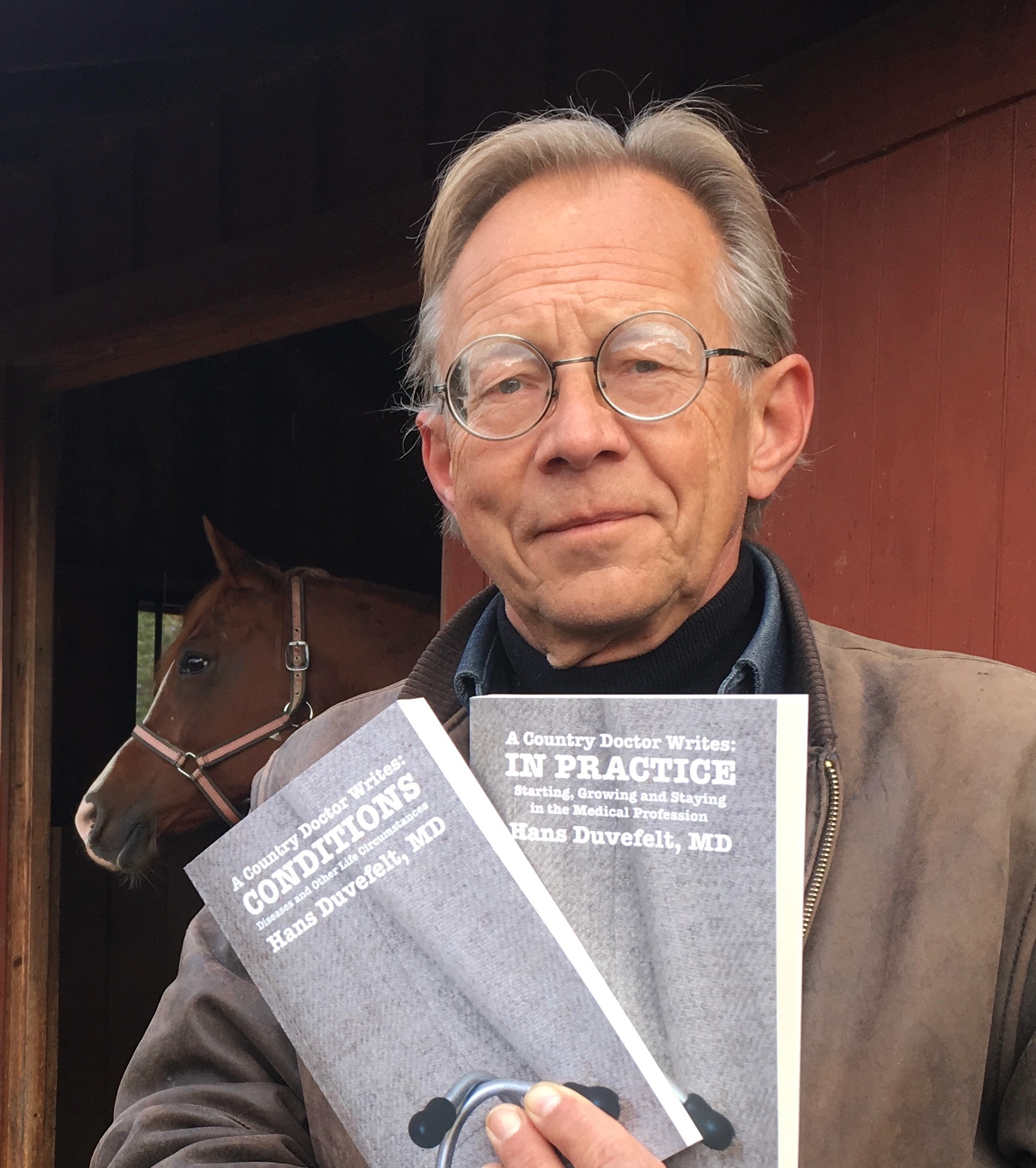
I have posted 19 videos, available on Vimeo and on A Country Doctor Talks (with a permanent link in the MENU), but I may not continue double-posting them on A Country Doctor Writes also.

I have also, finally, activated HOW TO BEAT DIABETES, because there is still too much confusion and misinformation about how to deal with (and cure) type 2 diabetes in overweight patients.

I have tweaked my social media buttons in the sidebar of this blog. I still have a “company page” on LinkedIn and Instagram, but I have redirected my Facebook link to my personal, public, Facebook page. I don’t need to be “friends” with everybody, because I only have that much time to keep up with other people, but if anyone wants to know what this 68 year old Swedish born family doctor working within walking distance from Canada is up to, there it is.

I am a regular contributor, featured on the masthead, of The Health Care Blog and an occasional contributor to The Deductible and KevinMD. My work is often reblogged in Australia. Today I finished an interview with Medscape News (for an article going live on 9/1/21) and I may be writing now and then for them.

I have found, a little bit to my surprise, that the more I write, the more ideas I get for what more to write about.

I’m having the time of my life, doing two of the things I enjoy the most: Doctoring and Writing.

Thanks for keeping me company of my journey.


I just realized none of the posts show on an iPad or a computer, but they do show on an iPhone. WordPress is working on this. In the meantime, please visit my Substack.


Osler said “Listen to your patient, he is telling you the diagnosis”. Duvefelt says “Listen to your patient, he is telling you what kind of doctor he needs you to be”.


BOOKS BY HANS DUVEFELT, MD

CONDITIONS, Chapter 1: An Old, New Diagnosis

Top 25 Doctor Blogs Award

Doctor Blogs

Enter your email address to subscribe to this blog and receive notifications of new posts by email.

Mailbox

contact @ acountrydoctorwrites.com
Bookmark and Share
© A Country Doctor Writes, LLC 2008-2022 Unauthorized use and/or duplication of this material without express and written permission is strictly prohibited. Excerpts and links may be used, provided that full and clear credit is given.