Archive Page 49

How to be an Expert: Narrow Niche or Novel Juxtaposition

I’m a family doc. I do a little bit of everything. I’m good at psych. I often cure diabetes. I handle what comes my way with a few exceptions: I haven’t learned how to treat HIV or Hep C and I don’t feel comfortable about treating most cases of osteopenia and osteoporosis, because I’m still not convinced that something that happens to everybody at a predictable rate is a real disease.

I just posted about two Swedish psychiatrists who each developed a special interest in one disease. I’ll probably never make a name for myself through niche knowledge. I have, however, discovered a previously unclaimed clinical sign, which I would rather not be immortalized for: Multiple pinpoint underwear blood stains are usually caused by pediculosis pubis, “crabs”.

So, the only way I can get famous is probably by somehow connecting the dots between seemingly unrelated facets of medicine or life in general. I find this at least as intellectually stimulating as discovering something new.

One theme that has popped up many times in my writing is what doctors should be like: “Be the Guide, Not the Hero”, “Be the Doctor Each Patient Needs” (a little bit like a chameleon), “The Apostolic Nature of Our Profession” (part clergy and part disciple), “A Samurai Physician’s Teachings” (disciplined and simple), “If You Are a Doctor, Act Like One” (a role model), “I am Not InstaDoc, This is Not InstaMedicine” (a professional, not a robot), “If Not a Doctor, Then What?” (teacher) and the list could go on.

Here, I am shamelessly drawing attention to the second book in my A Country Doctor Writes series, IN PRACTICE – Starting, Growing and Staying in the Medical Profession.

Our role in medicine has changed dramatically since I graduated from medical school in 1979, partly by circumstance and partly by design. Patients’ views and expectations have evolved, the health care industry’s grip and control over us has tightened and our self image and career expectations have slipped. I never heard of physician burnout in the first decade of my career and now I hear or read that word every day, several times.

So, one of the purposes behind my writing is to “think out loud” about what it means to be a doctor, where this profession is headed and if that is what we want for ourselves. I love medicine and feel blessed to be practicing with passion and enthusiasm at my age. My hope is that I might help others see what I see in this role, in this profession, in this calling – not really as an “expert”, but more like a spokesperson.
A Country Doctor Reads: New Swedish Psychiatry Celebrities on Incels and Narcissists

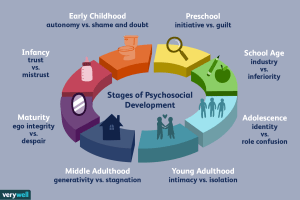
The Swedish psychologist Erik Erikson’s 1950s theory on the stages of human development still informs mental health providers and physicians around the world. He distanced himself from Freud’s sexually focused theory and instead framed his development theory from a psychosocial viewpoint.

This month I have read about two Swedish psychiatrists in my morning paper, Dagens Nyheter: Stefan Krakowski and Peder Björling. Both work in clinics and both are pioneers in their own way.

Krakowski, is a researcher, columnist, author and senior psychiatrist with a background in general practice, occupational medicine and terrorism studies. He has deepened and championed our understanding of incels, involuntarily celibate young men who are sometimes linked to violence and hate crimes. He has applied his psychiatric expertise to in-depth interviews he conducted as an author and columnist. In his new book, INCEL, first published in Swedish and soon also available in English, he describes their tragic lives with tenderness and understanding.

Dagens Nyheter writes: Looking at right wing extremists or violent Islamists, they see themselves as a clear-sighted elite with an often grandiose view of themselves. This is not the case with incels. They see themselves as disadvantaged. The uniting factor is their rigid views of how women should be and behave.

The book is a description of what is called the male surplus, where men fall behind in education and in society; men who never had a partner, and who sometimes also don’t have any other natural social contact points. In the incel vernacular this is called NEET: Not in Education, Employment or Training. In a survey on an incel site, close to 70% say they view their being incels as permanent – that their loneliness will persist their entire lives.

Björling explains to Dagens Nyheter that narcissists are not simply selfish and evil, like sociopaths, but capable of empathy and emotions many people don’t give them credit for.

Like people who suffer from borderline personality disorder, the narcissist has difficulty managing relationships:

– But unlike people with borderline, who are preoccupied with the relationship to others, narcissists are more preoccupied with power and respect, with gaining recognition and praise, who is superior and inferior, respectively. They constantly have a need to emphasize and re-establish themselves, to be admired and respected, which gets in the way of their relationships. If the constant question for people with borderline is “are you still there for me?”, then the corresponding question for the narcissist is “do you respect me?”.

Narcissism is partly brought on by childhood experiences:

– If you throughout your upbringing suffered from a lack of trusting relationships, lack of feedback on yourself, if adults could not handle how you felt inside; for example, became stressed if you cried, it is not so strange that you have difficulty managing relationships as an adult. You find it difficult to understand and regulate your own feelings, you find it difficult to ask for help, get support from someone else or show yourself [as] weak.

Narcissists often seek power within a relationship but ultimately often strive to be viewed as good, loved or likable:

– If they feel at a disadvantage, are questioned, receive criticism from someone they feel dependent on and the self-image ends up in a state of shock, the narcissistic reaction is triggered. The closer the relationship is, the stronger the stress. The defense is then often to go to a powerful attack…

– At the same time, they may feel deep anxiety about being in a conflict, because the need to feel that “I am a good person” is so strong. The nightmare is that that bubble will burst. It can also be that they blame the other person for “You made me behave badly!”

It is estimated that 1% of the population suffers from narcissistic personality disorder, but many more have narcissistic features. Very few seek help for their narcissism but often present with depression, anxiety or psychosomatic problems like chronic pain.

Treatment trials at Björling’s clinic include work on self image, emotion regulation and impulsivity.

Medicine is a Moving Missile, Aiming for a Dangerous, Elusive Target

(Desperate times called for desperate measures.)

In the tech world, we have come to expect our devices to become outdated and obsolete very quickly. The biggest tech companies in the world didn’t even exist a few years ago. Bitcoin, a virtual currency which at least I can’t wrap my head around, seems to be more attractive than gold.

I get the sense most people embrace or at least accept the speed of change in tech.

But medical advances that occur rapidly are frightening to many people. Vaccine hesitancy, for example, involves concerns and characterizations like “unproven” and “guinea pigs”.

But can we as a society strive for and reward rapid progress in one area and reject it in another, especially if we feel threatened by outside forces or phenomena – be that a virus, climate change or the collapse of our economy’s infrastructure like supply chains and raw materials.

Tech has its own momentum, more driven by profit motives than altruistism or a desire just to make peoples lives better. Medicine clearly has profit as a driving force, but also a goal of improving life for people. Curing or mitigating disease must rank higher than making life more convenient.

But when a pandemic begins and its magnitude cannot be estimated, when the future of mankind and life on earth appear to be at stake – can we afford not to deploy the know-how and resources of medical science?

I am not an early adopter when it comes to drugs that claim to undo what people bring on themselves through their lifestyle choices. I’d rather nag them to do the non-drug things we know to be safe and effective. But facing a pandemic, what choice does mankind really have?

It seems easy now, a couple of years into the pandemic, to say that it isn’t as bad as it might have been. But we don’t know that for sure, we haven’t seen the end of it yet – the virus keeps mutating, in case anybody forgot.

You can’t stop innovation and we already live in a society where citizens are told to wear helmets, use seat belts, not drink and drive, not litter or pollute, not steal, rape or murder – and to get vaccinated before starting public school.

Freedom without concern for others is selfish. It breeds anarchy.

A Gut Feeling: Could This Case Really Be That Simple?

After several years of ER visits with normal bloodwork and negative CT scans, Fred Hooper ended up in my schedule a few weeks ago.

“I’ve had stomach pains for 20 years and it’s gotten worse since my colonoscopy 7 years ago”, he said.

Fred had seen an emergency room doctor more times than any of the primary care physicians he tried over the years. He described severe lower abdominal pain and bloating soon after eating, followed by small, hard bowel movements. Each episode lasted a few hours or even less.

“Do I need a colonoscopy”, he asked.

“Maybe, maybe not, but you’re almost 80 years old and you’ve had this problem for 20 years. I’d like to try something first”, I said.

“Could this be Crohn’s disease”, he asked.

“Not likely, the episodes are quite short and in 20 years, nothing bad has ever happened because of them”, I answered. Instead, I went in a different direction.

I asked, “has anybody ever talked to you about trying a milk free or gluten free diet, like avoiding bread, crackers and pasta?”

“No, but now that you mention it, I’ve noticed that dumplings and pasta tend to bother me, and I do drink milk with my meals quite often.

“Let’s do this”, I suggested, “get some bloodwork to look for inflammation and full blown celiac disease, then stop milk products for one week. If you don’t feel better, go gluten free. Avoid anything made with flour, like boxed cereals, bread, pasta, crackers and so on. And see me one week into that. I’ll let you know if there are any surprises in your bloodwork as it trickles in.”

The emergency room has a different purpose from the primary care physician. They are geared up to identify acute problems that require immediate treatment. Fred got the bloodwork and the CT scan every time to make sure he didn’t have a surgical, infectious or vascular emergency. Once he was cleared from those things, their job was always done.

The primary care doctor’s job is to listen to the patient and, in Fred’s case, consider the chronic and often functional diseases that might explain the symptoms. But Fred is a somewhat impatient man who never seemed to invest in a primary care relationship.

Primary care doctors don’t necessarily dig deep into a new patient’s chronic but not so dangerous sounding symptoms until after they have done all the mandated new patient intake items like immunizations, routine lab work, screening for depression, alcohol abuse, smoking, food insecurity and more. In Fred’s case, he says he got the impression his doctors weren’t all that interested in his symptoms.

I was interested, because I had a gut feeling his problem was probably quite simple.

The other day, a few weeks into his dietary experiment, Fred came back to see me. Guess what he told me…

I am happy to report that my gut feeling was right on, and his gut is doing much better than it has been for the past few decades.

So, does Fred have low level gluten sensitivity? Maybe, maybe not. This is still not a completely understood phenomenon, but it has definitely moved from the fringes into mainstream medicine.

The Harvard Health Blog writes “The expression ‘leaky gut’ is getting a lot of attention in Medical blogs and social media lately, but don’t be surprised if your doctor does not recognize this term.”

This phenomenon has in fact become better understood and accepted and earned endorsement by the medical establishment, gaining the more scientific name increased intestinal permeability.”

The Celiac Disease Foundation reports that people with non-celiac gluten or wheat sensitivity who don’t test positive for celiac disease sometimes in fact have a systemic immune reaction with intestinal cell damage, really blurring the line between celiac disease and non-celiac gluten sensitivity, NCGS.

Canadian Society of Intestinal Research writes that since “wheat is a complex structure with an estimated 95,000 genes”, more than humans have, many other compounds besides gluten could be the culprit in wheat sensitivity.

Empiric elimination of wheat is an easy thing patients with unexplained gastrointestinal symptoms can do on their own. We owe them that suggestion.

We Shouldn’t Tolerate Sloppy Allergy Lists

The medication and allergy lists seem like they would be the most important parts of a health record to keep current and accurate. But we all see errors too often.

I think it shouldn’t be possible to enter an allergy without describing the reaction. Because without that information the list becomes completely useless.

The other day I saw a patient who needed an urgent CT angiogram. The allergy list said “All Contrast Materials”, which isn’t even “structured data entry”, and thus not recognized by the computer if my EMR (Me again, Greenway!) would have been clever enough to check for allergies when I order a CT scan.

After a lot of probing, the “allergy” in this case turned out to be a host of nonspecific, chronic symptoms after several lumbar CT myelograms in a short period of time many years ago.

Some people claim to be penicillin allergic because “it never works”. Others list ciprofloxacin or sulfa antibiotics because they get a yeast infection after taking them. Others were slightly nauseous after their first dose of an SSRI like fluoxetine or fatigued after starting gabapentin.

Some symptoms listed as allergies are poorly understood. For example, morphine causes itching in many patients, even skin manifestations like blushing as well as sweating. But this is not usually a histamine mediated symptom, and not an allergy. Other opioids, like hydromorphone, tend to have less risk for itching.

Cough from ACE inhibitors isn’t a true allergy, but we often note that in our allergy lists. People with this side effect can safely be switched to angiotensin receptor blockers, ARBs.

Angioedema from ACE inhibitors is an allergic and serious reaction with significant risk for cross-allergy also from ARBs. So it is essential to distinguish between the two in our allergy lists.

Medication and allergy history is one of the few things specialists look to us for. They often ignore and repeat the tests we had done, for example. But a good allergy history is something we can and should try to collect for every patient.

The big challenge is that patients often don’t remember the details of their allergies or side effects years after the fact. So, principle number one is to put down new reactions carefully when we hear about them.

My personal trick with new patients sporting long lists of proclaimed allergies is to ask: “Did you almost die from any of these medications I see listed as allergies?” That is the first step in a reality check about the real magnitude of their allergies.

The other list we could do better with is the PROBLEM LIST. Since we went electronic, it has bulked up and become much less helpful than it used to be. I just reread a post I wrote about that eleven years ago:

Problem List Problems


I just realized none of the posts show on an iPad or a computer, but they do show on an iPhone. WordPress is working on this. In the meantime, please visit my Substack.


Osler said “Listen to your patient, he is telling you the diagnosis”. Duvefelt says “Listen to your patient, he is telling you what kind of doctor he needs you to be”.


BOOKS BY HANS DUVEFELT, MD

CONDITIONS, Chapter 1: An Old, New Diagnosis

Top 25 Doctor Blogs Award

Doctor Blogs

Enter your email address to subscribe to this blog and receive notifications of new posts by email.

Mailbox

contact @ acountrydoctorwrites.com
Bookmark and Share
© A Country Doctor Writes, LLC 2008-2022 Unauthorized use and/or duplication of this material without express and written permission is strictly prohibited. Excerpts and links may be used, provided that full and clear credit is given.