Archive Page 37

A Renaissance For Phrenology? (A Country Doctor Reads 8/24/22)

phre·nol·o·gy/frəˈnäləjē/ the detailed study of the shape and size of the cranium as a supposed indication of character and mental abilities.

The article YOUR DOPPELGÄNGER IS OUT THERE AND YOU PROBABLY SHARE DNA WITH THEM in today’s The New York Times was surprising and not surprising at the same time. I grew up reading old medical books and (often racist) cartoon collections from the tail end of the heyday of phrenology in the 1940s. Nobody around me really believed in it, and the idea that our looks are linked to our character doesn’t seem to fit with the ideas of no discrimination and equal opportunity.

But here we are: The NYT article reports on a large study of doppelgängers, people who look like twins without being related in any way. Such couples share more DNA than random pairings. And what is even more interesting is that the degree of similarity in their personalities is more closely linked to the amount of shared DNA than to the similarities of their life experiences.
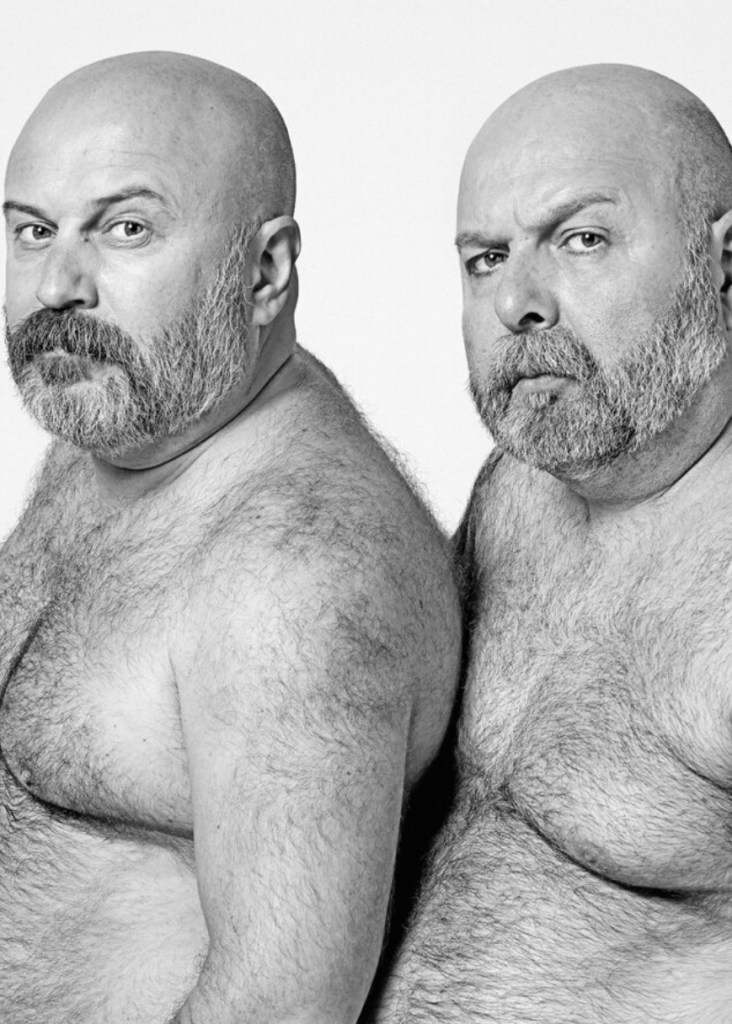
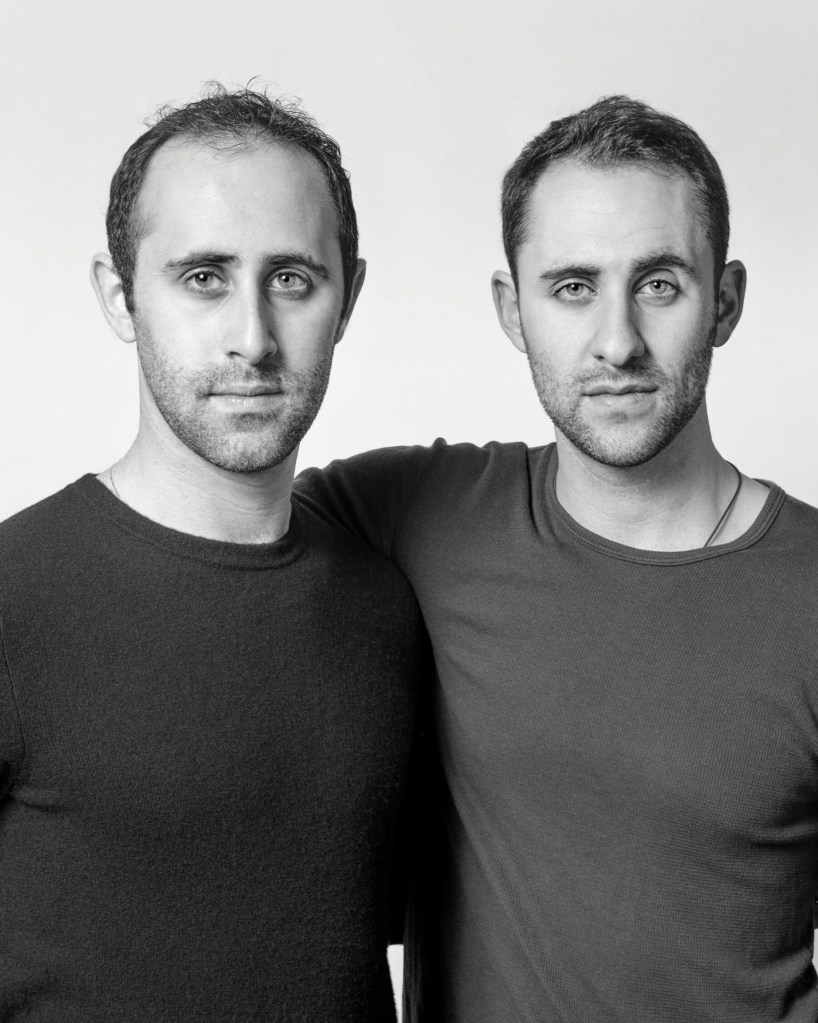
The article even hints that this research could lead to forensic use, such as predicting the facial features of a suspect just from crime scene DNA samples.

Dr. Esteller also suggested that there could be links between facial features and behavioral patterns, and that the study’s findings might one day aid forensic science by providing a glimpse of the faces of criminal suspects known only from DNA samples. However, Daphne Martschenko, a postdoctoral researcher at the Stanford Center for Biomedical Ethics who was not involved with the study, urged caution in applying its findings to forensics.

How far are we then from again linking facial features to moral character?
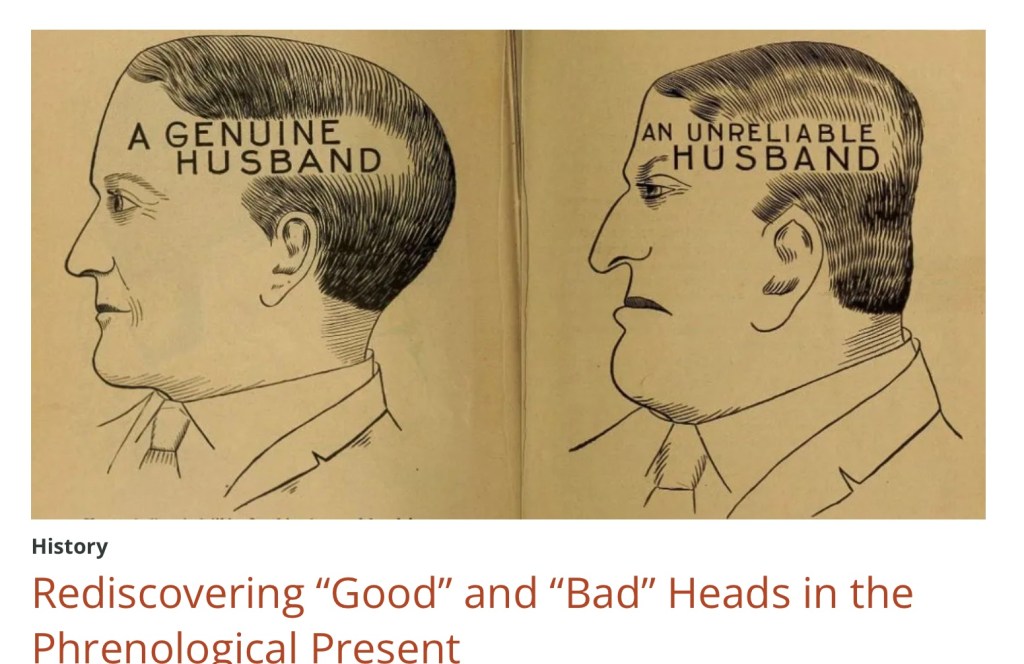
Here’s a 2020 article on the topic of phrenology and another study that harkens back to it:

While on the one hand I was pleased to see so many commentators connecting the conclusions of this study to phrenology, physiognomy, and related sciences, this leads to its own problems. Most modern-day commentators (and many historians) continue to frame phrenology primarily as a “pseudo-science,” a term often used to dismiss “bad” science. But in so doing, they neglect the long-term influence of phrenology and related “failed” sciences. By dismissing this study as yet another example of phrenology, without simultaneously recognizing the historic scientific validity, utility, and pervasive nature of the science, commentators highlight its superficial aspects while enabling the continued influence of the underlying principles. This study demonstrates the continued influence of phrenological thinking, language, and imagery in modern culture – both popular and scientific.”

Replay: A DOCTOR’S PARTING WORDS

My 19th post on this blog

We are settling in back home tonight after a two-week trip to New York City and one of the Mid Atlantic states. We stayed at one hotel for twelve nights and it started to feel like a home away from home. This was the first trip for our puppy, a black German Shepherd, who actually turned one year old while we were away. This dog makes friends everywhere we go.

I am not as gregarious as our puppy, but at this particular hotel I made friends (sometimes because of the dog) with all the desk clerks and the newly hired maintenance man and his helper. I also had a quiet understanding with the woman who ran the complimentary breakfast buffet. I never took the dog there, but he contributed to my multiple trips to the free buffet every morning. This dog doesn’t eat dog food; we feed him human grade food, so I made a few trips every morning to the breakfast buffet to load up on eggs and bacon for the dog and me, as well as pastries and yogurt for my wife.

Every morning the breakfast buffet supervisor seemed to look me over as I heaped a generous amount of eggs and bacon on my plate and disappeared to our room, only to appear minutes later for another big helping. She always smiled at me and said with an East-European accent: “Have a nice breakfast”. Whenever I ran into her somewhere else in the hotel, she smiled as if she knew my little secret and always said something nice.

Early this morning, after three trips downstairs to pack the car, as we passed through the lobby on our way out for the last time, it seemed as if they were all there. The night desk clerk, just coming off duty, the daytime desk clerk, the maintenance man, even the breakfast lady showed up, seemingly to say good-bye to the puppy. The breakfast lady was the last one to do so, and she spoke to Moses in Russian.

I said, in Russian, mustering all I could remember from thirty years ago: “I understand a little Russian“.

She beamed, exclaimed ” Ochen chorosho (very good)!” and went into something long and complicated, of which I understood nothing. I reverted to English and told her why I came to learn some Russian at all when I did my military service back in Sweden.

She smiled and said softly “I am doctor in Russia, here – ” and she shrugged “housekeeping”.

I wanted to say something more profound and supportive, but the puppy was starting to get impatient, we were already an hour behind schedule and we had a very long drive ahead of us. All I could do was mumble something about reading somewhere that there are many foreign-trained doctors who are having trouble getting their license here. Then I drove back home to my life as a doctor in America while she went back to check on the breakfast buffet.

Don’t Be Insulted If I Prescribe Narcan Along With Your Pain Medication

The Intrusive, Insensitive Nature of Primary Care

I had to get a PCR test for Covid today (I was negative) and before I had the pleasure of getting the swab inserted in my nasal passages I was subjected to a whole series of even more intrusive probings.

The questions on the multipage form included sex at birth and presently (just like our new EMR prompts us to document in every visit), sexual orientation, income bracket, ethnicity, food insecurity and living situation.

And this was just for a ten second nasal swab by a medical assistant.

If I had come for a primary care appointment with a medical provider, I would have received questionnaires about depression, anxiety, alcohol use, smoking, domestic abuse and maybe more.

I have several concerns about this barrage of questions before you even meet the provider. As clinicians we know that patients don’t always tell us the whole story. That is why we do pregnancy tests on nuns with abdominal pain, for example. We are supposed to use all our professional interviewing and communication skills to establish trust with our patients. That can be extra hard after they are first bombarded by the support staff with extremely personal questions.

This well intended systematic inquisitiveness is extremely insensitive and I seriously question its reliability. It seems odd to me that medical students and other staff categories have to take classes in cultural sensitivity and at the same time have a requirement to probe for personal secrets early in their interaction regardless of the age or cultural background of our patients.

I believe the statisticians are given too much power over how the clinicians work.


I just realized none of the posts show on an iPad or a computer, but they do show on an iPhone. WordPress is working on this. In the meantime, please visit my Substack.


Osler said “Listen to your patient, he is telling you the diagnosis”. Duvefelt says “Listen to your patient, he is telling you what kind of doctor he needs you to be”.


BOOKS BY HANS DUVEFELT, MD

CONDITIONS, Chapter 1: An Old, New Diagnosis

Top 25 Doctor Blogs Award

Doctor Blogs

Enter your email address to subscribe to this blog and receive notifications of new posts by email.

Mailbox

contact @ acountrydoctorwrites.com
Bookmark and Share
© A Country Doctor Writes, LLC 2008-2022 Unauthorized use and/or duplication of this material without express and written permission is strictly prohibited. Excerpts and links may be used, provided that full and clear credit is given.


