Archive Page 110

Blogging While Driving

It’s no secret that I have two jobs 220 miles apart and I recently revealed that my eight-year-old eight cylinder SUV has 256,000 (now 257,000; update, 259,000) miles on it (you get what you pay for).

A while ago I recorded a 15 minute monologue based on my very first blog post, Cholesterol Guidelines and the Bachelor with Platform Shoes, on Rev, an app that also offers remote transcription. All this while driving the trailer to pick up a load of hay early one Sunday morning.
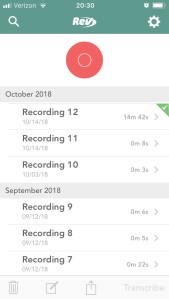
Last night I decided to upload my recording for transcription at a fee of $1 per minute (with a first-time discount of $10). Below is the unedited copy. I think my commutes will be even more productive than just listening to audiobooks from now on:

More on Cholesterol Guidelines and the Bachelor with Platform Shoes

So, what does ABBA have to do with cholesterol? I’ll tell you in a minute.

40 years ago, I realized I was never going to make it as a composer of popular music, when I got the rejection letters from the record companies saying my music sounded moldy and why couldn’t I write something more like ABBA? So, I was kind of jealous of ABBA. I thought their music was a little stilted, plus the guys were almost on stilts with their platform shoes. I figured that would go out of fashion pretty soon, and it did, sort of, but not quite then. Now it’s back again, at least the music. I don’t know about the shoes.

In 2008 when I started my blog, my very first blog post was about cholesterol, and it was called Cholesterol Guidelines and the Bachelor with Platform Shoes. The idea was that cholesterol treatment was a numbers game. You had to reach certain targets. But already then we knew there were drugs that could lower cholesterol that didn’t seem to cut heart attack risk at all. So my analogy there was that if you put a short guy in platform shoes, he may look like a tall guy, but he really isn’t, and he doesn’t get the benefits of being tall, because that seems to convey popularity, and riches, and authority, and all kinds of things. And here we are 10 years later, and even though in 2013 the American Heart Association and the American College of Cardiology issued new cholesterol guidelines based on what we knew back when I wrote my first post about this topic. This thing doesn’t go away, just like ABBA doesn’t go away. So, let me explain.

This goes back to the 80s and Scandinavia figures here and there in this story. There was a study called the 4S Study, the Scandinavian Simvastatin Survival Study. It showed that people who took simvastatin had fewer heart attacks and lived longer than people who did not. And simvastatin was invented to lower cholesterol, and there have been lots of studies about the benefits of these drugs, but there’s still some controversy about that.

There was a study a long time ago with Lipitor, where they had checked the buildup of the inner layer of the arteries in the neck on people who seemed to be at risk for strokes. They found that if you didn’t do anything, didn’t prescribe any Lipitor, the buildup in the carotid arteries got worse over a period of a couple years when they followed patients. If you have them a little bit of Lipitor you could slow down that progression of buildup, and if you gave more, it could stop and stay the same. And if you prescribed a high dose of Lipitor, the thickening of the innermost layer of the carotid arteries of that cholesterol buildup, plaque buildup, actually got better.

That led to guidelines, because people looked at what cholesterol lowering was achieved when you prescribed higher and higher doses of Lipitor, and it seems pretty logical that if the cholesterol drops, people are better off. That was one of the reasons we now had target numbers. In American measurements, the target numbers were, LDL, the bad cholesterol, should be less than 130 in most people, less than 100 in high-risk people, and less than 70 in people who already have cardiovascular disease.

That is still what the lab reports print out many years later, but we’ve actually known since before I wrote my post in 2008 that it really isn’t the cholesterol lowering at all. And in 2008, we already knew there was another drug called Zetia or ezetimibe that lowered cholesterol through a completely different mechanism from the statin drugs, but it really didn’t lower heart attack risk hardly at all. Therefore, more research has been done, and it has shown that the statin drugs have four other mechanisms, and those are the real reasons why they seem to lower heart attack risk as much as they do. Depending on which study you look at, it’s 30 to 50% lowering that’s possible with them.

The four other mechanisms, or the four other actions of the statin drugs are stabilizing plaque walls, and that’s very important, because 85% of all heart attacks happen not because the cholesterol plaque get bigger, and bigger, and bigger, and finally one day shut off the faucet. They happen because a plaque, that isn’t critical, ruptures, and when the wall of the plaque breaks, the gooey stuff inside mixes with the blood, and a clot forms around it, and that’s how a heart attack happens. Almost everybody has heard of somebody who passed a stress test with flying colors, and still went and had a heart attack soon afterwards, and the reason for that is plaque rupture. So, stabilizing plaque is the first mechanism besides the cholesterol lowering here, that doesn’t seem to mean so much, with the statin drugs.

And then the second thing that the statin drugs do that affects heart disease outcomes is that they prevent buildup of plaque in the first place. The third one is an anti-clotting affect that is different from the other blood thinners like aspirin and clopidogrel and so forth. And then the last effect that the statins have is that they can decrease coronary spasm, and coronary spasm can be the tipping point if somebody has partial blockages, and then the little muscles in the walls of the arteries tighten up. That can reduce blood flow enough to cause damage. So, we can measure the cholesterol lowering, but we really can’t measure the four other affects.

This was actually put into the new guideline, 2013, by the American College of Cardiology and the American Heart Association. They said because the arteries are living, changing things, it really doesn’t make sense anymore to assume that once you have a little buildup, it’ll continue to get worse no matter what you do. And that was a huge relief for a lot of doctors, because prior to the new guideline, we were encouraged to treat children with high cholesterol with statin drugs. Now the only children who are recommended treatment are children with a genetic type of cholesterol problem that causes sky-high cholesterols, and very early heart disease. But your average, perhaps, obese child with poor dietary habits does not need to be on cholesterol pills based on our new understanding.

So, the guideline in 2013 introduced a 10-year risk calculator where you put in age, sex, blood pressure, smoking, whether or not a person has the diagnosis of hypertension and takes medicine, whether the person has diabetes, and what their cholesterol numbers are. Based on that calculation, you get a 10-year cardiovascular risk estimate, and the beauty of this one, and the only real thing about it, is that an individual patient can see what their risk is compared to the best you could ever hope for. Because even if all the numbers are perfect, the older you are, the greater the risk. And, I mean, let’s face it, we’re all going to die sometime, and we’re not going to die because we get hit by meteors or we fall off a cliff. We’re going to die from heart disease or cancer.

So, that was 2013, and listen to this. They said that you treat based on the risk, and you treat with the statins, and there is no need to follow the cholesterol numbers since even bogus drugs can lower cholesterol. So they said, use the statins, don’t use Zetia. By the way, we’ve been treating low levels of the good cholesterol, HDL, with niacin for decades, and it’s a very unpleasant drug to take for many people with flushing and so forth. And guess what? Three major studies have shown that niacin, even though it increases the good HDL, does not improve heart attack risk, so it’s a waste of time.

So, here we are. We now have started our patient on a statin drug, and the guideline says the only reason to check cholesterol again is basically to prove that the patient is taking their medicine. I’m sorry. I don’t babysit. If somebody says they’re going to take it, I’ll take their word for it. Since the target numbers are gone, then why would I do blood tests to prove that my patient is doing what they decided to do in the first place? ‘Cause I certainly didn’t tell them to do it. I just gave them the option.

The thing about the guideline and the recommendation is, they have picked, arbitrarily, risk percentages that would make it a good idea to treat with a statin drug. And they set these numbers. If you have a 10-year risk between 5% and 7.5%, consider a low to moderate dose of the statin. If you have a greater than 7.5% risk, consider a moderate to high dose. The problem with this, even Mr. and Mrs. Perfect, once they get up there in age, so mid to late 60s, they should be on drugs no matter how good their numbers are, and no matter how favorably they compare to other people, and that’s expert opinion. That is not science.

So I think we need to be very careful as doctors that we lay out the facts and we look at the facts, and then I think we need to use our judgment if we should trust the expert opinion, because in many conditions, expert opinion is that things can happen to everybody are diseases and need drugs, so I have a hard time swallowing that. But I do like the idea that you can compare your risk to the best case scenario.

That’s where we stand with the guideline and the numbers. We still get lab reports that have the old target number on them, and we are still being measured doing annual cholesterol testing. It’s still a quality measure for diabetes care, for example. Even though the science pooh-poohed that about five years ago. That is one example of how elusive the concept of quality in healthcare can be.

(Transcribed by Rev)

https://itunes.apple.com/us/app/rev-voice-recorder/id598332111?mt=8
There Are Few Shortcuts to Health

People aged 70-90 who follow a Mediterranean diet, are physically active, have moderate alcohol use, and are nonsmokers have less than half the heart attack, cancer and overall death rate of people who eat an average Western diet and have more average habits. This was the remarkable conclusion of the 2004 HALE study, involving people from eleven countries.

And the 2014 PREDIMED study demonstrated a 35-50% reduction in cardiovascular events by simply consuming extra virgin olive oil.

But there’s little money to be made for the pharmaceutical and health care establishment by promoting healthy eating habits.

In this week’s New England Journal of Medicine, there are two articles with opposite results from the use of different omega-3 fatty acids.

The first one, sponsored by the pharmaceutical industry, showed a 25% risk reduction from a supplement with Eicosapentaenoic acid (EPA), naturally found in fatty fish like salmon.

“Among patients with elevated triglyceride levels despite the use of statins, the risk of ischemic events, including cardiovascular death, was significantly [25%] lower among those who received 2 g of icosapent ethyl twice daily than among those who received placebo. (Funded by Amarin Pharma; REDUCE-IT ClinicalTrials.gov number, NCT01492361.)”

I remember reading about this substance way back in Barry Sears book, The Zone.

The second article showed no benefit from generic omega-3 fatty acids:

Supplementation with n−3 fatty acids did not result in a lower incidence of major cardiovascular events or cancer than placebo. (Funded by the National Institutes of Health and others; VITAL ClinicalTrials.gov number, NCT01169259.)

Conclusion: Good food and good clean living reduces risk by 50+%, branded supplements by 25% and generic supplements possibly not at all.

Is anybody surprised?

Physicians are Influencers

The comedy channels on my car satellite radio are handy for combating fatigue the last hour of my commute between Brooklin and Caribou. After dark on New Year’s Day I caught a comedian ranting about being told he was overweight by a doctor with the same predicament, and how the two sort of bonded and quickly dropped the subject after that. And I still remember the diabetes expert at Uppsala who couldn’t button his lab coat!

Like it or not, we doctors are under a certain amount of scrutiny. People check out our grocery carts, our cars, lawns, clothes and body sizes (mostly organic, 2010 German SUV with 256,000 miles, coastal scrappy and professionally maintained lush but with dandelions up North, always a tie, 165 lbs).

A certain amount of self disclosure and deprecation can be a good thing, but too much can get in the way of a therapeutic relationship.

I use myself as an example in some very calculated ways, some of which I have mentioned before in older blog posts:

I tell people “I was a strict lacto-ovo-vegetarian for fifteen years, but I gained too much weight.” After their jaws settle in their lowered positions, I go on and explain: “I lived on pasta, oatmeal and sandwiches – all carbohydrates.”

I also tell the story about how I at age 50, in a dance studio with wall to ceiling mirrors, figured out (when my wife said “Your belt is crooked”) why standing straight always gave me a backache: I have one leg that’s more than an inch shorter than the other. Now I just put my weight on my long leg and stand on tiptoes on my short leg and have zero pain and a better posture. (Know your body…)

Self disclosure is risky when it touches on subjects that could undermine our patients’ confidece in our ability to help them, because they ultimately care more about whether we can help them than what we’re like as people. That includes sharing our frustration with “the system”.

But when it comes to how fit we are, what’s in our grocery carts and whether we ever use a push mower, go for hikes, jogs or simply walk to the post office, we need to consider the public health messages we broadcast to our communities.

Here is where I wonder if younger physicians might believe these kinds of considerations belong to a bygone era. If so, I think they haven’t kept up with the Internet phenomenon of “influencers”. I stumbled onto it when I was looking for audiobooks on how to promote your ideas. I naively thought that’s what “influencers” did. After just a few minutes of listening I realized that “influencers” are people like most of us, who choose to publicize their lives, their tastes and their pursuits and become promoters of products.

Health care professionals are by default influencers, because people are naturally curious about our habits. After all, when I first came to this country, dentists recommended a certain sugar free gum and doctors had been known to prefer a certain brand of cigarettes.

Just like we have abdicated some of our power and leverage in dealing with health care organizations, I think we often underestimate the influence we can have on our patients lifestyle choices.

In fact, the woman I described in my previous post said, when I entered the exam room, “you look great, what are you doing?” I quickly ran through my daily diet (extremely low carb), my age (65), work hours (60, loving every minute), farm chores and so on.

We are being watched, and we have a chance to influence others with our own healthy examples.

Curiosity, Antidote to Burnout

A patient with chronic pain who had tried CBD oil brightened up my ten hour workday on New Year’s Eve.

The cannabis derived product, free from the classic mind altering THC, has a sketchy record as a treatment for pain. But this woman described something that made me think, and Google for answers.

“It took away all that stinging, burning pain I have had everywhere, but it made me notice my hip and knee pains more”, she explained.

I instantly formulated my question: Does CBD affect signaling in the slow nerve fibers associated with the diffuse pain of fibromyalgia and opiate induced hyperalgesia, thereby making her more aware of the rapid transmission pain messages from her arthritic hips and knees?

“It’s as if your body was like an old fashioned radio and you adjusted the tuning so that the static decreased and now you can hear the actual broadcast more clearly…”, I said.

“Yes, exactly!” Her eyes lit up.

I thought for a moment.

“I would think that is a good thing, empowering, in that your arthritis pain makes more sense and may be more predictable than your fibromyalgia pain. This new state may make you more able to gauge how much you can do before you overdo it in terms of the arthritis.”

She agreed, and promised to keep me posted.

New Year’s Day I read an article on the BBC website that made me think again of my patient’s observation and how it fired up my curiosity. Titled “The secrets of the ‘high potential’ personality“, (https://www.bbc.com/worklife/article/20180508-the-secrets-of-the-high-potential-personality) it described curiosity as an antidote to burnout and one of several predictors of professional success that the authors claim to be better predictors than the Myers-Briggs Personality Types.

“Compared to our other mental traits, curiosity has been somewhat neglected by psychologists. Yet recent research shows that an inherent interest in new ideas brings many advantages to the workplace: it may mean that you are more creative and flexible in the procedures you use, help you to learn more easily, increases your overall job satisfaction and protects you from burnout.”

The six traits are:

    Conscientiousness
    Adjustment (ability to reframe stressful situations)
    Ambiguity acceptance
    Curiosity
    Risk approach/Courage
    Competitiveness

At the beginning of my day, my mind had been wandering back to New Year’s Eves away from the office, trudging through the snow in the Swedish countryside or dancing at Chateau Frontenac in Quebec.

As my workday ended, I wished my Suboxone group Happy New Year and thought about the literature search I wanted to do on my day off.

May I never lose my curiosity…

Touching the Mezuzah – Revisited

Christmas always makes me think of my childhood in Sweden, but it also makes me think a lot about my place in time and in people’s lives. This year, as I alluded to in my post “Don’t Do Chronic Care in December”, I’m spending extra time with our opiate addiction recovery groups because of the obvious stress we have seen in those patients around the holidays.

My Swedish upbringing put me in more contact with the Old Testament than perhaps many American Protestants, and my High School exchange student year in this country placed me in the only Jewish Family in a small Massachusetts town (Hi, Bob!). My Swedish High School German prepared me well for speaking some Yiddish with my host mother.

I am of the Old World, and I find comfort in ancient traditions. The Mezuzah is one I learned about only in the last decade. This led to my 2012 Christmas reflection, quoted in its entirety below. This year I am not taking a mini vacation. I work half a day with my Suboxone groups Christmas Eve, and some time Christmas Day I’m heading 200+ miles north to our Caribou house in order to work at the Van Buren clinic December 26 and 27.

Merry Christmas, happy belated Hanukkah 2018 and thanks for reading…

Hans Duvefelt, MD

.

TOUCHING THE MEZUZAH (12/24/2012)

.

A mezuzah (Hebrew: מְזוּזָה‎ “doorpost“; plural: מְזוּזוֹת mezuzot) is a piece of parchment (often contained in a decorative case) inscribed with specified Hebrew verses from the Torah.

And thou shalt write them upon the door-posts of thy house, and upon thy gates. Deuteronomy 6:9

.

It’s almost 4:30 and I have three more patients to see before my Christmas mini-vacation can begin. Snow and sleet are beginning to fall outside. Our lab tech, who leaves between 3 and 3:30, just called from home to warn the rest of us that she had seen nine moose on Route 1, probably attracted by the road salt.

“Three encounters in thirty minutes”, I think to myself, “and neither of them completely straightforward”. I used to shudder when healthcare administrators called medical office visits “encounters” , but the more I have thought about it, the truer the word rings to me. Two people meet briefly and try their best to communicate in spite of sometimes very different viewpoints and agendas. I remember the phrase “Marriage Encounter” from my first visit to this country in the early 1970’s – an event where couples learn to see each other with new eyes and communicate more effectively.

I have three fellow human beings to interact with and offer some sort of healing to in three very brief visits. Three times I pause at the doorway before entering my exam room, the space temporarily occupied by someone who has come for my assessment or advice. Three times I summarize to myself what I know before clearing my mind and opening myself up to what I may not know or understand with my intellect alone. Three times I quietly invoke the source of my calling.

4:35 – In Room 1 sits Bill Boland, the fellow who always sasses me for my habit of knocking on the exam room door before I enter. He had been in with pneumonia and his x-ray came back suspicious for a tumor. The purpose of today’s follow-up visit is to make sure he is feeling better and to tell Bill he will need more testing. I raise my hand in an automatic door knocking gesture, but catch myself and instead touch the doorframe briefly and take a slow breath before entering the exam room, ready to deliver the disturbing news.

4: 50 – In Room 2 sits Wally Parker, here to talk about his blood sugars. His wife is in the hospital with a lower GI bleed, and her colonoscopy showed an ulcerated tumor that is almost certainly malignant. “Why is he here tonight instead of at Mary’s bedside?” I ask myself as my hand reaches for the doorframe. At the same time I try to clear my mind of my own clutter and my guesses why he has chosen to keep this appointment under these circumstances.

5 o’clock – The child in Room 3 is an 11-month-old with a fever. He belongs to the pediatric group in town, but probably the slick roads and the late hour are the reasons he is here. A new patient, and a sick child at that, requires me to be unhurried and receptive. I must be aware of how well we connect, so neither this child’s young mother nor I miss something important in our encounter. In this case, the child has an ear infection and the mother is a registered nurse with an older child at home who has recurrent ear infections.

At 5:15 I wish Autumn and the new receptionist a Merry Christmas before I leave through the back door.

Route 1 is covered with snow and the large flakes coming right at me make it impossible to see with high beams. I drive slowly with only my low beams, and don’t see a single moose.

Our house is all lit up for Christmas. In one of the sunroom windows shines the metal star-shaped lamp that hung in my bedroom window when I was a child. I remember coming home from school in the dark, looking up at my star on the third floor of our Swedish apartment building, even closer to the Arctic Circle than where I live now.

I can see my wife in the kitchen window, but she can’t see me in the darkness outside. I quickly stomp the snow off my boots on the wooden steps outside the door. My hand touches the doorframe for balance, physical and spiritual, and as a brief gesture of love and blessing:

I am home. It is Christmas.


I just realized none of the posts show on an iPad or a computer, but they do show on an iPhone. WordPress is working on this. In the meantime, please visit my Substack.


Osler said “Listen to your patient, he is telling you the diagnosis”. Duvefelt says “Listen to your patient, he is telling you what kind of doctor he needs you to be”.


BOOKS BY HANS DUVEFELT, MD

CONDITIONS, Chapter 1: An Old, New Diagnosis

Top 25 Doctor Blogs Award

Doctor Blogs

Enter your email address to subscribe to this blog and receive notifications of new posts by email.

Mailbox

contact @ acountrydoctorwrites.com
Bookmark and Share
© A Country Doctor Writes, LLC 2008-2022 Unauthorized use and/or duplication of this material without express and written permission is strictly prohibited. Excerpts and links may be used, provided that full and clear credit is given.