Archive Page 109

Almost All We Do is Treat Symptoms

Treating a headache with Imitrex and having it turn out to be a brain tumor instead of a migraine is every primary care provider’s nightmare.

That is a dramatic illustration of treating a symptom instead of a diagnosis. But even when we do everything by the book, how often are we treating a manifestation, or symptom, rather than the underlying cause of a disease when we believe we know the right diagnosis?

Consider diabetes and dementia (now called “Type 3 Diabetes”), depression and irritable bowel syndrome (both responding to serotonin reuptake inhibitors), are we getting deep enough at the root of the problem in either case? And, since we now know that both MS and Myasthenia Gravis have immunologic mechanisms, aren’t we just scratching the surface with our current treatments?

Since I wrote my post titled “Treating Symptoms” five years ago, it has become clearer and clearer that that is almost all we do in modern medicine.

Other than infectious diseases, there are fewer and fewer diseases where we have any reason to believe our pills and potions are getting to the ultimate cause or mechanism behind the disease. And even with infectious diseases, we don’t always treat the root cause of why some people who are exposed get sick and why others are not.

One glaring area of medicine is psychiatry, where we know one genetic abnormality can lead to manifestation of any of a whole group of diseases.

The Broad Institute of MIT and Harvard published on this topic:

“Researchers explored the genetic connections between brain disorders at a scale far eclipsing previous work on the subject. The team determined that psychiatric disorders share many genetic variants, while neurological disorders (such as Parkinson’s or Alzheimer’s) appear more distinct. The results indicate that psychiatric disorders likely have important similarities at a molecular level, which current diagnostic categories do not reflect.”

The Journal of Immunology Research wrote about similar underlying mechanisms behind SLE and Rheumatoid Arthritis, psoriasis, multiple sclerosis and myasthenia gravis, conditions often treated quite differently, but never quite at their now known root cause level.

“…the role of HLA-DRB1 alleles has been evaluated in a large cohort of patients affected by different autoimmune diseases, identifying associations between specific alleles and different diseases and the HLA-DRB13 underrepresentation in all diseases evaluated [e.g., SLE, Psoriasis (PS), Psoriatic Arthritis (PsA), Rheumatoid Arthritis (RA), Systemic Sclerosis (SSc), Multiple Sclerosis (MS), and Myasthenia Gravis (MG)].”

Yet, the way we approach and name the chronic ailments of modern humans is based on organ systems: Neurologists treat MS and Myasthenia Gravis, Dermatologists treat psoriasis and rheumatologist treat SLE and RA, ophthalmologists treat uveitis and so on.

So, should we have more geneticists? Or more immunologists?

Not necessarily.

Since the same gene can cause widely variable diseases, there is a step between the gene and its expression, and that is where lifestyle, environment, diet, climate and everyday modifiers play in.

We need medical practitioners who can translate what we are more and more understanding into practical, individualized interventions.

It is almost like before phenylketonuria was discovered. You didn’t need a corps of geneticists on the frontlines once the understanding was there. You just needed to know who shouldn’t eat what (a simple blood test) and proper labeling of foods.

That is the future we are seeing the very beginning of.

A Country Doctor Reads: February 23, 2019

Artificially Sweetened Beverages and Stroke, Coronary Heart Disease, and All-Cause Mortality in the Women’s Health Initiative – Stroke

You can’t cheat the system. Eat sweets and take more or less known risks, but eat artificial sweeteners and go where no one has fully charted the territory:

“In women with no prior history of cardiovascular disease or diabetes mellitus, high consumption of ASB (Artificially Sweetened Beverages) was associated with more than a 2-fold increased risk of small artery occlusion ischemic stroke hazard ratio =2.44 (95% confidence interval, 1.47–4.04.) High consumption of ASBs was associated with significantly increased risk of ischemic stroke in women with body mass index ≥30; hazard ratio =2.03 (95% confidence interval, 1.38–2.98).”

https://www.ahajournals.org/doi/10.1161/STROKEAHA.118.023100

————————————————————————————————————

Food Protein-Induced Enterocolitis Syndrome (FPIES) – AAAAI

I took an online Functional Medicine class last week and was intrigued by the concept that food allergies aren’t always IgE mediated (and therefore not all that easy to test for), and they’re apparently not IgA mediated either; I always thought intestinal allergies were…

“There are differences that set FPIES apart from a typical food allergy. Most food allergy reactions happen within minutes or shortly after coming in contact with a food allergen. FPIES allergic reactions are delayed, occurring within hours after eating the trigger food. In most allergies, the immune system overreacts to the allergen by producing Immunoglobulin E (IgE) antibodies. FPIES reactions are thought to involve cells of the immune system rather than IgE antibodies.”

https://www.aaaai.org/conditions-and-treatments/library/allergy-library/food-protein-induced-enterocolitis-syndrome

————————————————————————————————————

(Interoception) We’ve Lost Touch with Our Bodies – Scientific American Blog Network

I’m more and more fascinated with mind-body medicine and ran into a new word, INTEROCEPTION, in this piece in Scientific American:

“This lack of connection to our bodies can be looked at through a concept called interoception, which describes our awareness of internal bodily signals, including the detection of sensations such as hunger, thirst and heartbeat. Interoception is a process by which our brains/minds make sense of these signals, which serve as a running commentary or mental map of the body’s internal world across conscious and unconscious levels of perception.

Our culture, technology and medicine have progressively made us into poor interoceptors.

Disrupted interoception is now understood to play an important role in mental health conditions including anxiety and mood disorders, eating disorders and addiction, and it is thought to be a feature of most psychiatric disorders. Scientific American has previously explored the role of interoception in eating disorders (“A Broken Sense of Self Underlies Eating Disorders”), emotional awareness (“Emotional Ignorance Harms Health”), and the location and function of such awareness in the brain (“Where Mind and Body Meet”). And results from relatively recent neuroanatomical and neuroimaging studies have shown how dysfunctional interoception can cause or exacerbate anxiety and depression.”

“The history of interoception science goes back to Charles Darwin, who discussed the role of visceral sensations in emotion in The Expression of the Emotions in Man and Animals.”

This type of training is, of course, what Yoga and many forms of meditation and mindfulness are all about.

Which brings me back to my old friend Alexithymia:

Brewer, Cook and Bird wrote in Royal Society Open Science in 2016:

Alexithymia: a general deficit of interoception

“While it was originally assumed that the interoceptive deficit in alexithymia is specific to emotion, recent evidence suggests that alexithymia may also be associated with difficulties perceiving some non-affective interoceptive signals, such as one’s heart rate. It is therefore possible that the impairment experienced by those with alexithymia is common to all aspects of interoception, such as interpreting signals of hunger, arousal, proprioception, tiredness and temperature.”

A New Word for Discharge Summaries?

In this country, we bulked them up and renamed them Transition of Care Documents, and they made life more complicated in many ways. The Australians are thinking of a different name:

I ran into an Australian video clip on Twitter that proposes a renaming of the Hospital Discharge Summary. It advocates for the term Clinical Handover and stresses the importance of timely summaries from the hospital to the primary care provider as readmission rates are exceedingly high when discharge summaries are not issued on the same day the patient leaves the hospital.

They propose a name change because the story doesn’t end when patients are discharged; instead, patients are returning to where the bulk of their health care takes place, and just like the Americans, they need their home team to safely continue their care.

https://vimeo.com/307594856

Where I work, the fictionalized hospitals, Cityside, Mountainview and so on, are pretty good about sending out summaries right away. The problem here is the bulk of the documentation.

I think it was Obamacare that brought us the concept of a massive data dump at the time of discharge. Just like doctors are accused of interrupting within seconds of patients beginning to speak, when we receive a discharge summary, or whatever we want to call it, we are intuitively feeling a sense of dread and panic:

Quick, what do I need to know to care for this patient?

It’s gotten so cumbersome that we now have had to hire care coordinators to read the voluminous discharge notes for us, extract the essential information, put it in a standardized format and send it electronically to us providers, and then incorporating that summary in our Transition Of Care (TOC, CPT Codes 99495 or 99496) visit documentation.

Well meaning bureaucrats figured doctors need to know everything to assume care of a patient, so they created a system that, as with EMRs, obscures the essence of the transition of care. Here too, we can’t see the forest for all the trees.

Actually, I recently did get just an ER note from Cityside, elegantly formatted in their new EMR with a right sidebar containing past history, medication list and so on, almost like the left sidebar in my own eClinicalWorks. After five minutes desperately looking for what medication my patient was started on, I called their Medical Records Department and asked them what was prescribed. They couldn’t figure it out either. There was a section in the clinical note for treatment, but the new medication wasn’t there.

They put me on hold, and while waiting I finally found it on my own, in the sidebar under “Medications” with a discrete “New this visit” over it. In eClinicalWorks, the medication list in the side bar contains only what each patient was on before the visit started. Greenway’s EHS in my other clinic reconciles medications at the end of the visit instead.

There is no standard in the VHS-Betamax wars of EMRs.

I was able to educate the Cityside Medical Records person about how their own documentation is set up.

So, what would constitute a practical Clinical Handover note? The future lies in the past: Emulate the old fashioned, laconic yet conversational style of old (just like a verbal handover would be like):

Just like with my proposed aSOAP office note, we need to incorporate a down-and-dirty quick take at the very top of every massive medical document that doctors actually have time to read.

“Let Food Be Thy Medicine and Medicine Be Thy Food”

The title of this post is a quote from Hippocrates, the father of Medicine. In my own life, practice and forays into Functional Medicine, I am increasingly convinced about the wisdom behind those words.

And, both foods and medications are best consumed in stringent moderation; less is usually more.

My 2011 post, “The Virtues of Oligopharmacy”, opens with the above Hippocrates quote, followed by Ben Franklin’s and Sir William Osler’s Words:

“I saw few die of hunger; of eating, a hundred thousand.” (Benjamin Franklin)

“The desire to take medicine is perhaps the greatest feature which distinguishes man from animals”

(William Osler)

I think that sums up where we are today:

There’s a pill for every ill. Eat too much sugar and Farxiga makes you pee it out. But you might get urinary tract infections, kidney failure, bladder cancer or Fournier’s gangrene. And so on.

Drug companies spend unimaginable amounts of money to produce drugs that allow us to have our cakes and eat them too. Most middle aged or older people with diabetes or hypertension are on three or four drugs, but foods, with their natural ingredients and lack of processed, unnatural or artificial ones can take the place of pills in many instances, at lower cost and with lower risk.

I have sometimes fumed about hospitalists suggesting our practice’s patients are on too many medications and then sending them home on magnesium, B12 and all kinds of more or less over the counter type medications. This irks me partly because of the hassle factor of documentation and cluttering up our medication lists. These days we are obligated to list all over the counter medications and supplements our patients are taking, even if our EMRs don’t have them in their data base…

But I guess I should be grateful that they’re not usually starting dangerous medications I wouldn’t agree with. I’ve never heard of anybody dying from low (or high) magnesium, but I guess I shouldn’t worry myself silly over a relatively harmless supplement to treat a laboratory abnormality still more or less looking for a purpose (seldom critical as an isolated finding, if other electrolytes and minerals are normal).

(UpToDate states: ●Hypomagnesemia is a common entity occurring in up to 12 percent of hospitalized patients. The incidence rises to as high as 60 to 65 percent in patients in an intensive care setting.)

But I do think we all, however conventional we may want to be, need to think hard about food:

If the wrong diet can cause kidney stones, migraines, diabetes, pancreatitis or whatever, shouldn’t we be better educated and more vocal about which foods can instead help patients avoid those conditions?

I, like most doctors, didn’t learn much about nutrition in medical school, but I was a squeamish eater, esthetic former and now recovering vegetarian, who (I always shock my patients with this) gained too much weight when I didn’t eat fish, chicken or bacon (I lived on pasta, sandwiches and oatmeal). This journey lead me to read a lot and learn a lot.

I’m not mad at my medical school for not teaching me more back then. Nobody ever suggested I’d be fully prepared for a lifetime of practice the day I graduated. I knew I’d have to keep learning, and that’s what I’m doing now…

Turmeric anyone? Blueberries?

A Country Doctor Reads: February 16, 2019

Find Nutrients Depleted by Medication – Nutrient Depletion Calculator – Mytavin.com

I came across a cute website that lists common deficiencies associated with medications, for example B12, iron and many others from Nexium, esomeprazole:

— Read on www.mytavin.com/results/medications/83

How Long Do Hip Replacements Last? -The Lancet

There is concern about hip replacements performed in middle aged adults. Will they wear out? The Lancet has an open access impressive review, which outlines the odds of failure over the remaining lifetime of 50-something patients:

“Moreover, these results are particularly important because of the growing number of younger, more active patients receiving hip replacements, as well as increasing population ageing and life expectancy.7,  8 In fact, lifetime risk of revision of total hip replacements for patients aged 50–54 years is estimated to be 29%, but only 5% in patients aged 70 years.9 Much of the increased risk of revision is due to component wear. The findings from Evans and colleagues’ study can therefore be used to more appropriately counsel patients”

https://www.thelancet.com/journals/lancet/article/PIIS0140-6736(18)31859-2/fulltext?dgcid=raven_jbs_etoc_email


I just realized none of the posts show on an iPad or a computer, but they do show on an iPhone. WordPress is working on this. In the meantime, please visit my Substack.


Osler said “Listen to your patient, he is telling you the diagnosis”. Duvefelt says “Listen to your patient, he is telling you what kind of doctor he needs you to be”.


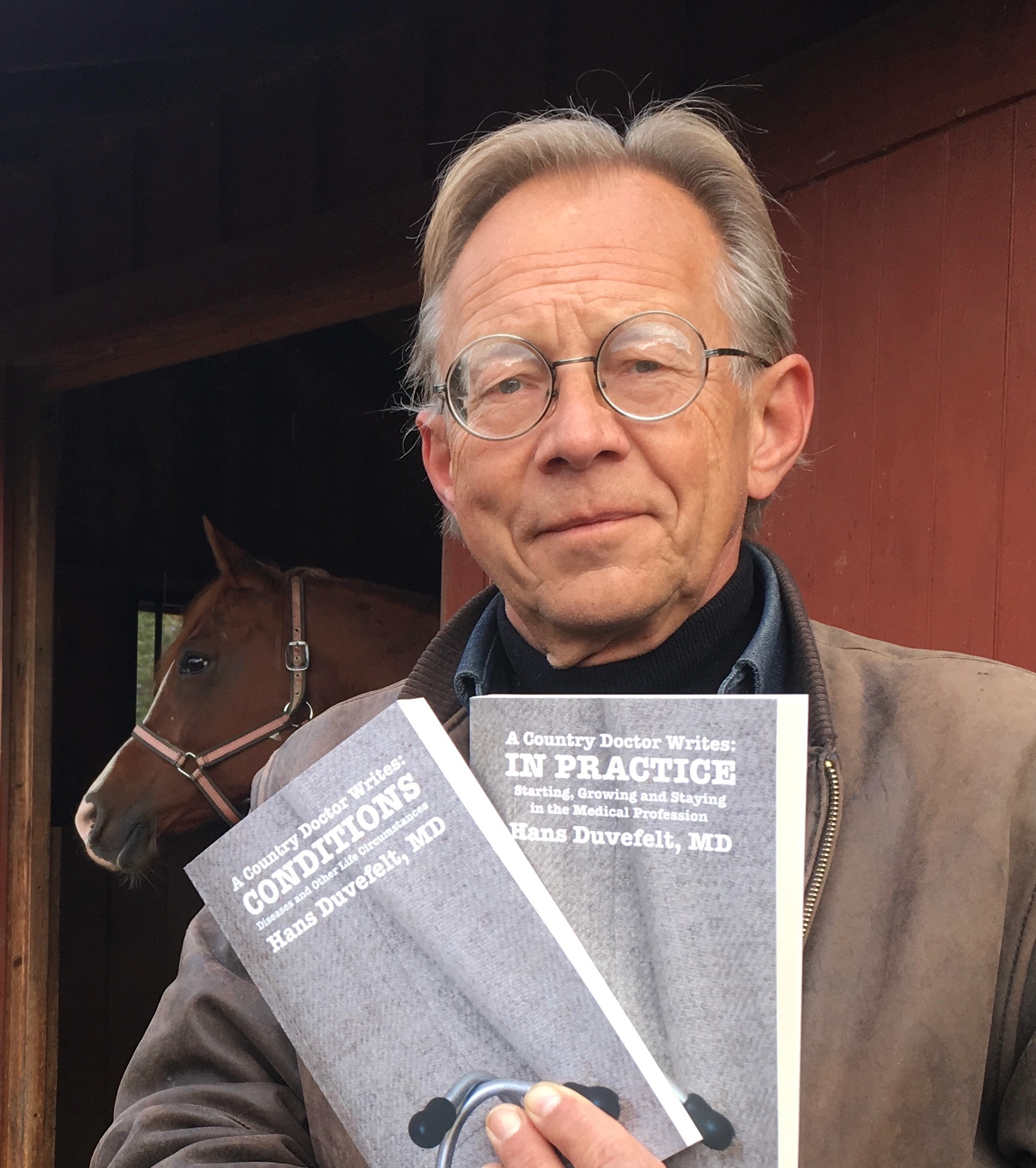
BOOKS BY HANS DUVEFELT, MD

CONDITIONS, Chapter 1: An Old, New Diagnosis

Top 25 Doctor Blogs Award

Doctor Blogs

Enter your email address to subscribe to this blog and receive notifications of new posts by email.

Mailbox

contact @ acountrydoctorwrites.com
Bookmark and Share
© A Country Doctor Writes, LLC 2008-2022 Unauthorized use and/or duplication of this material without express and written permission is strictly prohibited. Excerpts and links may be used, provided that full and clear credit is given.