Archive for the 'Progress Notes' Category


Shadow Syndromes

A fellow country doctor and blogger wrote a piece the other day about drug companies pushing medications for near-diseases like prediabetes and heartburn. I agreed with his sentiments and went on to think a lot about this.  There is a tendency among drug companies and even some doctors (perhaps looking for business?) to medicalize the human experience. We all have heartburn sometimes, but is it a disease or pre-disease, or did we simply eat too much of the wrong kind of food?

I have said before in these pages that Thomas Moore, the scholar and philosopher about matters of the soul, has said that book titles on your shelf can be inspiring even if you haven’t read the book.

A couple of years ago, at a Harvard psychiatry or psychopharmacology course, the booksellers in the lobby had a book that caught my imagination and has been an inspiration to me from that moment, even though I didn’t start to read it until today. It is by John Ratley, MD (co-author of “Driven to Distraction”) and Catherine Johnson, PhD (author of “When to Say Goodbye To Your Therapist”). The title says it all: “Shadow Syndromes” (The Mild Forms of Major Mental Disorders That Sabotage Us).

People with near-diseases can benefit from comparisons with the full-blown thing only if the analogy provides them with a deeper understanding of their situation and a course of action to change their trajectory away from the disease they are heading towards. This applies to labels in general. Labels are good if they help you understand what’s going on, and bad if they lock you into some sort of fixed category where you either don’t believe you can get out or, perhaps worse, start to feel comfortable and liberated from your own responsibility for your life and health. 

Somehow in the last generation of doctors, we seem to have lost our ability, or perhaps our perceived right, to give patients advice about their health; only if we diagnose them with a disease, or pre-disease, do we have something to tell them. We need to re-claim our position as health coaches, and fight for our right to tell people who are not yet diagnosable with an illness how to stay away from disease, instead of trying to make almost or completely healthy people carry a disease label, just so we can talk to them about how to stay out of trouble in the future.

Physicians and Chiropractors – Like Priests and Rabbis

Laura is about 25, a sweet kid with a doting husband, Mike. She was in the office yesterday to follow up on a weekend emergency room visit for vomiting and diarrhea. She wasn’t getting any better. Her liver tests were off the scale, but her pancreas numbers were pretty good. Her hepatitis profile was still pending. I got an urgent ultrasound on her to make sure she didn’t have her family curse – unusual and dramatic presentation of gallstones. This test was normal.

Today she was back for a follow-up visit. She wasn’t getting better. Her hepatitis profile from this weekend came back negative. Her liver tests from yesterday were unimproved from the ER visit. Overnight she had run a fever. She was vomiting more, her diarrhea was worse, and the pain was getting worse. She needed to go back to the hospital for some IV fluids and a CT scan.

Laura was alone in the room today. I asked if Mike was in the waiting room, which would have been unusual. No, her father had brought her, but he was waiting in the car. I must have looked puzzled. She said: “He’s a chiropractor, remember, and he has problems with doctors’ offices…”

I made the arrangements and Laura went back to the hospital with her father at the wheel.

I have had reason to think about physician-chiropractor relationships before; my brother-in-law is a chiropractor. We have never talked shop. I have always been a staunch allopath but have sometimes seen patients who were helped, dramatically, by chiropractic. Recently, Caleb, our horse with an unexplained limp, seemed to be very much improved after acupuncture and chiropractic treatments.

The practice of medicine in America is flavored by the malpractice climate. I have a form letter on my computer, stating that I as a patient’s primary care physician agree to authorize insurance payments to their chiropractor, but I don’t assume any responsibility for the chiropractor’s diagnosis or treatment.

When patients ask me if they should see a chiropractor, I usually answer their question this way:

“You wouldn’t ask your rabbi how often you should go to confession, would you? Chiropractic and allopathic medicine are like two religions. We don’t speak the same language and we use different tools. But even though our practices are different, we ultimately work for the same higher purpose, and it may be that our differences are smaller than we were taught. We don’t know enough about each other’s practices to make specific recommendations, but support you, our patients, in your pursuit of better health and wellbeing.” 

I wished Laura’s father had been more present as she sought allopathic care for a potentially serious, maybe even life threatening condition, and I wish my brother-in-law and I could sit down and talk about what it means to be in two different, yet similar healing professions…

Catch-up Time

I have been away from the office for more than two weeks. After two days back at work I am finally able to catch my breath and think about writing again.

I had intended to write a post about the fact that our clinic has a system where providers who have been away for more than a week have half a day dedicated to catching up on incoming laboratory tests, consultant and hospital reports as well as x-ray reports.

Instead, I am marveling about how hard we work. As doctors in rural America, we really do work hard. When I lived in Sweden and when I went back there to work as a locum tenens (“temp“) for one summer, there were regulated coffee breaks and a leisurely pace throughout the day. Swedes are a patient bunch; you can only call your doctor during certain hours, and you never expect anybody to respond in real-time. In America, people expect instant action.

I spent half a day going through reports. My hospice lymphoma patient is still hanging in there. Sally, the woman with a possible pancreatic tumor did go for her pancreatic CT, in spite of her misgivings, and the test was normal. Now she “only” has to deal with a possible kidney cancer; her urology appointment isn’t until next month. Sumner Bell, one of my regulars, died suddenly during a quick trip out to his shed – we don’t know what happened. He had angina and some heart failure and was on warfarin because of a prior history of a blood clot in his lungs.

My first two days back (one and a half seeing patients) have been more hectic and demanding than I anticipated. Today I had three patients go to the city hospital by ambulance – two with breathing problems and one with a broken femur. On top of that, my wife took our second car for a short trip to the post office and lost the brakes due to rusted-out brake lines (replaced only a couple of years ago in a hilly town in Canada – another adventure worth writing about some day). Between the tow truck taking six hours to get here and the hassles of picking up a rental, we haven’t quite landed yet, but life is expecting us to be present.

Moses, our puppy who took the big city by storm, is learning how to deal with the cats and the beagles all over again; I think he enjoyed being an only animal.

I was on call last night; tonight I am off. Now I know why it always takes a couple of days to wind down when I go on vacation – it is a matter of switching between two realities. But, I have to admit, even with the pressure we’re under, I couldn’t imagine myself doing anything else besides what I’m doing. I always wanted to be a doctor, and that’s what I am.

A Doctor’s Parting Words

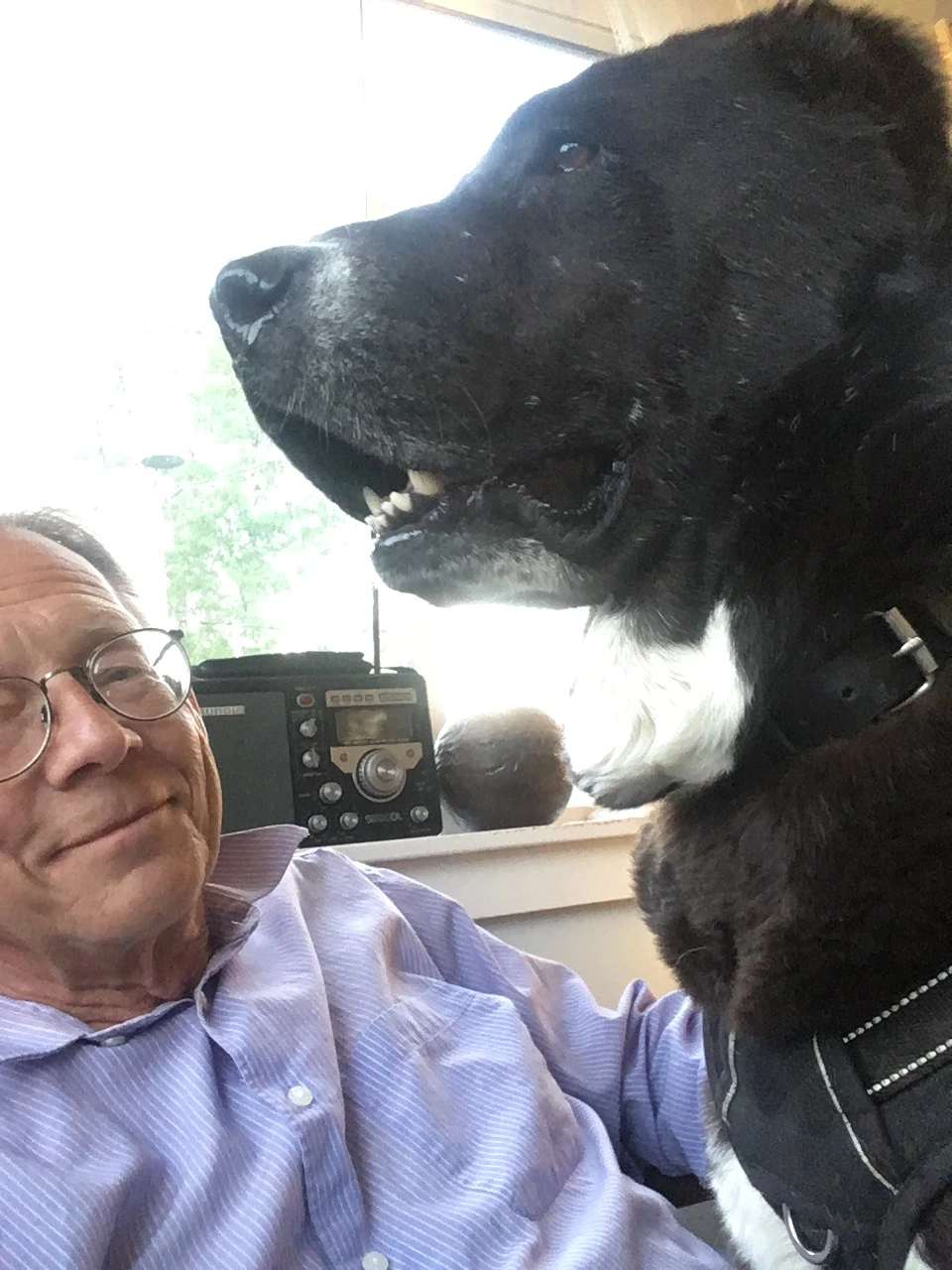
We are settling in back home tonight after a two-week trip to New York City and one of the Mid Atlantic states. We stayed at one hotel for twelve nights and it started to feel like a home away from home. This was the first trip for our puppy, a black German Shepherd, who actually turned one year old while we were away. This dog makes friends everywhere we go.

I am not as gregarious as our puppy, but at this particular hotel I made friends (sometimes because of the dog) with all the desk clerks and the newly hired maintenance man and his helper. I also had a quiet understanding with the woman who ran the complimentary breakfast buffet. I never took the dog there, but he contributed to my multiple trips to the free buffet every morning. This dog doesn’t eat dog food; we feed him human grade food, so I made a few trips every morning to the breakfast buffet to load up on eggs and bacon for the dog and me, as well as pastries and yogurt for my wife.

Every morning the breakfast buffet supervisor seemed to look me over as I heaped a generous amount of eggs and bacon on my plate and disappeared to our room, only to appear minutes later for another big helping. She always smiled at me and said with an East-European accent: “Have a nice breakfast”. Whenever I ran into her somewhere else in the hotel, she smiled as if she knew my little secret and always said something nice.

Early this morning, after three trips downstairs to pack the car, as we passed through the lobby on our way out for the last time, it seemed as if they were all there. The night desk clerk, just coming off duty, the daytime desk clerk, the maintenance man, even the breakfast lady showed up, seemingly to say good-bye to the puppy. The breakfast lady was the last one to do so, and she spoke to Moses in Russian.

I said, in Russian, mustering all I could remember from thirty years ago: “I understand a little Russian“.

She beamed, exclaimed ” Ochen chorosho (very good)!” and went into something long and complicated, of which I understood nothing. I reverted to English and told her why I came to learn some Russian at all when I did my military service back in Sweden.

She smiled and said softly “I am doctor in Russia, here – ” and she shrugged “housekeeping”.

I wanted to say something more profound and supportive, but the puppy was starting to get impatient, we were already an hour behind schedule and we had a very long drive ahead of us. All I could do was mumble something about reading somewhere that there are many foreign-trained doctors who are having trouble getting their license here. Then I drove back home to my life as a doctor in America while she went back to check on the breakfast buffet.

A Doctor’s Advice

My friend, Dr. Barbara Brennan, who gave up her practice because of her CFS, or Chronic Fatigue Syndrome, told me a very touching story about her last conversation with her gynecologist.

Dr. Brennan worked hard, and seemed to be inexhaustible until her illness stopped her in her tracks. In this medically underserved area we all work hard, and many of us looked to her as someone to admire, because she didn’t seem to tire of what she did day after day.

Barbara Brennan told me that there was one colleague who had told her to take a hard look at what she was doing.

Samuel Baumgarten was Barbara’s gynecologist for many years. He had delivered two of her children and when she came in for her annual checkup he always took time to ask how she was doing as a physician. She confided in him that she wished she wasn’t working quite as hard.

Sam had stopped delivering babies a couple of years earlier as his patients grew older, and focused more on gynecologic surgery. He had also cut his workweek from four to three days a week. He told Barbara that five days a week was too much for any doctor.

In his mid sixties, Samuel Baumgarten was youthful and always seemed relaxed and in perfect health. He was an avid skier, tennis player and sailor. He never wore a tie. He followed the Red Sox and gave the impression that medicine was important to him but never kept him from being a human being also.

The last visit Barbara had with Sam he had urged her to think about changing her situation.

“You’re working too hard” he lectured her. “No one is indispensable, not even you or I.” He looked very serious, almost stern as he spoke to his younger colleague and patient.

“People may say that only you can help them, but after you’re gone, they’ll say ‘She was good, but who do I see now?‘”

She often heard those words echo in her mind on days when fatigue started to creep up on her. She did start to think about what she might want to – or need to – do in the next few years in order to avoid burnout.

Two months after that appointment Samuel Baumgarten died suddenly while skiing down his favorite slope.  Barbara heard one patient after another say what a good gynecologist Dr. Baumgarten had been and in the next breath ask whom they should see now.

Barbara herself had to do the same thing, choosing to see Sam’s younger partner Sandra, who was ten years his junior and a nice enough woman, but not a mentor the way Sam had been.

His words came back to her often during the first weeks of her illness as she struggled with her guilt over not showing up at the office. They helped her make her final decision to quit her practice. And she imagined her own patients, one by one, wrapping things up the same way:

“She was a great doctor, but who do I see now?“


I just realized none of the posts show on an iPad or a computer, but they do show on an iPhone. WordPress is working on this. In the meantime, please visit my Substack.


Osler said “Listen to your patient, he is telling you the diagnosis”. Duvefelt says “Listen to your patient, he is telling you what kind of doctor he needs you to be”.


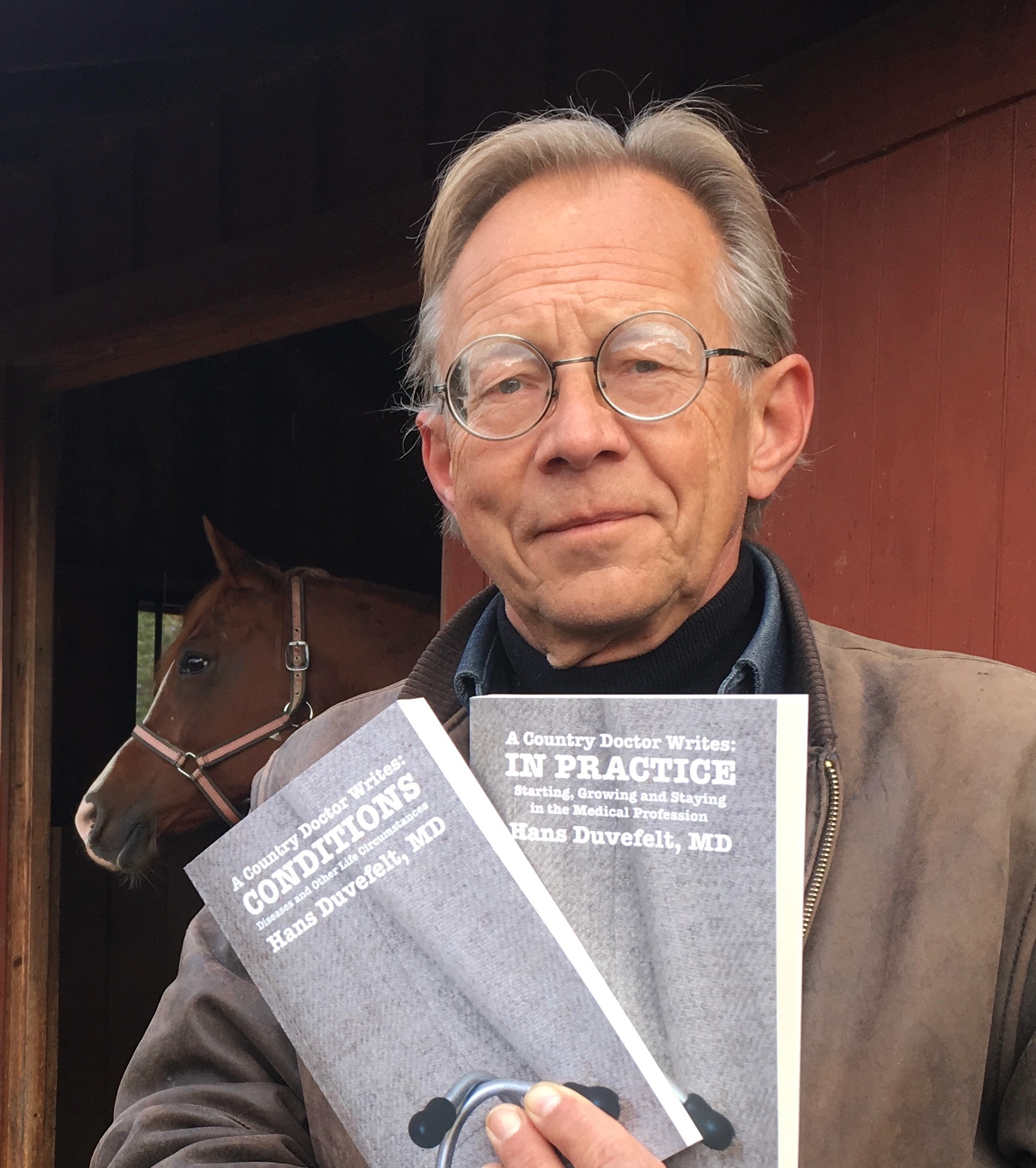
BOOKS BY HANS DUVEFELT, MD

CONDITIONS, Chapter 1: An Old, New Diagnosis

Top 25 Doctor Blogs Award

Doctor Blogs

Enter your email address to subscribe to this blog and receive notifications of new posts by email.

Mailbox

contact @ acountrydoctorwrites.com
Bookmark and Share
© A Country Doctor Writes, LLC 2008-2022 Unauthorized use and/or duplication of this material without express and written permission is strictly prohibited. Excerpts and links may be used, provided that full and clear credit is given.