Archive for the 'Progress Notes' Category


Catch-up Time

I have been away from the office for more than two weeks. After two days back at work I am finally able to catch my breath and think about writing again.

I had intended to write a post about the fact that our clinic has a system where providers who have been away for more than a week have half a day dedicated to catching up on incoming laboratory tests, consultant and hospital reports as well as x-ray reports.

Instead, I am marveling about how hard we work. As doctors in rural America, we really do work hard. When I lived in Sweden and when I went back there to work as a locum tenens (“temp“) for one summer, there were regulated coffee breaks and a leisurely pace throughout the day. Swedes are a patient bunch; you can only call your doctor during certain hours, and you never expect anybody to respond in real-time. In America, people expect instant action.

I spent half a day going through reports. My hospice lymphoma patient is still hanging in there. Sally, the woman with a possible pancreatic tumor did go for her pancreatic CT, in spite of her misgivings, and the test was normal. Now she “only” has to deal with a possible kidney cancer; her urology appointment isn’t until next month. Sumner Bell, one of my regulars, died suddenly during a quick trip out to his shed – we don’t know what happened. He had angina and some heart failure and was on warfarin because of a prior history of a blood clot in his lungs.

My first two days back (one and a half seeing patients) have been more hectic and demanding than I anticipated. Today I had three patients go to the city hospital by ambulance – two with breathing problems and one with a broken femur. On top of that, my wife took our second car for a short trip to the post office and lost the brakes due to rusted-out brake lines (replaced only a couple of years ago in a hilly town in Canada – another adventure worth writing about some day). Between the tow truck taking six hours to get here and the hassles of picking up a rental, we haven’t quite landed yet, but life is expecting us to be present.

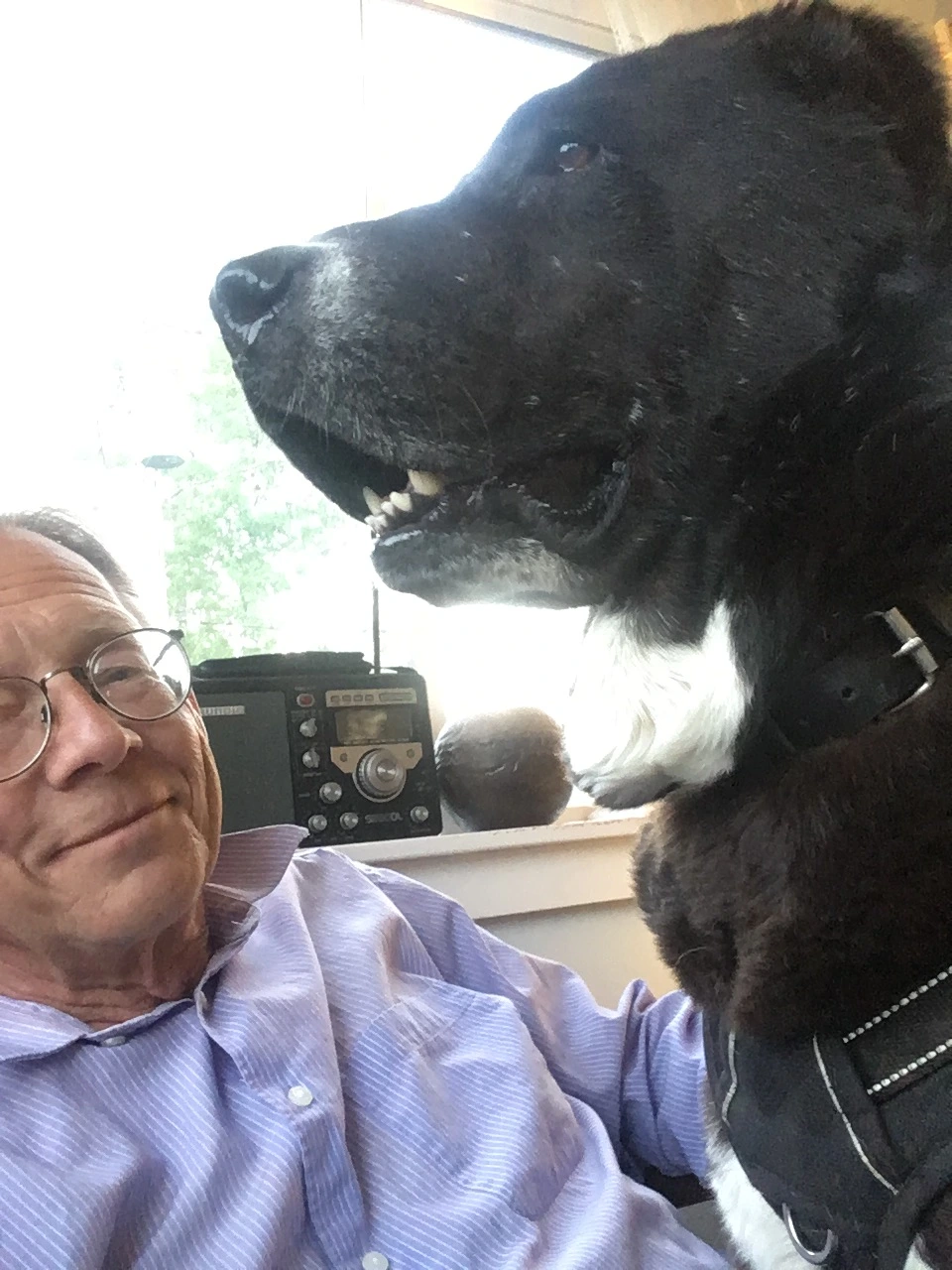
Moses, our puppy who took the big city by storm, is learning how to deal with the cats and the beagles all over again; I think he enjoyed being an only animal.

I was on call last night; tonight I am off. Now I know why it always takes a couple of days to wind down when I go on vacation – it is a matter of switching between two realities. But, I have to admit, even with the pressure we’re under, I couldn’t imagine myself doing anything else besides what I’m doing. I always wanted to be a doctor, and that’s what I am.

A Doctor’s Parting Words

We are settling in back home tonight after a two-week trip to New York City and one of the Mid Atlantic states. We stayed at one hotel for twelve nights and it started to feel like a home away from home. This was the first trip for our puppy, a black German Shepherd, who actually turned one year old while we were away. This dog makes friends everywhere we go.

I am not as gregarious as our puppy, but at this particular hotel I made friends (sometimes because of the dog) with all the desk clerks and the newly hired maintenance man and his helper. I also had a quiet understanding with the woman who ran the complimentary breakfast buffet. I never took the dog there, but he contributed to my multiple trips to the free buffet every morning. This dog doesn’t eat dog food; we feed him human grade food, so I made a few trips every morning to the breakfast buffet to load up on eggs and bacon for the dog and me, as well as pastries and yogurt for my wife.

Every morning the breakfast buffet supervisor seemed to look me over as I heaped a generous amount of eggs and bacon on my plate and disappeared to our room, only to appear minutes later for another big helping. She always smiled at me and said with an East-European accent: “Have a nice breakfast”. Whenever I ran into her somewhere else in the hotel, she smiled as if she knew my little secret and always said something nice.

Early this morning, after three trips downstairs to pack the car, as we passed through the lobby on our way out for the last time, it seemed as if they were all there. The night desk clerk, just coming off duty, the daytime desk clerk, the maintenance man, even the breakfast lady showed up, seemingly to say good-bye to the puppy. The breakfast lady was the last one to do so, and she spoke to Moses in Russian.

I said, in Russian, mustering all I could remember from thirty years ago: “I understand a little Russian“.

She beamed, exclaimed ” Ochen chorosho (very good)!” and went into something long and complicated, of which I understood nothing. I reverted to English and told her why I came to learn some Russian at all when I did my military service back in Sweden.

She smiled and said softly “I am doctor in Russia, here – ” and she shrugged “housekeeping”.

I wanted to say something more profound and supportive, but the puppy was starting to get impatient, we were already an hour behind schedule and we had a very long drive ahead of us. All I could do was mumble something about reading somewhere that there are many foreign-trained doctors who are having trouble getting their license here. Then I drove back home to my life as a doctor in America while she went back to check on the breakfast buffet.

A Doctor’s Advice

My friend, Dr. Barbara Brennan, who gave up her practice because of her CFS, or Chronic Fatigue Syndrome, told me a very touching story about her last conversation with her gynecologist.

Dr. Brennan worked hard, and seemed to be inexhaustible until her illness stopped her in her tracks. In this medically underserved area we all work hard, and many of us looked to her as someone to admire, because she didn’t seem to tire of what she did day after day.

Barbara Brennan told me that there was one colleague who had told her to take a hard look at what she was doing.

Samuel Baumgarten was Barbara’s gynecologist for many years. He had delivered two of her children and when she came in for her annual checkup he always took time to ask how she was doing as a physician. She confided in him that she wished she wasn’t working quite as hard.

Sam had stopped delivering babies a couple of years earlier as his patients grew older, and focused more on gynecologic surgery. He had also cut his workweek from four to three days a week. He told Barbara that five days a week was too much for any doctor.

In his mid sixties, Samuel Baumgarten was youthful and always seemed relaxed and in perfect health. He was an avid skier, tennis player and sailor. He never wore a tie. He followed the Red Sox and gave the impression that medicine was important to him but never kept him from being a human being also.

The last visit Barbara had with Sam he had urged her to think about changing her situation.

“You’re working too hard” he lectured her. “No one is indispensable, not even you or I.” He looked very serious, almost stern as he spoke to his younger colleague and patient.

“People may say that only you can help them, but after you’re gone, they’ll say ‘She was good, but who do I see now?‘”

She often heard those words echo in her mind on days when fatigue started to creep up on her. She did start to think about what she might want to – or need to – do in the next few years in order to avoid burnout.

Two months after that appointment Samuel Baumgarten died suddenly while skiing down his favorite slope.  Barbara heard one patient after another say what a good gynecologist Dr. Baumgarten had been and in the next breath ask whom they should see now.

Barbara herself had to do the same thing, choosing to see Sam’s younger partner Sandra, who was ten years his junior and a nice enough woman, but not a mentor the way Sam had been.

His words came back to her often during the first weeks of her illness as she struggled with her guilt over not showing up at the office. They helped her make her final decision to quit her practice. And she imagined her own patients, one by one, wrapping things up the same way:

“She was a great doctor, but who do I see now?“

The Doctor’s Doctor

Doctors have a reputation of making bad patients. Many of us even hesitate getting a personal physician. Years ago it was common for doctors to treat themselves and their families. The Latin vocabulary used on prescriptions includes the phrase “Ad Usum Proprium”, which means “For Personal Use”. This is now considered inappropriate, except in emergency situations or for occasional minor illnesses.

When I turned fifty, after years of neglecting my health, I decided to get my own Family Doctor. I thought about it for a long time. I decided not to see one of my partners, but someone in the city 20 miles from here. It should be a physician with more years of experience than I had, not someone who was young and “aggressive”.  In medicine we use that term for doctors who order lots of tests and prescribe multiple medications. My choice of Family Doctor for myself was Wilford Brown, III, MD, a tall, gray haired man with a solid reputation as a thoughtful, conservative clinician.

Our first meeting went well. I told him which things I was interested in looking into and which ones I didn’t worry about. He obliged, did a brief but appropriate physical exam and treated me with utmost respect. If he disagreed with me, he didn’t say so. I really liked him. We had another visit a year later, and I thought things were going well until he told me he was retiring. My heart sank. I asked him if there was another doctor in his office he would recommend for me. He didn’t hesitate before suggesting Dr. John Royson.

My first and only meeting with Dr. Royson did not go well. I sat in a bare exam room, fortunately not bare myself, for an hour. The exam room door was open and I overheard the medical assistant call Dr. Royson on the phone. Her end of the conversation went:

“Hello, Dr. Royson? Did you forget you had office patients today?”

“Yes, for over an hour.”

“So when will you be here?”

I had taken a half-day off, so I declined the assistant’s offer to reschedule the appointment. After another twenty minutes or so Dr. Royson appeared. He was in his early thirties, sported a flat top and didn’t apologize or even mention anything about me waiting almost an hour and a half.

D. Royson seemed a bit flustered about having an older physician for a patient. He mumbled to himself about perhaps checking my prostate etc. The whole visit lasted ten minutes.

I didn’t have to fire Dr. Royson; he left the practice to become a full time Hospitalist, doing what he was doing when he forgot that he had me and other patients to see at the office.

Dr. Royson’s replacement at Cityside Family Practice was another interesting experience. Dr. Joe Washburn looked like he’d rather be surfing, started me on a new blood pressure pill with a prescription good for a whole year and didn’t say a word about how to follow up. I got the impression he was so uncomfortable treating a colleague that he wished I’d go away and do my own follow-up.

Not long ago our clinic had a new patient register. We have a preliminary registration sheet come to the doctors for approval, because we are at near full capacity. This patient  registration sheet caught my eye:

Name: Wilford Brown, III, MD. 

Reason for choosing our practice: Payback.

Clara’s Sinus Headaches

When people come to my office with “sinus headaches”, they often ask for an antibiotic and perhaps something for congestion. Pain in the forehead, behind the eyes or in the cheekbone area doesn’t always mean infection, though.

Clara was a widow in her seventies, who had experienced frequent and severe sinus headaches for years. She even had postnasal drip and a recurrent sore throat. I ordered a CT scan, which was negative; there was no sign of cancer or polyps, but also no sign of sinusitis. On this, one of many office visits, she asked for antibiotics. I agreed to prescribe something while we waited to get the scan.

When we had a follow-up visit to review the scan, I told her the films were completely normal. She told me the antibiotics had cleared all her symptoms, just like every time her previous doctor had prescribed them. How could she not have had a sinus infection when the antibiotics always made her feel better? It wasn’t long before she came back with another request for antibiotics.

The antibiotics always had to be brand name – she insisted generics made her feel badly and they never cleared her sinuses. The pharmacists would call and point out that the generic version of her favorite antibiotic was actually made by the same manufacturer as the brand name. Clara was unconvinced. She had good insurance, and all she needed me to do was check the box on the prescription and write “Brand Medically Necessary”. This is what she insisted on for her antibiotics as well as for her maintenance heart medications.

I didn’t feel comfortable with Clara’s repeated requests for antibiotics, so I sent her for a couple more CT scans over the years, and she reluctantly agreed to see an allergist and an ear, nose and throat specialist. She didn’t like either of them, and they didn’t help her. She seemed to enjoy her visits with me, and she often said that she wouldn’t know what to do without me; on the way out she would hug me good-bye.

Clara often seemed a little sad and lost. Her husband had always taken good care of her, although I wasn’t sure how happy their marriage had been. She had never involved herself with practical or financial matters. Now she was struggling with what to do with their mobile home in Florida, and she fretted about whether to sell their house, which was too large and too expensive to heat. I would try to help her find the confidence to tackle things one at a time.

We finally had a heart-to-heart talk about her headaches. I suggested we stop treating her with antibiotics, and she asked me if I thought she was just imagining them. I reassured her that I didn’t think so, but explained that you can have temporary congestion without infection.

Clara sold her home and moved into a senior citizen complex. I was busy, and didn’t notice how much time had passed. One day recently my office nurse, Autumn, grinned and said “Guess who just made an appointment to switch all her prescriptions to generics!”

Clara entered the office with an air of confidence and dressed to the nines. “You look well”, I pointed out. “I’m happy,” she beamed, and pointed out a new diamond ring. 

Clara had not been in for well over six months. She never had headaches anymore, and she thought it was time she tried the generics. I knew her problem had never been her sinuses. And I knew it wasn’t all in her head; all along it had been in her heart.


I just realized none of the posts show on an iPad or a computer, but they do show on an iPhone. WordPress is working on this. In the meantime, please visit my Substack.


Osler said “Listen to your patient, he is telling you the diagnosis”. Duvefelt says “Listen to your patient, he is telling you what kind of doctor he needs you to be”.


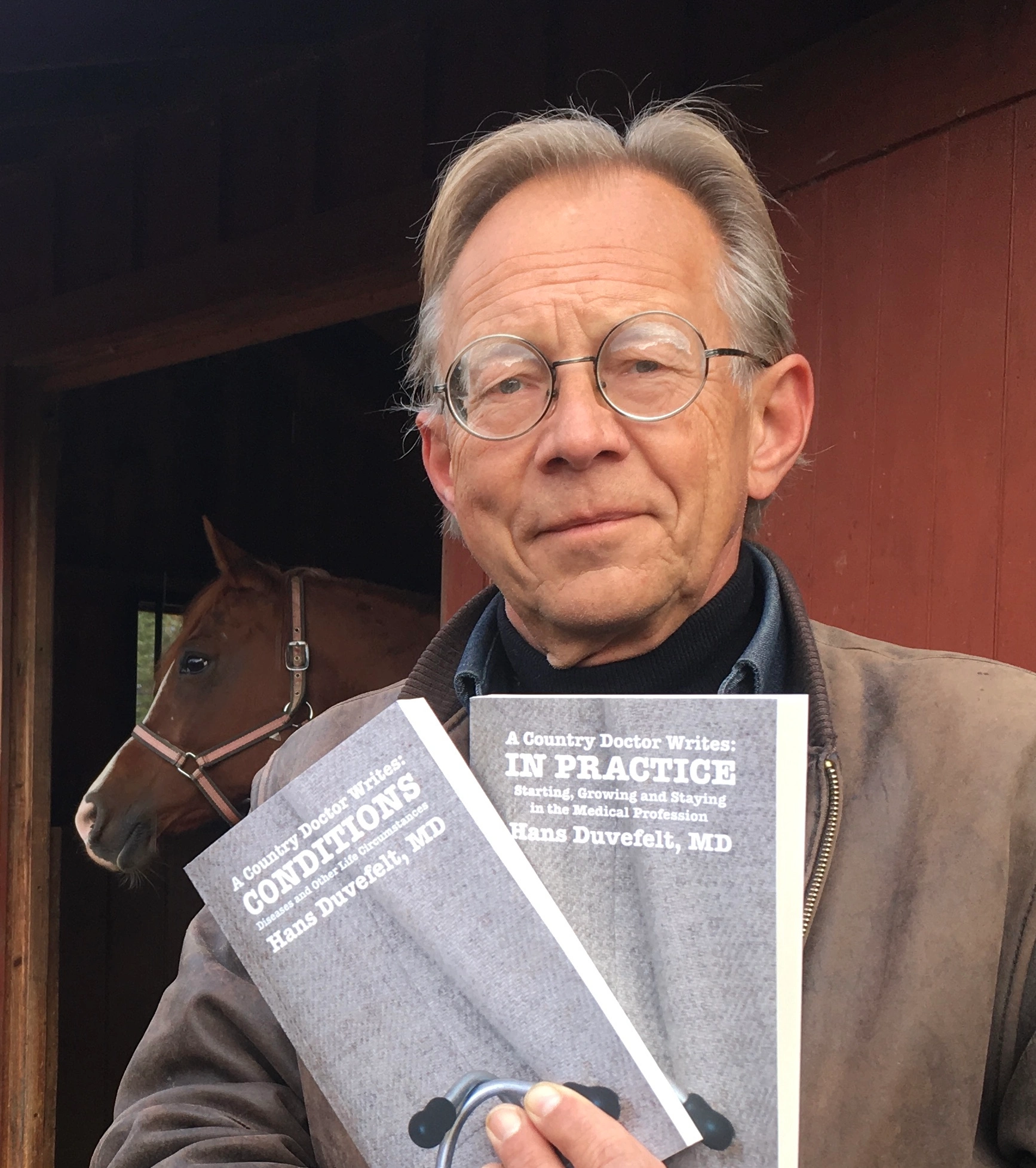
BOOKS BY HANS DUVEFELT, MD

CONDITIONS, Chapter 1: An Old, New Diagnosis

Top 25 Doctor Blogs Award

Doctor Blogs

Enter your email address to subscribe to this blog and receive notifications of new posts by email.

Mailbox

contact @ acountrydoctorwrites.com
Bookmark and Share
© A Country Doctor Writes, LLC 2008-2022 Unauthorized use and/or duplication of this material without express and written permission is strictly prohibited. Excerpts and links may be used, provided that full and clear credit is given.