Archive Page 58

Patient: “Another Doctor Said Keto Was Bad For Diabetics” – Me: “Let Me Tell You the Story of the Flex Fuel Man”

“There is confusion and disagreement about diet, or should we say FOOD CHOICES, when you have Type 2 Diabetes”, I admitted. “But I’ve done my reading. I have had my own experience losing weight giving up being a vegetarian. And I have over 40 years of experience with diabetic patients – and curing some.”

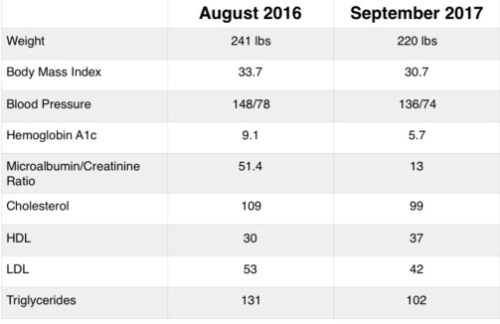
These numbers illustrate what happened 2016-2017 when a diabetic patient of mine took my Flex Fuel talk to heart and drastically cut the carbs in his diet. We did not change his medications during this time – it was all because of his food choices.

A Flex Fuel Man

Funny Examples of Swedish Medical Terminology

The Scandinavian languages have long tried to resist the incorporation of foreign words. The Norwegians are perhaps more into that in our time, but Swedish medical terminology is a powerful, very old example of our provinsionalism. Even though words like diabetes and stroke are now used by lay people, the old Swedish terms are by no means obsolete.

What sometimes makes our terminology doubly amusing to a non-Swede is the fact that, in our language, multi-word expressions or descriptions are written with no space between the words. For example, May Day demonstration is förstamajdemonstration in Swedish and a female laundromat proprietor is called a tvättinrättningsföreståndarinna, and there are even longer words than that.

Here are some samples of local Swedish medical terminology:

BÄLTROS – “Belt rash”: Herpes Zoster or Shingles (The Greek word zōstēr means belt and the word shingles is said to be related to the word zoster.)

BUKSPOTTKÖRTELN – ”The Belly Spit gland”: Pancreas (Greek for “all flesh”.)

SKÖLDKÖRTELN – “The Shield Gland”: Thyroid, shaped like the shield of a knight in armor.

KROPPSPULSÅDERN – ”The Body Pulse Vessel”: Aorta.

LILLHJÄRNAN – ”The Little Brain”: Cerebellum.

RYGGRADEN – ”The Back Line”: Spine

HALSMANDLAR – “Throat Almonds”: Tonsils

HALSFLUSS – “Throat Flow (discharge)”: Tonsillitis

KÄRLKRAMP – ”(blood) Vessel Cramp”: Angina

HALSBRÄNNA – ”Throat Burn”: Acid Reflux

BARNFÖRLAMNING – ”Child Paralysis”: Poliomyelitis

GULSOT – ”Yellow Sickness”: Jaundice

LUNGSOT – ”Lung Sickness”: Tuberculosis

KRÄFTA – ”Crayfish” (the Latin word cancer means crab or creeping ulcer. The Swedes just used the existing Swedish word): Cancer

KÖRTELFEBER – ”Gland Fever”: Mononucleosis

SOCKERSJUKA – “Sugar Disease”: Diabetes

SLAGANFALL – “Strike Attack”: Stroke

BENSKÖRHET – ”Bone Brittleness”: Osteoporosis

PÅSSJUKA – ”Bag Disease”: Parotitis/Mumps

SJUVECKORSKLÅDA – ”Seven Week Itch”: Pityriasis Rosea

ENGELSKA SJUKAN – ”The English Disease”: Rickets/Osteomalacia

DANSSJUKA – ”Dance Disease”: Chorea

KALLBRAND – “Cold Fire”: Gangrene

BLINDTARMEN – ”The Blind Gut”: Appendix (which is a small, dead-end piece of gut)

GRÅ STARR – “Gray Stare”: Cataract (which can make the pupil look gray or cloudy)

GRÖN STARR – ”Green Stare”: Glaucoma (occasionally associated with a greenish instead of red appearance of the pupil when shining light into the eye)
“Fruit is God’s Candy”

That is exactly what I tell my overweight diabetic patients. I also say “There may be more vitamins in fruit than in most candy bars, but unless you’re out jogging and need a quick calorie burst, fruit will raise your blood sugar and make you gain weight.”


“If you feel you must have dessert, and are already in the habit of eating pie, then switching to fruit may be a first step in breaking your dessert habit”, is another blunt statement I might use.

We can thank our dietitians for perpetuating the catastrophic EAT MORE FRUIT myth. People with sedentary lifestyles who are already obese or diabetic should not be told to ADD anything, even healthy calories, to their diet. Because for them, any additional calories will cause harm.

Instead of saying what to eat MORE of, I help my patients know what to eat LESS of. Then we work on adding back, or substituting, the right kind of foods.

It is simple psychology: When explaining a two step process, start with the big idea, in this case what to eat less of. That way, if your listener tunes out after the first part, they’ll still be on a better track than they were on.

But if people stop listening after EAT MORE FRUIT, and miss the second part (what to eat less of), your advice will have the opposite effect of what you intended.

We live in a culture that somehow can’t deny itself anything. It is as if we are recovering from a big famine and the thought of being hungry for a few minutes or not having exactly what we want induces PTSD. Our growing impatience and insatiable desire for more food, more entertainment, more convenience is causing many of our era’s current challenges – from lifestyle diseases to the environmental disasters plaguing us right now.

The Art of Diagnosis: Go With Your Gut, Dig Deeper, Step Back or Start Over

Nelson Malloy had infrequent but bothersome spells when he felt drained for half a day or more. He just couldn’t put his finger on exactly how he felt. Neither he nor I knew in the beginning what his symptoms were all about. The usual fatigue related bloodwork came back normal. His pulse in the office was exactly 50. On a hunch, I suggested tapering his lowest strength tablet of metoprolol tartrate down to half a tablet twice a day and that seemed to have solved his problem. The medication had been started after a questionable non-ST elevation myocardial infarction a few years earlier. Encouraged, he stopped it altogether and instead ended up with two hours of palpitations, triggered by a stressful event, with a heart rate upwards of 150. I advised him to resume the half tablet regimen. He may need more testing if he gets palpitations again.

Ben Chasse stumped me before with his drowsiness and his various neck and head pains. Was he just hypoglycemic with a herniated disc in his neck and an unrelated ordinary cellulitis, or something more exotic? Now, after neck surgery and off most of his diabetes medications, could his reoccurring spells of fatigue and shortness of breath be related to suddenly high blood sugars? After all, he was not anemic, his chest CT, echocardiogram and stress test were all normal and his peak flow was the same as mine. Time will tell, now that he is starting to take care of his diabetes again.

Sometimes the broader view holds the answer. It helps to ask “what else is going on” or to do a review of systems that includes things we might not think have anything to do with the chief complaint. 

Wanda Starks, years ago, puzzled me with her recurrent episodes of mild confusion, nausea and ever so slight headaches. She seemed to have a migraine equivalent, but it took ten years of infrequent by-the-way mentions before I realized what ailed her.

As I wrote about Wanda’s case back in 2008:

When you get stuck in a diagnostic dilemma you have two ways of approaching the problem. You can dig deeper and meticulously go over all the tests that have been done so far, looking for anything that could have been missed. You can also do the opposite, step back, clear your mind and listen to the patient’s story all over again. It is a little bit like those pictures in psychology class; the more you stare at them, the less likely you are to see the hidden image. Sometimes if you squint, you can see it right away.

And in 2009, in a story about Mrs. Jarvis’ spells of nausea, I also wrote about starting over:

“I am stuck,” I said. She sighed as I continued: “I must be missing something in your story.” Then, in a moment of inspiration, I got up from my stool and walked over to the exam room door as she followed my movements with suspicion and disbelief in her eyes.

With one hand on the doorknob I turned toward her and explained what I was doing:

“Pretend I’m an amnesiac or that you never met me or told me what you are feeling. I need to hear your story again from the beginning and without interruptions.”

The punch line in that story was:

Five minutes later, without asking a single further question, I knew what to do.

There are many ways to get unstuck. We must be prepared to use all of them.

When I Escalated His GERD Treatment, My Patient Got Worse. Now I Know Why

Pierre Patenaud had a long history of dyspepsia with fair control on 20 mg of omeprazole. A few months ago, he started getting worse. My first response was to check for changes in his lifestyle and increase his dose to 40 mg. When that didn’t work, I added famotidine 40 mg twice a day. He felt worse and even developed hoarseness. I prescribed sucralfate before meals and at bedtime and made a referral to one of our general surgeons for an upper endoscopy.

The other day I got a call from the surgeon.

“Mr Patenaud’s endoscopy looked atrophic and I just got a call from the pathologist. The biopsies were negative for helicopabter pylori, but he’s got giardia in his stomach.”

“I’ve never heard of that”, I said, “and he hasn’t had any lower GI symptoms.”

My literature search yielded mostly old articles, like an Italian one from 1992 linking it to helicobacter pylori, a 1994 piece in the BMJ linking it to achlorhydria (which may be why Mr. Patenaud got worse with more acid suppression) and bile reflux (bile is alkaline). The most recent piece I read was from 2009 by the WHO, reporting Egyptian data on helicobacter pylori and giardia, which often coexist as they are transmitted in the same fashion between individuals.

The lesson here is: Not all dyspepsia is due to acid excess or reflux, or even bile reflux in and of itself. And the ones that are neither of those aren’t necessarily irritable bowel related “nonulcer dyspepsia” – a strong case for scoping and biopsying difficult dyspepsia.


I just realized none of the posts show on an iPad or a computer, but they do show on an iPhone. WordPress is working on this. In the meantime, please visit my Substack.


Osler said “Listen to your patient, he is telling you the diagnosis”. Duvefelt says “Listen to your patient, he is telling you what kind of doctor he needs you to be”.


BOOKS BY HANS DUVEFELT, MD

CONDITIONS, Chapter 1: An Old, New Diagnosis

Top 25 Doctor Blogs Award

Doctor Blogs

Enter your email address to subscribe to this blog and receive notifications of new posts by email.

Mailbox

contact @ acountrydoctorwrites.com
Bookmark and Share
© A Country Doctor Writes, LLC 2008-2022 Unauthorized use and/or duplication of this material without express and written permission is strictly prohibited. Excerpts and links may be used, provided that full and clear credit is given.