Archive Page 43

I Heard About Chilblains in British Television Shows, Not in Medical School

Today I saw a woman with a painful toe. She said another doctor used to give her mupirocin, an antibiotic cream, for this recurring painful redness and swelling in one toe she believe suffered a frostbite years ago.

I looked at the toe. The skin was intact, but there was redness, tenderness and a little swelling. I didn’t think topical antibiotics would help that.

“Did the cream work?“ I asked.

“I don’t know, it went away in about a week most of the time but sometimes the toes next to it started to bother also“, she said.

I was sure her flareups resolved on their own and not because of the antibiotic cream she used. It just kept her busy while she waited them out.

Frostbite, recurring pain, inflammation. I have never been shown or diagnosed a case of chilblains before, but the word and the basic concept was in the back of my mind. I remember British people speaking about them. Lately, I have also read that Covid-19 can trigger chilblains.

As I often do, I minimized the EMR on my screen and did a search, this time on up-to-date. I showed her the pictures of toes with chilblains and she agreed with me that they looked like hers and the description of all the symptoms rang a bell with her, too.

The choice seems to be between powerful topical steroids for inflammation or systemic medications including nifedipine, which increases blood flow to cold fingers and toes but could also lower blood pressure. That side effect would be something she could ill afford.

We agreed on a strong topical steroid in ointment form for better penetration and she will let me know how it works for her.

One of the sources I looked up claims that 10% of Brits will experience chilblains in their lifetime. Sweden is colder than Great Britain but perhaps not as damp. I wonder why nobody bothered to tell me about this condition.


Care Reminders? No Time to Think on the Clinic Assembly Line

What do you do when you get a multi-page letter from an insurance company with care reminders about several patients? I toss it in the shred box.

This is why:

The business model in primary care is that providers are scheduled to see patients all day long. We treat one patient at a time. Anything else, like prescription refills, review of results, answering messages and so on, happens at the expense of scheduled patients’ time with us or our own free time (not-so jokingly called pajama time).

Those care reminders would require me to look up each patient’s chart, review it, consider the recommendation and then maybe create an order and a message to my nurse.

On whose dime? (This is an expression from the era of telephone booths.)

In manufacturing, at least before the recent supply chain meltdown, the concept of just-in-time has been popular. Have raw materials or parts arrive when you need them. That eliminates the need for excessive inventory and storage capacity.

In paper medical records, care reminder letters would have been placed as the first page you see when you open the chart the next time the patient comes in. There is no easy or established way to do that in an EMR. And we are far away from the utopia of having doctors sit at their desks thinking about and directing the care of any patients who are not right in front of their faces.

So, in the reality of today’s work flows, the best I could possibly do would be glance at them and put the “recommendation” in the back of my mind for the next time I see the now normoglycemic diabetic who isn’t on a statin drug. And so on.

If we are supposed to work outside the face-to-face assembly line model, we need our schedules and our tools to be redesigned for such purposes. Until that happens, care reminders and many other things, like population management, are just recipes for physician burnout.

A Year of Extremes: From Medieval Masks to mRNA Vaccines; From Science Denying Flat Earthers to the Prospect of Civil War

What a year this has been. Our lives continue to be upended, and in many cases cut short, by this novel virus. And our responses include everything from the most sophisticated new medical technologies to medieval strategies. In fact, French Royal physician DeLorme invented PPE in 1619, all the way from clothing that covered the entire body without gaps to the birdlike face mask that filtered the air that plague doctors were breathing. It is almost mind boggling that over 400 years later, we are doing the exact same thing.

But at the same time, the introduction of the Covid mRNA vaccines is equally remarkable. The first gene sequencing, of the RNA virus called Bacteriophage MS2, happened in 1976, when I was in my second year of medical school. And it took from 1990 to 2003 to complete the sequencing of the human genome.

In this strange era of coexisting medieval and space age technologies, I cannot help thinking about the tension between those who embrace both of these strategies and those who deny both. You would think the tension would be between the new and the old ways, but that isn’t as great as the one between all and nothing.

It is as if we have, in this and many western countries, two incompatible world views, like the flat earthers and the rest of us. But in this case, the size of each camp seems to be frighteningly close to equal. And the fervor that is evident in those who want to do nothing to protect themselves from the virus is truly unsettling.

I imagined that mask wearing would be an inoffensive practice, which at least wouldn’t bother anybody else. But no, people get assaulted and harassed for doing it, for making a personal choice to protect themselves.

Many experts are predicting that the pandemic will become endemic and that continued booster shots will contain its lethality. But there are no signs that the tension between the do-somethings and the do-nothings will go away.

Instead of drawing together to fight the invader, the red and blue White American subpopulations have started to view each other as the adversary. I don’t think the insurrection of 1/6/21 would have happened if we hadn’t been in the middle of this pandemic. We are like dogs who suddenly turn on each other instead of attacking the intruder at our gate.

One of these dogs appears to be more aggressive than the other, perhaps even rabid. Or is it just that much more frightened? Not frightened by the virus, but by the Black Lives Matter, Mee-Too and Environmentalist movements they see as threats to their “Freedom”, which they believe they will lose if others gain theirs.

It seems this virus was a catalyst for a chemical, cultural chain reaction whose end product is as of yet unknown. We are witnessing incompatible progress and regression rapidly reshaping and destabilizing this country.

God bless America. God help America.

I Hate to Encourage Pharmacy Shopping, But I Have to

In a perfect world, patients have one primary care doctor who knows what their specialist doctors are doing, prescribing and recommending, and one pharmacy that watches out for interactions between their treating physicians’ prescriptions.

But sometimes I just have to tell my patients to shop around for their medications, even though that creates some risks.

I have many patients without prescription insurance. Some of them are on our sliding fee program and also qualify for free drugs from the pharmaceutical companies. We call that prescription assistance. A coordinator within my organization helps patients apply for this and they may get several different brand name drugs from different companies. It is obviously up to me to make sure there are no interactions between the drugs I prescribe. But if such a patient fills a new medication at the pharmacy from an emergency room or specialist doctor, there is no one watching over this, because no one has that kind of information.

The other day I saw a new patient who had quit his job and moved to Maine. Six months from now he will have Medicare, but right now he is without insurance. He is a diabetic and takes half a dozen medications. He uses Walmart, which made sense to him as he was moving from one state to another and was able to transfer his prescriptions. But one of his latest prescriptions was an expensive diabetes medication. Alogliptin was one I had never heard of, but because sister drugs usually end with the same syllable, I deducted that it was a generic in the same family as Januvia.

This drug costs over $300 per month at Walmart. The discount website GoodRx has coupons for different pharmacies. The Walmart coupon brings the cost down to $160.63, but there is a better deal at $94.57 with Walgreens.

So I refilled his metformin and glipizide at Walmart and sent the alogliptin to Walgreens. The next day I got a call from the Walgreens pharmacist, asking why I had a diabetic on such a fancy drug as monotherapy instead of something more basic like metformin or glipizide. I told him the patient was on both, but at Walmart.

Continuity of care isn’t just a provider issue. It is also a pharmacy issue. We sometimes forget that. But it can come with a cost to the patients because of wide variation in drug prices. And this isn’t just for people without insurance. Medicare patients regularly end up in the benefit gap we call the doughnut hole, when their Medicare D prescription benefit is exhausted partway through the year. Those people, too, will find the best deal they can with competing pharmacies.

Another Christmas Message

I am writing this by the fireplace in my Swedish looking farmhouse in northern Maine. It is a couple of days before Christmas and we have 8″ of new powder snow on top of last week’s snow. Without all wheel drive and studded tires I wouldn’t have made it up the driveway after work today.

This season of celebration is shrouded in uncertainty. Last year at this time I wrote about the threats of the coronavirus and of anarchy. Both of these threats to life as we knew it played out worse than I had imagined.

And here we are again, with Omicron raging and the political divide widening. All I can do as a physician and a human being is keep my own house in order, cherish my loved ones and stay focused on what it means to be a doctor.

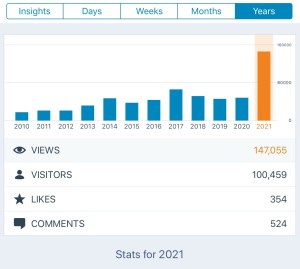
My world has stayed small, physically, but my thoughts and my words travel freely. My post views have more than doubled this year. I’ve been writing this blog for almost 14 years now and it has been a way for me to balance my frustrations with the system with the continuing enthusiasm this job nurtures in me.


I have written a Christmas piece most years. Below, I am linking to last year’s installment and also to the one from ten years ago, when I gathered sentences from Sir William Osler’s writings, imagining what he would want to say to today’s rural primary care doctors; Hippocraticus Rusticus, he called people like me.

Osler was a brilliant physician, a dedicated mentor and an optimist. He is one of a select group I call my imaginary mentors. By now I’m one of the oldest physicians in my organization, so I sometimes imagine what Osler or one of the other great teachers would guide me to do when I hit a snag or a difficult choice.

As one more year in medicine is about to end and as I prepare to start another, I would like to extend holiday greetings and best wishes for the new year to everyone who reads this. Writing this blog and compiling the books based on it has been both therapeutic and fun for me. And, just so you know, I have another book in the works – all new material, and this one in hardcover.

Stay tuned, God Jul & Gott Nytt År.

A Christmas Message to All Physicians From a Swedish-American Country Doctor in Maine

A Christmas Message to All Physicians from Sir William Osler


I just realized none of the posts show on an iPad or a computer, but they do show on an iPhone. WordPress is working on this. In the meantime, please visit my Substack.


Osler said “Listen to your patient, he is telling you the diagnosis”. Duvefelt says “Listen to your patient, he is telling you what kind of doctor he needs you to be”.


BOOKS BY HANS DUVEFELT, MD

CONDITIONS, Chapter 1: An Old, New Diagnosis

Top 25 Doctor Blogs Award

Doctor Blogs

Enter your email address to subscribe to this blog and receive notifications of new posts by email.

Mailbox

contact @ acountrydoctorwrites.com
Bookmark and Share
© A Country Doctor Writes, LLC 2008-2022 Unauthorized use and/or duplication of this material without express and written permission is strictly prohibited. Excerpts and links may be used, provided that full and clear credit is given.