Archive Page 42

Notes From My Sick Bed: Cold War, Viruses and History Repeating Itself

Growing up in Sweden in the late 1950s, I remember walking past the metal gated entrances to the underground bomb shelters from World War II on my way to kindergarten. Around the same time, mass polio vaccination was introduced.

My parents and grandparents still held on to the rationing coupon booklets they had left over from the war – needed to buy sugar, coffee and other staples.

As the years passed, Russia continued to loom as a threat close to our borders. In 1969, as I traveled around Europe with the Swedish Explorer Scouts, we visited Prague almost exactly a year after the Soviet invasion that crushed the democratic reforms led by Alexander Dubček.

The oppression was palpable and the beauty of the ancient city was shrouded under the dystopian Soviet totalitarianism.

In 1973, Sweden and much of the rest of the world faced a gasoline crisis following the October war in the Middle East.

In 1977 I visited Moscow with my medical school class. We saw underequipped hospitals with underpaid physicians and we saw long lines of people waiting to buy basic groceries.

Also in 1977, the last case of smallpox was recorded in Somalia after a worldwide campaign to eradicate the disease.

And in 1989, the Berlin Wall came down, in many ways ending the Cold War that had started in 1947. The bunker memories of my preschool years finally faded away.

Fast forward, through the bulk of my career as a physician, to 2022:

A pandemic, finally appearing to be less lethal than at its onset. The medical victory of mass vaccinations, but not before our economies almost crashed. Supply chains strangulated and people scrambling to buy toilet paper and other necessities. Lingering chip shortages crippling the automobile industry. A rising awareness that our global marketplace has made us vulnerable in our interdependence.

And now, Russia has invaded its non-communist neighbor. We are at war again, cold or otherwise, a war between communist totalitarianism and democracy. Oil and gas movement across the globe may end. More shortages are looming. Military conflict may erupt in other places; Sweden is mobilizing and reconsidering its independence from NATO.

And here we are, deeply divided, bickering about the right to refuse vaccinations and masks, the right to bear arms, the right to abortion, the right to discuss race or sexual orientation and even the right to vote. Not to mention how to handle the climate issues we are facing.

Meanwhile, our victory over the coronavirus may be only temporary: I am writing this on my iPad from my sick bed on day 8 of my fortunately mild case of Covid-19. Me, triple vaccinated, living alone, N-95 masked whenever I leave the house, goggles at work. If I can get infected, anyone can.

It makes me humble. We are all vulnerable – to illness, war, natural disasters, supply shortages, civil unrest and loss of the freedoms of movement and self expression we have been accustomed to.

How to Talk to Clinicians: Forget Workflows, Just Tell Us How Things Work

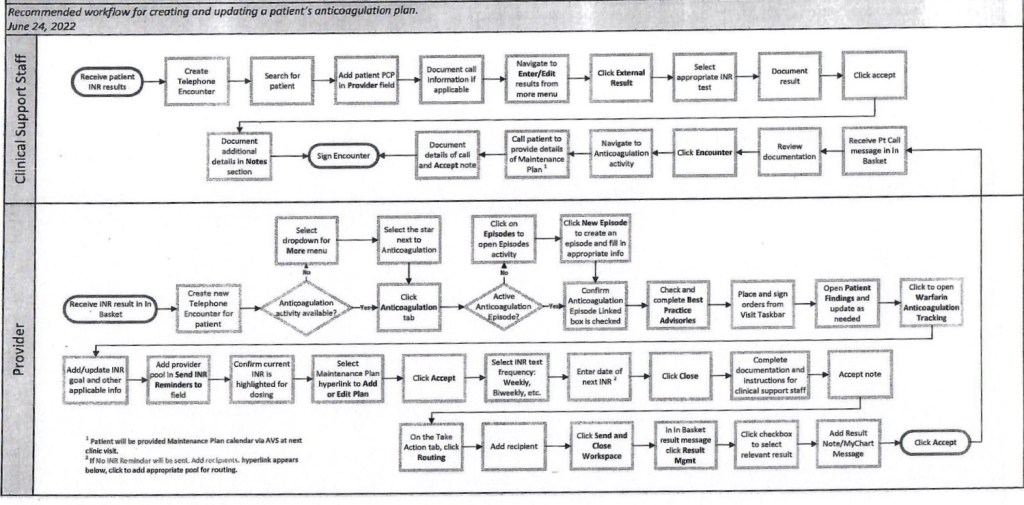
Workflows are all the rage with EMR people. But doctors, NPs and PAs are smart. Nothing burns us out as fast or as completely as being told how to do things instead of why. We are not circus animals.

Let me explain:

If we had no professional education at all, we would have clinical workflows memorized instead of clinical knowledge. For example, two weeks after starting an ACE inhibitor like lisinopril, order a basic metabolic profile. That sounds pretty straightforward, but if you add up all the possible clinical workflows we would need if we didn’t know medicine at all, that would be a huge burden – a massive amount of seemingly random and senseless rules.

But, of course, the clinical knowledge we acquired in our training is that ACE inhibitors can act like a stress test for patients with undiagnosed renal artery stenosis and a BMP drawn soon after starting such medications ensures we aren’t causing kidney damage with our prescription.

Such clinical knowledge makes us not only order the blood test, it guarantees that we will always remember to do it because it makes sense. It is like memorizing a beautiful poem instead of a long string of random letters.

Especially since computer workflows are often counterintuitive to clinicians, it helps us to know why they require us to seemingly do the wrong thing. As I have written before, EMRs are workarounds because today’s computer programs can’t replicate how the clinical mind works. Some of us might even take a certain pride in becoming expert at using a less than brilliant tool when we have the admission of our IT people that it is the EMR that is stupid and not us.

Seriously, we deal with worse challenges than that every day, just trust our intelligence and let us know when and why our computers can’t yet do what every reasonable clinician would expect them to.

Hijacked for Public Health Purposes: Previsit Planning and Morning Huddles

Mr. Adams is coming in to follow up on his MRI, but did he have it done? Mrs. Jones is supposed to bring all the medications she is actually taking, but will she remember to do that? And did Billy’s mom get his teachers to complete the teacher version of the ADHD symptom checklists she and his dad were supposed to each do before his appointment?

When doctors ran their medical offices and saw 30 or more patients per day, questions like this were part of how we planned the flow of our clinic days. Many of us called it CHART PREP. Our medical assistants would actually read our last office note the day before a patient’s appointment and try to make sure we would be ready for each visit. Then, first thing in the morning, we often had a quick HUDDLE to talk about what was supposed to happen during the day. The chart prep and huddle were very patient centered; they were about what the patients expected from their visit at least as much as what the doctor expected.

Now, with non-physicians managing medical practices and Medicare and other insurers redefining the purpose of primary care, previsit planning and morning huddles have been hijacked for public health purposes. The nation’s public health agenda is inefficiently squeezed through the bottleneck of a couple of brief in-person visits per year for unsuspecting patients who because of that don’t always then get their own concerns addressed.

Imagine driving up to an ATM for what you think will be a simple fast-cash withdrawal and having the machine start blurting out financial advice and offers of new services instead of giving you the cash you came for. On and on, until you give up and drive off empty handed. Of course, that doesn’t happen. Banks have figured out other, better ways to communicate with their customers.

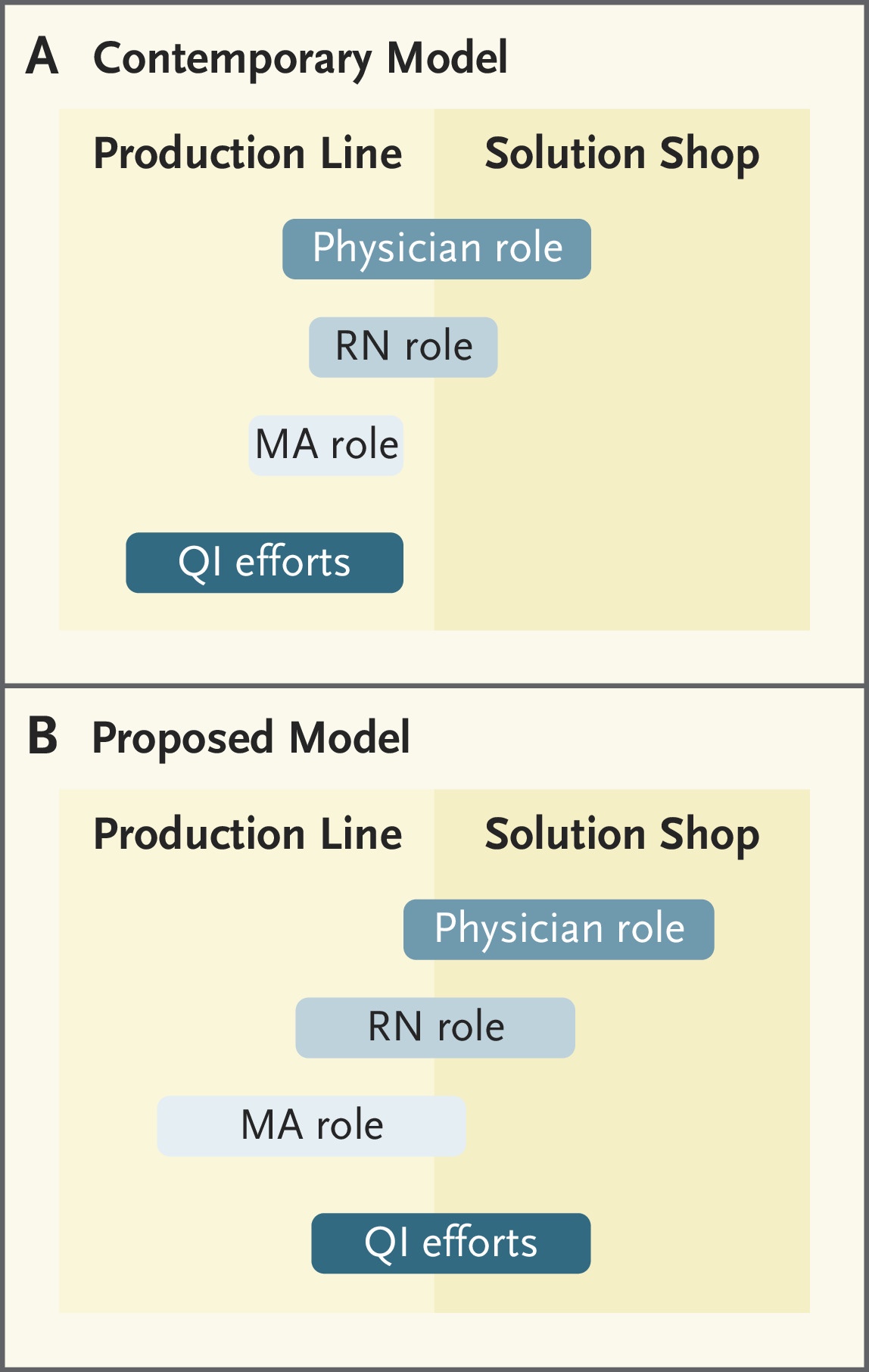
Why is it so hard to imagine a health care system that lets doctors be doctors? Public health doesn’t require a medical degree or a medical license. Have other staff categories handle that with our general blessing and support.

I mean, seriously, now there are efforts to have pharmacists treat hypertension – while doctors perform routine screenings for depression, alcohol use and domestic violence and give canned one-on-one pep talks about weight loss, exercise and immunizations. Is that a reasonable division of labor???

So, in clinics around the country, and now even with grant money to support this, previsit planning has become the word for identifying gaps in preventive care and morning huddles are promoted as a way to plan how to surprise patients with alternate agendas for their doctor visit.

Mr Adams had his MRI only a few hours ago and the report isn’t available yet. But he will get his depression screen and pneumonia shot. Mrs Jones didn’t bring her pill bottles, but this time she said she’ll consider having that colonoscopy. And Billy’s visit does not clarify his diagnosis but he did get his flu shot.

Is this an efficient way to work? Is it a good use of physician time? Or is it something a non-physician could have, should have, handled?

.

Upselling in Medicine: Would You Like a Pap Smear with that Ankle Brace, Ma’am?

A Stubborn Rash: When Doctors Don’t Communicate

Paul Ploetz has a pulmonologist and a cardiologist and I am his primary care doctor. His two specialists work for the same hospital system and I work for a different organization. His specialists send me their notes and I can also look them up on Maine’s statewide database. My organization’s notes aren’t there, at least in part due to the fact that our EMR vendor charges big money for uploading notes to Maine Health InfoNet.

Paul had been increasingly short of breath. His pulmonologist didn’t think this was related to his COPD, so he prescribed a two week trial of furosemide.

I saw him toward the end of that, and he was itchy and had a rash that looked like scattered excoriations and was only located in places he could reach and scratch.

I suspected he had become allergic to the furosemide, which is common and can cross react with sulfa allergy. I marked his chart with allergy to furosemide. I told him to stop it and prescribed something for his itch.

Two weeks later he came back and told me the rash never went away completely. Two medicines and a couple of creams later he was frustrated with my inability to cure him. So was his daughter-in-law.

I made sure his dog wasn’t scratching. I looked as his other medications, none of which seemed likely to be causing his rash.

On a hunch, I clicked the “PBM” button on top of his medication list. It displays what medications have been billed through insurance, Pharmacy Benefit Management. For clinicians, this is read-only; I can’t enter a stop order there.

There, with a date about two weeks after I stopped his furosemide, was a listing for the same drug – this time prescribed by his cardiologist

I showed him this. He shrugged. He wasn’t keeping track of what pills he was taking.

I went back to his cardiologist’s notes. Sure enough, buried in a multi page note was a refill of furosemide. I had signed off on the note when it came in.

I admit, i missed this information.

Office notes are bulky, filled with fluff and pseudo quality measures. Primary care doctors have no time set aside to review anything in their inboxes – we are expected to do that in our “spare” time or during time stolen from our scheduled patients.

A shared medication list, across EMR platforms, similar to the PBM plug-in, could avoid snafus like this one. So could scheduling time for actually reading incoming reports. Something should be done.

If We Can’t Have a Universal Electronic Health Record, We at Least Need a Single, Universal, Medication List Plug-In

A Country Doctor Practices Bibliotherapy: Books by Prescription

Books, or even just book titles, can help us see things differently and feel differently about ourselves. I often recommend Jungian psychologist Robert A Johnson’s little book He to men who in any way struggle to understand themselves. And long before I read Shadow Syndromes, the mere title of the book cemented some clinical insights I had been intuiting but only skirting around for years.

Reading my Stockholm morning paper this snowy January weekend, I came across an article on bibliotherapy. The word hit me with a jolt. According to Wikipedia, it was coined by Samuel McChord Crothers in an August 1916 Atlantic Monthly article, but the medicinal use of books goes back centuries if you consider the use of religious texts and at least to the 1850’s for other literature in the United States.

Apparently, both therapists and librarians, perhaps more in Great Britain than here, offer bibliotherapy. Libraries sometimes offer group sessions focusing on books about topics like overcoming anxiety.

Without having such a technical word for it, I actually was able to help a young man make huge progress with his anxiety by recommending Eckhart Tolle’s The Power of Now, a book that I myself had only skimmed a couple of years ago. I actually didn’t read it; I listened to the audiobook, sitting in my camping lounge chair in the horse paddock against the south wall of the barn. There were horse related interruptions that made me miss parts of the book. But I got the essence of it and it rang very true to me. As I have alluded many times, being with horses has taught me many things. Perhaps most of all, it has taught me not to think about other things when I am with my large, fast, strong and high strung Arabians. Only now matters with them. Being aware and in tune with them is how to be safe and how to influence their actions without the use of any kind of force.

Jeremy is an articulate young man who seems comfortable in any situation, but he gradually revealed to me that he is plagued by severe anxiety and constant ruminations, catastrophic thinking and self doubt. The more he talks, he explained, the more that means he is feeling anxious. He has a lot of regrets and guilt about the past and even more worries about the future.

The short answer to what he needed to do is well summarized by Karen Salmansohn: “No amount of regret can change the past. No amount of anxiety can change the future.”

Eckhart Tolle’s book, especially the audiobook, is a bit like an outdrawn meditation guide. Only the now matters, because only the now exists. I found a YouTube video that explains very succinctly what he means, and may be a good and quick (16 minute) introduction for anyone who is unsure if Tolle’s thinking is for them.

Jeremy read the book and emerged almost as a new man. He still needs to remind himself now and then to get out of his thinking mind and be fully present in the moment, but his outlook on his situation has changed profoundly.


I just realized none of the posts show on an iPad or a computer, but they do show on an iPhone. WordPress is working on this. In the meantime, please visit my Substack.


Osler said “Listen to your patient, he is telling you the diagnosis”. Duvefelt says “Listen to your patient, he is telling you what kind of doctor he needs you to be”.


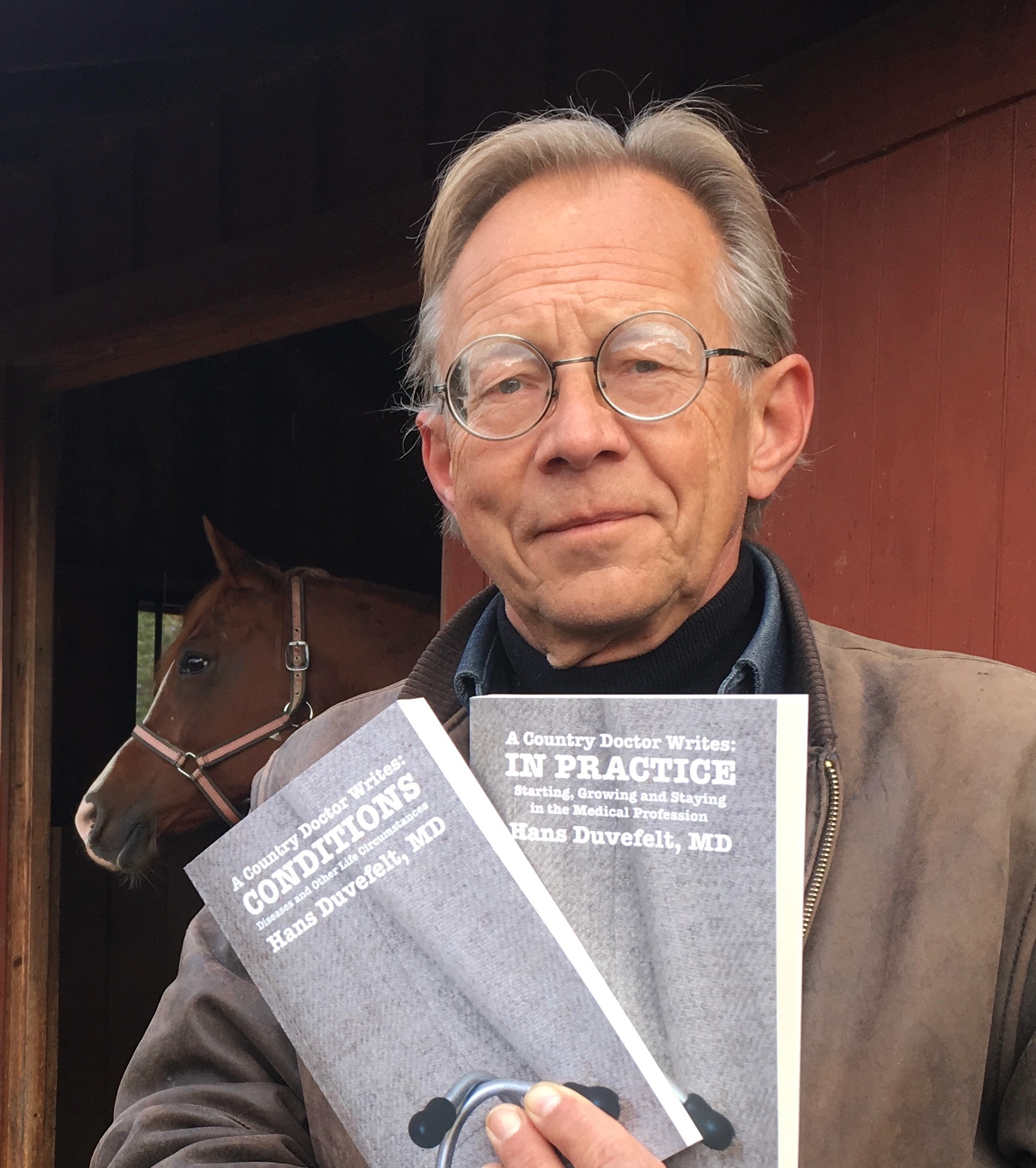
BOOKS BY HANS DUVEFELT, MD

CONDITIONS, Chapter 1: An Old, New Diagnosis

Top 25 Doctor Blogs Award

Doctor Blogs

Enter your email address to subscribe to this blog and receive notifications of new posts by email.

Mailbox

contact @ acountrydoctorwrites.com
Bookmark and Share
© A Country Doctor Writes, LLC 2008-2022 Unauthorized use and/or duplication of this material without express and written permission is strictly prohibited. Excerpts and links may be used, provided that full and clear credit is given.