Archive Page 24

All the Lonely People: Primary Care isn’t a Team Sport Anymore, We’re Only Interacting with Our Computers

In spite of all the talk these days about health care teams and in spite of more and more physicians working for bigger and bigger healthcare organizations, we are becoming more and more isolated from our colleagues and our support staffs.

Computer work, which is taking more and more time as EMRs get more and more complex, is a lonely activity. We are not just encouraged but pretty much forced to communicate with our nurses and medical assistants through computer messaging. This may provide more evidence of who said or did what at what point in time, but it is both inefficient and dehumanizing.

Why do people who work right next to each other have to communicate electronically? Why can’t my nurse simply ask me a question and then document “Patient asked whether to take aspirin or Tylenol and I told her that Dr. Duvefelt advised up to 2,500 mg acetaminophen/24 hours”. It would be a lot less work for me, even if I have to sign off on the darn thing.

And just because it now takes us longer to do our work, there is less slack our day. This makes for less curbside consults, less sharing of clinical experiences between clinicians, less social contact with other staff categories.

All this leads to professional and social isolation.

And, you know me, this reminds me of a James Taylor song, Millworker:

Then it’s me and my machine
For the rest of the morning
For the rest of the afternoon
And the rest of my life

Call Me Old-Fashioned, But I Still Select Blood Pressure Medications Based on Phenotype

There are a lot more choices these days for hypertension treatment than when I started out. Once several agents became available, we used to choose medications according to what type of patient we had in front of us: A person with leg edema and hypertension would be put on a diuretic, a type A personality with a high resting pulse would get a beta blocker, a patient with heart disease might get an ACE inhibitor and a person who might not show up for their bloodwork or follow up appointment would get a modern calcium channel blocker like amlodipine.

Then came the statistics that showed slightly better outcomes for diuretics and ACE inhibitors and all of a sudden we were supposed to take those small differences seriously enough to force all patients into the same treatment algorithm.

Some time after that came the data that showed that Black hypertensives respond differently to ACE/ARB drugs, which led to race based hypertension guidelines, which are now being debunked. Some people are now saying treat all hypertensives the same, while others are again suggesting making treatment decisions based on “individual factors”.
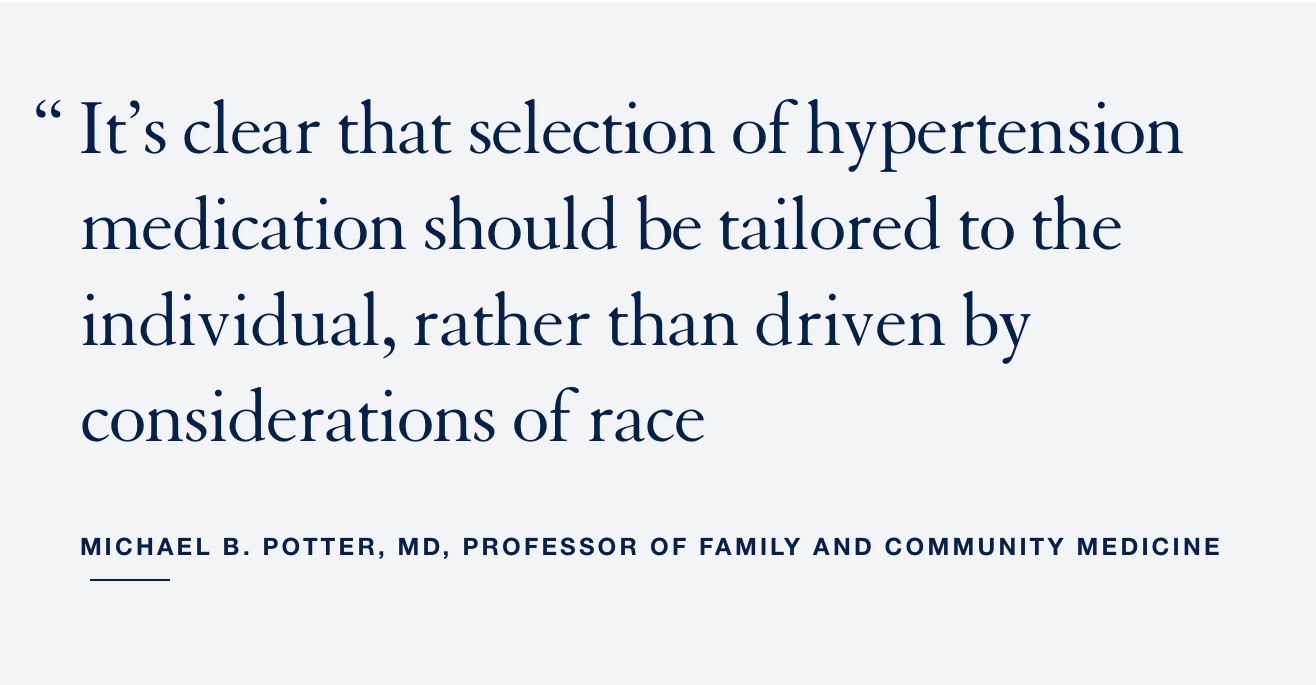
https://www.ucsf.edu/news/2022/01/422151/race-based-prescribing-black-people-high-blood-pressure-shows-no-benefit

I, for one, still individualize based on what my patient looks like and their personal preferences and their likelihood of compliance with followup appointments and blood testing.

I will never forget Fran, the chainsmoking, hypertensive woman I started on lisinopril many years ago. This drug was not generic back then and she asked for a 90 day supply because that would save her money. I told her a couple of times how important it was to get the bloodwork after starting this drug and placed the order to check her kidney function within just a few weeks.

When I saw her back 3 months later, I knew immediately something was dreadfully wrong with her. She was in kidney failure and it turned out that she didn’t have renal artery stenosis, which is what we’re supposed to consider and do bloodwork to check for elevated creatinine shortly after starting lisinopril, but she had a coarctation of the aorta. The vascular surgeons cleaned out her plumbing and her kidneys recovered but that was an important lesson, actually two:

Lesson number one is to measure lower extremity blood pressure in new hypertension cases. Ankle Brachial Index, ABI, even has a CPT code and may be billable to the tune of about $78 where I work (I don’t worry about billing but I do use a pocket Doppler and a conventional sphygmomanometer to do it right).

Lesson number two is not to prescribe a bigger supply of pills than you feel comfortable with. I now only prescribe 30 days of a new ACE or ARB. When I get an instant (!) “patient requests 90day supply” request from Walgreens – because they want to sell more pills – I turn it down.

And, now that I think of it, there is a third (bonus) lesson with new hypertensives. If they have a very low potassium and no good explanation for it, like chronic diarrhea, I very quickly consider they might have hyperaldosteronism and check their renin-aldosterone ratio before I put them on an ACE or ARB, since they may be better off on spironolactone than the traditional blood pressure pills. And they may even need surgery.

An Incomplete Workup
A Few Crucial Pieces of Advice for New Clinicians

1) Always set an agenda: “What would you like to cover in our visit today, before we get into any detail – so we can plan our time.”

2) Always summarize what you understand of your patient’s symptoms, and don’t be afraid to ask “anything else going along with this feeling that I might have missed?” And never take self-diagnoses at face value. Ask for details.

3) Always explain your diagnostic thinking and always emphasize that symptoms can change and then lead to other conclusions or treatment choices. Don’t make snap diagnoses in a way that might seem arrogant or lazy.

4) Always spell out if you are adding a medication or making a substitution. We know hypertension and diabetes often require multiple medications as time goes by, but patients don’t (or don’t want to) understand that. Just the other day I learned that a diabetic patient stopped his pills when I asked him to start insulin!

5) Always make a followup appointment, especially if you just made a new diagnosis and treatment plan – just to make sure your diagnosis was correct and that your chosen treatment works. I have found that “call and let me know if this isn’t working” often leads to less than perfect outcomes and less than happy patients.

Let Your Wife be Your Ozempic!

An overweight man with high blood pressure asked me about Ozempic the other day. He and his wife have different insurances. She is on Ozempic with a low co-pay. It would be high enough to be difficult for my male patient to afford.

So I asked him: “What does it feel like to be hungry?”

“I don’t know”, he answered. “I can work all day without even eating breakfast and feel fine but then once I start eating, I just go on and on. I’m not much of a snacker, I just eat big meals.”

“I have a large hiatal hernia with spontaneous reflux even standing up”, I started. “If I go too long between meals, I get acid reflux and pain in my upper belly. And sometimes I get cranky and confused”, I explained.

“I don’t feel any of those things”, he said.

My response was instant like a divine flash of lightning from the sky: “Why don’t you let your wife plate your food, just the size portion that she is eating?”

He smiled and raised his eyebrows.

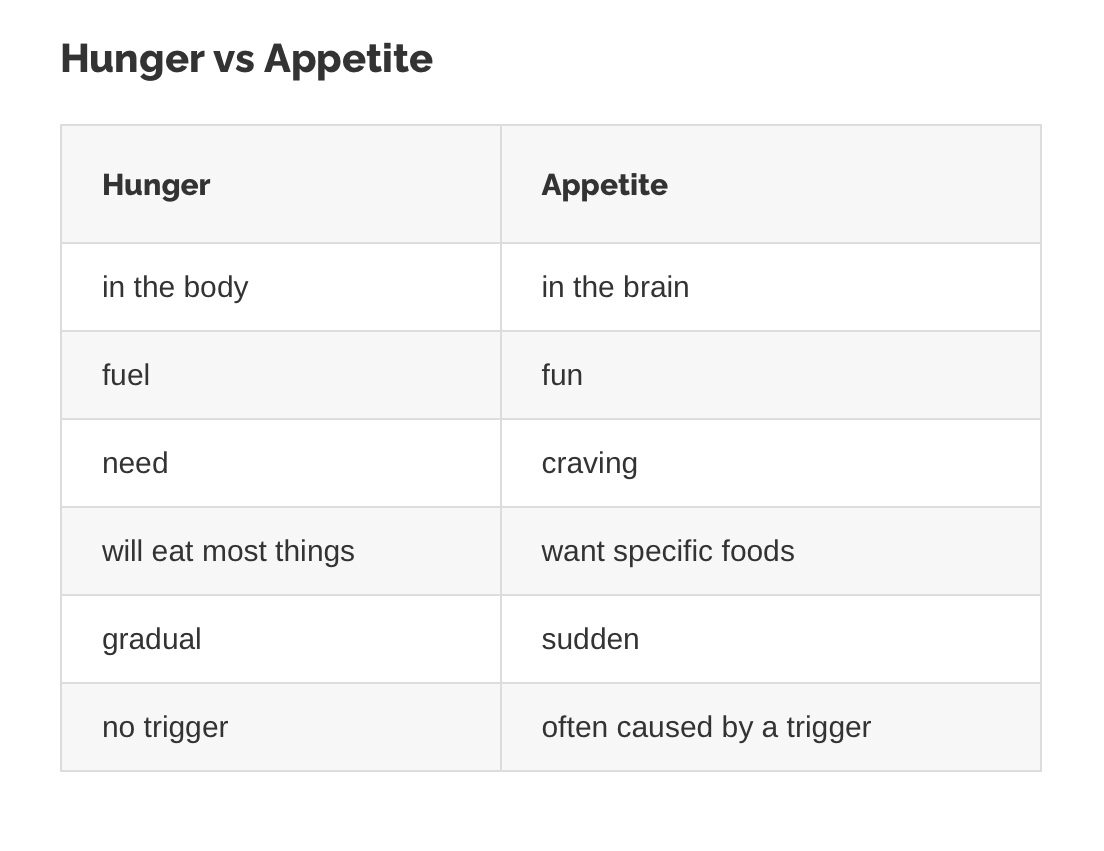
“Because you don’t feel hungry, you just have an appetite. Doing this would save you a lot of money and avoid piling more medication on top of what you’re already taking. It might be worth a try”, I said.

“Let your wife be your Ozempic”, I added. “And if you haven’t lost any weight when you come back to see what this new blood pressure pill is doing for you, we can talk Ozempic and other options if you’re still interested!”

https://badgut.org/information-centre/a-z-digestive-topics/hunger-and-appetite/

Speed Reader ≠ Speed Scroller

It should be no secret by now that this rural family physician is pretty much unimpressed by today’s EMRs.

There are many little things that range from annoying to dangerous, but which don’t have a global impact on how I get through my day.

For example, in my Epic, the date when a blood test was ordered displays much more prominently than when it was actually drawn. This makes perfect sense for accountants, who keep track of when the order was received or when the bill went out. They have no idea that in medicine, it makes a difference whether the panic value reflects the patient’s status before they went to the emergency room last week or after they started their new potassium replacement.

More dangerous is when controlled substance prescriptions have an automatic stop date inserted if the provider follows the prompt and enters a numeric duration. What then happens is that a pain or anxiety patient who takes fewer pills some days when they feel better falls victim to having their medicine removed from their list on the day that is supposed to be the minimum time the drug is supposed to last, not the maximum (although Epic displays “up to X days”). Then, either my covering provider will refuse to refill a prescription because it is no longer on the patient’s list or that provider or I will need to re-create the medication from memory of another screen we have to visit, because you can’t “restart” an expired medicine in many EMRs. I have at least once prescribed the wrong potency of a pain pill that had fallen off the list. I caught myself because I had a funny feeling, and jumped through several hoops to retrieve the information from the old prescription.

But my absolute major gripe with today’s EMR’s is how much more difficult it is to glance at a report and get the gist of it. I don’t know if it is a generational thing, but I can glance at a report that follows the format of an 8 1/2 x 11” printed or faxed report and instantly get the essence of it and often even find the typos (for my readers outside this country, that’s approximately an A4 page). Even in my personal life, on my iPhone 13 mini, I can just take my myopic glasses off my nose and read a PDF of such a page and instantly understand what it means. Scrolling through screens that occupy maybe 20% of my laptop screen is slow and annoying and increases my screen time by many multiples.

Very seriously, if I get an emergency room report from my hospital, I only want to see the last page because that’s where the key information is. With the other hospital in the area, I only need to read the first page. But with an electronic medical record it’s not that easy to skip between the pages.

So, yours truly is a speed reader only if the page looks like a page. Maybe I should put up a poll: Page view or screen scroll preference by age?


I just realized none of the posts show on an iPad or a computer, but they do show on an iPhone. WordPress is working on this. In the meantime, please visit my Substack.


Osler said “Listen to your patient, he is telling you the diagnosis”. Duvefelt says “Listen to your patient, he is telling you what kind of doctor he needs you to be”.


BOOKS BY HANS DUVEFELT, MD

CONDITIONS, Chapter 1: An Old, New Diagnosis

Top 25 Doctor Blogs Award

Doctor Blogs

Enter your email address to subscribe to this blog and receive notifications of new posts by email.

Mailbox

contact @ acountrydoctorwrites.com
Bookmark and Share
© A Country Doctor Writes, LLC 2008-2022 Unauthorized use and/or duplication of this material without express and written permission is strictly prohibited. Excerpts and links may be used, provided that full and clear credit is given.