Archive Page 165

A Country Doctor Acquitted

A Family Physician in the northernmost part of the United States was acquitted last week of charges stemming from years of guideline insubordination.

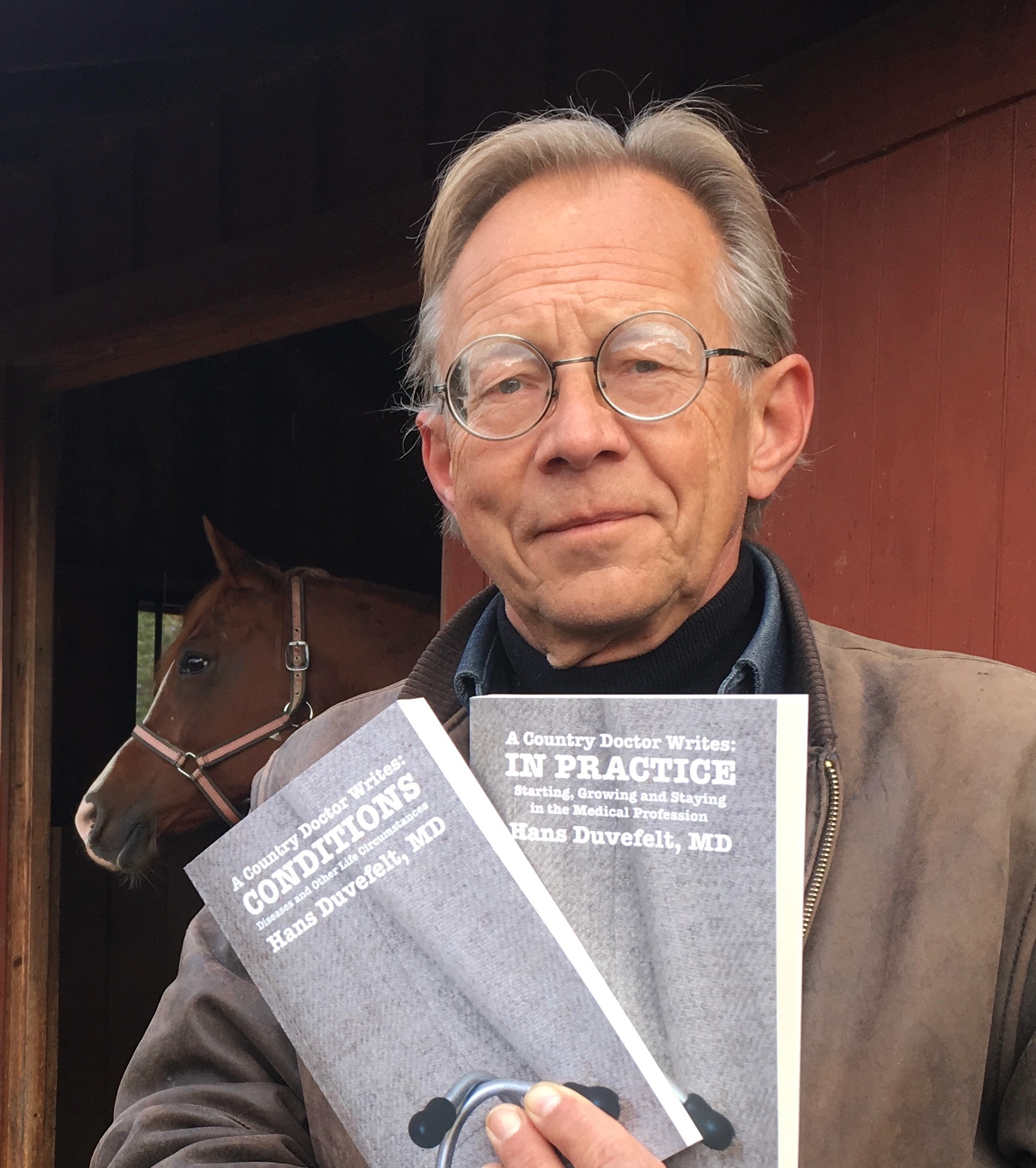
Interviewed this weekend by members of the local press while he was cleaning the stall of his favorite horse, the silver-haired doctor declined making comparisons between the manure he was shoveling and the now-abandoned numeric cholesterol guidelines, and would not comment on his former accusers’ fall from their pedestals. He made no reference to “Cholesterol Guidelines and the Bachelor with Platform Shoes”, the very first post on his anonymous blog, “A Country Doctor Writes”.

Instead, he turned philosophical.

“I remember the first cholesterol medication, Atromid”, he said. “It lowered cholesterol but still increased the risk of death by almost 50%. We should all have paid attention to that when it was taken off the market more than ten years ago. You could have satisfied the requirement to reach specific lipid targets with a dangerous drug like that, but not have helped a single patient by prescribing it. Right now, almost the same thing is happening with drugs like Zetia, Tricor and niacin”

Opening a bag of clean pine shavings for the stall floor, the Swedish-born physician continued:

“Health care has changed from a profession to an industry, and the founding principles for physicians, like ’First, do no harm’, have lost their central place.”

“In Sweden”, he continued, “the oldest laws regulating the practice of medicine state that it is the physician’s duty to practice in accordance with ’science and time-tested experience’. Cholesterol treatment is a good example of a practice that drifted into the realm of speculation instead of staying on firm scientific ground. Instead of waiting for outcomes data such as heart attack rates, doctors were more or less willingly jumping on the bandwagon, prescribing unproven and sometimes unsafe medications because pseudoscience extrapolated from surrogate endpoints like LDL and CRP levels.”

“So what did you do when that was the guideline you were working under”, asked one of the reporters.

“I told my patients what the science told us and what the guidelines recommended, and I had the patient make an informed decision, which is pretty much what our new marching orders are.”

“So, you are pleased with the new guidelines?”

The bespectacled sixty-year old physician sighed.

“I am relieved and saddened at the same time”, he answered. “I am relieved we aren’t told to do things that have no basis in science, but I am sad that there has to be guidelines that essentially say ’help the patient understand what we know about heart disease prevention and help them make an informed decision’ – I mean, do we really need a guideline for something as basic as that? Isn’t that the way we are supposed to work anyway?”

He hesitated, then added: “Sometimes clinical guidelines remind me of overly basic consumer information. There is a Swedish joke about one of their neighboring countries. Supposedly glass bottles there are inscribed on the bottom with the words Open at Other End. But of course Norwegians aren’t really that silly, and doctors aren’t either. We’re supposed to be critically thinking professionals, aren’t we?”

With that, he hoisted the last bags of horse manure over his shoulders and brought them down to the dumpster to be hauled off the property. “Fly and odor control – keep the manure away from the barn”, he explained.

On the side of the green four cubic yard dumpster was a warning sign: Do not play on or in.

“I guess everybody has guidelines these days” were his parting words to the reporters before he walked off with a spring in his step and disappeared behind the door of his little red farmhouse.

Hippocrates’ First Aphorism

“Life is short, and Art long; the crisis fleeting; experience perilous, and decision difficult. The physician must not only be prepared to do what is right himself, but also to make the patient, the attendants, and the externals cooperate.”

Hippocrates was a wise man. In an era where the causes of most diseases, even the functions of many organs, were unknown, he made detailed and astute observations that allowed him to become a master of prognosis.

His first aphorism is not often quoted in its entirety. When I first read it, I was struck by especially the last two words, “externals cooperate”. It makes me think that perhaps doctoring a few thousand years ago might have been a lot like today. We aren’t the first physicians to deal with demands beyond those of the clinical circumstances, the patient and his or her family.

I can only imagine who the externals were in Hippocrates’ time, but I am thoroughly familiar with who they are today: They are insurance company doctors and executives, pharmacy benefit managers and others, who say yes or no to our diagnostic and treatment plans. They are the ghosts in the exam room when patients and doctors try to make plans together.

The phrase “experience perilous” seems to imply that the gaining of experience is fraught with danger, but an alternate interpretation is that relying only on one’s own experience can be misleading. Hippocrates often emphasized the need to apply the known science to the practice of medicine.

The central point is that it takes time and effort to learn the art of medicine, which is sometimes glossed over in our fast moving society.

The volume of known science has obviously multiplied since Hippocrates’ time, and we can each know only a small fraction of it. But with all the available information now instantly searchable, we can become dangerous to our patients if we apply things without knowing them well through education and experience.

So, in the spirit of Hippocrates:

The artful practice of medicine requires understanding of the science, technical mastery of the craft, and wisdom

           and

Facts can be learned by anyone; experience is earned through years of practice; wisdom is granted to us only if our hearts and minds are open, in our practice of medicine, and in our lives.

“I am here, Doctor”

Marguerite lived on the little hill north of town. You can see her house from the path along the river where I used to walk my beagles. Her tall, turreted Victorian seems to sit right under the constellation of stars in the northern sky I first knew in Swedish as Karlavagnen – Charleswain in Old English, the Plough in British, and the Big Dipper in American.

My house calls at Marguerite Rackliffe’s spanned a period of over ten years. She was already widowed and in her eighties when I began seeing her in her house on Village View Drive. At first, I would visit her every few months, but gradually my house calls became more frequent as her health problems worsened with her advancing age.

Homebound and with no family nearby, she relied on neighbors, acquaintances and hired workers from the community for many of her basic needs. In the beginning, our visits were sometimes more social than medical, but as the years went by, we juggled more and more complex medical issues. Sometimes our visits took place on a spiritual plane; Marguerite was an ordained minister, although she had never had her own church.

I had learned when we first moved to town that Marguerite was a writer. At one time, she had been an editor for a New York book publisher. Now she ran a small publishing company from her home and, by the time I first visited her, from her sick-bed.

I remember the first time I entered her home through the massive double front doors. Inside was a tall, tile floored hallway with a soaring curved staircase.

“I am here, Doctor,” her voice echoed from a large parlor-turned-bedroom. There were books everywhere – in dark floor-to-ceiling bookcases, on a rectangular table, on the mantle and in boxes on the floor.

She was propped up against the tall headboard of an antique bed near the front window, and she had a computer on a stand with the keyboard on an over-bed table in front of her. There were books strewn across the bed.

She spoke with precision and authority as she answered my questions during our review of systems. When I asked her to lie down, she interrupted me and said:

“It is so refreshing to finally hear a doctor say ’lie’ down instead of ’lay’ down.”

“I have to pay more attention, because English is my second language,” I replied.

She had read my column in the local paper and told me she liked it.

“You should write a book,” she said. She continued to say that every so often, and dismissed my excuses about being too busy in my practice. Once, she gave me Dr. Bernard Lown’s book “The Lost Art of Healing”, pointing out that he was a busy doctor and still took time to write.

In every visit with Marguerite, it seemed she gave me more encouragement than I was able to give her. She offered to edit and publish anything I might write, even though her failing eyesight by that time required her to enlarge the fonts on her computer screen to the point where she could only read a few lines of text at a time. There was only so much I could do to control her interrelated medical problems, and I had very little to offer in the way of help for her practical needs.

When I showed concern for her health, she was quick to reciprocate with concern for mine. She spoke of burnout, and gave me her own copy of Thomas Moore’s “Care of The Soul”. Sometimes, she asked if she could pray with me. I sat quietly with her hand holding mine as she prayed for me to have stamina and wisdom in caring for all of my patients. She asked no favors for herself.

We were on a first name basis almost from the beginning, but when she received an honorary doctorate two years before she passed away, she jokingly suggested I must call her “Doctor”.

Every night, walking my dogs, I would turn around after I got to where I could see Marguerite’s house. Most of the time, she would still be up, her computer screen’s bluish light radiating against the night sky. After she passed away, at age 93, I still walked the dogs along my usual route at night. In the beginning I caught myself half expecting to see the light from her computer screen, but her house always lay dark; the only lights near the Rackliffe house were the usual seven brightest stars of Ursa Major in the northern sky.

She has been gone for nine years now, and we have left town for a house in the country. I still do house calls and I sometimes go up Village View Drive. I often think of the decade Marguerite and I shared and how much I learned during those years. My patient became my mentor; her perseverance became my inspiration. She, more than anyone else, showed me how obstacles can make you stronger.

Marguerite’s clear voice still rings in my ears, “I am here, Doctor”. Indeed, she is. I can still feel her presence – praying for my work as a doctor and telling me to keep writing.

Low Tech Medicine

My new glasses were years overdue. The eye doctor understood perfectly my request that the focal point and pupillary distance for my iPad reading glasses had to match my habitual reading style – right under my nose. The result couldn’t be more pleasing.

The other day my wife squinted over her iPad and said “I don’t know if I’m getting a cataract or if I just need new glasses. My right eye is blurry”.

“Why don’t you just make a pinhole and find out?” I asked.

She made a fist and peered between her tightly curled fingers.

“Oh, yes, it’s just my glasses!” she exclaimed with relief.

Both of us medical providers, and both of us lifelong photographers and former dark room enthusiasts, we started talking about everyday optics. We speculated whether younger primary care clinicians still use pinholes to distinguish between eye diseases and simple refractory errors, for example when doing a quick vision check on a patient with eye pain who left their glasses at home.

The pinhole test is one of those examples of low tech, bedside – or, rather, exam room – assessments, that have been around for generations. So much of medicine today is complicated and dependent on technology. And there is more and more being written about point-of-care testing with smartphones and miniaturized gadgetry that people might be forgetting some of the basics that almost don’t require any equipment at all.

The other day I saw a patient with tension headaches. I had him look at a poster across the exam room through my ophthalmoscope. Switching between the neutral and the plus one diopter built-in lens, he could read with both through his left eye, but only with the neutral lens on the right, suggesting he may be a little farsighted in his left eye. I referred him for a formal refraction.

Maybe it’s the Boy Scout in me that finds it interesting to still use my earliest medical school lessons, my common sense and everyday tools to evaluate patients.

For example, I still use my tuning fork a lot. I love explaining the Webber and Rinne tests for conductive hearing loss to my patients.

I use my regular blood pressure cuff to record a palpatory blood pressure at the ankle for a quick ABI, or Ankle Brachial Index, in patients at risk for peripheral vascular disease.

One of my pet peeves is using the peak flow meter when evaluating asthmatics. Every hospital emergency room I have seen checks oxygen saturation as a routine vital sign. But a low oxygen saturation is a very late warning sign in asthma – almost immediately before needing intubation. A peak flow meter is a much simpler tool than an oximeter. In fact, all the guidelines I have seen recommend using peak flow meters at home, so why not at the doctor’s?

And, of course, that universal symbol of the medical profession, the stethoscope is more than an identification symbol:

I regularly listen for bruits over the carotid arteries and have found a few critical stenosis cases. I also listen for the kidney arteries and sometimes the femoral arteries in the groin.

There is a growing movement among medical educators to bring bedside clinical exam skills back into focus, instead of just being part of the introductory courses, somewhere between the history of medicine and applied Mendelian genetics. Abraham Verghese and others, as recently as a few weeks ago in The Journal of the American Medical Association, emphasized the importance of mastering both clinical exam skills and the use of technology.

It was here in North America that Osler revolutionized medical education by bringing it from the lecture halls to the hospital wards. But today’s medical students and residents spend only a small fraction of their workday in the presence of their patients. It is my hope that that will change, and that medicine will strike a healthier balance between hands-on bedside assessment and hands-off high tech testing.

I enjoy new technology, but direct observation by a skillful physician isn’t necessarily inferior to the latest gadgetry. My iPhone can tell me what the weather is where I live, but if I get soaked when I step outside in the morning, I won’t need to check the weather app to verify my observation.

Albert Schweitzer, Action Hero

Last week marked the anniversary of Albert Schweitzer’s death, at age 90, in 1965. He went to Africa to begin his missionary work one hundred years ago, in 1913.

As the son of a Protestant minister, in a German speaking province that sometimes belonged to Germany and sometimes to France, Schweitzer had a solid religious upbringing. As a young child he began to include wild and domestic animals in his evening prayers. His lifetime motto, “Reverence for Life”, was germinating in his mind already then.

While still in school, he formulated a life plan to first study religion and music, and after the age of 30, find a concrete, hands-on way to practice his faith. He had no idea then what that would be.

His study of music, particularly Bach and his organ music, including theories of organ building and restoration, was earning him international standing by the time he was 24. In 1905, at age 30, he published the first of several works on Bach with insights from his own religious upbringing and study of theology.

Albert Schweitzer became a widely respected theologian. In 1901, at age 26, one year after earning his degree, he became Principal of his alma mater, the Theological College of St Thomas. In 1906 he published “The Quest of the Historical Jesus”, his perhaps most famous book on theology.

True to his earlier commitment, he realized at age 30, that he wanted to be a missionary doctor in Africa. By 1911, now 36 years old, he had earned his medical degree, and by the spring of 1913 he was headed for Africa. Because he was Protestant, the organization he wanted to work for would not accept him. Instead, he largely financed his mission himself with earnings from lectures and concerts. Other medical personnel joined him on his voyage into the jungle, 200 miles upstream from the nearest port.

He built and ran his hospital in Lambarene, and made it a haven for patients, their families and scores of animals. He saved the life of an orphaned kitten, who came to spend much of her time for the next twenty years sitting on Schweitzer’s desk as he wrote by a kerosene lamp every night.

Patients stayed at the hospital, which was laid out like a small village, until their treatment was completed. For patients with leprosy, the treatment could last over two years. Able-bodied patients and family members were required to work, and Schweitzer taught them basic carpentry, concrete making and other skills needed to expand the hospital. He planted gardens and made the hospital less dependent on food from outside Lambarene, but funds were still needed and he sometimes went back to Europe to lecture, give concerts and record music. Some of his travels away from Africa were involuntary, resulting from French-German animosity during and after World War I and from illness.

His work at Lambarene gained him world-wide recognition, as did his writings promoting peace and denouncing nuclear war. He was awarded the Nobel Peace Prize in 1952, and used the money to improve his hospital.

Albert Schweitzer is said to have met Albert Einstein some time around 1930, and the two corresponded about their work for peace. Einstein compared Schweitzer to Ghandi in his leading by example.

Last night we watched Jerome Hill’s 1957 documentary on Schweitzer (available on Amazon and iTunes), filmed with the restriction that it was not to be released until after his death. We watched him move among patients, their families, dogs, cats, goats and pelicans in Africa and we watched him play the organ in his home church in Alsace. We watched him, at age 81, lead construction of the new leper wards in Lambarene. We watched footage from the hospital that only had electricity in the operating room. We heard Schweitzer quoted as saying that having thermometers would only have you pay more attention to the heat that you couldn’t do anything about anyway.

He went on, tirelessly, for nine more years. He died peacefully at the hospital he had built.

This remarkable man had three strong callings, three unique talents, three fulfilling careers, all interrelated. He was a true man of action.


I just realized none of the posts show on an iPad or a computer, but they do show on an iPhone. WordPress is working on this. In the meantime, please visit my Substack.


Osler said “Listen to your patient, he is telling you the diagnosis”. Duvefelt says “Listen to your patient, he is telling you what kind of doctor he needs you to be”.


BOOKS BY HANS DUVEFELT, MD

CONDITIONS, Chapter 1: An Old, New Diagnosis

Top 25 Doctor Blogs Award

Doctor Blogs

Enter your email address to subscribe to this blog and receive notifications of new posts by email.

Mailbox

contact @ acountrydoctorwrites.com
Bookmark and Share
© A Country Doctor Writes, LLC 2008-2022 Unauthorized use and/or duplication of this material without express and written permission is strictly prohibited. Excerpts and links may be used, provided that full and clear credit is given.