Archive Page 126

Another Thanksgiving Reflection

I guess I’m American enough, after spending ten more years here than in Sweden, to start to get a little philosophical at Thanksgiving. I spent my first Thanksgiving in this country not far from where the Pilgrims landed at Plymouth Rock, as an exchange student with a Jewish family, three houses down from an African American family in an otherwise white Anglo Saxon distant suburb of Boston.

I, too, was a pilgrim of sorts when I decided to move here. I was smitten by the sense of freedom and optimism in this country, and by the belief that hard work almost always paid off.

Because many of the specialists I started referring to when I first came to this area have now retired, I can vaguely picture the end of my own tenure, but I hope to have twenty more years in the profession that was my dream since age four.

I am thankful for the schooling I received and for the mentors that guided my progress through my early years of practice. I am thankful for the opportunity to knock on an exam room door twenty times a day and say “how can I help you today” to twenty fellow human beings. I am thankful that most of the time my advice is well received and I am humbled that so many patients have remained loyal to me for so many years.

I am thankful that I have been able to stay focused on the essence of doctoring and have had so few feelings of burnout after 38 years of being a physician.

I am thankful that I have always landed on my feet when life has seemed to trip me up. And I am thankful that I have so far been blessed with good health.

As I reflect on my own fortune, I can’t help but grieve over how many people I meet that don’t have the optimism, faith and enthusiasm I first encountered when I came to this country. My adopted homeland is a very different place from when I started my Senior year in 1971 and my Family Practice residency in 1981.

I don’t think it’s just because I’m older that I have to do a lot more life counseling with people who are losing their faith in their own future. And at the same time the health care system is squeezing the agenda of my patient visits with more and more demands that challenge my ability to really connect with my patients and help them carry on with their lives.

So, for the next twenty years or however long I have left, may I never lose my own faith in the power of the doctor-patient relationship or my gratitude for the opportunity I have been given to cure sometimes, treat often and comfort always.

Always Ask

The woman’s legs were so swollen that the indentation from my thumb squeeze was as deep as half my thumb. Her belly looked pregnant at sixty plus years but a recent ultrasound had shown no fluid and no change in size or texture of her already enlarged liver.

“There may be something else going on, I said. “Have you had any chest pain lately?”

“Well, yes, three weeks ago I had a pain here”, she said, pointing to her left upper chest. “It lasted three days, and I kept waking up and going back to sleep, hoping it would go away.”

“Has your breathing been worse since then?”

“Yes, but I thought it was because my belly got bigger.”

Her EKG showed q-waves in leads III and aVF, new since last winter, a sign of a possible old inferior myocardial infarction.

“It never occurred to me that it could have been a heart attack“, she said. “I should have known better.”

I have found that few people volunteer that they have had serious chest pain, so I ask at every visit with anybody who is at risk. Why is there so much denial about this?

“I didn’t want it to be my heart.” Her classic comment summarized my recurring observation.

I thought of a post I wrote four years ago, called Twenty Questions:

Adrian Bell didn’t look dehydrated, but his diarrhea had come and gone for a week and a half when I saw him a few weeks ago.

“Is anyone else sick with the same thing?” I asked, beginning my usual line of questioning.

“No”, answered Eleanor, his wife.

“Have you had any water to drink from a new or unknown source, or have you traveled away from home?”

“No”, both answered in unison.

“Any new foods that only you ate or that you don’t normally eat? Are you a big milk drinker?” I added, thinking about secondary lactose intolerance.

Still, negative answers.

“Any chills, fever, belly pain…” my questioning continued.

Nothing.

“Have you had any antibiotics prescribed by any other doctor?” I asked, because we have had a flurry of Clostridium Difficile infections in our community, which is something we didn’t have to worry about years ago. We had three cases recently at the nursing home, where Eleanor volunteers.

Still, “no”.

“Anything else going on, even if it seems unrelated?” I finished my questioning as I motioned for Adrian to get up on the exam table.

“I have had some joint pains”, he answered.

After an unremarkable physical exam, I ordered some lab tests, including inflammatory markers, a stool culture and C. Difficile test. I gave dietary instructions and we set up a follow-up appointment for a few days later.

At his follow-up visit, everything was the same and all the tests were normal. I sighed internally.

“Do you think it may be Beaver Fever?” Adrian and Eleanor both leaned towards me. “We’ve heard of an awful lot of people downstate who’ve had that.”

“I haven’t seen a case of giardiasis around here in years. How do you think you may have gotten that?”

“Well, two weeks before this started, I fell in a beaver pond in the woods in back of our property. I was checking out an old four wheeler trail….”

“Fell in a beaver pond…” I kicked myself for not having ordered a test for ova and parasites, but, of course, they can be unreliable.

“I think we’ve got to put you on some medication and do another stool test”, I said, thinking to myself that I now have one more question for future diarrhea assessments.

Medicine is like twenty questions sometimes. If you don’t ask the right questions, you don’t get the right answers.

Wasted Education

I saw a young woman the other day with severe and longstanding hidradenitis suppurativa. She knew very little about her disease. I logged in to UpToDate and printed out “The Basics”, a two page summary for patients, and the 18 page article for medical professionals. I showed her the pictures of what Hurley Stage II and III look like and we agreed she is probably a stage III. She had had one lesion lanced a few years ago and she had tried one topical agent. I suggested chlorhexidine, prescribed doxycycline and ordered a dermatology consultation to see if she is a candidate for more advanced medications and to help her learn more about her disease. I encouraged her to read the article and to ask the dermatologist lots of questions.

She seemed encouraged as we wrapped up our visit.

Back in my office, I clicked on the “Patient Education” icon and printed out the information that comes with every certified EMR. It was two thirds of a page long, in a large font with one and a half line spacing, and it said very little about her disease. I did what I often do – dropped it in the recycling box next to the printer.

Why print it if I was going to throw it away? Because we get Meaningful Use credit ONLY for patient education that is printed from the EMR. But since the handouts are so embarrassingly rudimentary, I click for credit and give my patients the real stuff from my personal UpToDate account.

This is how a lot of things work in today’s healthcare: Meeting some arbitrary requirement and then making sure the patients get what they really need.

A Blackmail Attempt

Ellen Boulder filed a complaint against Dr. Kim and it was my job to handle it.

Her previous physician had retired and she had been reassigned to see Dr. Kim, who was trying very hard to limit his opioid prescribing.

Ms. Boulder had been on moderate doses of hydrocodone for years for osteoarthritis, lumbar disc disease and chronic sciatica after a failed back surgery. She had also been diagnosed with fibromyalgia.

Dr. Kim explained to her, and documented everything impeccably thoroughly in the medical record, that long term opioids have been shown to be less effective and carry greater risk for debility and death than non-opioid pain medications. He also explained that hydrocodone can cause a fibromyalgia-like condition called opioid induced hyperalgesia, which can be more debilitating than the condition the opioids were prescribed for in the first place.

He outlined a slow tapering schedule that he printed out for her and he prescribed a starting dose of gabapentin. A few days later, she had called and reported severe drowsiness, generalized swelling and tingling all over from the gabapentin. She refused to take any more of it, but wouldn’t come in to document her swelling and talk about what to do next because her car was in the shop. Dr. Kim prescribed 10 mg of amitriptyline at bedtime until her next appointment and didn’t hear from her until one week before her hydrocodone, at the lower dose, would have been due for a refill.

When she called and left a message that she needed a refill, Dr. Kim sent the message back to his medical assistant with the reply “not due until next week”.

That’s when the barrage of noisy phone calls started, back to the medical assistant, to the on-call doctor that evening, to our nursing supervisor and care coordinator the next morning and to our Chief Operating Officer just after lunch.

By 4:30 it was my turn. My COO sent me an urgent message to review the situation and deal with the patient’s concern. Ms. Boulder wanted to fire Dr. Kim and get a different provider.

On the phone with me, she spoke softly. She described how she had struggled to remain functional with her chronic pain and never mismanaged her hydrocodone. Then she proceeded to tell me that her brother had been taken off his pain medications a few years before and had turned to heroin. Maybe she had no other choice herself if she couldn’t stay on the hydrocodone. And Dr. Kim had given her no warning that she was supposed to come off it this quickly.

I told her I had read the detailed instructions Dr. Kim had printed out for her about how to reduce her hydrocodone.

“But I had to take more than he wanted me to because of my pain being out of control, I went from a “5” to a “10” with just two pills less per day.”

I answered: “Well, you’ve been through our pain program, you know that our pain experience is influenced by our frame of mind, you’ve been upset about the taper and may have expected to hurt more….”

“My pain is real”, she interrupted. “And if I can’t have my hydros, I may have to turn to heroin, just like my brother. He got into trouble when he was on heroin, lost his job and his family. Then he went to rehab and was clean for a year but his pain was unbearable. Then they prescribed amitriptyline for him, just like Dr. Kim did for me, but I won’t take it, because – you know what happened? He killed himself with it, it’s more dangerous than a few measly hydros every day ever was. I refuse to take that kind of medicine.”

I answered: “I know Dr. Kim is more than willing to work with you at finding other ways to manage your pain.”

“But you’re the Medical Director, you can tell him not to cut me down.”

“No, I can’t, and you know that this is something every doctor is doing now as we see what the long term risks and consequences of opioids are.”

“But Dr. Kim doesn’t listen to me. You do, would you see me instead? I’m afraid of the kinds of medicines he wanted to give me, and I don’t want to end up on heroin, like Johnny.”

“All the doctors here have agreed not to go against a colleague’s tapering of opioids, because that is the road all doctors are on now, there are only some small differences in how fast we are going.”

“So are you saying I have to become a heroin addict?”

“No, I’m saying…”

“None of you doctors is taking responsibility for my pain, and it is your job to do that”, she interrupted.

“Actually, our first responsibility is to do no harm”, I answered. “Pain relief that is risky or dangerous doesn’t always help, it can hurt and we know that now.”

There was a long pause.

“I’ll just have to find another doctor”, she finally said.

“I’m afraid you’ll hear the same words everywhere you go these days”, I answered. “Times have changed.”

After another pause, she said “thank you for at least calling me back”, and hung up.

The Codes that Disappeared

I take pride in my dermatological diagnostic prowess. The medical establishment seems not to.

Recently I saw three patients in just a few days with concerns about similar skin lesions that were all dermatofibromas. I couldn’t help notice that my EMR Diagnosis search came up blank. I had to pull out my iPhone and google the code. This happens often enough that I don’t have time to think much about it, but making the same search almost three days in a row, I registered some frustration.

Dermatofibromas are now bundled together with several other dermatological diagnoses that used to be pearls of pride in primary care, such as halo nevus, dysplastic nevus, histiocytoma and neurofibroma.

I grumbled internally because I knew that there was an ICD 10 code for much more specific and esoteric diagnoses, like drowning while diving for pearls.

Here are some examples of these phenomena:

IMG_0362.PNG

IMG_0361.PNG

I understand why: Medical coding doesn’t serve primary care clinicians anymore. Instead, it is the foundation for research into the epidemiology of infectious diseases, cancers and accidents. There’s simply no money and little interest in diagnostic accuracy for non lethal and non litigable medical conditions.


I just realized none of the posts show on an iPad or a computer, but they do show on an iPhone. WordPress is working on this. In the meantime, please visit my Substack.


Osler said “Listen to your patient, he is telling you the diagnosis”. Duvefelt says “Listen to your patient, he is telling you what kind of doctor he needs you to be”.


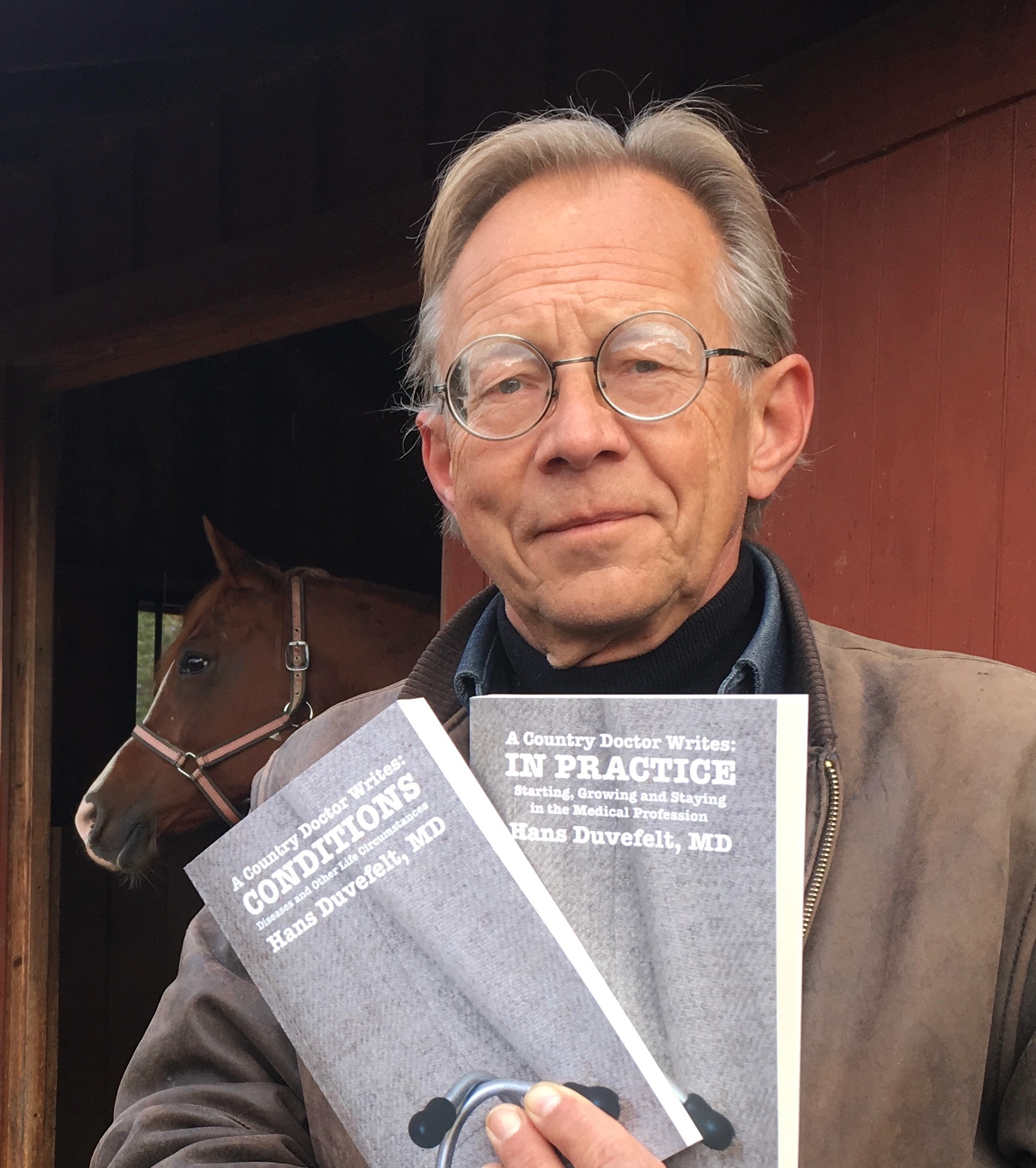
BOOKS BY HANS DUVEFELT, MD

CONDITIONS, Chapter 1: An Old, New Diagnosis

Top 25 Doctor Blogs Award

Doctor Blogs

Enter your email address to subscribe to this blog and receive notifications of new posts by email.

Mailbox

contact @ acountrydoctorwrites.com
Bookmark and Share
© A Country Doctor Writes, LLC 2008-2022 Unauthorized use and/or duplication of this material without express and written permission is strictly prohibited. Excerpts and links may be used, provided that full and clear credit is given.