Bag people, we’ve all seen them, pushing grocery store carts with what seems to be all their earthly belongings. That’s what I think of when I read some medical charts. Back when we were dictating office notes to be transcribed, I often read initial paragraphs summarizing a patient’s entire past history with smatterings of relevant information like most recent colonoscopy if they were in the office for constitutional or digestive or related conditions. That can make a certain amount of sense but often there are too many items quoted in that paragraph for readers to follow along and to grasp what the whole visit was about.
With electronic medical records , particularly written in the APSO format (which I detest, because it’s like putting the punch line before the joke, or revealing the murderer before telling the mystery plot. A better format, in my humble but well grounded opinion, is the aSOAP note.) In hospital APSO notes, I sometimes get the main diagnosis followed by all the other diagnoses the person ever had. Look at this example, for instance:
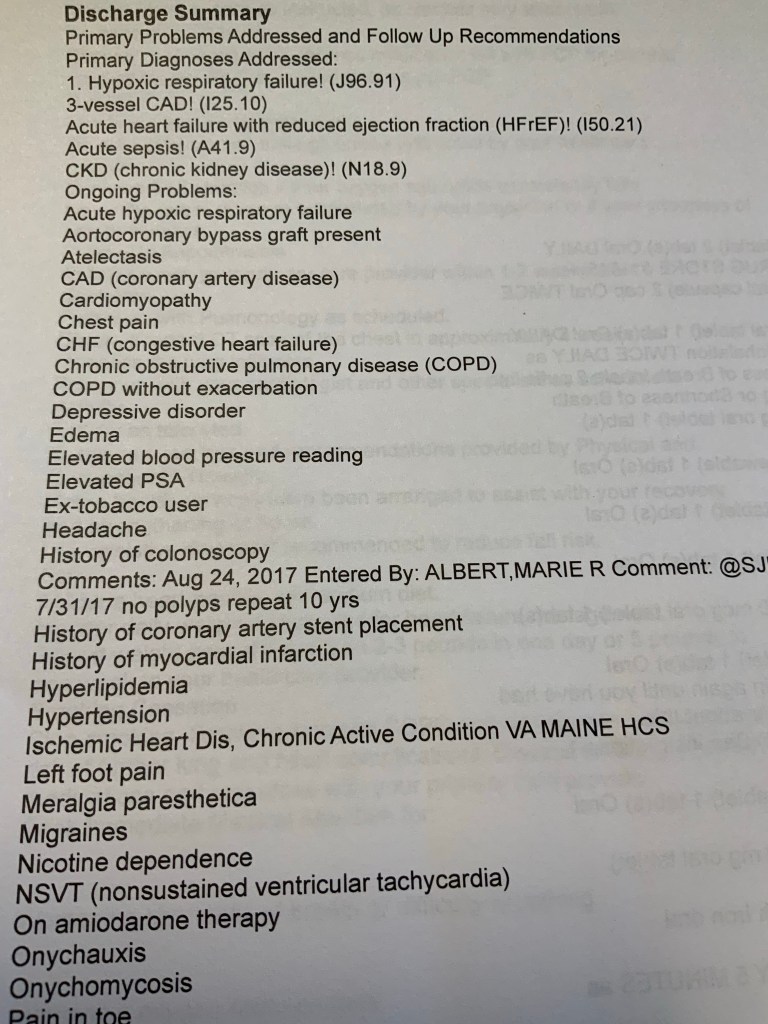
When I started practicing, clinical notes were brief and to the point. I have mused before about pediatricians with hand written sick visit notes that might read LOM. AMOX (left otitis media, amoxicillin). Before billing codes and malpractice concerns dominated our clinic days, that was all we needed. A little more information, I’ll admit, can be useful, particularly what dose you prescribed on your hand written script that wasn’t copied into the chart.
One interesting observation I have made is that emergency doctors at some hospitals create extremely malpractice defense focused notes with detailed differential diagnoses and why they appeared unlikely. And also the opposite, when somebody comes back from one of the top Boston hospitals, their discharge summary is impressively succinct.
To me the contrast between bag people and globetrotters is worth considering in our charting practices: Too much baggage bogs us down but just enough to fit in a carry-on makes us quicker and more nimble, and can still carry us through most situations we’ll encounter.









0 Responses to “Some Doctors are Like Bag People”