Archive Page 95

Ten Building Blocks of Therapeutic Relationships

It is well known by now that a physician’s demeanor influences the clinical response patients have to any prescribed treatment. We also know that even when nothing is prescribed, a physician’s careful listening, examination and reassurance about the normalcy of common symptoms and experiences can decrease patients’ suffering in the broadest sense of the word.

This has been the bread and butter of counselors for years. People will faithfully attend and pay for weeks, months and even years of therapy visits just to have an attentive and active listener and to feel like they have an ally.

We also have data that shows that adherence to treatment plans is dependent on how patients feel about their provider. One problem solved can build an ally for life

Primary care medicine is a relationship based business. I don’t know how often that basic fact is overlooked or denied. Whether you are trying to get another person to alter their lifestyle, take expensive medicines according to inconvenient schedules or even just trust and accept your diagnosis, you have to “earn” the right to do those things. Our titles and medical accoutrements give us a foot in the door, but they don’t usually get us all the way into peoples inner circles of trusted advisers.

In this age of corporate medicine, there is a belief that patients attach themselves to institutions and networks because of their trust in the organizations, and that therefore the connection with their individual providers is secondary.

I think that is a factor mostly when someone is looking for sophisticated specialty interventions, often one-time-only, like “where’s the best place to go for high risk cardiac surgery”.

When looking for primary care, people still tend to ask, “who’s a good doctor”, rather than “which is the better primary care group, Uptown Medical Associates or Statewide Primary Care”.

How do you as a clinician in today’s restless and mobile society earn trust and build therapeutic relationships in fifteen minute visits with several visible and invisible intruders in the room – the computer and the insurance company, for starters.

I have previously reflected on how to prepare yourself for beginning a clinical encounter. My ABCs are Attention, Behavior and Connection.

But where do you go from there, how do you continue, grow and nurture a therapeutic relationship over time in the kind of environment most of us work within?

Here are a few lessons I have learned myself:

1) Listen and respond. How many times do we hear that patients don’t get to speak for even a minute before we interrupt them? If you hear something that immediately requires clarification, do what you would do in a social situation. Say that what the other person just said is important or interesting, reflect back what you think you understood and then be careful not to give them too many yes or no options, but invite them to continue their story. Imagine that you’re meeting an interesting person at a dinner party, not leading a legal interrogation.

2) Set an agenda. Almost every time I ignore this little rule, I get burned. Patients may not reveal their real concern when making an appointment and their priorities may have changers since then. Going all-in with what you think is their main issue and saving “do you have any other concerns” until the end of the visit is a recipe for disaster. That agenda-setting may need to be addressed right away or after hearing a little about the main concern. If you don’t ask what people need from you, how can you ever hope to fill your role as their provider?

3) Budget time. Don’t act frustrated about the reality that time is at a premium, and don’t declare that you have too little of it until you know how serious or urgent your patient’s concern is. The person with a seemingly trivial concern may need you to help them with the biggest or worst problem of their life, so invest your time and attention on listening and understanding early on in the visit. By acting unhurried at first, you are more likely to create an atmosphere of trust and caring; once you know your patient’s concern and their diagnosis or differential diagnosis, if they feel heard, you can move more quickly to wrap up the visit if you need to.

4) Manage the perception of time. If I am running late, I often enter the exam room and demonstrably sit down, take a deep breath and relax my posture as if I am finally arriving at the most important appointment I have all day. That slowing down gesture helps me to undo my patient’s fear that I’m going to be rushing them along. If they think I’m not going to meet their needs, their memory of the visit will likely be just that, even if I do a pretty good job technically for them.

5) Don’t be a hero. My 2018 post “Be the Guide, Not the Hero” points out the fact that everyone is on heir own journey in life and we are at best guides in our patients’ pursuits. If we try to be the hero in their stories, we create unhealthy, dependent relationships that often lead to patient disappointment or even resentment. As guides instead of heroes, we also remind ourselves that we are not the ultimate experts on what is best for our patients. Since our patients are the heroes of their own stories, they must ultimately decide which piece of advice from which guide they will choose to follow.

6) Be true to yourself. On the one hand, I believe we must adapt our demeanor to the situation – reassuring, motivating, inquisitive or sometimes decisive – but we must stay within the range of our real selves. I can be jovial only to a point or I will seem and feel like I am pretending, for example. People can usually sense falsehood a mile away.

7) Balance disclosure. We can not build therapeutic relationships as only technicians; we must engage as real people and you can’t be real without showing emotion, genuine interest, engagement and a good amount of humility. We have to be careful to show that we are fallible like everybody else but also that we ultimately have our act together. Nobody wants a self absorbed, overconfident guide, but nobody wants a weak and insecure one either. If we say we never had tough choices to make or regrets we carry with us, how can we expect patients to allow us to be close enough to build trust?

I tell people things they could relate to that I don’t think would come back to haunt me. I tell them how many miles I have on my car, but not how much money I spent on repairs. I tell them about my life lessons from being a Boy Scout or going through basic training in the Swedish army, the antics of the beagles I’ve had in my life or the way my one-time vegetarian diet made me put on weight. I tell them I was homesick at my first scout camp, but I don’t talk about things that could distance patients from me; not that I am a golfer or a sailor, but pictures and magazines of such things will alienate as many patients as it might build relationship with. My Arabian horses didn’t cost much money, they were adopted from a horse rescue and simply needed a home. Our relationship with animals, I believe, is more likely to show that we have the capacity for relationship building with humans, too.

8) Build continuity. From one visit to the next, find a thread to follow. For some patients, it is their chronic disease, for others their family or their hobby. Reconnecting about what you talked about last time is a powerful and quick way to reestablish the fact that you know each other and that you care about your patient. It brings you straight into a space where you are ready to do the work you do. Even if you have to pull up their last visit in the EMR (maybe even looking at the screen together), that quick reconnection that begins every visit helps make you seem better prepared; maybe you don’t remember the details of the last visit but you do remember your patient very well.

9) Solicit participation. When it’s time to formulate a treatment plan, don’t be too quick to lay it out as if there is only one way to do things.

10) Plan when and how to reconnect. “Followup PRN” isn’t usually the best way to conclude a visit in your mind or the EMR. Friends don’t usually leave each other saying “I’ll see you around”, that’s more for casual acquaintances. It’s important to agree on what to do after the test results come in, when the antibiotic runs out, if the rash doesn’t go away or when to meet up if everything is going well. Not making such plans devalues the relationship and makes you look as if you don’t care about your patient.

Everything on this list is about how we interact with the people we engage with frequently or infrequently. We must always look beyond the diagnosis and the Chief Complaint (which should be Chief Concern – where did “complaint” come from?). Remember Osler:

The good physician treats the disease; the great physician treats the patient who has the disease.

Screen Sharing With Patients

I ran late the other morning. My first patient, an internal transfer, was already waiting. Booting up my laptop seemed to take forever.

Usually I try to poke around at least a little in the EMR before I enter the exam room, even when I know the patient well in order to remind myself of what we are supposed to do in today’s visit.

I decided to walk in cold because I was so late. All I did before unplugging my laptop was open the encounter note of the man I had never seen before.

I knocked on the door and introduced myself – first and last name, I only call myself “doctor” with children or if I walk into a crisis-type situation where being a doctor allows or requires you to take charge.

I pulled up the little computer stand and sat down in the second chair right next to my new patient.

I did everything with him as in a guided tour of the electronic medical record, moving the cursor over things I oriented myself to.

“So, you’re 66, and it says here you’ve got high blood pressure, cholesterol and a history of GERD. Let’s check your medication list…are you still taking Prilosec. It hasn’t been renewed since 2017….or are you just buying it over the counter?”

I pulled up lists of blood pressure readings, commented on how the numbers seemed to have dropped at the same time he started losing weight last spring.

We looked at his immunization record together and I cracked about both of us needing the “Big Boy Flu Shot” because of our age.

As we sat there, side by side, I renewed prescriptions and ordered his flu shot and a couple of blood tests, explaining exactly what I was doing.

He interrupted me:

“You know, my old doctor never showed me the computer screen. It’s like it was secret somehow. I like the way you do this.”

I learned something in that visit. I show the screen all the time like this, but I have always tried to prepare myself for a new patient visit by looking through the chart before I walk into the room.

It was actually more powerful to start from scratch together, me exploring my new patient’s medical history and him seeing an EMR, his own story on the screen, for the first time.

If Nothing Else Works, Try a Horse

Equine assisted therapy keeps coming up for me. I hear about people who provide it and I know people who are curious about it. Last weekend I read a piece in The Wall Street Journal about it that had some quotable things in it.

After reading it, I did some more research, and found a few interesting connections. For example, Hippocrates, the father of medicine, whose name (I never reflected on it) literally means Horse Power(!) described the health benefits of horseback riding two millennia ago in a work called “Natural Exercise”.

Horse therapy today encompasses both riding and being in the presence of horses, including grooming them, without necessarily riding them. Riders with physical disabilities can sometimes do as well or better than most other riders, for example the Danish dressage rider Lis Hartel, who won a silver medal in the 1952 Helsinki Olympic Games in spite of partial leg paralysis from polio, which prevented her from mounting her horse unassisted. Since then there have been many studies on the benefits of horseback riding on balance, coordination and muscle control for patients with neuromuscular diseases.

There is also more and more research published on what being with or riding horses can do for psychiatric conditions, from veterans with PTSD to depression to substance abuse.

Meggan Hill-McQueeney, featured in the WSJ article, runs an Equine Assisted Therapy program. She had a profound first experience with therapeutic riding:

M, a life­long eques­trian, first wit­nessed the heal­ing power of horses while work­ing af­ter col­lege on a ranch in Col­orado, where she was teach­ing peo­ple to ride. A fam­ily had brought their 4-year-old son, a boy with Down syn­drome who was un­com­mu­nica­tive. Some­thing about the horse cap­ti­vated him. Sit­ting in the sad­dle, he signed “horse”—the first word he had ever com­mu­ni­cated. His mother started cry­ing, which prompted his first spo­ken word too: “Mama.”

Horses, being prey animals, are exquisitely sensitive to their environment and their survival depends on fleeing from predators. They can sense the intentions of animals and humans around them. They are said to be able to smell adrenaline and they can “read” the intentions of predator animals and save their energy if such animals are only passing through without intentions of attack. They can synchronize their heart rates with the humans who care for them.

I know from my own experience with rescued Arabians, who as a breed have a reputation of being easily excited, that they help me be calm and unhurried around them. It is almost as if they provide me with biofeedback and reflect back to me what my own degree of tension might be. And not just because an edgy 1000 lb animal could inadvertently hurt me, but because I so much enjoy their unfrightened peacefulness and kindness, I automatically correct my own frame of mind in their presence.

As Meggan Hill-McQueeney puts it:

“When you’re near a horse, you have to prac­tice the art of keep­ing your en­ergy in a good spot. To trust them, they have to trust you. Help­ing the horse rec­i­p­ro­cates to help­ing the per­son. It’s just so nat­ural, but it ends up chang­ing you.”

Her focus is helping veterans and her mission is to prevent suicides. The article concludes:

This year, BraveHearts will see more than 1,000 veterans, and Ms. Hill-McQueeney longs to reach even more. “Is it unconventional? Innovative? Does it help?” she asks. Her answer to all those questions is “yes.” “We’ve got an epidemic of veteran suicide in this country,” she says. “If nothing else works, try a horse.”

Clinical Depth: The Power of Knowing More than the Minimum

In medicine, contrary to common belief, it is not usually enough to know the diagnosis and its best treatment or procedure. Guidelines, checklists and protocols only go so far when you are treating real people with diverse constitutions for multiple problems under a variety of circumstances.

The more you know about unusual presentations of common diseases, the more likely you are to make the correct diagnosis, I think everyone would agree. Also, the more you know about the rare diseases that can look like the common one you think you’re seeing in front if you, rather than having just a memorized list of rule-outs, the better you are at deciding how much extra testing is practical and cost effective in each situation.

Not everyone with high blood pressure needs to be tested in detail for pheochromocytoma, renal artery stenosis, coarctation of the aorta, Cushing’s syndrome, hyperaldosteronism, hyperparathyroidism or thyroiditis. But you need to know enough about all of these things to have them in mind, automatically and naturally, when you see someone with high blood pressure.

Just having a lifeless list in your pocket or your EMR, void of vivid details and depth of understanding, puts you at risk of being a burned-out, shallow healthcare worker someday replaced by apps or artificial intelligence.

The power of knowing these exceptions to the common rules in enough detail to naturally be able to reference them is what makes a doctor a “docere”, a true learned professional.

I recently came across he term “airmanship”, which is when you intimately know your plane, the weather and the gravitational, centrifugal and and all the other physical forces that can alter your flight. Airmanship is taught in rigorous military training that brings you close to the limits of what can be done and far beyond what you will see most days as a commercial pilot, in order to prepare you for those times when everything depends on your judgement.

Primary care medicine may not seem like heroic aerial acrobatics, but it can actually involve a fair amount of flying by the seat of our pants, which must be a real expression straight out of advanced flight school.

Only experience and in-depth knowledge empower you with an appreciation for nuances. Is it necessary to treat mild renal artery stenosis if the blood pressure is easily controlled with medication? A patient with low potassium and high blood pressure probably does have hyperaldosteronism, but do you have to do anything more than prescribe spironolactone regardless of why the potassium runs low?

There is another side to having deep knowledge, besides making you a cost effective clinician. Patients trust you more if you show that you know a lot about why you’re recommending a certain intervention. And that is not a trivial consideration. Opinions on everything from when life begins and ends to whether coconut oil is good or bad vary so much that what your family doctor says is only one in a crowded field of competing views.

Even guidelines for the most common diseases we treat change too often for patients to feel comfortable just because we tell them that the target numbers or best practices have changed since the last time we saw them.

So, on the most basic level, our demonstrated knowledge in diagnosis and treatment builds case-specific credibility.

Patients usually take great comfort in seeing that you have considered reasonable differential diagnoses and know how the treatment you recommend works and also what to do if the treatment doesn’t work.

But the other consideration is that if we demonstrate a breadth and depth of our medical and scientific knowledge, we also gain a broader credibility and authority when we apply our knowledge and understanding to related areas. Obviously, we shouldn’t claim authority in unrelated areas like fashion or finance. That phenomenon, called ultracrepidarianism, has always been rampant in our culture, for instance in advertisements that more doctors smoke Camels than any other brand of cigarette. But we do have a role as well educated generalists in helping patients evaluate medical news, for example.

The third level is distinctly different from ultracrepidarianism, and that is the authority patients place in our general wisdom, for lack of a more politically correct word; years of schooling and experience with life, disease and death allow us to say things people need to hear in certain situations. Our words of encouragement, our little gestures of caring and kindness can have much greater impact because of the position of authority we may have earned in people’s lives.

I just read a senior psychiatrist’s list of 50 pieces of advice for younger colleagues and his Number 15 really resonated with me:

“15. Try to create rare magic moments—things you say to patients that they will remember always and use in changing their lives.” – Allen Francis, MD, Professor Emeritus and former Chair, Department of Psychiatry, Duke University

This is an earned power that needs to be carefully considered, because we can just as easily hurt or undermine our patients if we speak carelessly or impulsively.

Revisiting the Concept of Burnout Skills

I looked at a free book chapter from Harvard Businesses Review today and saw a striking graph illustrating what we’re up against in primary care today and I remembered a post I wrote eight years ago about burnout skills.

Some things we do, some challenges we overcome, energize us or even feed our souls because of how they resonate with our true selves. Think of mastering something like a challenging hobby. We feel how each success or step forward gives us more energy.

Other things we do are more like rescuing a situation that was starting to fall apart and making a heroic effort to set things right. That might feed our ego, but not really our soul, and it can exhaust us if we do this more than once in a very great while.

In medicine these days, we seem to do more rescuing difficult situations than mastering an art that inspires and rewards us: The very skills that make us good at our jobs can be the ones that make us burn out.

Doctors are so good at solving problems and handling emergencies that we often fall into a trap of doing more and more of that just because we are able to, even though it’s not always the right thing to do – even though it costs us energy and consumes a little bit of life force every time we do it. And it’s not always the case that we are asked to do this. We are pretty good at putting ourselves in such situations because of what we call our work ethic.

The Harvard Business Review piece listed four pitfalls and described two types of leaders, which in our case would be clinical leaders: Leader A and Leader B.

Dr. B is a walking recipe for burnout and Dr. A may be the one whose job feeds his soul, at least to some degree (you still have to like people and medicine):

These four pitfalls run through the minds and daily realities of primary care doctors constantly, I dare say:

Just do more: The future reimbursement model is said to be based on value, loosely speaking. But clinics’ quarterly cash flow is largely determined by patient volume. Doctors have patient quotas, and any quality related incentives or requirements are typically tacked on top of the productivity targets without much infrastructure or time set aside for figuring out how to reach those targets in any kind of systematic way.

Just do it now: We certainly are operating in a constant state of emergency to at least some degree. Particularly the addition of quality targets is done in a not very proactive fashion, but much more reactive, with short term “fixes” that tend to be disjointed, as if we are all trying to make improvements to a moving vehicle while also trying to keep an eye on the road.

Just do it myself: Oh, yes, we have all heard about every staff member practicing to the top of their license, but everyone seems so busy, so how many times a day do we think “It’ll take me longer to get this done if I delegate it to someone else, I’ll have to tell them I need this done, how to do it and then – will I trust that it actually got done?”

Just do it later: Sometimes now is the right time, and sometimes later is the right time. But who decides? Physicians tend to put what the HBR calls “value add” work on the back burner, because changing how we work requires detaching from the short sighted thinking of getting through the piecework of the day. We don’t take enough time to think about what we’re doing and why.

Burnout happens when you work hard without seeing real alignment between your efforts and your goals and values, if you get right down to it. I have read and written much lengthier definitions, but the graph in this article made me shorten mine.


I just realized none of the posts show on an iPad or a computer, but they do show on an iPhone. WordPress is working on this. In the meantime, please visit my Substack.


Osler said “Listen to your patient, he is telling you the diagnosis”. Duvefelt says “Listen to your patient, he is telling you what kind of doctor he needs you to be”.


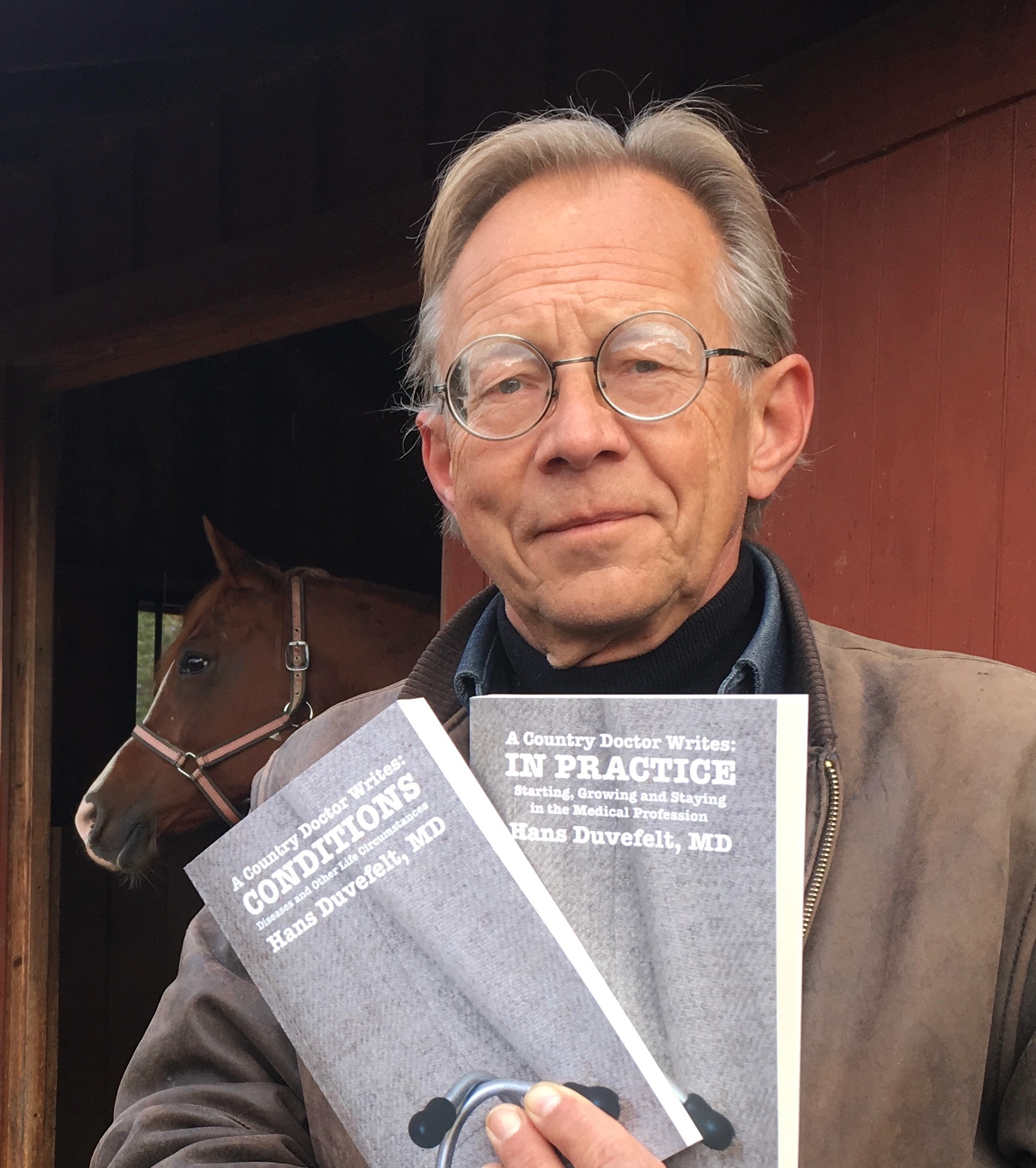
BOOKS BY HANS DUVEFELT, MD

CONDITIONS, Chapter 1: An Old, New Diagnosis

Top 25 Doctor Blogs Award

Doctor Blogs

Enter your email address to subscribe to this blog and receive notifications of new posts by email.

Mailbox

contact @ acountrydoctorwrites.com
Bookmark and Share
© A Country Doctor Writes, LLC 2008-2022 Unauthorized use and/or duplication of this material without express and written permission is strictly prohibited. Excerpts and links may be used, provided that full and clear credit is given.