Archive Page 73

Playing Poker With the Devil: “Prior Authorizations” are Paralyzing Patients and Burning out Providers

The faxes keep coming in, sometimes several at a time. “Your (Medicare) patient has received a temporary supply, but the drug you prescribed is not on our formulary or the dose is exceeding our limits.”

Well, which is it? Nine times out of ten, the fax doesn’t say. They don’t explain what their dosage limits are. And if it isn’t a covered drug, the covered alternatives are usually not listed.

So the insurance company is hoping for one of a few possible reactions to their fax: The patient gives up, the doctor tries but fails in getting approval, or the doctor doesn’t even try. In either case, the insurance company doesn’t pay for the drug, keeps their premium and pays their CEO a bigger bonus.

First problem: This may be in regards to a medication that costs less than a medium sized pizza. And the pharmacy generally doesn’t even bother telling the patient what the cash price is.

Second problem: A primary care physician’s time is worth $7 per minute (we need to generate $300-400/hour). We could spend half an hour or all day on a prior authorization and there is absolutely zero reimbursement for it.

In my opinion it is unconscionable for an insurer to say a drug isn’t covered without listing the covered alternatives. They are truly making us play a game where only they know the rules – and I have seen some of them change the rules mid-game.

EMRs sometimes have functional formulary checkers built in, but they don’t always work (I’m talking about you, Greenway – again).

There are too many insurance companies for a provider to separately check their websites before prescribing.

There is an app called Epocrates that has some formularies built in. I have it set to Mainecare, the Maine version of Medicaid. But far from all insurers are included. Whether this is Epocrates’ fault or the insurers, I don’t know. All I know is I’m playing prescriber without knowing the rules of the game.

It is a pathetic state of affairs. The technology is out there but it isn’t in the interest of the for profit insurance companies to use it.

This alone is a reason to consider a one payer system: Mainecare publishes their formulary with real time updates and shares it with Epocrates. Their step care rules are easy to understand for both prescribers and patients.

Prior Authorization requirements are mostly meant to save insurers money, but sometimes they are efforts to control provider behavior. But we have the medical license and bear the liability burden when we prescribe. And the insurance companies don’t seem to have any legal risk when they refuse to honor our prescriptions and leave patients without treatment.

This situation is pure evil. I don’t think my analogy of playing poker with the devil is exaggerated at all. It is provider harassment and customer abuse.
“I Don’t Cook” is an American Epidemic (But A Country Doctor Cooks)

Some patients announce it very proudly, others with downturned eyes: There are a lot of people out there who don’t know how to, or simply choose not to, prepare meals for themselves or their families.

This is a serious health problem. And it is a confusing one. Because there are so many easy ways to get a meal on the table very quickly.

I have many non-cooking patients who don’t even buy frozen dinners they can pop in the oven or microwave, but instead buy pizza, drive-through burgers or subway sandwiches.

A sandwich is not a meal. It is a snack at best.

The reasons not to cook seem to fall into three categories:

1) It takes too long

2) It’s too hard

3) It’s too much work to cook for just one person

I love spending an entire day making Swedish Christmas food for my children and grandchildren. But most of the time I do some weekend cooking for the coming week and spend very little time on weeknights preparing my dinner. Most weeknights I don’t even use the stove, just my little toaster oven.

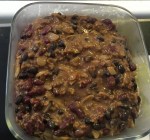
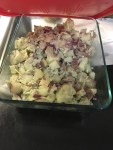
Weekend cooking might be a batch of vegetarian chili, a cheesy potato salad or a barley risotto.

Last night I bought two salmon fillets, placed both on the foil covered tray for my toaster oven and spiced them up in two different ways for two meals: Salt, pepper and streaks of paprika (to simulate grill lines) on one and salt, pepper, pesto and a layer of Parmesan on the other. I turned the toaster oven to broil for 13 minutes and by the time my Caesar salad was done (from bagged hearts of romaine, bottled dressing, store bought croutons and some more Parmesan), the salmon was done.

It takes more skill to drive to McDonald’s for a fish burger.

In the frozen fish section of my supermarket they have Gorton’s haddock in sauce – two for around $6. Plop one in the toaster oven at 350 degrees and set for 30 minutes.

Do something else, and come back to eat. And, one of my tricks is making a wild rice pilaf from a package that yields two or even three servings. I then put one of those servings in a Pyrex dish on top of the toaster oven with foil over. By the time my fish is done, the rice is warm, too. (The same method works for warming up the cheesy potato salad while my store bought frozen Swedish meatballs thaw on “broil” for ten minutes.)

How hard is that?

The S-Word (Social) Suddenly Has a Place In American Medicine

Many Americans have had a negative feeling about the word “social” because of their fears of too much government control, as in socialized medicine or even socialism.

As a Swede with a more neutral sense of the word, although I never identified with the socialist political party, I startled when the pandemic brought us the concept of social distancing. That felt like a complete oxymoron. How could keeping a six foot distance to other human beings be a social act?

But, of course, keeping your distance out of consideration for others is a socially responsible and appropriate thing to do. My ears were just not used to hearing the S-word in English.

Swedes don’t use the expression “socialized medicine”, because health care is viewed as a human right and people don’t imagine that a private system could provide care for all of society—notice the similarity between the words society, social and socialism. So they think it is a no-brainer that health care needs to be a service provided by the government for everyone. There is simply no concept of “desocialized” health care, or whatever you would call health care that was entirely privately run.

Socialmedicin, in Sweden, is a broader field than what Americans call Public Health. Its focus on the socioeconomic determinants of health is more obvious than what I usually hear in this country. Other “social” words in the Swedish welfare state vocabulary (and my mother tongue has a visually powerful custom of making one word out of two, as in healthcare versus health care) are:

Socialarbetare (social worker), Socialvård (welfare in its broadest sense) Socialnämnd (Social Board that oversees the welfare of minors, like DHHS here), Socialstyrelsen (National Board of Health and Welfare) Socialfall (Social case, as in the legitimate admission diagnosis “causa socialis” when I worked in Sweden and someone wasn’t safe at home and the hospital was their only option).

The pandemic has brought us one giant leap forward in our understanding that biochemical and sociopolitical factors can converge to cause disease and that both sets of factors are equally necessary to save us from it.

Rudolf Virchow, the father of modern pathology, is also considered the father of social medicine. Interestingly, pathology and social medicine have diverged since his lifetime and medicine has strayed far from his vision. In this century, the American Physician Paul Farmer and others are trying to bring these models together:

Because of contact with patients, physicians readily appreciate that large-scale social forces—racism, gender inequality, poverty, political violence and war, and sometimes the very policies that address them—often determine who falls ill and who has access to care. For practitioners of public health, the social determinants of disease are even harder to disregard.

The holy grail of modern medicine remains the search for a molecular basis of disease. While the practical yield of such circumscribed inquiry has been enormous, exclusive focus on molecular-level phenomena has contributed to the increasing “desocialization” of scientific inquiry: a tendency to ask only biological questions about what are in fact biosocial phenomena.

The time is more than ripe for us here in America to pay more serious attention to the biosocial and biopsychosocial determinants of health and disease.

Why We Need Good Primary Care Physicians

I have made the argument that being the first contact for patients with new symptoms requires skill and experience. That is not something everybody agrees on.

One commenter on my blog expressed the opinion that it is easy to recognize the abnormal or serious and then it is just a matter of making a specialist referral.

That is a terribly inefficient model for health care delivery. It also exposes patients to the risks of delays in treatment, increased cost and inconvenience and the sometimes irreversible and disastrous consequences of knowledge gaps in the frontline provider.

UNNECESSARY SPECIALIST REFERRALS ARE COSTLY

Seeing a high charging, high earning specialist when the primary care provider can’t diagnose and manage the condition involves higher cost and, in many cases, a comprehensiveness that is based on the fact that the patient traveled 200 miles for their appointment. In such cases patents aren’t likely to come back for a two week recheck. Consequently, specialists tend to do more in what may be the only visit they have with a patient.

UNNECESSARY SPECIALIST REFERRALS CREATE TREATMENT DELAYS

For my patients, seeing a neurologist involves a one year wait for the out of state neurologist who does consultations almost 100 miles from my clinic, or a three to four month wait for an appointment more than 200 miles away in Bangor. The situation for rheumatology or dermatology is about the same.

Even if a primary care provider makes a correct referral, patients risk getting sicker and suffering needlessly because of these delays or, for them, nearly insurmountable barriers to travel.

And the days are gone when a rural medical provider could call city specialists several times a month and get free curbside consultations about tricky cases.

Rural America is almost like a different country in terms of the availability of specialist physicians, so less knowledge on the frontlines of medicine is a big deal here. Distance is an overlooked health disparity. I even have patients who hesitate traveling 20 miles to Caribou for an x-ray.

THE DANGER OF NOT KNOWING WHAT YOU DONT KNOW

The biggest concern with the you-can-always-refer mentality is that it actually takes good training and real life experience to know what constitutes an emergency when the clinical signs are subtle and similar to more trivial conditions.

In my own writing I have described the inexplicable phenomenon of clinical instinct and the newbie hubris of the Dunning-Kruger effect and also illustrated many common primary care triage situations:

A rash could be leukemia or idiopathic thrombocytopenic purpura. A sore throat could be glossopharyngeal neuralgia or a retropharyngeal abscess. A blocked ear could be Ramsay-Hunt syndrome, a self-limited serous otitis or sudden sensorineural hearing loss with an abysmal prognosis if not treated immediately with high doses of steroids. A headache or sinus pain could be cancer, and a cough could be a pulmonary embolus or heart failure.

Why are so many people systematically belittling the skills that are needed to be a safe and effective primary care provider? In many other countries, primary care physicians are the backbone of their health care system.

Oh, I almost forgot, our system was never actually designed. It looks the way it does because of market forces, corporate strategies and all those kinds of things.

The Art of Asking: What’s Your Biggest Fear?

When a patient presents with a new symptom, we quickly and almost subconsciously create a hierarchy of diagnostic possibilities. I pride myself in my ability to effectively share my process of working through these types of clinical algorithms.

But sometimes I seem to get nonverbal clues of dissatisfaction or simply no reaction at all to my eloquent reasoning. And only then do I remember to ask the important questions, “do you have any thoughts on what’s causing this” and, most importantly, “what’s your biggest fear that this could be”.

It doesn’t matter how brilliant a diagnostician you are if a patient with less medical knowledge than you has a thought, fear or hunch that diseases and symptoms work in ways that don’t make sense to you.

An uncle may have had a burning sensation in his nose minutes before a stroke, so this symptom may seem like a much more obvious harbinger of disaster to your patient than it does to you. How would you know, if you didn’t ask, what the number one question is that your patient wants the answer to?

We are often so focused on our own thinking process, especially with our time pressures and the bureaucratic requirements of medical encounters these days, that we risk forgetting our patients may not think the way we do.

Of course, sometimes things work the opposite way: The patient may think they just have something simple, like the woman I saw with throat pain who ended up getting a cardiac stent for a major coronary blockage.

So it isn’t always obvious when we need to ask the “biggest fear” question. That’s a judgment call that requires paying attention: Watch your patient’s facial expressions and body language, listen carefully to their words and the character of their voice.

Basically, start by ignoring what the listed chief complaint is, ask an open ended question and then shut up and let the patient speak uninterrupted so you can listen and observe.


I just realized none of the posts show on an iPad or a computer, but they do show on an iPhone. WordPress is working on this. In the meantime, please visit my Substack.


Osler said “Listen to your patient, he is telling you the diagnosis”. Duvefelt says “Listen to your patient, he is telling you what kind of doctor he needs you to be”.


BOOKS BY HANS DUVEFELT, MD

CONDITIONS, Chapter 1: An Old, New Diagnosis

Top 25 Doctor Blogs Award

Doctor Blogs

Enter your email address to subscribe to this blog and receive notifications of new posts by email.

Mailbox

contact @ acountrydoctorwrites.com
Bookmark and Share
© A Country Doctor Writes, LLC 2008-2022 Unauthorized use and/or duplication of this material without express and written permission is strictly prohibited. Excerpts and links may be used, provided that full and clear credit is given.