Archive Page 65

Three Challenges in the Art of Prescribing Warfarin

The blood thinner we have used for so many years is gradually being replaced by the novel anticoagulants, which don’t require laboratory monitoring and have fewer interactions. But for some indications, warfarin is still preferred and for many patients, it is still by far the more affordable anticoagulant.

Dosing warfarin has always been an art and it seems to be less often mastered than it used to be. The three challenges are drug interactions, food interactions and dosing schedules.

DRUG INTERACTIONS

Just the other day, I was covering for a colleague and got an urgent message that her patient had a supratherapeutic INR – too much thinning of his blood. I asked the medical assistant to find out if the patient was taking any new medications, like ciprofloxacin, that might interact with the warfarin. I just threw that drug name out because it is such a common and overlooked interaction. Sure enough, somebody else had prescribed ciprofloxacin two days earlier for a urinary infection.

I played detective and tracked down the urine culture, which showed the coli bacteria were resistant to ciprofloxacin, but sensitive to nitrofurantoin (safe) and Bactrim (unsafe). I messaged the prescribing provider, who changed the patient’s antibiotic to nitrofurantoin, so I just ordered the warfarin held for two days.
Many providers seem to be unaware or less paranoid than I am about drugs that interact with warfarin. I once had a patient end up in the intensive care unit with critical internal bleeding because I prescribed levofloxacin with plans to check her INR every couple of days during her antibiotic course. That was clearly not cautious enough in her case.

I have seen great variability in how much other drugs affect the effect of warfarin, especially azithromycin, amoxicillin-clavulanate and also acetaminophen and prednisone, both of which in most people doesn’t seem to cause much trouble. But I worry about all of them, plus sulfamethoxazole, metronidazole, fluconazole, NSAIDs (obviously) and new starts of amiodarone, sertraline, carbamazepine and many others. Over the counter agents to worry about include fish oil, ginkgo biloba and St Johns Wort.

This is not a complete listing, and since most of us have EMRs that warn us of interactions you would think close calls like this would never happen. The problem here is the multitude of basic warnings providers know in their sleep, so that the less famous issues drown among the unnecessary alerts (see my posts about Alarm Fatigue).

I end up using epocrates’ interaction checker on my iPhone to double check sometimes, but, as I said, I’ve been burned so I know this stuff know.

FOOD INTERACTIONS

Warfarin interferes with the role of vitamin K in the coagulation process. Therefore, if you flood your system with foods rich in vitamin K, which is the pharmacological antidote to warfarin, you decrease the effectiveness of warfarin. A week before my ciprofloxacin case, one of my own patients suddenly had a low INR. “Ask him if he’s been eating fiddleheads”, I told Autumn. Sure enough, this Maine spring delicacy was the culprit. The season is short and he wasn’t going to have more, he said, so I didn’t change his dose schedule.

A lot of people are under the impression they cannot eat green vegetables while on warfarin. I tell them that’s like saying you can’t open your windows in the winter if you heat with wood. Imagine you know how many logs to put in the wood stove at certain outdoor temperatures. Then imagine you decide to open a window now and then. You would then have to adjust your fire whenever you opened the window, compensating for the heat loss. If you instead decided to leave a crack open all the time, you would quickly figure out your new firewood budget.

So I simply tell my patients, “eat all the greens you want, but be sure to keep the amount the same every day”.

DOSING WARFARIN: DON’T DRIVE LIKE YOU’RE MR. MAGOO AND PLEASE LEARN FROM YOUR MISTAKES

Mr. Magoo is like me without my glasses. If I were to drive in a snowstorm without my glasses, I would only see a couple of feet in front of me and I would be turning my steering wheel a lot more than necessary. I wouldn’t be able to tell if I was entering a small or a big curve, for instance. If I could see further ahead, I would make smaller corrections. Many providers will look at the current INR value and the previous one, and the current warfarin dose. Then they change the dose. Unless you have a flowsheet that tells you that the last time you made that change, bad things happened, you will make the same poor choice again. On paper, such flowsheets are easy to maintain, but – believe it or not – in many EMRs it is just too darn cumbersome to do.

I have a three ring binder with all my warfarin patients’ flowsheets. It helps me avoid Mr. Magoo type errors and it also serves as a low tech way of making sure no warfarin patients fall off my radar screen. Autumn or I sometimes just flip through the binder to make sure our flock doesn’t wander off, so to speak.

An old fashioned method of managing an old fashioned medication…
Serving is No Longer a Useful Term, Especially For Snack “Foods”

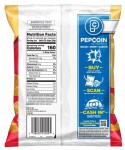
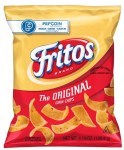
One of the classic deceptions of the snack food industry is to pretend that a small package contains enough to feed two or more people. This small bag of Fritos has only 160 calories per serving, but it is supposed to feed 4 1/2 people. Only 160 is printed in bold, whereas you’d have to do the math yourself to figure out that your snack bag has 720 calories in it. And even beverages, say a bottle of chocolate milk, can be tricky. One serving can be an 8, 12 or 14 Oz bottle with 150-250 calories

Perhaps you could make the argument about meat and potatoes that there is such a thing as a “normal” or “average” serving. Even that is arguable, since that can vary according to a person’s activity level: Proverbial lumberjacks and teenage boys often eat larger portions than sedentary elderly individuals, for example.

But most snacks are, let’s be honest here, not really food and not really part of a healthy diet. So why should we pretend that there is agreement of how much we “should” or “might” eat of them?

Suggesting that most people can stop at a fraction of what’s in the bag is playing dirty. Wasn’t there a slogan that went “nobody can eat just one”?

(Disclosure: I, too, sometimes eat Fritos, and then usually more than one “serving”.)

Working Too Hard Doesn’t Cause Burnout. Having to Do the Wrong Thing Does

Physicians are generally highly motivated to treat their patients well, both in terms of clinically well and in a nice manner. When they don’t do that, it isn’t usually because of personality disorders or character flaws, but because their jobs are robbing them of their enthusiasm and compassion.

Sometimes it is our own fault that we get burned out. I realized this ten years ago today (!) when I read Claire Burge’s post about burnout skills. We are, by nature and by training, fixers and problem solvers. Because healthcare these days is so dysfunctional, many of us feel like we should be heroes and do “the impossible” in spite of limited time, resources, support and so on. When we do that, we get external praise or praise ourselves, so we end up doing it again. That can be a vicious cycle of always fighting uphills battles, ultimately at our own expense.

But many times, we risk getting burned out even when we aren’t over-capitalizing our heroism. Sometimes the everyday, totally routine tasks put us at risk for burnout. A lot has been written about moral injury in healthcare as a cause for burnout. I agree that can be a dramatic contributing factor sometimes, but I firmly believe the most fundamental cause of burnout is that we, trained clinicians, diagnosticians and decision makers, are put in the position of public health nurses and data entry operators.

This is a terrible waste of a medical education and a sure way to job dissatisfaction and burnout.

It is frustrating for physicians to hear that everyone in their organization except them should work “at the top of their license”.

Think about it:

A patient is due for their ten year colonoscopy recall. The surgical clinic sends an electronic message asking the primary care physician to make a referral so the insurance will pay. It isn’t enough to respond or forward a “MAKE IT SO” command. No, the physician has to create a non-billable encounter, locate the correct diagnosis code for screening for malignant neoplasms of colon, Z12.11, click however many times it then takes to indicate the provider or clinic and send the order off to the referral coordinator.

Or:

A patient comes in for a sore thumb and is behind on all kinds of screenings and chronic care. Instead of devoting the visit to making the correct diagnosis, bacterial paronychia versus herpetic whitlow, and then treating it correctly, the physician is now held personally responsible for catching the patient up on things that could have been figured out and handled by an unlicensed staffer under the supervision of a public health type nurse working with practice wide protocols.

If there were “efficiency experts” analyzing what we do in healthcare, would they really recommend that the people with the highest degree of education do the most basic functions of data entry and checking off health screening protocols?

I find the priorities of modern primary care bewildering. I personally feel less burned out when I double book sick patients or stay late to take care of a complex new patient than when I am put in a position of bookkeeper. If I wanted to be an accountant or a public health nurse, I would have gone to school for that.

The Counterintuitive Concept of Burnout Skills

Revisiting the Advantages of aSOAP Notes: The Best of the Paper Chart and Old School Photography

I used to teach photography and dark room techniques. Now that I only use my iPhone for picture taking, I have forfeited many of the tools that used to help me tell a good story within a photograph.

We may only have 15 minutes with each patient. At least in my opinion, that means you always have to make the choice very early in the visit between going narrow and deep or wide and shallow. A sore knee or an annual physical are like a closeup or a panorama. I can take both kinds of pictures with my iPhone.

In primary care it is often necessary to think in terms of including more than our area of interest in our mental picture of our patient. But if we keep everything in sharp focus, we won’t pay enough attention to solve the problem at hand.

So my mental picture of the problem area ends up being like a photograph with everything surrounding the center of the picture a bit blurry. But that’s not what my iPhone pictures or my EMR notes tend to look like.

The way my EMR prods me to document is by default either panoramic or closeup. My system lets me choose whether to import everything or essentially nothing from the patient’s past medical history. And the past medical history reminds me of a bag person, dragging around everything they own in a stolen supermarket shopping cart. It is a hodgepodge of structured and free texted data that seldom gets updated because of our constant time pressures.

The past medical history has historically been abused by other specialty providers using a common EMR. Some of them have chosen to list everything the patient doesn’t have wrong with them, almost like what a primary care provider calls a review of systems, but under the heading originally meant to give providers a snapshot of each patient.

If a patient only has one medical problem and never had any surgeries, why would any reader of their medical record prefer to view one or more full screens or pages of what has NOT happened to this patient, at least not as of some date in the past when that was nailed down as the patient’s medical profile.

The old paper problem list on the inside left of the chart was by necessity brief, because a page can only hold so much information. Computer scrolling changed all that.

In primary care it is usually sufficient to know that a patient has had two myocardial infarctions and one coronary bypass. I don’t really need the details in order to know how to consider this patient’s risk for future cardiac events.

What I end up doing because of the messy bulk of data in the EMR medical history is insert a macro that says the past history was considered in the visit but not included in the note. I then more and more dictate relevant past history in what I call my visit abstract in my aSOAP note.

It may look something like this:

40 year old male has a normal routine physical. His 10 year cardiovascular risk is average but his BMI is approaching 30. Dietary strategies reviewed.

What more do you really need to read next time you look through his chart?

Or it may look like these examples:

60 year old male with hypertension, COPD and anticoagulated atrial fibrillation returns for followup. No treatment changes made but he has noticed a lump in his lower abdomen and altered bowel movements. Labs and CT scan ordered, anticipate diagnostic colonoscopy.

(The rest of the note is more for billing and prior authorization purposes.)

72 year old female with diabetes and heavy atherosclerotic burden presents with two weeks of increased dyspnea and weight gain as well as increased thirst and episodes of blurry vision. In-house HbA1c is 9. Revisited diet, increasing basal insulin and furosemide dose. Recheck 2 weeks.

(The rest of my note serves little purpose under normal circumstances. If anyone wanted to know that there were bibasilar rales or that the EKG was normal or that the last potassium was fine or that the patient had changed her diet against medical advice, it would be there, further down the screen.)

So, I am again making the case that, by necessity, we often need to compensate for the exaggerated comprehensiveness of the charting tools we are made to work with. The aSOAP note can bring the best aspect of the paper chart into the EMR.

Voicemail, Repeat Requests and Multitasking: Inefficiencies in Today’s Healthcare

My nurse regularly gets at least 50 voicemails every day, many saying “please call me back”.

I have one patient who frequently tests the patience of our clinic staff by calling multiple times for the same thing. He is the most dramatic example of what seems to be a widely held belief that physicians, nurses and medical assistants sit at their desks and answer phone calls all or most of their time. But when we do, we are often hampered by busy signals, phone tag or “voice mail not set up”. Electronic messaging isn’t a panacea, because patients don’t necessarily know what we need to know in order to answer their questions correctly and efficiently at first contact.

Pharmacies, too, create duplicate requests that bog down our workdays. In my EMR, if an electronic refill request doesn’t get a response the day it comes in, the “system” sends a repeat request every day until it gets done. This is one reason I look like I am further behind on “tasks” than I really am. To top it off, every single refill request generated by the “system” comes with a red exclamation point next to it. This happens even when a patient has just picked up their last 90 day refill – a case where I theoretically should have 89 days to respond. Meanwhile, my system has no way of flagging truly urgent refill requests. This “alarm fatigue” is common in EMRs today.

The business model in today’s healthcare is that reimbursable activities (seeing patients in person or via telemedicine) are scheduled back to back, all day long. There is a universal assumption that this will still provide enough slack to deal with prescription refills, phone calls, incoming reports and the further ordering and feedback to patients prompted by them. And did I mention EMR documentation? Multitasking, or rather, constantly switching between different kinds of tasks, is not a sane or efficient way to work.

Providers, as salaried employees, are universally expected to get their work done on their own time (jokingly called “pajama time”). This creates varying degrees of stress and burnout. But nurses and medical assistants have a different stress. As hourly employees, they are theoretically entitled to overtime pay if they can’t finish their work during their normal working hours. But that is expensive for healthcare organizations and often discouraged or forbidden.

In Sweden, known for its somewhat stodgy bureaucracy, clinics almost universally have “telefontid”, a portion of the day when patients can call, or when staff are not seeing patients but returning calls – the details can vary. This may not be ideal customer service, but it at least acknowledges that multitasking in healthcare isn’t always necessary and certainly not healthy.

A growing trend in this country, mysterious to me and a generator of patient frustration and employee stress, is that in spite of all our expensive computers and phone systems – or perhaps because of them – most clinics, even large organizations, can’t afford to have someone answer the telephone.

St Joseph Hospital in Bangor usually answers on the first ring, and the main operator (I know her voice well) is efficient and helpful. My mother worked as an operator for a big hotel and also at one point the phone company. I remember watching her efficiency plugging in those little cables to transfer callers to the right department. Most clinics and hospitals tell you to hang up and call 911 if you’re in trouble and make you “listen carefully” to all the options, threatening that they “may have changed” and eventually you end up in somebody’s voicemail.

When everybody is talking about patient centeredness, customer experience and such things, why isn’t it obvious that incoming calls and other types of requests need to be prioritized as they arrive and not just dumped, unsorted, in someone’s voicemail or inbox?

Organizations appear to be paranoid about being held responsible if non-clinicians are put in a position to “triage” incoming calls. But it isn’t rocket science – everybody does it at home, with their kids, pets and themselves. I believe it may be an even greater liability to have an automated telephone system people get lost or stuck in.


Here are two slides from a staff education talk I gave 10 years ago about common sense telephone triage.

The telephone used to be a powerful tool, connecting people with businesses, services and each other. It no longer works like it used to, because nobody’s answering.


I just realized none of the posts show on an iPad or a computer, but they do show on an iPhone. WordPress is working on this. In the meantime, please visit my Substack.


Osler said “Listen to your patient, he is telling you the diagnosis”. Duvefelt says “Listen to your patient, he is telling you what kind of doctor he needs you to be”.


BOOKS BY HANS DUVEFELT, MD

CONDITIONS, Chapter 1: An Old, New Diagnosis

Top 25 Doctor Blogs Award

Doctor Blogs

Enter your email address to subscribe to this blog and receive notifications of new posts by email.

Mailbox

contact @ acountrydoctorwrites.com
Bookmark and Share
© A Country Doctor Writes, LLC 2008-2022 Unauthorized use and/or duplication of this material without express and written permission is strictly prohibited. Excerpts and links may be used, provided that full and clear credit is given.