Archive Page 63
NNT: The Number Needed to Treat in Order to Prevent One Bad Event
Published June 19, 2021 Progress Notes Leave a CommentHYPERTENSION is Like Driving a 5-Speed in 4th Gear
Published June 18, 2021 Progress Notes Leave a CommentDoctor-Patient Relationships: I Don’t Babysit – I Want to Empower
Published June 18, 2021 Progress Notes 3 CommentsI have known doctors that cultivated a dependence among their patients by suggesting their health and safety depended on regularly scheduled visits and laboratory testing for what seemed to me stable, chronic conditions. People would come in every three months, year after year, to review cholesterol numbers, potassium levels and glucose or blood pressure logs and have a more or less complete physical exam every time. Patients would also get scheduled for rechecks of ear infections and other simple conditions I always thought patients can assess themselves.
Compare the effort on the part of the physician with that type of practice versus seeing stable patients less often, doing more urgent care, and being more available for new patients. The first approach seems comfortable, possibly complacent, and the second more demanding, but also more satisfying, at least to me. My goal is always to make my patients as independent and self sufficient as they can be. I don’t want them to be dependent on me in an unhealthy way.
It is a matter of temperament, but it is also a matter of stewardship and resource management if we see ourselves as serving the populations and communities around us.
Maybe it is because of my Swedish upbringing and education, but I would feel guilty if sick patients or even relatively healthy people don’t even have access to a personal physician if I were to spend my days over-monitoring stable conditions.
In this medically underserved state, don’t we have a responsibility to consider whether we are getting too comfortable in our chronic care routines? Patients check their own blood pressures and glucose levels. They could get in touch if their numbers worsen. Do we really need to bring them in to make sure they don’t stray when there are people in our communities without access to care?
I sometimes actually use the phrase “I don’t babysit”. I don’t necessarily use the word “empower”, but that is what I always try to do with my patients.
I admit that it doesn’t always work when I ask a patient to let me know if their home blood pressure drifts above 140 or their weight goes up by 5 lbs. But this is where I think we all, providers, clinics and healthcare organizations, can utilize support staff. Someone other than the physician could reach out to patients for followup information instead of hauling them in just to establish they’re on track. We obviously need to do that with complex or very ill patients, but it is inefficient and sometimes unhealthy to do that with every patient taking medications for relatively benign conditions.
It is easy to feel responsible for our patients if our prescriptions cause harm or even carry great risk, but this is (still) a (mostly) free country and every patient has choices to make every day that we have no control over. We can’t be there, watching their every move. We know people don’t always take their medications or follow our advice. We might make them more compliant by seeing them more and more often or by instilling fear in them or insisting they let us assume all responsibility for their disease.
But that amounts to an unhealthy doctor-patient relationship, undeserving of a civilized and free society.
Americans are an impatient lot. They’re also eternal optimists. They believe there are drugs out there that can make a cold go away faster than its own, in large part genetically predetermined, timeline.
I do try to get people to specify which symptoms they feel they must control or modify while they wait for the illness to run its course, and I try to give a balanced view of the pros and cons of the different remedies.
For example, if your nose runs like a faucet and that would be embarrassing during a Zoom interview, you could take a decongestant pill or even a nasal decongestant spray. But if you take a decongestant consistently so that you might not have to wipe or blow your nose at all, your secretions could get thicker and get stuck in your sinuses. That’s how you get a sinus infection. And nasal decongestant sprays can over time (5 days or more) cause a rebound congestion. If you then escalate your dosing to relieve the second wave of congestion, you can end up with sores and even a perforation of your nasal septum from too much constriction of blood flow.
Cough suppressants may decrease your cough frequency, but what if you then don’t raise all the gunk in your bronchial tubes? Couldn’t that make you get sicker or take longer to clear your bronchitis? I don’t know, but is it worth the risk?
Treating body aches with acetaminophen (paracetamol) or ibuprofen can make us feel better, but eliminating a low grade fever is said to possibly delay the clearing of a viral infection. So, how necessary is it to make yourself feel less sick than you actually are?
Before Covid, Americans tended to take drugs to hide their colds so they could go to work, attend gatherings and not miss out on life’s happenings (or their paychecks). Maybe we have now all learned to hunker down, “self quarantine” and keep our viruses to ourselves.
Rest, hot tea, lemon, honey, blankets and long naps may be the best way to get through our illness. “Fighting” a cold may be an outdated concept as we move forward? The over-the-counter pharmaceutical industry might not like it, but I think that would be a good thing.


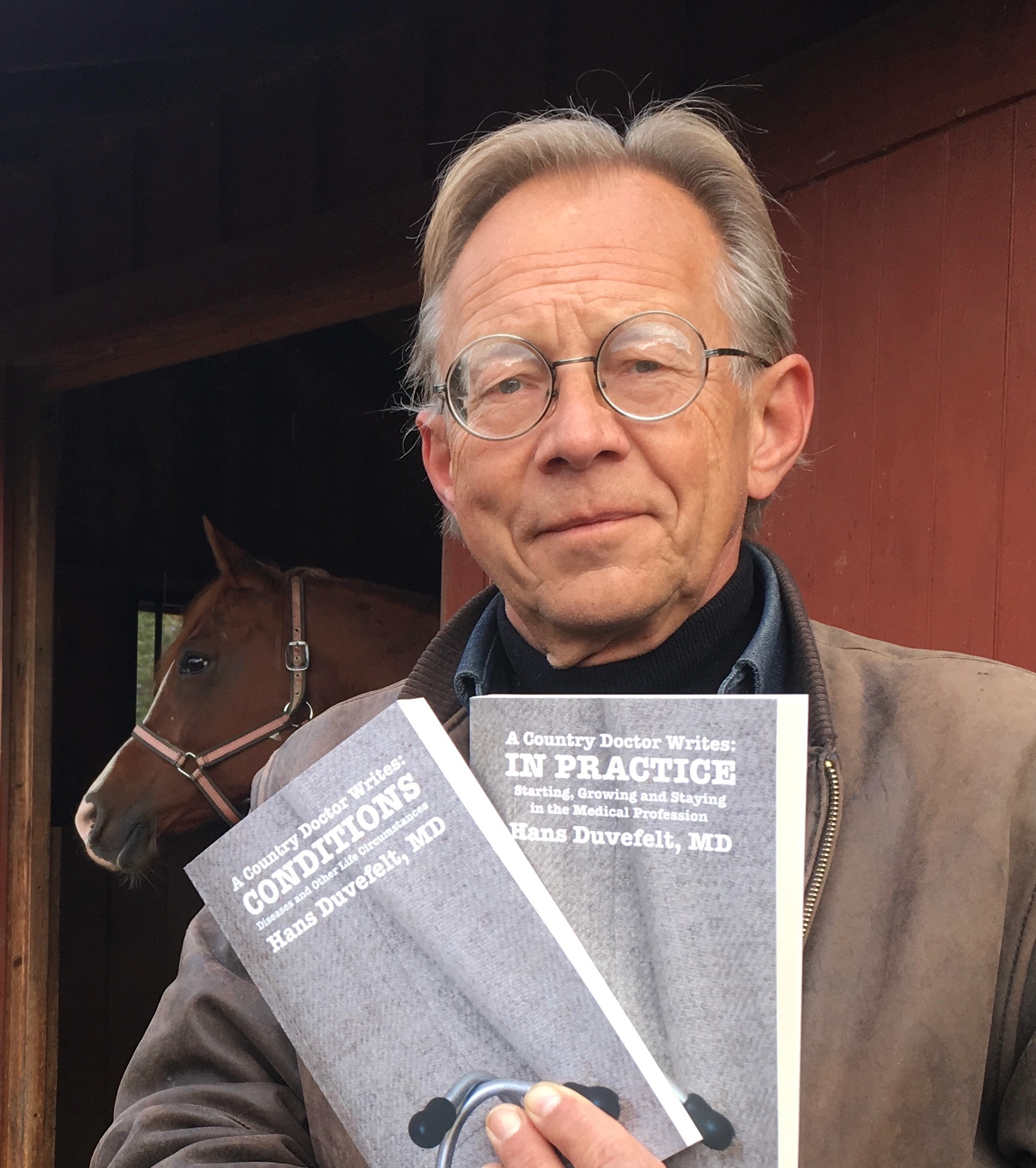







 A Country Doctor Writes:
