Archive Page 55

In a Perfect World, Ancient Drugs Would Not Cost More and More Over Time

Insulin was discovered in 1921 and first given to a patient in 1922. It used to be cheap. Now, a month’s supply of basal (24-hour) insulin at 50 units per day costs $400 for pens (needles are extra) and $450 for vials (but then you need to also buy syringes with needles). In a perfect world, insulin would not cost as much as the USDA “Liberal” monthly grocery bill for one (the “Thrifty” amount is $200).

Albuterol inhalers, introduced in 1956, were around $10 in the early years of my practice. They are now around $75. Because of environmental concerns, the CFC propellant of older inhalers had to be changed, and that opened the door for new patents that kept prices high for many years. Even though those patents are expiring, the cost of this basic medication is prohibitive for many people.

Epinephrine, first synthesized in 1904, lifesaving for anaphylaxis, is famously priced from $350 upward of $650 for two auto-injectors. Generic vials that require having syringes and knowing how to use them (and nerves and time enough to do it) are around $20, except at Walgreens, where they cost $70.

I once had an elderly patient who scorned inhalers for his asthma and carried a vial of epinephrine and a syringe in a metal box. Is that a practice asthmatics and allergy sufferers will soon have to resort to?


Return Visit: A Shot in the Arm

“Patient Requests 90 Day Supply”

This is a request I am getting electronically more and more often from pharmacies. I usually turn it down. Let me explain why.

For medications the patient is already on, I pretty much always refill them for a whole year in 90 day increments. Some people get their medications bubble packed in 4 week increments, and then I do the refill for 28 days with 12 refills.

But the reason I turn down the electronic requests I get from pharmacies to change my 30 day script to 90 days is that I have issued a new prescription that requires some kind of monitoring.

New starts of furosemide will require a potassium level and possibly a creatinine before the first 30 days are up. The same is true for spironolactone, in this case because it can raise potassium levels and carries a greater risk for causing kidney damage. The same is true for lisinopril, an ACE inhibitor, as well as the newer angiotensin receptor blockers. I had my own near miss with lisinopril more than 10 years ago, chronicled here.

A new start of a modern antidepressant, like the SSRIs, requires a clinical followup within a few weeks to make sure the patient isn’t getting suicidal or hypomanic. Even a 30 day script without followup is pushing your luck. 90 days in a non compliant patient missing their followup is medicolegally indefensible.

The other day I increased a PTSD patient’s prazosin for nightmares from 1 to 2 mg and sent in a 30 day script for the new dose. She still had some 1 mg capsules left. I neglected putting “FILL WHEN CALLS” on the “Sig” of the script. Boom, instantly the pharmacy shot off a “Patient requests 90 day script” refill request. You can’t split a capsule in two if, after a little while, you decide the higher dose doesn’t agree with you. In this case I authorized the 90 day script ONLY if they didn’t fill it until the patient had used up all her 1 mg capsules at two per day and knew that this dose agreed with her.

My bottom line is:

I am the doctor. I know what I’m doing. I work hard to save my patients money, and look up costs and copays every time I prescribe a new medication. Just like I carefully choose the medication and the dose, I deliberately choose which amount is appropriate for the situation.

The Lazy Man’s Guide to Calorie Counting

The Middle Age Creep

So often, I note that my middle aged patients slowly gain weight between visits. It is a recurring topic during routine physicals. I call it the middle age creep and I make a big deal of it. I warn my thirtysomething male patients with budding potbellies that this doesn’t get any easier to get rid of later in life.

People often assume that our metabolism slows down in middle age, but that is not the case. And middle age creep isn’t always a case of decreased physical exercise. It is usually, quite simply, an excessive caloric intake. This was demonstrated recently in a big study published in Science. I read about it in my Swedish morning paper.

There are many reasons we take in more calories than we need. We may snack, we may indulge in sweet treats, we may drink caloric beverages that we desire, from juice and soft drinks to beer. And we may eat “fast foods” that generally contain more calories than a home cooked meal.

Judging from the cars idling in the right hand lane of Bennett Drive in Caribou, waiting to pull into McDonald’s at supper time, it’s not just people bringing their kids for a Happy Meal who eat their dinner this way.

I often bring up the concept of stewardship along with the middle age creep. Call me paternalistic, call me moralistic, but if we can talk of how our behavior and consumption are causing global warming, we must also be allowed to talk about how our behavior and consumption are causing ill health and disease.

Age 34 with Spaniel

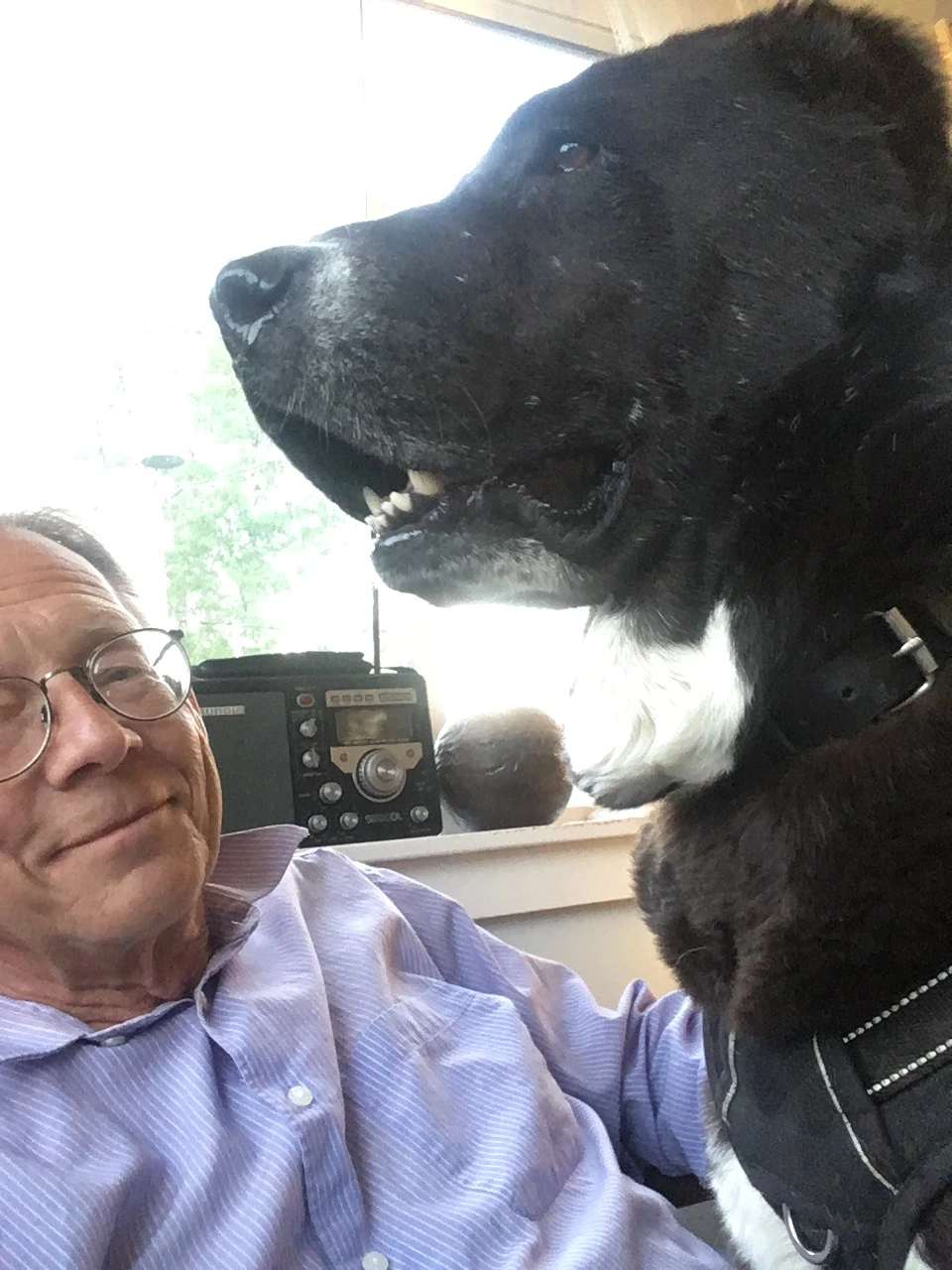
Age 68 in Alabai shirt

I see my role at this point in my life and career – technically beyond the statistical middle years of a man’s life – to speak of the perils of middle age health denial. I can even refer to the fact that I was getting pretty pudgy myself in my mid-to-late thirties. I turned it around, as I described in my video “As a Vegetarian, I Gained Too Much Weight”. I didn’t think I ate badly, but instead blamed my metabolism at first.

https://hansduvefeltmd.com/2021/05/01/as-a-vegetarian-i-gained-too-much-weight/amp/

A Country Doctor Writes eBook Price Drop

CONDITIONS was published July 4, 2020 and IN PRACTICE September 5. In order to mark the one year anniversary of the beginning of my series, which will have more installments in the future, I am lowering the price of my full length ebooks from $9.99 to $5.99. International pricing follows the US, and I believe this price decrease will help make my books more widely read not just in this country but also in other markets, served by Amazon, where my blog readership is growing steadily.

https://www.amazon.com/Country-Doctor-Writes-CONDITIONS-Circumstances-ebook/dp/B08B67NR7K


I just realized none of the posts show on an iPad or a computer, but they do show on an iPhone. WordPress is working on this. In the meantime, please visit my Substack.


Osler said “Listen to your patient, he is telling you the diagnosis”. Duvefelt says “Listen to your patient, he is telling you what kind of doctor he needs you to be”.


BOOKS BY HANS DUVEFELT, MD

CONDITIONS, Chapter 1: An Old, New Diagnosis

Top 25 Doctor Blogs Award

Doctor Blogs

Enter your email address to subscribe to this blog and receive notifications of new posts by email.

Mailbox

contact @ acountrydoctorwrites.com
Bookmark and Share
© A Country Doctor Writes, LLC 2008-2022 Unauthorized use and/or duplication of this material without express and written permission is strictly prohibited. Excerpts and links may be used, provided that full and clear credit is given.