Archive Page 50

I Am a Decision Maker, Not a Bookkeeper

Perhaps it is because I love doctoring so much that I find some of the tools and tasks of my trade so tediously frustrating. I keep wishing the technology I work with wasn’t so painfully inept.

On my 2016 iPhone SE I can authorize a purchase, a download or a money transfer by placing my thumb on the home button.

In my EMR, when I get a message (also called “TASK” – ugh) from the surgical department that reads “patient is due for 5-year repeat colonoscopy and needs [insurance] referral”, things are a lot more complicated, WHICH THEY SHOULDN’T HAVE TO BE! For this routine task, I can’t just click a “yes” or “authorize” button (which I am absolutely sure is a trackable event in the innards of “logs” all EMRs have).

Instead, (as I often lament), I have to go through a slow and cumbersome process of creating a non-billable encounter, finding the diagnostic code for colon cancer screening, clicking on REFERRAL, then SURGEON – COLONOSCOPY, then freetexting “5 year colonoscopy recall”, then choosing where to send this “TASK”, namely the referral coordinator and , finally, getting back to the original request in order to respond “DONE”.

The authorization for the colonoscopy referral does require my clinical judgement: My patient may not be medically stable for their routine colonoscopy because of a recent heart attack, or they may have already had a diagnostic colonoscopy at another hospital because of a GI bleed, or they may now have a terminal illness that makes screening for colon cancer moot.

But, please – when we can land robots on Mars – give me an easier way to say “yes” or “no” in my multimillion dollar system!

A Country Doctor Reads: THOUGHTS OF A TEENAGER (and a Blast From the Past)

A couple of months ago I had a request to connect on social media from a woman named Charlotte something. The name didn’t sound familiar and I didn’t recognize her face. I ignored it, but she tried again a few weeks later. She told me what her maiden name was.

She was my first girlfriend when I was 17. We were explorer scouts and we drank tea together on weekends when I took the bus to see her in the next town over. We once visited her friend, who had an indoor swimming pool. That’s when I decided to have my own some day, which I did. Life happened but we stayed in touch until I was in medical school in Uppsala. Then we lost track of each other.

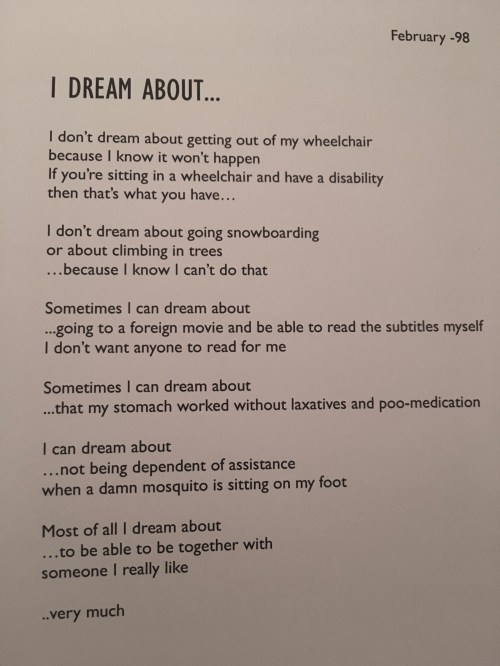
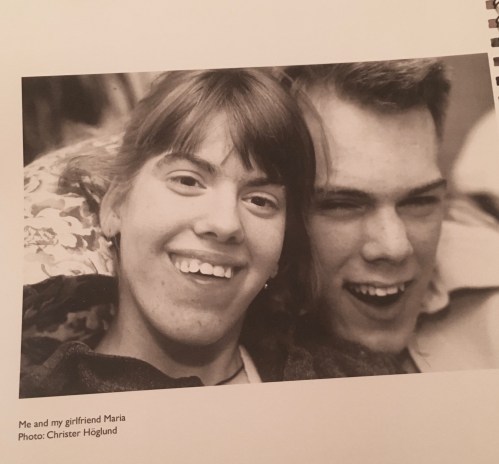
It turns out she became a social worker, another healing profession. She married and had a son a few years before I adopted my first child. Her son suffered a severe birth injury. When I told her about my books, she told me her son wrote a book with a little help from her.

She sent me two copies, one in Swedish and one in English. I was very touched, by what she told me about her son, how she and her husband have supported him and by the content of the book.

Here are the first two pages of the English version. Note that this boy’s dreams are more about connections with people than his own physical abilities.

Swedish Telemedicine Psychiatric Prescribing

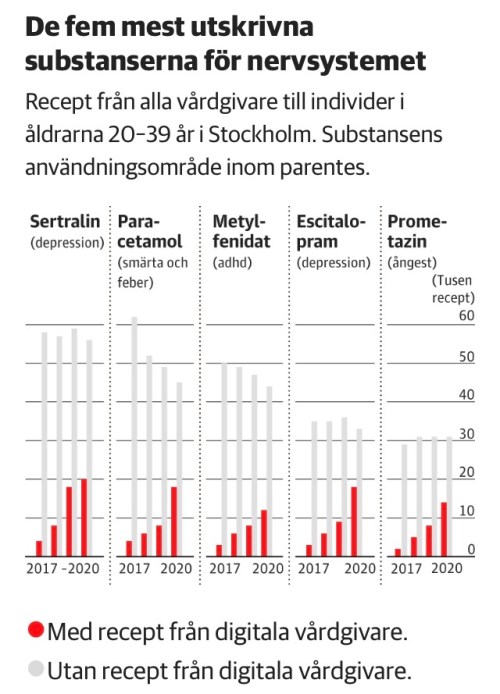
My Swedish morning paper has an interesting story about psychiatric prescribing by “net doctors”. 20-39 year olds in Stockholm are heavy users of telemedicine and in this population, 25% of all prescriptions for the antidepressant sertraline (Zoloft) and an even greater proportion of those for escitalopram (Lexapro) are from telemedicine doctors. There is a lot of concern in the psychiatric community about where this might lead, particularly the risk for inappropriate prescribing and inadequate followup.

https://www.dn.se/vetenskap/natlakarnas-forskrivning-av-lakemedel-oroar-psykiatriker/

A Man With Sudden Onset of Gastroparesis

Leo Dufour is not a diabetic. He is in his mid 50s, a light smoker with hypertension and a known hiatal hernia. He has had occasional heartburn and has taken famotidine for a few years along with his blood pressure and cholesterol pills.

Over the past few months, he started to experience a lot more heartburn, belching and bloating. Adding pantoprazole did nothing for him. I referred him to a local surgeon who did an upper endoscopy. This did not reveal much, except some retained food in his stomach. A gastric emptying study showed severe gastroparesis.

The surgeon offered him a trial of metoclopramide. At his followup, he complained of cough, mild chest pain and shortness of breath. His oxygen saturation was only 89%.

An urgent chest CT angiogram showed bilateral pulmonary emboli and generalized hilar adenopathy, a small probable infiltrate, a small pulmonary nodule and enlargement of both adrenal glands, suspicious for metastases.

He is now on apixiban for his PE, two antibiotics for his probable pneumonia and some lorazepam for the sudden shock his diagnoses have brought him.

I ordered a pulmonary consult and tonight I was thinking to myself: “Does the vagus nerve sometimes get compromised by hilar masses or adenopathy?”

My first search hit was a 2014 article about a previously unknown association between gastroparesis and pulmonary adenocarcinoma. It has been associated with upper gastrointestinal cancers since 1983 and also with small cell lung cancers and pancreatic cancer.

So my compromised vagus theory may or may not be relevant, but the general link with malignancy was news for me.

As so often in medicine, one diagnosis leads to another.

Labor and Delivery

(For some reason, Labor Day this year makes me think of my first experiences on the Labor and Delivery unit – 40 years ago this month!)

“Please call 2350 STAT” were the most dramatic pages I got during my residency. It was Labor and Delivery at Central Maine Medical Center in Lewiston. I can still feel the mixed worry and excitement that call gave me. I never felt anything positive being called to a code or other medical urgency. I don’t revel in the drama of disease, even though I, obviously, handle it. Delivering babies, with or without the drama, had its own magic.

I had a reasonable education in office gynecology in medical school. But obstetrics is more of a carve-out in Sweden, something family doctors, or allmänläkare (general physicians) don’t really come in contact with. Prenatal care and Infant care are (or were, at least back then) centralized at clinics that sometimes, but not always, were housed in a primary care office building. They are still viewed as their own specialties and mostly nurse-run under protocols with physician supervision.

Because my medical school was 5 1/2 years compared with the US 4 year curriculum, I felt better prepared, medically, than my fellow residents. I started my American residency having already had hands-on experience in the “smaller” specialties people think of as surgical sub-specialties: otolaryngology, orthopedics, ophthalmology and so on. But I had a fair amount of cultural catching up to do, learning where the Americans did things differently than the Swedes. I knew the diseases, but drug choices and general approaches were sometimes very different.

Obstetrics was an entirely new field for me. The Lewiston program was known for its strong OB experience, which is not why I picked it. I was looking for a program in Maine and liked what I saw in Bangor and Lewiston more than Augusta or the urban Portland. But Bangor seemed so far north – and here I am, practicing almost 200 miles further north of Bangor today! I also resonated with the faculty in Lewiston.

So there, wouldn’t you know it, OB was one of my first rotations. It was a trial by fire. I learned so much, so fast. And, wouldn’t you know it, the fist delivery I did on my own, with the summoned obstetrician guiding me from the delivery room doorway, still in his street clothes, was a double footling breech. Everything turned out just fine, but I decided right then and there that I would not be doing obstetrics in my own practice.

But, even though I never practiced obstetrics after I left Lewiston, some of my OB experiences have etched themselves in my mind and helped form me as a physician.

I still think about the woman in tears about her unwanted pregnancy that turned out to be a beautiful baby boy that strengthened her whole family. And I still remember the woman who thought she was too old to become pregnant and the magical moment when we listened to her fetal heart tones, both of us holding the Doppler in silence.

Knowing how to deliver a baby made me a better doctor, even though I chose not to continue doing it. It made me comfortable during snowstorms with closed roads in northern Maine. It made me comfortable doing my routine well woman care. The number is only my best estimate, but I can honestly say to a female patient, “I’ve delivered close to a hundred babies”.

Off The Record

Good, Strong Heart Beat – 140 and Regular

I just realized none of the posts show on an iPad or a computer, but they do show on an iPhone. WordPress is working on this. In the meantime, please visit my Substack.


Osler said “Listen to your patient, he is telling you the diagnosis”. Duvefelt says “Listen to your patient, he is telling you what kind of doctor he needs you to be”.


BOOKS BY HANS DUVEFELT, MD

CONDITIONS, Chapter 1: An Old, New Diagnosis

Top 25 Doctor Blogs Award

Doctor Blogs

Enter your email address to subscribe to this blog and receive notifications of new posts by email.

Mailbox

contact @ acountrydoctorwrites.com
Bookmark and Share
© A Country Doctor Writes, LLC 2008-2022 Unauthorized use and/or duplication of this material without express and written permission is strictly prohibited. Excerpts and links may be used, provided that full and clear credit is given.