Archive Page 5

A Childhood Illness that Stumped a Pediatrician

Melanie’s breathing troubles started almost three weeks ago. Her pediatrician suspected cough variant asthma, but she didn’t respond that much to her medications. “Give them more time to start working”, was her recommendation.

But Melanie’s mother was worried enough to locate a pediatric pulmonologist, who saw Melanie on a day when the cough wasn’t too bad, so the specialist never got to hear her cough. He did suspect Melanie had whooping cough, even though she had been vaccinated. He explained that it was too late to start the typical antibiotic we use for whooping cough. Her mother noticed that even though she was getting better, the least bit of exercise or anxiety made her cough again. And she noticed that, now that she had a possible name for what was going on with Melanie that there was another noise after each cough that was severe enough to make Melanie a little distressed. It didn’t sound like “whoop” to her, though.

Over Easter, I spent a few nights with Melanie’s extended family who are from the town I live in.

Twice, I saw Melanie have a pretty significant coughing jag. After each short, harsh cough there was a characteristic high pitched, musical sound as she would breathe in.

“You hear that”, I said to her mother. “That’s not like wheezing with asthma. Asthmatics make noise breathing out, and whooping cough wheezes breathing in. It’s also a lower pitch and shorter than asthmatic wheezing. The medical word is stridor. I have heard it a few times in my long careeer.”

“So now that she’s able to be back is school, but gets a coughing jag with whooping after a little exercise. I don’t want her to take phys ed until she is ready”, Melanie’s mother said. “Would you be willing to call her pediatrician and tell her you’ve heard her cough and you’re sure she really does have whooping cough? That way Melanie’s might get a physical ed excuse from her doctor.”

“I’d be happy to”, I said.

So I called. I introduced myself as a family friend and that I was a Family Physician with 46 years of experience and I happened to be staying with her family and happened to hear the classic sound of whooping cough that hadn’t been documented in her earlier visits.

The receptionist said she couldn’t give me any information because there was no release in Melanie’s chart.

“I’m not asking you to tell me anything”, I told her. “I’m giving you some information, because I’ve heard Melanie’s classic whooping cough.”

I thought that was the end of this, but within minutes the pediatrician called Melanie’s mother at her office and started chewing her out for going behind her back.

All I can say is that this must be a very fragile and insecure doctor, who feels threatened by a fellow physician visiting the home of a patient calling in to simply report a clinical observation that could be helpful in the care of her patient. This was not a second opinion. But even if it were, patients have a right to get one, just like Melanie’s mother had already done with the pediatric pulmonologist.

Looking for Patterns, Looking for Change and Looking for Incongruity

I recently reposted a 2017 WordPress reflection on my Substack about how sometimes a disease evolves so slowly that you, as a continuity provider, barely notice it but another, covering, provider notices the subtle abnormalities and recognizes the pattern as a new disease.

When taking a medical history, it is often very difficult to pin down the duration of a patient’s symptoms or the speed of change. For example, patients tell me all the time that they had muscle aches on a statin drug. When I then ask if they never had them before they started that drug or if they never had them after they stopped it, I often don’t get a straight answer. And when people report alarming symptoms without mentioning that they’ve had them for decades, you could easily fall into the trap of overreacting to chronic symptoms.

The art of diagnosis is said to be 80% the art of taking a good history of the clinical symptoms. Doing an appropriate, skillful exam is probably a disappearing or at least undervalued skill. Knowing what test to order if you suspect something, and sometimes even if you have a handle on the most prominent symptom, is something your computer can help you with, from UpToDate to DxGPT.

Then there is the many facets of incongruity. Just the other day, I saw an older woman with years of gastrointestinal problems. She knew she was lactose intolerant, but when my assistant walked into her kitchen where she kept her testing equipment for her home INR blood testing for her warfarin anticoagulation, she noticed a table full of 1% milk cartons. When we pointed out that she seems to be drinking milk even though she is lactose intolerant, she responded, “but it’s only 1%”. “Yes only 1% fat, but still a lot of lactose”, I told her. “Oh, I had no idea”, was her answer. Incongruity can be an issue of what’s around in the home, how a person talks or moves when they are distracted from describing how ill they feel, and many more things.

I used to like old mysteries when I was younger. I watched Columbo and Perry Mason. I don’t watch mysteries anymore. I get enough of that in my work…

17 Years of A Country Doctor Writes:

The thought of writing about my experience as a doctor had been percolating for a couple of years before I started my blog and published my first post on April 28, 2008. I remember having a black notebook during our traditional New Year’s visit to Château Frontenac in Quebec. I was all dressed up in my tuxedo, waiting for the New Year’s dinner to begin and I finally hatched the title, A Country Doctor Writes. I didn’t know then if it was going to be a book or a blog or something else.

I didn’t get much more written in my little black book during that New Year’s holiday, and it took me almost a year and a half before I finally did it. I had some professional challenges that, in a way, made me think of my writing idea as a means to focus on the good and important aspects of being a doctor instead of some of the daily difficulties I had to navigate.

By November that year, I made the difficult decision to leave the practice where I had spent the bulk of my career up until that point. We ended up moving almost 200 miles north and I started over as a complete unknown at age 56. Talk of fodder for writing about being a doctor.

Up north, I quickly grew my practice and earned the trust of both patients and the medical community. Then, six years later, a new administrator in my old practice convinced me to return to my old position as medical director. But a divorce forced me to choose between going back to the job up north and the farm in Caribou, which was sitting there, empty and ready for horses, or to figure out how to start over “downstate” as we call the middle and southern parts of Maine.

Having worked in both parts of Maine as well as in Sweden, I have gathered more experiences than if I had stayed in one place. And it has made fictionalizing my clinical vignettes especially easy, beyond changing the names, ages and maybe even sexes in my case descriptions. Nobody knows where each particular patient was located. And now, so many years down the road, I don’t even remember for sure what the names were in all of the stories, which I have gathered since I graduated from medical school in 1979.

This summer, I will have been a doctor for 46 incredible years!

A Country Doctor Reads: Repurposing Old Drugs for New Indications

Every morning with my first big mug of coffee in bed with the dogs, I read the news on the BBC website, the New York Times, CNN and a Swedish compilation called Omni.

Over the years, I have written many blog posts inspired by medical news from the New York Times. Here is the latest article that really caught my attention, titled “Doctors told him he was going to die. Then AI saved his life”.

The article tells the story of how AI is now being used to scour old research papers for unexpected effects or side effects of medications that are now often both old and cheap, to indicate whether they may be worth trying for conditions beyond their original FDA approved indications.

The pharmaceutical companies are investing heavily in new treatments for common conditions, but not so much for rare conditions where the market is too small to ever recapture the cost of developing brand new drugs.

Here are a couple of quotes from the New York Times article:

In labs around the world, scientists are using A.I. to search among existing medicines for treatments that work for rare diseases. Drug repurposing, as it’s called, is not new, but the use of machine learning is speeding up the process — and could expand the treatment possibilities for people with rare diseases and few options.

Repurposing is fairly common in pharmaceuticals: Minoxidil, developed as a blood pressure medication, has been repurposed to treat hair loss. Viagra, originally marketed to treat a cardiac condition, is now used as an erectile dysfunction drug. Semaglutide, a diabetes drug, has become best known for its ability to help people lose weight.

https://acdw.substack.com/p/viagra-the-back-story

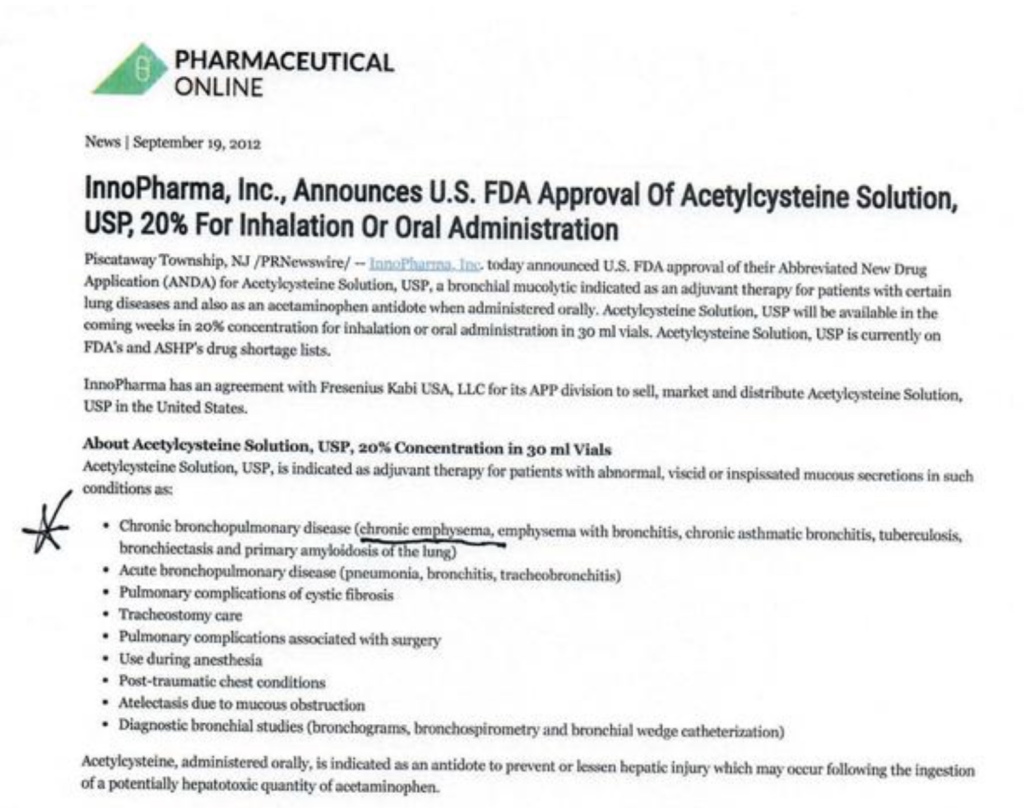
I put a hyperlink on the name Viagra to a video I made a while back about how that drug was discovered when there turned out to be a side effect of a new compound for pulmonary hypertension. I have also written about doxepin, a very old antidepressant that is possibly the most powerful antihistamine on the planet and a few other drugs with other uses. This kind of stuff fascinates me. I often say or write that drugs have personalities and if you really get to know them, you can almost predict where else they might be of use in our personal black bags of tricks. This is called “off label” use. It costs big money to go back to the FDA to get their approval for a new indication for a drug that is already or soon off patent and therefore inexpensive.

Doxepin, a Little Known Super Drug in My Personal Black Bag of Tricks

Other Super Drugs in My Personal Black Bag of Tricks

Beyond the Other Viagra: Curiosities in Off-Label Prescribing

A Country Doctor Gets Epicondylitis

I have never in my career seen tennis elbow in a tennis player. The proper name for this condition is lateral epicondylitis. There is also medial epicondylitis, nicknamed golfer’s elbow, and I haven’t seen that in a golfer either.

Still, it helps to have a folksy name for medical conditions when those names help people understand what it is or how it is caused.

In my case, I had it once before after a home improvement project. This time I’m pretty sure it was the combination of two thongs: First stall cleaning, putting manure, wet hay and shavings in the manure bucket with the pitchfork handle with my right hand and my left hand further down, making a backhand-like movement just like a tennis player. Second, I’ve been snow blowing. My Toro drives forward by itself but it doesn’t have a way to steer it except by holding on to the handle bars and making a twisting motion with my arms, pronation with one elbow and supination with the other, flirting with tennis elbow and golfer’s elbow on opposite arms.

Today, I also noticed for the first time that I have a swollen olecranon bursa on my left elbow, also sometimes called Popeye’s elbow or student’s elbow, supposedly caused by putting your flexed elbow on a desk or table too much. I didn’t think I did but I have it, a mild case where the fluid is not under pressure. No need for intervention. Same thing for my epicondylitis, take it a little easy for a while. I don’t dare to take ibuprofen with my acid reflux condition. Besides, I just don’t like to take pills…


I just realized none of the posts show on an iPad or a computer, but they do show on an iPhone. WordPress is working on this. In the meantime, please visit my Substack.


Osler said “Listen to your patient, he is telling you the diagnosis”. Duvefelt says “Listen to your patient, he is telling you what kind of doctor he needs you to be”.


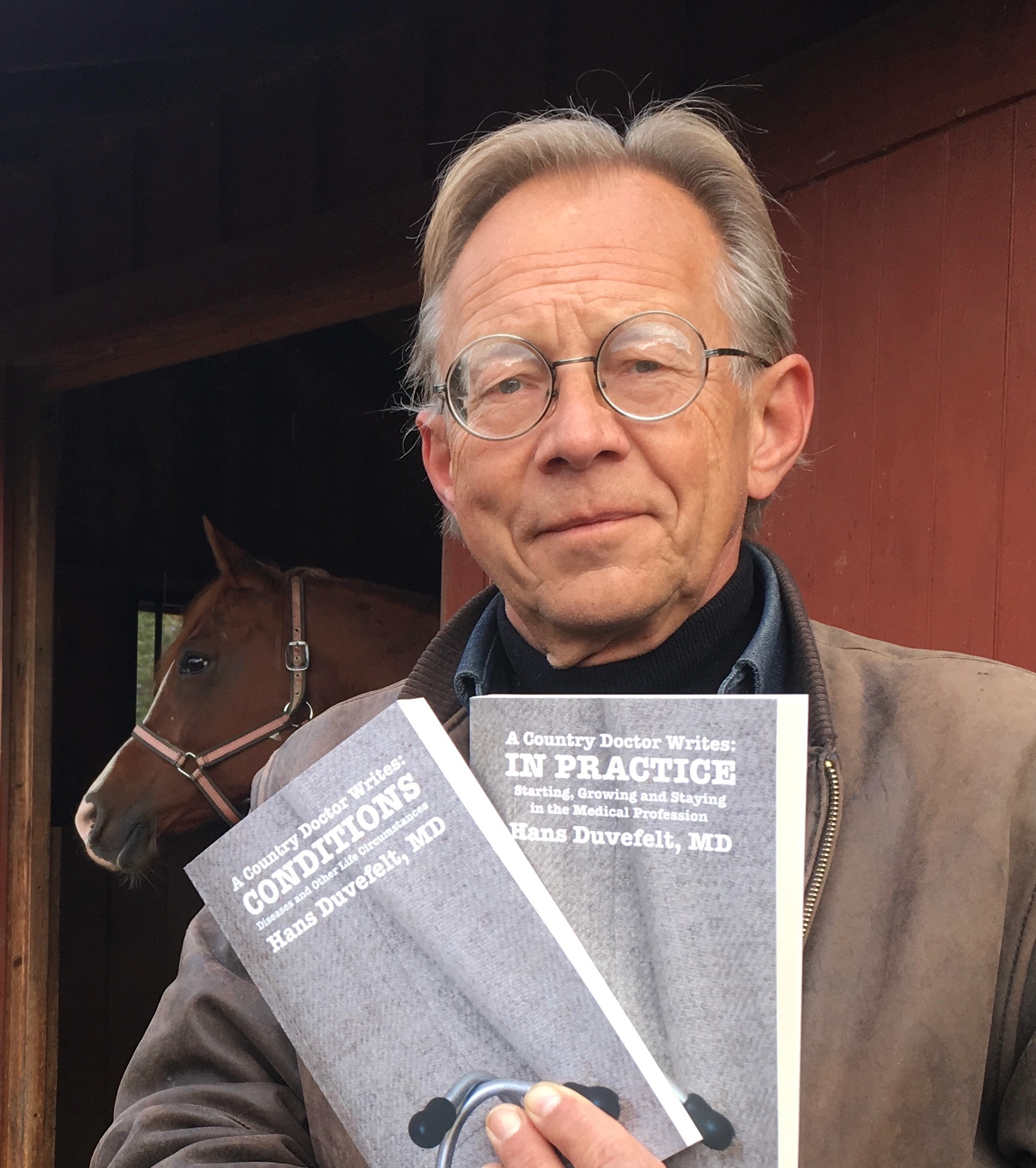
BOOKS BY HANS DUVEFELT, MD

CONDITIONS, Chapter 1: An Old, New Diagnosis

Top 25 Doctor Blogs Award

Doctor Blogs

Enter your email address to subscribe to this blog and receive notifications of new posts by email.

Mailbox

contact @ acountrydoctorwrites.com
Bookmark and Share
© A Country Doctor Writes, LLC 2008-2022 Unauthorized use and/or duplication of this material without express and written permission is strictly prohibited. Excerpts and links may be used, provided that full and clear credit is given.