Archive Page 35

How Much Time Should Doctors Spend With Their Patients?

I wonder if there is a difference between older and younger physicians when it comes to how much time we actually spend and would prefer to spend with patients. In 1984, fresh out of residency, I was the young man trying out a position in Livermore Falls, Maine. The two fifty-something family docs wrote their notes by hand standing up at the counter in a shared area. There wasn’t a whole lot of other paperwork to do.

Now, I read statistics from the American Medical Association that doctors spend more than 50 percent of their time with their EMRs, which at least to a degreee means away from their patients. I guess I’m a little slow, but it’s finally becoming clear to me why I am always behind on my charts.

Being old school, I have little patience for the fact that I am expected to tear myself away from my patients – worried, suffering fellow human beings – because the technology I’m required to use is pathetically clumsy and obviously not created by people like me who know and respect what I need in order to help my patients.

In the early years of my practice, nurses and medical assistants, like veterinary technicians today, were allowed to give medical advice and order tests based on common practice, verbal orders or “common sense”. In my Epic EHR, I have to “touch” everything, down to signing off on a “conversation” after my nurse has done what I asked her to do. And only I am allowed to give advice that any available grandmother would have dished out instantly and free of charge – if people had them around anymore.

I feel I’m in a culture clashing time warp.

How understanding can we expect patients to be when half of the time they hoped to spend with us, we’re interacting with a machine, ultimately for their benefit, but often in ways that are invisible to them.

I grew up before there were computers, smartphones or EMRs. But yet I think I’m more impatient with their inadequacies than younger providers who grew up playing video games. Not that I quite understand why they’re more tolerant of bad technology than I am, but I guess I expected that the future would bring more seamless, unobtrusive technology than it actually did.

And, speaking of computer games, compare them with today’s EMRs:
From Warrior to Wise Man: Former Coast Guard Reflecting on the Healthcare Workplace

Walter speaks slowly and always thinks before he opens his mouth. I would not have guessed he used to be a soldier. He seems more like a philosopher. He has suggested books for me that have helped me make some sort of sense of what is happening in the world today.

He is part of my team and I find him a great asset. He is a calming influence on my patients and never seems to make snap judgements, which is how I pictured people in the armed services had to function.

Tonight we were talking about my latest article about burnout. Walter surprised me again about his Coast Guard experience. They have policies and officers focusing on work-life balance. As far as I can see, healthcare does not. But in many ways we are similar organizations. We have some fancy equipment but our most important resource is our human capital, specially trained to work under stressful conditions in keeping their fellow human beings safe from harm.

Walter explained that the Coast Guard is ready to step in to prevent burnout and undue stress, to protect their workforce from overextending. I found this striking, to borrow a military term. The armed services are prepared for crises and disasters but make it a priority to consider what their staff can handle. And not every day is a crisis. But in medicine, we sometimes feel that every day is a crisis.

There are more tasks/messages/results and refills than there is slack in our patient schedules to carry out. Our patients have more concerns than our allotted appointment times can give justice to. For many of us, the constant backlog is a major burnout factor.

I have read the Coast Guard’s 2017-2022 Strategic Plan for their Health, Safety and Work-Life Directorate. It may be just a bunch of words, but I haven’t seen anything like it in my line of work.

Maybe there should be something like this for the nation’s healthcare workforce?

.

A Country Doctor Reads: What if Burnout Is Less About Work and More About Isolation? (NYT)

This weekend I read a piece in The New York Times that put a slightly different slant on what burnout, in the case of physician burnout, is or is caused by. We have heard theories from being asked to do the wrong thing, like data entry, to “moral injury” to my favorite, “burnout skills“, when you keep trying to do the impossible because people praise you when you pull it off.

Tish Harrison Warren’s piece is a dialog between her and psychiatrist/author Curt Thompson. He focuses on isolation as a driver of burnout:

Assume that if you’re burned out, your brain needs the help of another brain. Your brain is not going to be OK until or unless you have the experience and opportunity of being in the presence of someone else who can begin to ask you the kind of questions that will allow you to name the things that you’re experiencing.

The moment that you start to tell your story vulnerably to someone else, and that person meets you with empathy — without trying to fix your loneliness, without trying to fix your shame — your entire body will begin to change. Not all at once. But you feel distinctly different.

I’m not as lonely in that moment because you are with me. And I sense you sensing me. That’s a neural reality.

I have written about burnout many times. The NYT article made me remember that I once also wrote about missing the doctors lounge and how I once tried to start a slack group among my colleagues. It never really took off but I think the point about isolation feeding burnout is very valid. Back when there were doctors lounges, we would talk with colleagues. Even in the office when I started out we scribbled our chart notes very quickly and then we would have time and space to discuss our cases or other things with our colleagues. Now we are tied to the computers, feeding the big machine that controls each of our lives.

As often before, my thoughts go to a James Taylor song, one about working in isolation to feed a big machine – Millworker:

Then it’s me and my machine

For the rest of the morning

For the rest of the afternoon

And the rest of my life

And, later:

And I have been the fool

To let this manufacturer

Use my body for a tool

But, when all is said and done, I am not burned out, as I say in one of my videos. I work at looking beyond my obstacles and I focus on my patient encounters and my curiosity.

But I wish I wasn’t as isolated as I am, in part simply due to the pandemic. I mean, even medical staff meetings are virtual these days. Like Hollywood Squares…

My Fibromyalgia Patient With Chronic Back Pain and Gout Swears That Colchicine is a Miracle For All Three of Her Painful Conditions

Mary Madore is no stranger to pain, but it seems that over our last couple of visits, I have eliminated or mitigated all her painful conditions. She didn’t make good on it, but the other day she proclaimed “I could kiss you”.

Like many other people who have had their gallbladder removed, she has had terrible yellow diarrhea and abdominal pain, not just after her surgery, but even decades before. I explained simplistically “you seem to have too much random bile in your gut” and prescribed her cholestyramine pills to bind her bile. That worked like a charm.

Then we had her gout (read my basic treatise on gout here). She gets emotionally imbalanced on prednisone, so I tried her on colchicine for her smoldering, chronic gout. It worked, but I didn’t see my way to starting allopurinol for her, since it often aggravates gout in the beginning and patients often need prednisone then. It is taking two colchicine pills a day to control her symptoms, and we had to first get her off her blood pressure medication, carvedilol, because of the interaction between it and colchicine, but it’s working.

Not only that, but she told me her fibromyalgia pain is half of what it used to be and her chronic, debilitating back pain is 90% better.

This sent me googling the literature.

My search results were mixed:

Intravenous colchicine has shown some, albeit temporary, benefit for back pain. Oral colchicine has not shown benefit in double blind studies.

There is no good evidence that it helps fibromyalgia. In fact, there are reports that long term use can cause fibromyalgia or something like it.

Of course, we know colchicine is a powerful anti inflammatory drug that can treat many conditions. Its use dates back to ancient Egypt 1,500 BC. A short list from an excellent review article includes the following:

  • Gout
  • Pseudogout
  • Pericarditis
  • Bechet’s Disease
  • Actinic keratosis
  • Familial Mediterranean Fever
  • Secondary Amyloidosis
  • Epidermolysis bullosa acquisita
  • Leukocytic vasculitis
  • Sweet’s syndrome
  • Recurrent aphtous stomatitis
  • Chronic urticaria
  • Granuloma Annulare
  • Hennoch Shönlein Purpura

Colchicine was briefly studied as a potential Covid drug with dismal results.

Colchicine appears to lower overall cancer incidence and cardiovascular disease. An older study by Crittenden found that the myocardial infarction prevalence in colchicine treated gout patients was 1.2% versus 2.6% in patients on other treatments. A more recent study found a 49% lower risk of primary cardiovascular events in colchicine users and also a 73% reduction in all cause mortality.

This is better than the 25% risk reduction of the latest fad drug, Jardiance, which reduces blood sugar by lowering the renal threshold for peeing out sugar. It is now recommended by cardiologists for reducing cardiovascular deaths even in non-diabetics. Colchicine is more in the benefit range of atorvastatin, Lipitor, which was at one point the best selling drug in this country.

Will colchicine ever climb to those heights? Not likely, because it is old, generic and now cheap again. But there is an irony here: Colchicine never underwent the rigorous approval process of modern times because it was such an old drug. The FDA disallowed several such old medications and an enterprising drug company offered to do the testing in return for an exclusive patent of this ancient drug. They got what they wanted and the price went up astronomically. But now colchicine is generic again and there is no money to be made from these promising newer cardiovascular and cancer reducing properties.

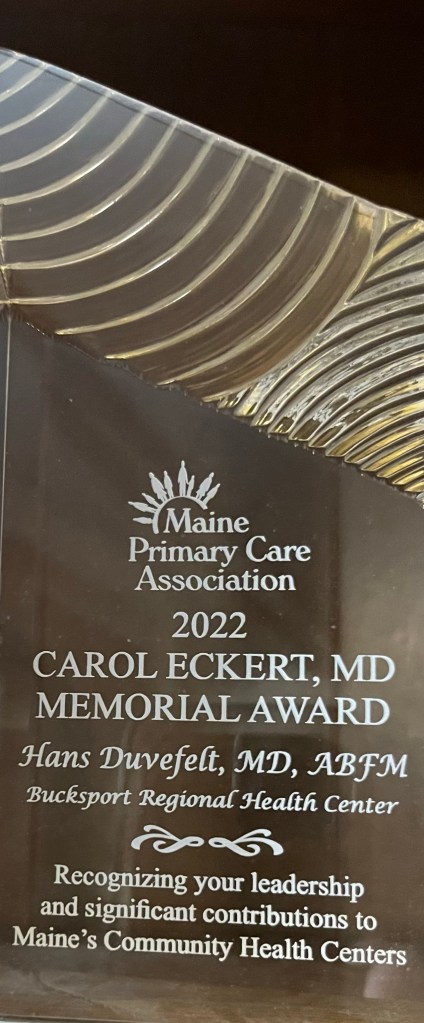
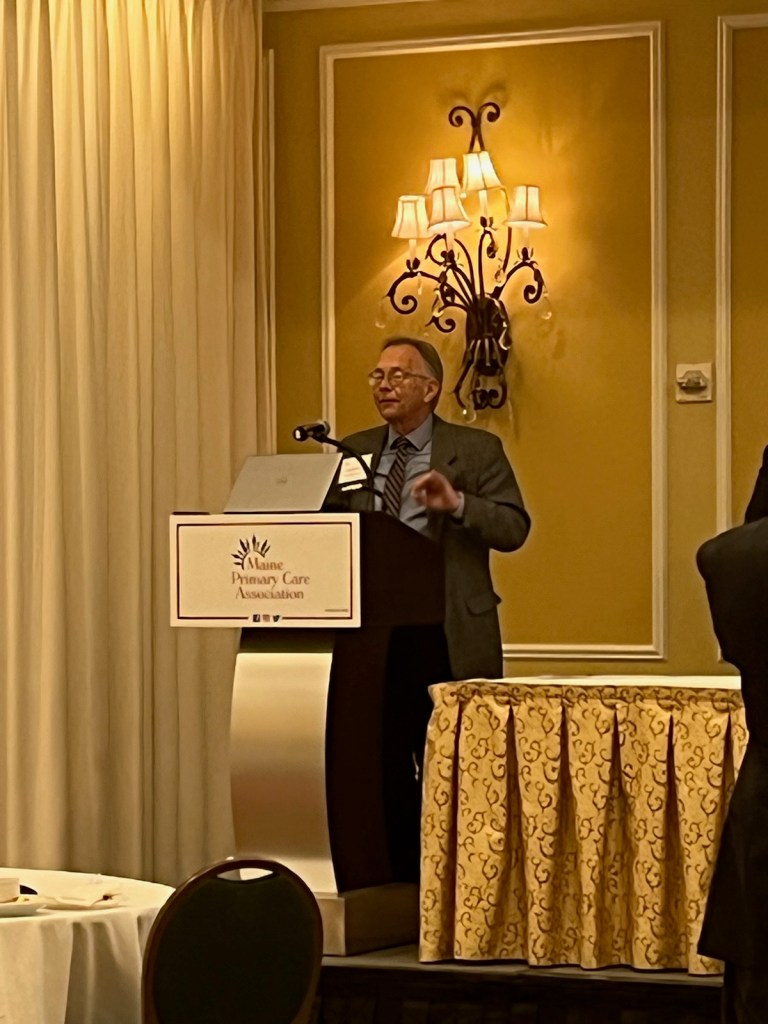
Award Day

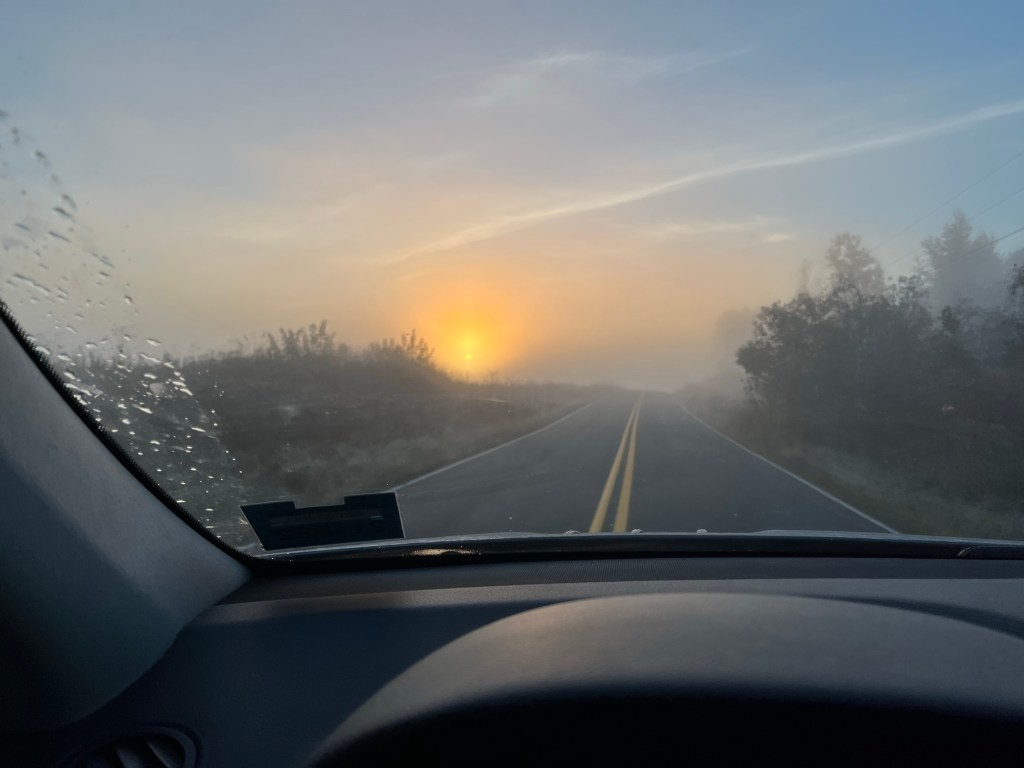
It was a 12 hour day, from sunrise to moonrise, almost 500 miles round-trip to the Samoset for an award that at my age almost feels like a lifetime achievement award, but I’m not done yet.


I just realized none of the posts show on an iPad or a computer, but they do show on an iPhone. WordPress is working on this. In the meantime, please visit my Substack.


Osler said “Listen to your patient, he is telling you the diagnosis”. Duvefelt says “Listen to your patient, he is telling you what kind of doctor he needs you to be”.


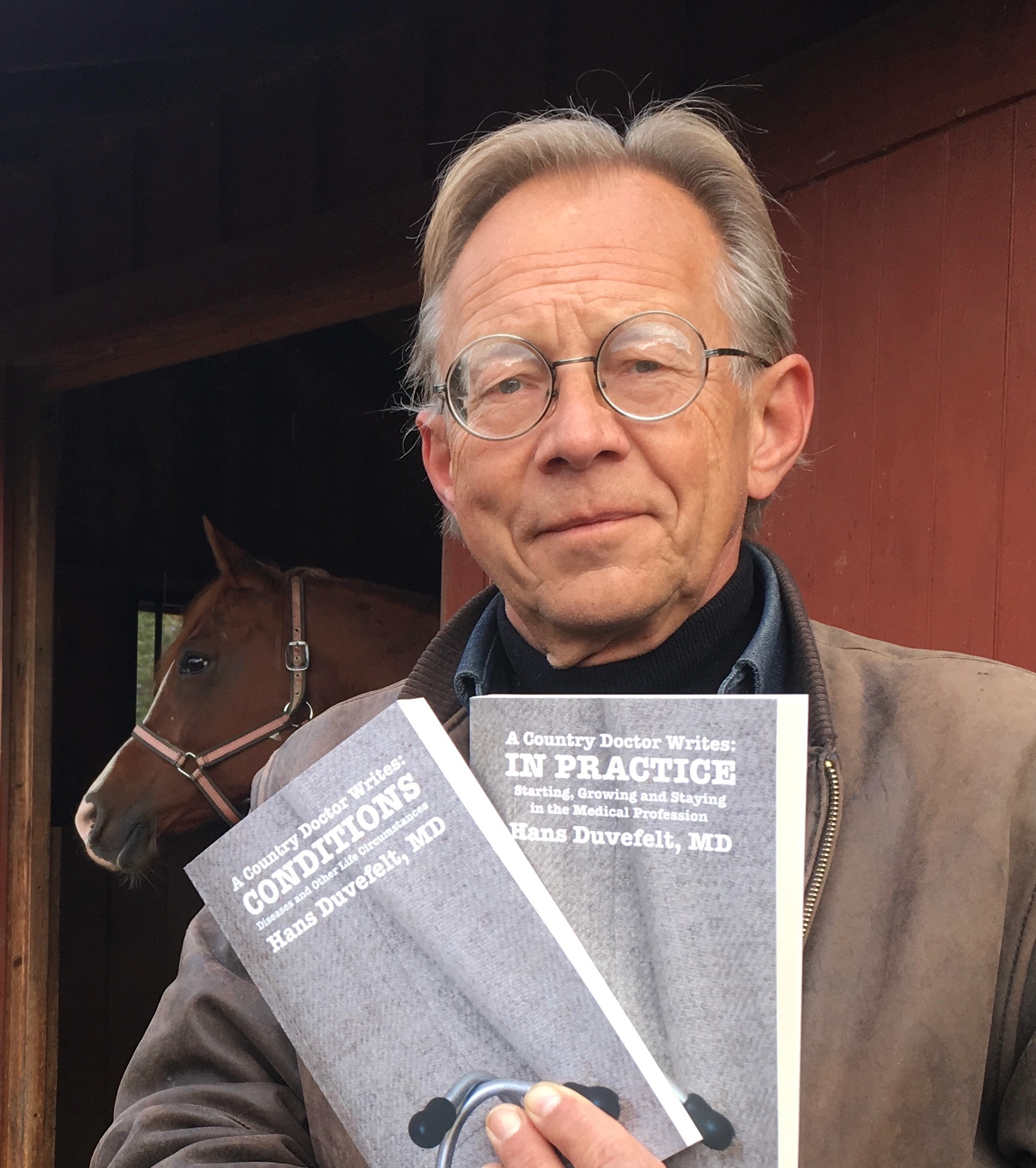
BOOKS BY HANS DUVEFELT, MD

CONDITIONS, Chapter 1: An Old, New Diagnosis

Top 25 Doctor Blogs Award

Doctor Blogs

Enter your email address to subscribe to this blog and receive notifications of new posts by email.

Mailbox

contact @ acountrydoctorwrites.com
Bookmark and Share
© A Country Doctor Writes, LLC 2008-2022 Unauthorized use and/or duplication of this material without express and written permission is strictly prohibited. Excerpts and links may be used, provided that full and clear credit is given.