Archive Page 22

On the Road and at Home in Maine: I Do House Calls


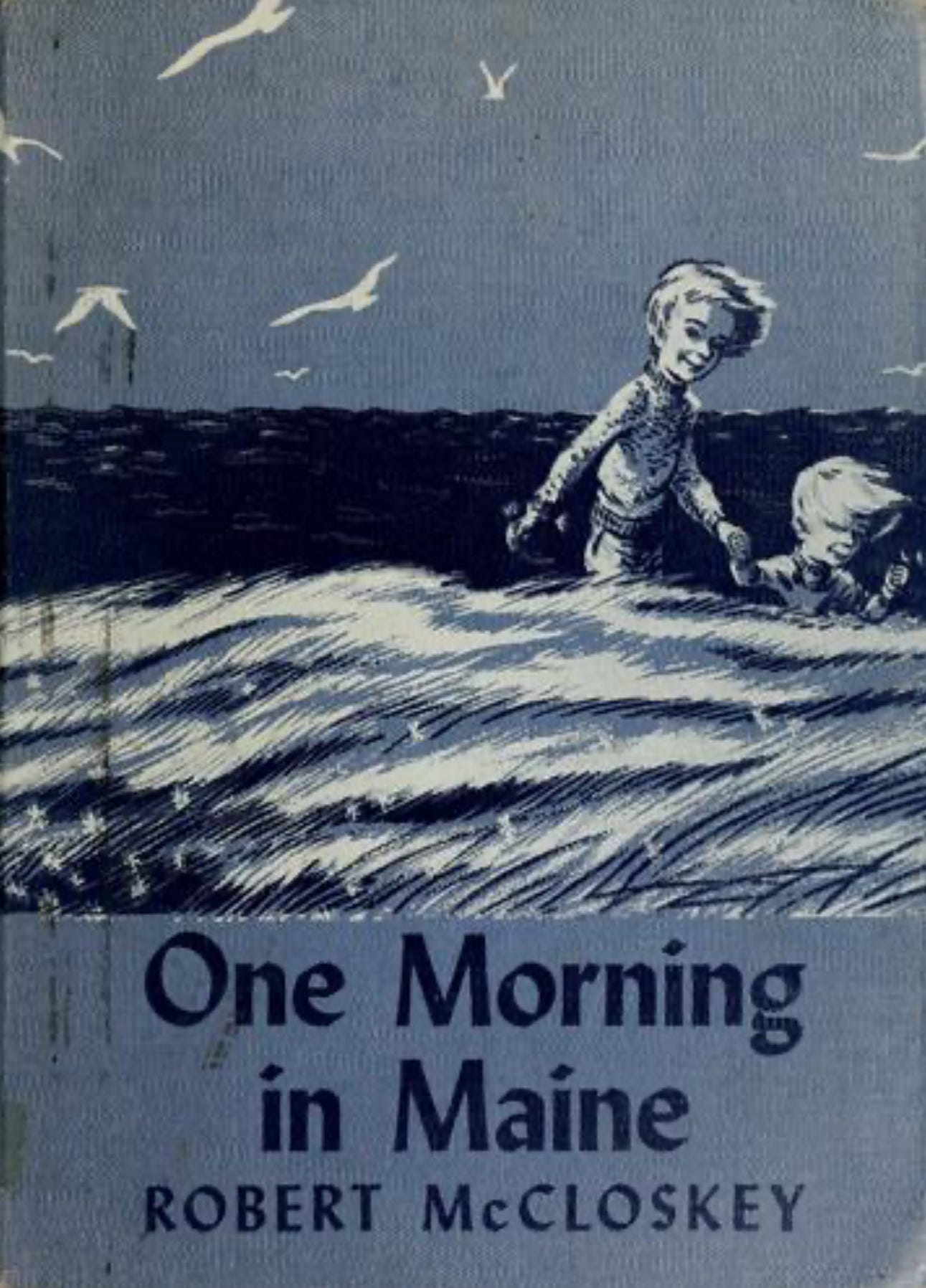
One Morning in Maine (that’s a famous children’s book, at least locally), I set off to my new office in Presque Isle. There is a fairly dense fog as I leave the house at 7:30. I usually don’t have to leave this early, but on this day I am scheduled for a mask fitting, with COVID still a close reality. 

I didn’t want to go through Caribou in the morning traffic on Route 1 to Presque Isle with lots of stops for red lights, so I am following the Grimes Road along the northern shore of the Aroostook river to Fort Fairfield. As the fog slowly lifts, I see more and more of the river and the foliage. I pass Rocking S Ranch, where there are groups of boarded horses eating round bale hay in the nearly barren fields. My own horses probably wouldn’t eat round bale; I left them munching on second cut hay, an almost rare delicacy here in northern Maine. 

Going from Fort Fairfield toward Presque Isle, I don’t turn right on my usual weekend shopping road that would bring me past Lowe’s to a fairly busy part of town, but continue past Amish country with more horses in the fields and some shackled to buggies standing outside the farm houses. In Easton I turn right and eventually pass the small hospital in Presque Isle and then turn onto a side street before I even see the very first traffic light on my journey and I actually arrive at the office in less time than if I had taken the busiest road through town.

My first house call for the day is an hour away, close to Houlton. I see Edwin Starks, a man with multiple medical problems and spotty medical care. Halfway through our one hour initial visit I know that he had been misdiagnosed and that he suffers from an iatrogenic condition (an avoidable disease caused by his previous providers’ misguided medication choices).

Read the whole post;

https://acdw.substack.com/p/on-the-road-and-at-home-in-maine

Who Wants to be a Primary Care Doctor in Maine?

I am leaving my position as a primary care doctor in Maine. My reason is the EMR’s workflows. My nurse can’t sort incoming information for me. I’m the first one to see unsorted reports and as one of the busiest providers in my organization, I really miss the supportive work of prioritizing incoming information that my nurse used to be allowed to provide for me.

Modern Electronic Medical Records send everything to the provider, unsorted, unprioritized, and we then need to spoon-feed this back to our support staff. I think it’s inefficient, unsafe and unethical to bottleneck everything through the provider. I believe this is mostly done for malpractice/liability types of reasons, but I can’t work without a team. In normal businesses support staff is always filtering information to the boss. The boss doesn’t open the mail. That’s how it works in today’s primary care and it’s inefficient and it’s wrong.

And just so you know, here is my LinkedIn listing of available primary care doctor jobs within easy commuting distance from my house. Primary care as we know it is falling apart.

In the coming weeks, I will start posting regularly on my Substack about my new house call practice under the heading “progress notes”.

See you there!

Switching Careers at 70!

Hard to believe, this is moving fast. I resigned in July thinking I had a three month notice, but I misremembered the contract, it was a six month notice. The only details I care about are the medical details, everything else somehow seems less important to me. I forget errands on my way home all the time but tell me about a case and I’ll remember everything.

I have two more days of patient service for my current employer. Then I need to take some time to clean out my ridiculous 23 inboxes. Am I the only one who thinks the inboxes are abusive? After that I will transition to full-time with Galileo health. House calls about three days a week, remote work about two days a week. Smaller and sicker patient population, more nimble organization that seems to leverage provider input/effort better. I will continue to write, on my Substack primarily now. The category “progress notes” will be behind a paywall. Everything else will be free. Listen, I’m 70 years old, and I need to make a living into my old age.

But my goal in life, and in my writing, is to always under-promise an over-deliver

Http://acdw.substack.com/

Rule #1: Ask Questions, Even if You Think They’re Stupid. Rule #2: Use Google

One of my group home residents has all kinds of problems that I and several specialists have grappled with. In the past few weeks, he developed a new one. He had already had episodes of altered consciousness without cardiac or neurologic explanation.

Not long ago, a second neurologic opinion suggested that the patient’s risperidone, a modern “atypical” antipsychotic, might be the cause. So the psychiatrist switched the patient to quetiapine, another drug in the same class. Personally I find quetiapine a scarier drug in many ways, but my patient seemed to have fewer episodes on the new drug. But two weeks ago there seemed to be new spells, and they included low blood sugars. My patient is not a diabetic, but one of the lead workers at the group home is a former medical assistant of mine with a very good head on his shoulders. He checked the blood sugar and it was lower than expected for the time of day and foods eaten. Blood sugars had never been low in this patient before, even during near collapses.

When I heard about this, I ordered a paired fasting blood sugar and insulin level. They wre normal, making an insulin producing tumor an unlikely explanation.

In today’s visit, D. posed the question “do you think the quetiapine could be the cause?”

“I don’t know”, I said and googled “quetiapine hypoglycemia” and, sure enough, there was a case report of just this apparent side effect.

https://www.ncbi.nlm.nih.gov/pmc/articles/PMC7387607/#:~:text=By%20interacting%20with%20these%20receptors,cells%20and%20thereby%20cause%20hypoglycemia.&text=Insulin%20is%20secreted%20by%20pancreatic,the%20islets%20of%20Langer%2Dhans

“How helpful is the quetiapine for the moods, compared to the risperidone?”, I asked.

“Better”, D. answered. “And the day we did the fasting bloodwork, which is when the sinus surgery took place, he was off the wall and the anesthesiologist had to give him Haldol.”

So we agreed to keep the quetiapine, schedule snacks between meals and monitor the blood sugars. But at least we think we know what’s going on. Hopefully we can work around all this…

Apropos My Recent Post About the Lack of Leverage in Primary Care (from the Washington Post)

I wrote in September about how surgeons’ time and expertise is leveraged in their specialties while primary care doctors are largely left to fend for themselves, doing many things that severely diminish their productivity and push them toward burnout.

Shortly after I did that, I got an email newsletter that quoted and linked to an article in the Washington Post making the same observation and said primary care is at a tipping point. Today, only 25% of doctors are in primary care. This means there aren’t enough primary care doctors for everyone who needs a PCP (which many insurance companies even require).

The article points out that in 1980, almost 2/3 of medical visits were in primary care and 1/3 were in specialty medicine. By 2013, those statistics were reversed.

This is what the Post states has caused this switch, besides the income inequality between generalists and specialists:

“But the dispirited feeling that drives doctors away from primary care has to do with far more than money. It’s a lack of respect for nonspecialists. It’s the rising pressure to see and bill more patients: Employed doctors often coordinate the care of as many as 2,000 people, many of whom have multiple problems.

And it’s the lack of assistance. Profitable centers such as orthopedic and gastroenterology clinics usually have a phalanx of support staff. Primary care clinics run close to the bone.”

https://www.washingtonpost.com/opinions/2023/09/05/lack-primary-care-tipping-point/


I just realized none of the posts show on an iPad or a computer, but they do show on an iPhone. WordPress is working on this. In the meantime, please visit my Substack.


Osler said “Listen to your patient, he is telling you the diagnosis”. Duvefelt says “Listen to your patient, he is telling you what kind of doctor he needs you to be”.


BOOKS BY HANS DUVEFELT, MD

CONDITIONS, Chapter 1: An Old, New Diagnosis

Top 25 Doctor Blogs Award

Doctor Blogs

Enter your email address to subscribe to this blog and receive notifications of new posts by email.

Mailbox

contact @ acountrydoctorwrites.com
Bookmark and Share
© A Country Doctor Writes, LLC 2008-2022 Unauthorized use and/or duplication of this material without express and written permission is strictly prohibited. Excerpts and links may be used, provided that full and clear credit is given.


