Archive Page 208

You Are What You Eat

Patients often chuckle when I tell them I am a recovering vegetarian. As a child I was pretty squeamish about things like chicken drumsticks, spare ribs and other anatomically identifiable foods. In my teens I decided the only rational way to handle my qualms was to be a vegetarian.

Decades later, and somewhat overweight, I decided to go back to being a picky eater instead of a strict vegetarian. Thus I increased the protein content of my diet and lost fifteen pounds. Reading Barry Sears’ “The Zone” and Atkins helped me understand what had happened to me.

All along I have been nervous of artificial ingredients and unnecessary additives. My wife has the same dietary background as I have, and shares my concerns.

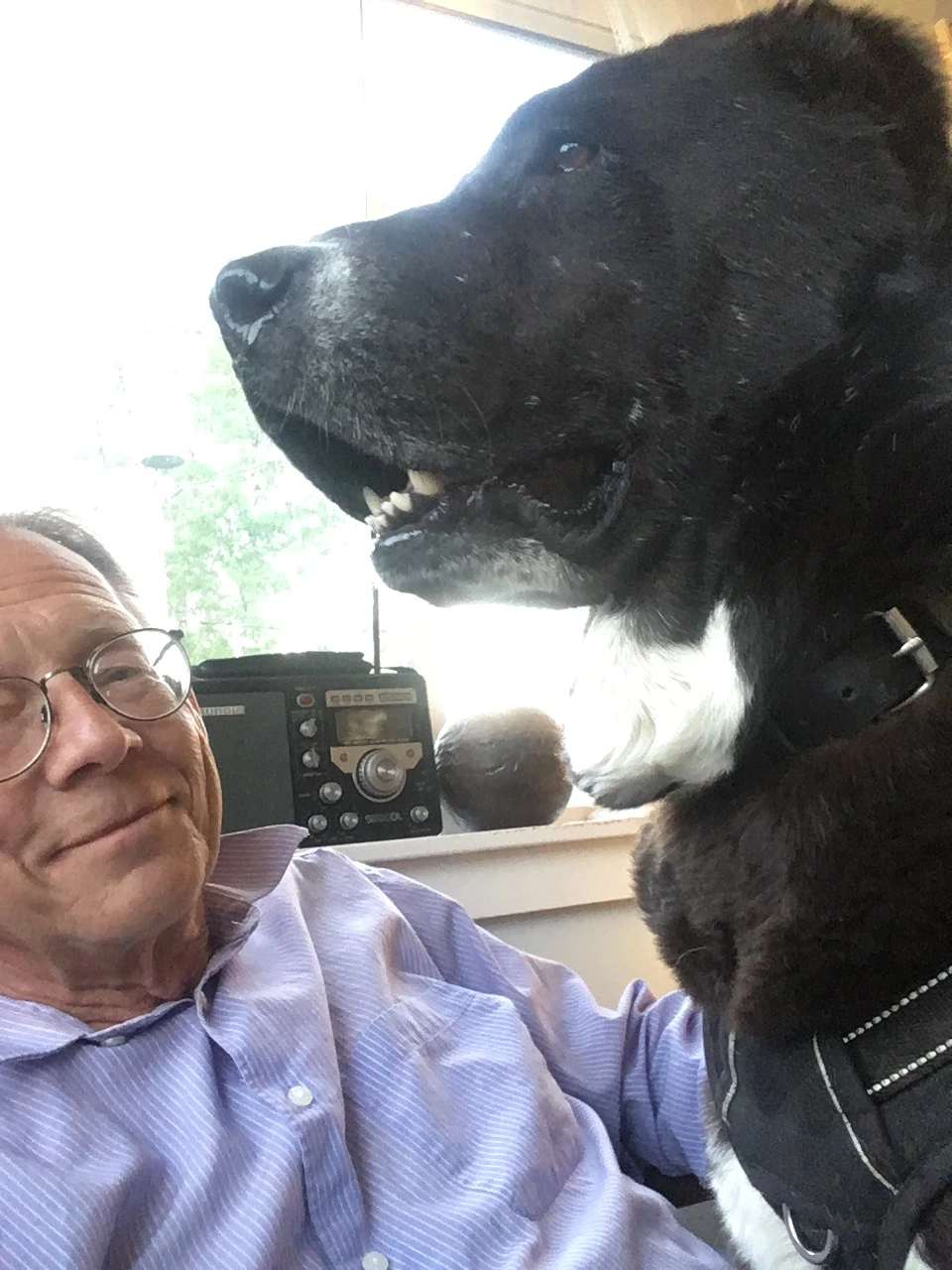
Today, we have a one-year-old German shepherd puppy raised on organic human grade food. He has a coat unlike any other dog of his breed that I have ever seen.

This weekend two things made me think again about food. The first one was a woman who is cooking for her dog and had read a book we also have, called “See Spot Live Longer”, which tells stories and provides facts about how bad commercial dog food is for your dog, both because of the low protein content and because of the inferiority of its ingredients.

The second thing I ran into this weekend was the September 25 issue of The New England Journal of Medicine – yes, I am behind on my reading – with an interesting article entitled “Storm over Statins – The Controversy Surrounding Pharmacologic Treatment of Children”.

This article quotes the American Academy of Pediatrics 2008 recommendation of doing cholesterol testing on two-year-olds and prescribing “statin” drugs like Lipitor to 8-year-olds(!). This makes me think of my puppy: Why don’t we just feed them right in the first place?

Happy Hour

Between 4 and 5 pm is a time when many people start to wind down, even at work. In our clinic it is usually a mad dash for the finish. We often begin the last hour of the day with all bases loaded – a patient in every exam room.

This is also a time when some of the strangest phone calls come in. Today we heard from Beulah Betts.

Beulah Betts is a remarkable 94-year-old woman. She is almost blind, and lives by herself on Yellow Brick Road, which is a trailer park from the late sixties or early seventies. Her home is neat as a pin, even though she doesn’t see well enough to watch television, read the paper or even see where she put the vacuum cleaner. Her refrigerator door is full of pictures of relatives’ children, even though she cannot see them.

I did a house call there a week or two ago. Her two younger sisters were there, obviously a bit concerned about Beulah’s failing memory. Soon after I arrived, Beulah told me something important about her medications:

“I didn’t know what all these pills were for, so I stopped them.

I was humbled. Other than her macular degeneration and her memory, she seemed to be in great shape. The trailer was as neat as ever, and she looked good, with normal vital signs despite her noncompliance.

I quickly proposed a compromise. Her cholesterol pill and her eye vitamins seemed more important than the rest of them:

“Why don’t you take these two kinds of pills and we’ll put the rest of them away.

She was O.K. with that, and we finished the home visit.

Today, shortly after 4 pm, Autumn got the call from Beulah as she suddenly missed all her other pills. I paused for a moment. Was this her usual, mild confusion, or had she had a little too much of that orange soda-looking concoction she once admitted to keeping in her refrigerator? Should I call her sisters, or maybe Adult Protective Services? I decided against it; she was probably safe. Autumn was able to confirm with Beulah that she still had the cholesterol pills and the eye vitamins.

At 4:45 Beulah called again. I was still up to my ears in messages and had two more patient visits to wrap up. This time, she talked to my appointment secretary, Gwen.

Gwen was clearly concerned. Beulah claimed she had been at our clinic this afternoon and we wouldn’t give her any medication.

My heart sank. Was Beulah really that confused? Was she drinking? What was going on?

I called Beulah’s sister, Beverly. That’s how the story finally came together:

Beulah had an appointment with the eye doctor today, long overdue. I had actually asked Autumn to call the eye doctor to facilitate this. Beulah has now developed glaucoma, and had been given a prescription for eye drops. When Beulah and Beverly found out how much the drug store was going to charge for the eye drops, they had come to our clinic. Someone at the front desk had taken the prescription and forwarded it to the staff member who helps patients apply to the pharmaceutical companies for free medications. Because of how wild things tend to be here between 4 and 5 pm, nobody had told me yet or had had an opportunity to document their conversations.

So, during our Bewitching Hour, I had myself worrying that poor Beulah was hallucinating about coming to the doctor’s office while sipping too much of her yellow concoction during her Happy Hour.

As it turned out, she was no more confused than our clinic or I was!

One Last Signature

Benjamin “Bip” Alderton died yesterday morning. The Hospice nurse called a few minutes after eight, but I already knew; in a small town everyone always knows these things. I recorded the telephone call on our usual sticky-form:

Date:                           10/3/08
Time:                          08:22
Patient’s name:           “Bip” Alderton
Caller’s name:             Heather Snow, RN
Problem:                     Patient passed away peacefully at 05:30.
Plan:                           (I left this blank)
Physician’s Signature: (Signed)

Within two hours the funeral parlor’s typical glossy brown marble-like document folder appeared at my desk with his death certificate. I paused for a few moments before I opened it.

I moved to this area in 1985. The clinic had located a house for rent just a few miles away, a lovely early 1800’s center-chimney cape with crooked wide pine floors, original wainscoting and a nice yard for their newly recruited 32 year old doctor’s young family.

“Bip” Alderton was my next-door neighbor. I never did learn why people called him “Bip”. He was 55, the age I am now, worked at the mill and did some lobstering on the side. He became my patient, and although we were never close, we saw each other often enough that our lives intertwined when things happened to each of us.

His wife died from heart disease, and then when he was about seventy, he was severely injured in a car accident. Always a stubborn man, he learned to walk again, and within a couple of years you had to look hard to notice his limp and the pain he was in – he never complained, and never took anything for it after the first few months.

He developed atrial fibrillation, and had to take a blood thinner, so I saw him often as he came in for his blood tests to have his warfarin dose regulated.

Then, suddenly this summer, his prothrombin times started to fluctuate wildly. He hadn’t changed his diet, didn’t seem to have mixed up his pill bottles, and hadn’t taken any new medications or supplements. We both scratched our heads.

The explanation didn’t take long to reveal itself. Over just a couple of days, he developed jaundice and lost his appetite. His CT scan demonstrated widening of his bile ducts and the head of his pancreas looked enlarged.

A gastroenterologist did an ERCP procedure and was able to place a stent that opened his bile duct where it passed through the tumor, and a cancer surgeon offered “Bip” an operation called a Whipple procedure, which at age 78 is an almost heroic thing to do.

“Bip” thought about it for a few days, but decided against it. He had some pain and lost weight, but the stent worked for a couple of months. We got Hospice involved, and they kept him comfortable. Periodically they called for updates and new medication orders, all properly documented and signed in his thick medical record.

I opened the brown document folder and read the entries filled in by the funeral parlor: Place of birth, ethnicity and so on. Then I completed my part, in black ink:

Cause of death:                               Pancreas cancer.
Time between onset and death:       4 months.
Other contributing diagnoses:        (I thought about losing a wife and almost being killed in a car accident, but left this field blank.)
Did you view the body after death: No.
Certifier’s name and address:         (done)
Signature:                                   I put my signature on the last piece of paperwork in the medical history of my friend and neighbor, and carefully closed the document folder.

I was still thinking about how comfortable it had been to have “Bip” and Ellen right next door that first year here when Autumn startled me by tapping me on the arm:

“Mrs. Pye’s lab work is back!”

Left Behind (In the Dust)

I have enjoyed reading Family Practice Management for several years. Even though I work at a Federally Qualified Health Center (FQHC), which operates by different rules than private offices, somewhat like the Socialized Medicine of Sweden, I like reading management/business books and magazines.

The issue I received a few days ago had a sheet glued to its front page stating in bold letters: “This is your last issue – unless you act NOW!”

These are my options: I can get the digital (online) version for free, starting in November, if I give them an e-mail address to send it to, or I can continue to get the print version for an undisclosed fee; I have to log on to their website to find out what it would cost me. Hmmm… where does that leave unconnected physicians?

Don’t get me wrong – I’m not against the Internet; I own six domain names, six blogs and even more e-mail accounts. I just don’t prefer to read journals and magazines online; it seems cozier to fall asleep with a magazine than with a laptop. I also feel forced to switch e-mail accounts every several months due to the sheer volume of junk mail I get. I just can’t trust that I’ll receive important communications through e-mail.

A while ago the American Board of Family Medicine sent me a newsletter that stated that the next notification of my upcoming Board Certification would ONLY be sent via e-mail.

I called them up to protest; the best they could do for me was to give me the e-mail address of their President. Hah! I know a trap when I see one.

There is a religious bestselling book series called “Left Behind”, about those left behind after the Apocalypse. In a sense, this is what’s happening now with the Internet as the predominant and sometimes only way of communication.

Playing Doctor

Being middle aged is not very glamorous. For months now, I have had to work extra hard to take blood pressures. I always pump the sphygmomanometer up higher than the nurses and release the pressure slower, and consequently have a reputation of finding more hypertension cases than most…

In simple conversations at home, I have had to ask my wife to repeat things a lot lately. I haven’t heard the crickets or the frogs on the river from our bedroom for a couple of years now, and my tinnitus once had me worry that the screech in the sound system at the symphony was an exacerbation of my own medical problem.

Today, I resolved to do something about it, and brought home my housecall bag. After dinner, which we in usual fashion had in the sunroom with a kerosene lamp on the table and a nice bottle of Cotes du Rhone, I asked my wife, who is a medical provider no longer doing the work I do, to check me for ear wax.

I had not anticipated the reaction I got. She broke down in hysterical laughter. In between paroxysms of giggling I heard her utter the words “middle aged” and “playing doctor”.

So, after our romantic dinner and her giggling spell, she checked my ears. The verdict was not what I wanted: No wax. So now I have to weigh my options. I am thinking I might get one of those fancy stethoscopes with built-in amplification. So far I can handle conversations if I pay close attention, and I don’t think I need a hearing aid just yet.

After all, I hear a lot of men during their annual physical exams say: “My wife says I don’t hear too well.”

I always reassure them: “They all say that!”


I just realized none of the posts show on an iPad or a computer, but they do show on an iPhone. WordPress is working on this. In the meantime, please visit my Substack.


Osler said “Listen to your patient, he is telling you the diagnosis”. Duvefelt says “Listen to your patient, he is telling you what kind of doctor he needs you to be”.


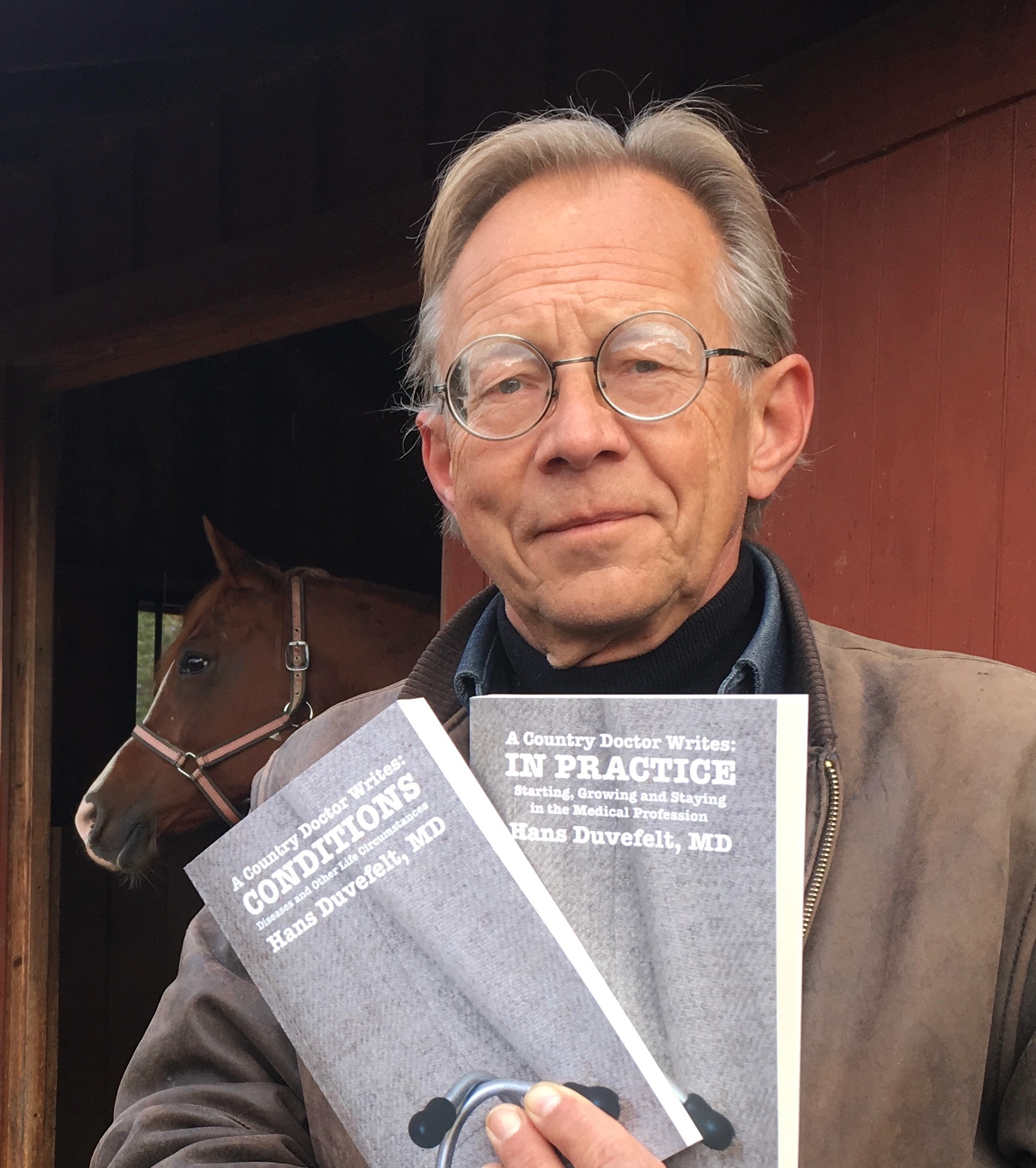
BOOKS BY HANS DUVEFELT, MD

CONDITIONS, Chapter 1: An Old, New Diagnosis

Top 25 Doctor Blogs Award

Doctor Blogs

Enter your email address to subscribe to this blog and receive notifications of new posts by email.

Mailbox

contact @ acountrydoctorwrites.com
Bookmark and Share
© A Country Doctor Writes, LLC 2008-2022 Unauthorized use and/or duplication of this material without express and written permission is strictly prohibited. Excerpts and links may be used, provided that full and clear credit is given.