Archive Page 2

The Power of a Diagnosis

Another Early and Late Career Collaboration with Lilian White, MD

A diagnosis is something very powerful. It can unlock a cure or clinch a death sentence. It can give you protection and benefits or it can exclude you from your chosen career.

Because healthcare is so much about public health, prevention and chronic disease management these days, diagnostic acumen is an underestimated skill in my opinion.

Diagnosis is the foundation of sick care, the oldest iteration of the practice of medicine. Half a century ago, many specialties involved more diagnosis than treatment. Neurology seemed to have very little in the way of treatment to offer back then, for example.

When I was a first year medical student, our university hospital didn’t yet have a CT scanner; the brain CT was introduced in Sweden the following year. The full body scanner came to Sweden in my third year.

So a thorough clinical history and bedside physical examination were the fundamental tools in the diagnostic process. I learned lung auscultation from a couple of old pulmonologists with experience evaluating tuberculosis patients. They were experts at percussion, the almost forgotten technique of listening to the sound created by tapping on the chest wall. People said they could draw a picture that predicted what a patient’s chest X-ray would look like.

We certainly have better imaging capabilities now, but so many diseases don’t show up in pictures. Take movement disorders, headaches, even chronic belly pain. Symptom history and simple observation and examination have not become obsolete.

In our everyday practice, we see diagnoses play many different roles for us as medical providers, for our patients and for the organizations we work within as well as for insurance companies and ultimately Uncle Sam.

A DIAGNOSIS CAN OPEN DOORS

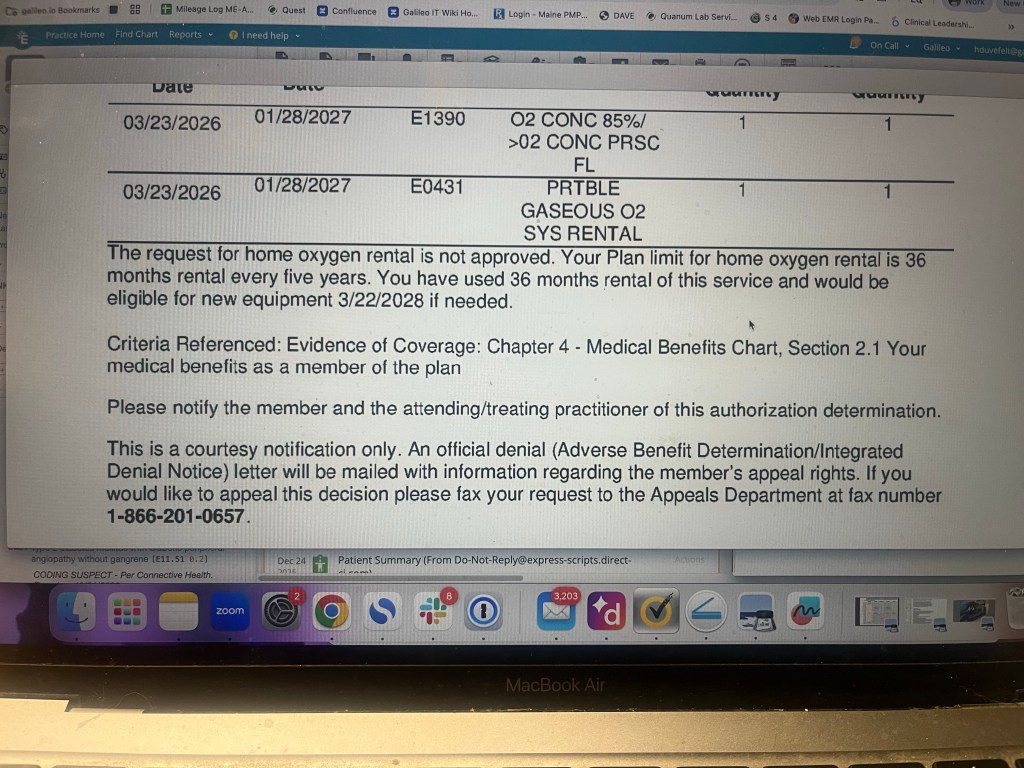
A patient of mine with chronic respiratory failure on oxygen 24/7 was bothered by thick sticky phlegm. Maximum doses of guaifenesin did not help her raise much of it. I wanted to try an old nebulized medication called acetylcysteine. It required a prior authorization. The diagnosis I assumed would qualify her was chronic respiratory failure with hypoxemia, J96.11. The prior authorization was denied. I managed to find a list of diagnoses that would cover this medication. It turned out that the much less ominous ICD 10 code for unspecified emphysema, J43.9, got it approved.

I think this is a fairly random ruling by Medicare. But little things like that fill our days. Knowing what diagnosis covers what in terms of qualifying for a test or treatment is part of a bigger phenomenon that I call metamedicine. Another example of metamedicine is that even though heart failure can typically cause shortness of breath and/or swelling of the legs, Medicare pays for the blood test BNP that we use to diagnose and quantify heart failure only if there is shortness of breath; leg swelling will not cover it.

A DIAGNOSIS BRINGS MONEY TO PROVIDERS AND INSURANCE COMPANIES

Because so much chronic care is managed and measured, it has become increasingly important to predict how costly each diagnosis is per year. This requires a degree of specificity when choosing the ICD 10 diagnostic codes. The more severe ones give you more “points“. And Medicare does not retain the codes over time. Each year they need to see a claim with active condition codes in order to predict their expenses. And now more and more they pay providers either directly or by making them earn or not earn bonuses if the cost to care for a patient is higher or lower than anticipated.

A diagnosis of depression with no indication of it being severe gives you no brownie points and no extra money in your pocket. Diabetes with complications is more profitable than diabetes without complications. And if we don’t assume that a person‘s mild to moderate chronic kidney disease is actually secondary to their diabetes, we lose an opportunity to score.

A DIAGNOSIS CAN SAVE YOUR LIFE OR MAKE YOU MISERABLE

Low-dose CT lung cancer screening and mammograms are examples of screening tests that may prevent getting a diagnosis too late for any hope of cure. Screening for Alzheimer’s disease isn’t likely to open doors to any radical and successful treatment. Some people might modify their disease trajectory by lifestyle changes, but how many of us would want to live the rest of our lives with the knowledge that we will come down with a disease like that? The benefit of prostate cancer screening has been debated for decades and one thing I learned in my training that still seems to hold true is that you may have to treat around 35 men for prostate cancer to actually save one life. The downside of treatment side effects, and also knowing that you have a cancer, even if most people don’t die from it, is something we may not be able to predict the effect of when we decide whether to screen or not.

A DIAGNOSIS CAN ELIMINATE THE SUFFERING OF UNCERTAINTY

For most clinicians, it can seem obvious that an annoying symptom that has lasted for decades is quite likely something harmless. That’s not how all patients see it. So many times I have found that an appropriate diagnosis or explanation of why they feel what they feel helps people stop worrying. As a primary care provider, we have to live with ambiguity and uncertainty, but that’s not how all human beings are made up. The closer we can come to a reasonable medical explanation of a symptom, the more we can help our patients get on with their lives and help themselves navigate their symptoms by developing an understanding of what makes them feel better or worse.

DIAGNOSTICIAN MAY BE AN EMERGING NICHE SPECIALTY

One of the greatest compliments I ever had, actually more than once, was “he is a brilliant diagnostician”. Maybe AI can help clinicians with less training make more accurate diagnoses as technology moves forward. But, now there is talk of making American medical school three years instead of four, even before medical AI is completely ready for prime time.

My Swedish medical school training was 5 1/2 years. After that, I did a two year rotating internship and then a three year family practice residency in this country. I have been a board certified family doctor for 41 years. I do love a medical mystery and have to confess that following treatment algorithms for chronic diseases all day long can be pretty boring. So at this stage of my career, it would be nice to be the in-house diagnostician who helps point patients care in the right direction. Maybe with an increasing percentage of primary care providers having shorter and increasingly even online training, diagnostic physician will become a new niche specialty?

Read Lilian White’s essay here:

Beyond Pattern Recognition: Illness Scripts Versus Pathophysiological Reasoning

https://jamanetwork.com/journals/jama/fullarticle/2839306

I read an interesting and a little provocative article in JAMA this weekend, Critical Thinking for 21st-Century Medicine—Moving Beyond Illness Scripts by Richard M. Schwartzstein, MD; Alexander A. Iyer, ScB

In the opening paragraph, they describe diagnostic errors this way:

Most diagnostic errors involve common diseases the physician did not consider rather than rare diseases the physician did not remember; they are thinking errors, not knowledge deficits.

They then start out describing how much of medical education views diagnosis as relying on pattern recognition. They describe it as “Illness scripts”, trying to match up the patient’s presentation with differential diagnoses and then ranking these by probability. AI uses pattern recognition and can be very good at it. But the authors advocate using a more pathophysiological way of reasoning. This sounds to me like taking a step away from the knee jerk rattling of differential diagnoses and envisioning what the processes are inside the body that could cause a given symptom, before naming a plausible diagnosis.

They continue:

Educators can cultivate adaptive expertise by focusing less on pattern recognition and more on teaching learners to engage in critical thinking, starting from foundational principles of human biology and pathophysiology. In particular, instead of asking trainees to move directly from a patient’s clinical presentation to differential diagnoses, educators can push trainees to develop testable, intermediate hypotheses that explain a patient’s presentation in terms of pathophysiological processes.

I can think of two cases in my career that I have written about, where I pondered what could be happening inside their bodies and arrived at the correct diagnosis, albeit not instantly. Both were patients with shortness of breath whose final diagnosis wasn’t one of the commonest, but certainly not esoteric, Two Red Herrings from 2011 and An Uncommon Cause of Shortness of Breath from 2021.

Two Red Herrings

An Uncommon Cause of Shortness of Breath

Are Medical Practices More Like Solution Shops than Production Lines Now than in 2022?

Two months ago, I reposted a 2021 piece titled I am a Decision Maker, not a Bookkeeper. Tonight, looking at the stats of my WordPress blog, I saw that a 2022 post, where I had written almost the same thing, had a couple of views. There, I wrote “I am a problem solver, not a bookkeeper”. My piece was a short review of a New England Journal of Medicine article by Christine Sinsky and Jeffrey Panzer titled The Solution Shop and the Production Line – the Case for a Frameshift for Physician Practices.

I think that title is brilliant. I also think it is depressing – when did doctors offices stop being solution shops? Because they weren’t always production lines. Rereading my piece, I don’t believe much progress has been made in shifting the framework for how a medical practice works.

One frightening thought that comes to me when I think about the healthcare climate today is that medical practices may be becoming even more like production lines than they were a few years ago. Today’s solution shops seem to a large degree to be freestanding non-provider entrepreneurs. I see them position themselves between the medical practices and the payers/insurance companies with promises to get better results or more savings by data mining, analyzing and influencing provider behaviors and performance.

I also see niche medical practices who provide specialized services, like supporting or even managing the care for patients with respiratory illness, obesity or other high Total Medical Expense (TME). For pulmonary patients, they typically provide phone support, video coaching of inhaler techniques, etc.

There are also companies that analyze insurance claims for prescription refills and send reminders to PCPs that a heart disease patient hasn’t filled their statin drug that should have run out two weeks ago. Such things lead to lower quality scores for us, even if the patient was in the hospital with a serious infection and got their cholesterol from the hospital pharmacy, for example.

Those types of middlemen, or whatever you want to call them, seem to be where the action is today, while many medical practices struggle with high costs, low reimbursements, staff shortages and burnout.

Maybe All Benzos are not Created Equal

I was taught, back in the Stone Age (late 1970’s), that clonazepam, introduced in 1975, had distinct antidepressant properties, besides being just another benzo. I had a patient who reported not feeling well on one particular generic version of it, but doing great on another, who was switched to an equipotent lorazepam and became very depressed. I checked what the literature is showing now and here it is, a little more recent: 2009, 30 years after medical school and 25 years after residency:

Abstract:

Clonazepam, first used for seizure disorders, is now increasingly used to treat affective disorders. We summarize the use of clonazepam to improve the management of depression. Clonazepam is useful for treatment-resistant and/or protracted depression, as well as for acceleration of response to conventional antidepressants. Clonazepam is at this time recommended for use in combination with SSRIs (fluoxetine, fluvoxamine, sertraline) as an antidepressant, and should be used at a dosage of 2.5-6.0 mg/day. If clonazepam is effective, a response should be observed within 2-4 weeks. It is significantly more effective for unipolar than for bipolar depression. Low-dose, long-term treatment with clonazepam exhibits a prophylactic effect against recurrence of depression. Although the mechanism of action of clonazepam has not yet been established, some investigators have been suggested that it involves enhancement of anti-anxiety effects, anticonvulsant effects on subclinical epilepsy, increase in 5-HT/monoamine synthesis or decrease in 5-HT receptor sensitivity mediated through the GABA system, and regulate in GABA activity.

https://pubmed.ncbi.nlm.nih.gov/19330803/#:~:text=Although%20the%20mechanism%20of%20action,receptor%20sensitivity%20mediated%20through%20thehttps://pubmed.ncbi.nlm.nih.gov/19330803/#:~:text=Although%20the%20mechanism%20of%20action,receptor%20sensitivity%20mediated%20through%20the

Pseudodiabetes, the Newest Form of Our Chronic Disease Scourge

We all learned about type 1 diabetes in medical school. That is a disease where the bodies ability to produce insulin vanishes very quickly. Type 2 diabetes, which only affected 2% of Swedes when I went to medical school, is more a problem of insulin resistance. It used to be called a disease of old age, but it is now common in Children with overweight. Lately, Alzheimer’s disease has been nicknamed type 3 diabetes. We are also screening our patients for Prediabetes in order to offer early intervention. With recent drug development and expanded indications for various medications, we suddenly have an entirely new class of people who take diabetes medicines because they have been proven to at least to some degree improve cardiovascular outcomes. Voilà, welcome to the bizarre phenomenon of Pseudodiabetes.

Let me explain:

A recently developed class of antidiabetic medications, the SGLT2 inhibitors (Jardiance and Farxiga) can lower blood sugar by inhibiting the body’s ability to reabsorb glucose that is about to be excreted in the urine. These medications can help improve or preserve kidney function in people with type 2 diabetes. They have also been shown to reduce cardiovascular event risk. I don’t know exactly how that works but I sure know how it has affected my daily work as a primary care doctor.

Primary care physicians are held to many treatment standards for our quality ratings and in many cases our insurance reimbursement. For example, if we have patients who refuse colon cancer screening, we get dinged for it. If we have diabetics with normal cholesterol, who don’t believe us when we say that cholesterol pills can reduce the heart attack risk even for people with normal cholesterol, we risk getting bad report cards and less money coming into our practices. In the case of this new class of anti-diabetic drugs, the SGLT2 inhibitors, even if somebody gets put on them purely for cardiovascular risk reduction, they are now in the eyes of the insurance companies, full-blown diabetics. We are obligated to check their urine for microalbumin and send them to the eye doctor for annual eye exams to look for diabetic eye disease.

This makes no medical sense and it is downright stupid. I would think a clever high school student or a simple AI program could find a way for the actuarial people to see whether this class of drug was started to reduce heart risk or control blood sugar, but so far that has not happened.

We can transplant hearts and do surgeries on fetuses, but we can’t eliminate the unnecessary Pseudodiabetes silliness.


I just realized none of the posts show on an iPad or a computer, but they do show on an iPhone. WordPress is working on this. In the meantime, please visit my Substack.


Osler said “Listen to your patient, he is telling you the diagnosis”. Duvefelt says “Listen to your patient, he is telling you what kind of doctor he needs you to be”.


BOOKS BY HANS DUVEFELT, MD

CONDITIONS, Chapter 1: An Old, New Diagnosis

Top 25 Doctor Blogs Award

Doctor Blogs

Enter your email address to subscribe to this blog and receive notifications of new posts by email.

Mailbox

contact @ acountrydoctorwrites.com
Bookmark and Share
© A Country Doctor Writes, LLC 2008-2022 Unauthorized use and/or duplication of this material without express and written permission is strictly prohibited. Excerpts and links may be used, provided that full and clear credit is given.