Archive Page 191

“Needs Prior Auth”

Laura Lyons has been in and out of the hospital, the emergency room and her surgeon’s office for the past month.

A cautious, thin woman in her early sixties, Laura had experienced indigestion often, but what she had a month ago was different. She was diagnosed with acute inflammation of the gallbladder and had it removed urgently. The laparoscopic procedure seemed to go well, but shortly thereafter she had to be admitted with severe nausea and abdominal pain again. Even the injections in the emergency room didn’t control her symptoms, so the surgeon put her back in the hospital for a couple of days.

The tests showed no abscess, no remaining little gallstones in the bile duct and no bile leak. The radioactive scan showed that a fair amount of bile traveled from the duodenum to the stomach, and her surgeon prescribed an acid blocker. She seemed to get a little better and went home to recover.

About a week ago Laura developed an infection of her abdominal wall and she got some antibiotics, which seemed to help. Then the nausea and vomiting came back.

When I saw her late in the afternoon the other day she didn’t think the stomach pills were helping. She had been running a low-grade fever on and off and she had a rash, consisting of little red bumps on her torso and arms. I did a careful physical exam but made no other unusual observations to help with the diagnosis.

I racked my brain trying to find the connection between all her symptoms. I got hold of the surgeon and he didn’t know either. She needed more tests and I prepared the orders for her. If she hurried, she could still get them before the hospital lab closed. We agreed that if the shot we gave her in the office for nausea didn’t work, she should go to the ER instead of the lab.

The next morning I saw the lab tests I had ordered, and they were all normal. There were a few extra blood tests, also normal, with one of the emergency physicians listed as the ordering doctor. A few hours later there was a CT scan, also normal. Around 4 o’clock we got reports from an upper and lower endoscopy, showing nothing that would cause nausea, vomiting, fever or abdominal pain, let alone a rash. On the last page, there was only one paragraph. Under the heading “Cityside Hospital, Operative Report” was the surgeon’s conclusion that the patient’s symptoms were probably due to bile reflux into the stomach after all, and she needed to take a double dose of her acid blocker under close supervision by her primary care physician.

At 4:30 we got a fax from the pharmacy. The acid blocker prescription was rejected by Laura’s insurance. The pharmacist had written in bold ink “NEEDS PRIOR AUTH”. The prescription information had the surgeon’s name on it, but it was crossed out and replaced with mine. As I looked closer at the fax, I noticed two numbers at the top of the page. The pharmacy had faxed it to the surgeon and the surgeon had faxed it to me.

So this is where the buck stops, I thought to myself as I printed up the usual Prior Authorization form from the Medicaid website. I filled in the diagnosis “Bile reflux, post cholecystectomy with complications” and attached the last page of her endoscopy report with the surgeon’s comments about intensifying her acid blocker treatment. I do know how to jump through insurance companies’ hoops, or maybe I just have more patience with them than surgeons do.

I still don’t know what is causing Laura’s symptoms, but the surgeon clearly signed off by saying she needs high-dose acid blocker treatment under close supervision by her primary care physician.

After the holiday, I need to take a fresh look at poor Laura Lyons.

The Last Supper

George Piarelli loved food. His Italian-born wife, Bianca, made the creamiest risotto, the most tender chicken and the tangiest sausage he knew. Next to his wife’s cooking, his second passion was wine – bold, richly flavorful northern Italian wines like Bardolino, Montepulciano d’Abruzzo and Barbera d’Alba. No one ever crossed the Piarelli’s threshold without getting a back-slapping bear hug and an invitation to food and wine.

George’s stroke was devastating. He lost his powerful baritone voice and struggled to learn how to just whisper again. He lost almost all movement on one side of his body and worked for months in rehab to regain a fraction of strength.

Worst of all, George lost his ability to swallow. He had a feeding tube placed through a hole in his abdominal wall and lived on a steady infusion of nutrition solution going straight into his stomach without giving him the pleasures of the sight, smell or taste of food.

George spent many quiet hours every day in his room at the nursing home. Sometimes he watched cooking shows. Rarely he listened to Opera music.

A few months ago George asked to see me during rounds. His mouth struggled to form the words and I leaned forward until his breath touched the side of my face.

“I want to eat”, he managed to whisper.

I glanced over at Suzanne, the charge nurse and repeated his statement.

“He’s been asking all week”, she said.

“Do you think you can swallow again?” I asked.

“I know it”, he whispered.

There was a new fervor in his eyes and his face didn’t look as flaccid as before.

“Let’s order a swallow eval and see how you do”, I suggested.

He nodded his head and gave me a thumbs up with his good hand.

The modified barium swallow results came back the following week. According to the speech pathologist, George could handle certain consistencies, but not solids. George was not pleased. He wanted to eat.

“I’ll sign a paper”, he said.

I reminded him how aspiration pneumonia or choking could kill him. He looked away and ended our exchange.

Two months went by. George swallowed his nectar-thick liquids without trouble and barely spoke to me during rounds.

Near the end of last month he waved me closer and whispered:

“I can eat now.”

“Are you sure?” I asked.

“Test me again”, he answered.

His follow-up swallowing evaluation arrived at the office two weeks ago. The concluding paragraph read:

In summary there has been remarkable improvement since the previous study and the patient this time demonstrated adequate swallowing of all consistencies.

Suzanne took my verbal order to let George start trying to eat at the nursing home.

When I saw him at rounds again, Bianca was with him.

“We want to have a birthday party at home next weekend for George”, she explained.

“An Italian feast”, I surmised.

“Absolutely”, she beamed. “Saltimbocca, risotto, chicken cacciatore, all his favorites.”

“How has he done with eating here this week?” I asked.

“No problem whatsoever”, Bianca answered while Suzanna nodded in agreement.

“All right”, I said and shook George’s hand.

The following day George left in the wheelchair van.

Monday morning the fax machine at my office had the news waiting for me:

George Piarelli was admitted to the Intensive Care Unit over the weekend with aspiration pneumonia.

Feeling Like A Doctor

One of the teaching activities I am involved with is a Rural Preceptorship for medical students from one of the major medical schools.

Looking through some of the materials I received a while back, I saw a list of objectives that caught my attention. Students are expected, through their different experiences, to specifically advance in the areas of “talking like a doctor” (giving oral case presentations), “writing like a doctor” (recording chart notes), “thinking like a doctor” (applying clinical knowledge) and “acting like a doctor” (showing professionalism).

I was reminded of my experience when a Hollywood movie crew came to our area many years ago to film a horror movie with a doctor in one of the main roles. I did an insurance physical on the child star, helped the prop man get the medical items he needed and I took care of the film crew’s accidents and illnesses. I also met with the actor who played the young doctor.

Although I had never heard of him, he carried himself like someone who was used to fame and attention. He was casually dressed and looked like he could have been from downstate or even around here if it weren’t for his alligator boots.

The one question I remember him asking me was how disturbed he should be as a young physician when suddenly faced with an accident victim who has had his head partially crushed.

I thought for a while.

The closest I had come to that was early in my first residency, back in Sweden. The first night of the county fair a pretty, seventeen-year-old girl was brought in by ambulance in cardiorespiratory arrest. She was reported to have fallen off a merry-go-round. Ambulance protocols weren’t as advanced then as they are now. She arrived on a stretcher without a back board or rigid neck collar. The chief surgical resident was the doctor in charge of all things surgical in the emergency room at our community hospital. I assisted him as we relieved the ambulance crew giving chest compressions and ventilating her with a bag and mask.

Her pupils were unresponsive and her chest didn’t move with our efforts to ventilate her. As I leaned close and smelled the strange blend of blood and alcohol I have since come to associate with violent deaths, I noticed the swelling around her neck. I knew her windpipe was torn and we were pumping air into the soft tissues of her neck. The surgeon saw it, too, and ordered the resuscitation halted. Carefully, he moved her head, and we both cringed as her neck just continued to move to the side. She must have broken her neck falling off the merry-go-round.

All of it seemed surreal – the beautiful young face with unresponsive blue eyes, the swollen, limp neck and the smell of death and alcohol.

The surgeon called off the code and we covered up her face. Neither one of us said anything, but I could tell he felt as sick about it as I did.

“How disturbed do you think I should be?”

The Hollywood actor repeated his question. His earnest expression came back into focus as I cleared my mind of the images I had carried with me all these years.

“Ummm…….”, I answered, “quite disturbed”.

The 15-Minute Hour

Psychotherapy appointments have traditionally lasted 50 minutes with 10 minutes for paperwork. This has lead to the expression “The 50 minute hour”. More recently there has been talk of incorporating psychotherapy techniques in brief visits in Primary Care. The provoking title “The Fifteen Minute Hour” is from a book about addressing the emotional aspects of disease in Primary Care during brief appointments. The title and the concept seem relevant to much of what we do in my specialty.

In Primary Care we seldom spend more than 15 minutes at a time with an established patient. Yet we are required to cover infinitely more details and consider more outside authorities in every visit today than when I first started practicing medicine. Between health insurance and office administration, there are now many more mouths to feed from the office charges than there were then. Sometimes it feels like we are not alone in the exam room even for the short time we do have.

Except for doctors in concierge medicine or micropactices, most of us cannot change the amount of time we have with each patient. Even if we hope to change the system, the patients we see today deserve the best we can give them in today’s 15-minute visits.

This is what I do in my busy, rural practice:

I work hard to focus on a purpose for each visit. If neither the doctor nor the patient knows what they are supposed to accomplish in 15 minutes, chances are not much will get done. In my schedule, nobody has just a “follow-up” or an “office visit”.

Established patients come to see me for one of two reasons. They may have identified a problem, such as back pain, a cough or a rash, and made an appointment for this. They might also have a follow-up because I requested them to come back in 1 or 3 months for their blood pressure, diabetes or some other chronic problem.

I look at my daily schedule to see how they day will flow based on the stated reason for each appointment and my knowledge of each patient. This helps us see where we might be able to squeeze in (double book) someone. For example, an appointment for fatigue and weight loss is likely to use up more time than an appointment for an earache. Some individual patients typically tend to need more time than others. Knowing the purpose of each appointment also helps focus the staff and me. Schedule notations like “Follow-up Blood Pressure, bring cuff” (to compare the patient’s own equipment with ours) or “Follow-up Diabetes, do comprehensive foot exam” eliminate guesswork.

I also keep in mind that I sometimes have more than one opportunity to get the results I strive for. Short visits in Primary Care often occur in the context of a doctor-patient relationship that stretches over an extended period of time and possibly even spans generations. A teacher would not try to cover a semester’s worth of material in the first week or month, and then just spend the rest of the semester repeating and reinforcing that information. It is the same with many chronic conditions we treat. Together, the patient and I decide on a general plan of action. We then patiently make small adjustments over time until we see the results we aimed for.

I try to see patients with chronic conditions like Type 2 Diabetes every three months with fresh blood tests done a few days before the appointment. We go over the results together and work out the next steps in the patient’s care. Every visit includes an overview of the major components of the disease. In diabetes, this list includes blood sugar control, blood pressure, kidney function, cholesterol/lipid status, foot problems, eye problems, heart issues and depression. After the overview, we usually focus on the most pertinent issue, such as improving blood pressure control. Even if every area could use some improvement, it isn’t generally feasible to attack several issues at the same time. Doing one thing at a time tends to bring better results in the long run.

I sometimes schedule brief, very focused visits for one aspect of complicated conditions like diabetes. If I prescribe a new blood pressure medication for one of my diabetic patients, the standard of care may require a blood test shortly afterward. I naturally also need to see what difference the medication made on the patient’s blood pressure and how the medication was tolerated. The visit to check blood pressure and laboratory results is a quick, separate visit between the scheduled quarterly diabetes visits. Chances are in these types of highly focused visits with a limited agenda, there will be time for “extras” that might never get addressed if every visit is a very comprehensive one, crammed into 15 minutes.

I try to be flexible. Every week I see patients whose priorities have changed since the appointment was made. It is important, early in the visit, to determine the best use of our time. I might say, for example, “I had asked you to come back to follow up on your headaches. Is that still OK with you, or do you have anything else you’d rather spend our time on today?”

It is not unusual to see patients who are uncomfortable or upset due to something unrelated to the scheduled purpose for the visit. There is probably no better way to alienate a patient than forcing your own agenda when he or she is in distress and needs you to pay attention to that. Showing that you are ready to listen, by closing the paper chart or pushing away the keyboard, and making eye level contact aren’t “techniques”, but ways of giving the patient permission to take the lead.

The 15-minute appointment is the canvas we have to work with today in the art form we call medicine. I wouldn’t work the same way if I had a bigger canvas to paint on, but each piece of art has to fit its medium.

Beyond the Male Menopause

One of my medical school professors was an internationally renowned subspecialist, whose ward occupied the entire top floor of the medical tower at Academy Hospital in Uppsala.

He had cadres of residents working for him, and for two glorious months I rotated through his ward as part of my internal medicine training in medical school.

One thing that stands out in my memory, to this day, from those two months is how Professor B refused to deal with anything but the esoteric diseases his patients came to his ward for. If anyone had a cough or an ache or a rash, he would scornfully say “I treat diseases, not ailments”.

It seems that nowadays many ailments have been given disease status. Restless legs, premenstrual syndrome, thinning hair and overactive bladder are bona fide diseases now.

Even aging is, in this country, largely viewed as a constellation of diseases. It strikes me as odd that in this age of high regard for Evidence Based Medicine, we so boldly define things that happen to all of us sooner or later as diseases and try out treatments for these symptoms when every shred of available evidence suggests these are actually natural occurrences.

When I was a resident, I got docked if I didn’t offer postmenopausal women estrogen replacement. It seemed like such an obvious thing to do – who wouldn’t want to keep women from aging as nature had so cruelly intended? Who wouldn’t want to save them from heart disease, dementia, osteoporosis, genito-urinary symptoms and decreased joie de vivre? Who wouldn’t want to preserve and prolong youth?

Now, of course, everyone agrees that estrogen replacement increases a woman’s breast cancer risk and also increases her risk for blood clots, stroke and heart disease.

The male aging process seems to be the current frontier for many of those who wish to medicalize the human experience. As if we never learn from our mistakes, we are now prompted to look for low testosterone levels in middle-aged and older men, who might not have their usual vitality, muscle mass or sex drive anymore.

Never mind that there are already concerns about what male hormone treatment might do to prostate cancer and maybe even heart disease risks.

I wonder when the drug companies will focus their attention on the other big transition we all go through.

Adolescence is a life-changing condition for both girls and boys with many undesirable, hormone-mediated “symptoms”. Every generation of parents and teenagers until now has had to go through it without help from the pharmaceutical industry. If we were to follow the menopause-and-aging-as-diseases logic, this is probably the next medical frontier after we conquer the male menopause. Just think of all the “patients”, who suffer their way through this “disease”.

It’s probably only a matter of time until we have diagnostic codes and blockbuster drugs for this, too.


I just realized none of the posts show on an iPad or a computer, but they do show on an iPhone. WordPress is working on this. In the meantime, please visit my Substack.


Osler said “Listen to your patient, he is telling you the diagnosis”. Duvefelt says “Listen to your patient, he is telling you what kind of doctor he needs you to be”.


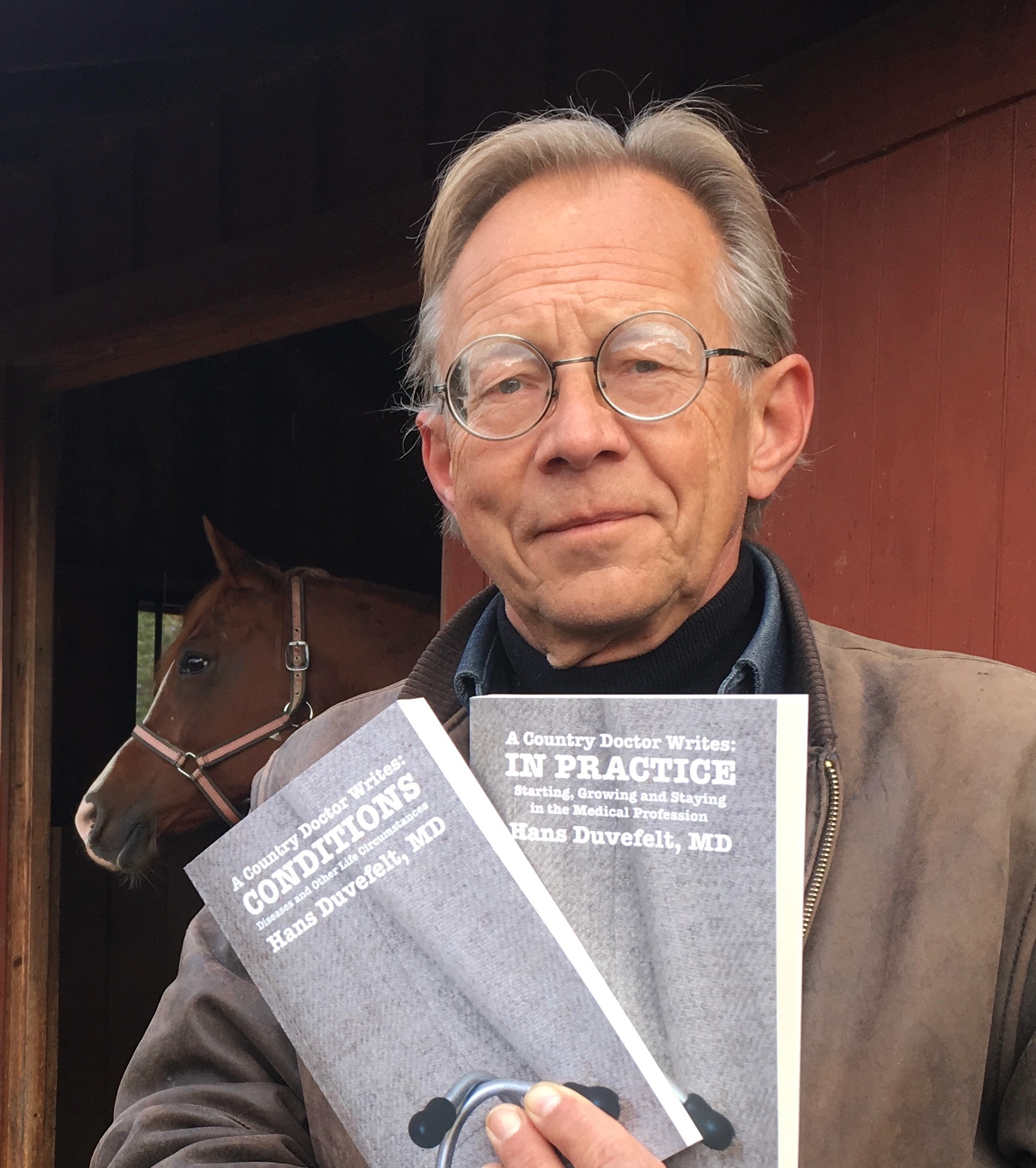
BOOKS BY HANS DUVEFELT, MD

CONDITIONS, Chapter 1: An Old, New Diagnosis

Top 25 Doctor Blogs Award

Doctor Blogs

Enter your email address to subscribe to this blog and receive notifications of new posts by email.

Mailbox

contact @ acountrydoctorwrites.com
Bookmark and Share
© A Country Doctor Writes, LLC 2008-2022 Unauthorized use and/or duplication of this material without express and written permission is strictly prohibited. Excerpts and links may be used, provided that full and clear credit is given.