Archive Page 176

The Virtues of Oligopharmacy


“Let food be thy medicine and medicine be thy food.”

                                                                                       Hippocrates

“I saw few die of hunger; of eating, a hundred thousand.”

                                                                                      Benjamin Franklin

“The desire to take medicine is perhaps the greatest feature which distinguishes man from animals.”

                                                                                       Sir William Osler

The US Pharmacopeia is a tempting smörgåsbord of medications for every conceivable disease, ailment and risk factor. It can be approached either as a well-stocked holiday table for careful sampling or as an all-you-can-eat affair. Too much of anything can be deleterious to our health.

At a Swedish smörgåsbord, you typically don’t try to eat everything offered, and you avoid putting too many different things on your plate at the same time. On formal occasions you make several trips to the buffet table and use a clean plate each time. The smörgåsbord is just like a multi-course dinner with a choice of self-serve selections for each course. Etiquette suggests that the first plate includes your choice of pickled herrings and sharp cheeses, the second plate your choice of smoked salmon and other cold fish dishes, the third one cold meats and sausages, the fourth one warm dishes and the fifth one cheeses or sweet desserts.

Polypharmacy has become a buzzword in recent years. Most dictionaries have two definitions of the word, one neutral and one derogatory. The word can simply mean administration of a large number of medications, or it can imply administration of unnecessary medications.

A patient with several chronic conditions may end up taking a large number of perfectly appropriate medications. Even such “appropriate” polypharmacy can cause problems, particularly in the elderly, who are more prone to suffer medication side effects. Also, our understanding of drug metabolism and drug-drug interactions continues to evolve. For example, just within the past few months there have been new warnings about interactions between decades-old medications like simvastatin and amlodipine.

A recent example of how prescribing multiple medications can be fraught with problems is combination therapy for lipid disorders. Well-meaning doctors have combined statins with fibrates and even niacin in order to make each measurement in their patients’ lipid profiles normal. To this day there is no evidence that anything added to a statin regimen further decreases risk, even if a patient’s triglycerides and HDL are off the chart, including several studies published in the last 18 months.

No prescriber thinks they are prescribing too many medications. Since there is disagreement over exactly what number of medications constitutes polypharmacy, and since the word has become so derogatory, I suggest we instead speak of what we should strive for.

I suggest we use the term OLIGOPHARMACY to mean the administration of as few medications as possible to achieve our therapeutic goal.

Just the way a Swede may choose only one or two flavors of pickled herring for his first course at the smörgåsbord and leave some room for the next several courses, physicians may want to choose only a few of the best evidenced drugs for each of their complex patients’ primary diseases in order to also leave room to treat their multiple other medical conditions.

Years ago, I read an article, written in jest, suggesting that a fistful of medications, each with a certain proven percentage of risk reduction, could eliminate heart disease completely. Even when there is statistical evidence that a number of different medications can decrease risk or improve outcomes, we cannot assume their effects are multiplicative or even additive; sometimes all they do is increase the risk of side effects.

Let us think and act like polite Swedes at the smörgåsbord. Pick and choose among the favorites. Let’s not overindulge.

Whom Does the Medical Record Serve?

Last weekend I sat down to look at some of the journals I receive at home in the mail. A couple of articles caught my interest, all touching on how we use the medical record.

Dr. Aldebra Schroll describes in an article in Medical Economics how her meticulous medical records were used to deny her patients new insurance coverage after some of her patients lost their jobs and their health insurance. One new patient didn’t tell Dr. Schroll for a whole year that she had Multiple Sclerosis for fear that she would lose her insurance because of her illness.

Dr. Ranjana Srivastava, in her article, Complicated Lives – Taking the Social History in the New England Journal of Medicine tells of when she sat down with a clinic patient in her oncology department. Several doctors rotating through the clinic had seen this woman, but Dr. Srivastava had never seen her before. The woman becomes increasingly upset as the visit goes on. Frantically, the doctor searches through the electronic medical record for a clue. Finally, the patient blurts out:

“Didn’t they tell you? My husband, he died from cancer last week. He died in that hospice of yours.”

The nurse, it turns out, knew what had happened. The doctor asks how.

“Because I talk to her”, the nurse answers.

Also in the New England Journal of Medicine, Dr. John J. Frey III writes about the days when there was no such thing as a “routine HIV test”. I remember in my clinic, we called it a “Special Draw”. Patients usually paid in cash and no claim was submitted to their insurance. We usually stored the results in a special “XYZ” record to protect each such patient’s privacy.

The Journal of the American Medical Association has a commentary about a new Florida law that makes it illegal for physicians to note in a patient’s medical record whether there is a firearm in their household. This standard part of health risk screening in the U.S. is now punishable with a $10,000 fine and disciplinary action by the Florida Board of Medicine.

Why do we write things in our patients’ medical records? It used to be that doctors wrote brief notes to document their treatment. I remember two pediatricians I rotated with during my residency. They knew each other’s styles and preferences inside out. Their office notes might read:

“LOM. Amox”

(Left otitis media, amoxicillin). For a busy pediatrician, an ear infection usually requires no further introduction or explanation. They occasionally scribbled something about their patients’ social histories in the margin or on a problem list that later jogged their own memory, but would be meaningless to other readers.

The world has changed a lot since then, but only the uninitiated expect medical records to be complete and accurate. Patients, doctors, administrators, government, malpractice lawyers and insurance companies all have different expectations from the medical record. Whether we have records scribbled on 4×6 inch cards, typed notes or electronic medical records, their purpose is in the eye of the beholder.

Ironically, I see more and more often that slick, boiler-plate, pre-populated electronic record notes brimming with data that appear to support high-level professional Evaluation and Management coding still have a brief free-text note by the recording physician, explaining in three sentences or less what really happened in the visit. Those brief notes harken back to the brevity of old, but since today’s records are viewed by many more eyes than those of the past, not even those notes always reveal the true essence of the patient-physician encounter.

In Manu Medici: The Art of Administering and Prescribing Medications

Hitting machine with hammer:         1.00

Knowing where to hit machine:    999.00

Total:                                      1,000.00

There are many versions of the story with this punch line. One is about a plumber, another about Thomas Edison and a third is said to be translated from Arabic. There are even claims that it is an old Norwegian anecdote.

My subject is not physician fees or salaries, but physician skill and experience. Just like painting or gourmet cooking, the practice of medicine can seem deceptively easy to the observer, but it can seldom be done well the first time.

Few people would question the value of experience in the surgical specialties, but medication prescribing isn’t always viewed as an equally complex medical service.

In medical school we memorize which drugs are preferred for which conditions, but our training gives us limited practical experience with these medications. That experience comes with use and over time.

A medical school professor of mine said: “Choose a few drugs from a class, get familiar with them, and stick with them. Add new ones only if they offer a clear advantage over the ones you know.” Today, there are often more similar members of many drug classes than most physicians can become thoroughly familiar with. An unfamiliar drug, even if it has a theoretical advantage, can be harmful to the patient if it is less than expertly prescribed.

When I worked in Sweden, we wrote “In Manu Medici” on prescriptions for medications actually administered by the physician. The words mean “In the physician’s hand”. Strictly speaking, though, I think even medications administered by the patient, including most pills and topicals, are used in the physician’ hand, since the same medication can have widely different results depending on how it is dosed, when and how it is administered and how it is suggested and explained to the patient.

I have reflected before on the art of dosing antidepressants and on giving injections. Choosing the right medication in the first place is often complicated and not easily done without experience.

Probably the two most “artful” areas of prescribing I get involved with are heart failure and depression. The placebo effect in depression treatment is almost as big as the proven benefit of antidepressants, and each member of the antidepressant class seems to have a different set of effects and side effects: Fluoxetine is energizing but often not tolerated by very anxious patients, paroxetine can be mind-numbing and may insulate patients from even appropriate degrees of emotional pain, sertraline is quieting but can break down the defenses of tenderhearted, gentle men, and citalopram turned out to have more side effects even though it was marketed as better tolerated. Bupropione is sometimes particularly helpful in depressed patients with anger issues, and duloxetine brings out aggression in those who harbor potential for it.

I once heard of an overworked psychiatrist who told a primary care provider that a consultation wasn’t necessary because both clinicians had the same number of medications to consider for the patient. That reminds me of an amateur Iron Chef contest I saw, where one contestant couldn’t get the skin off a salmon. Having something at your disposal doesn’t guarantee you can do the right thing with it.

Recently a colleague switched a patient with Parkinson’s disease from pramipexole to ropinirole because the patient’s new insurance wouldn’t cover the first drug. Within a week, the patient became psychotic. After stopping ropinirole, the patient recovered. It was then easy to get a Prior Authorization from the insurance company for pramipexole, which in practice has fewer side effects than ropinirole. Reading the official drug information, you would never know one drug was a little safer than the other, yet this type of substitution is now becoming automatic in many hospitals and nursing homes, and may soon take effect also at the pharmacy. In our Parkinson-patient the doctor was the one who switched drugs because of the insurance – what would have happened if the pharmacist had made the switch? When would the doctor have found out about the substitution? Before or after the patient became psychotic?

“In Manu Medici” is not how today’s health care system views prescribing. When insurance companies and pharmacists want a say in the choice and dosing of medications, the artfulness of the physician may have to be partly utilized to navigate the system and to minimize the damage caused by outside influences on the therapeutic relationship and the treatment plan.

Following the Path of the Soul

In February 1995 I must have seemed overworked and headed for burnout. Clarine, my bed-bound patient who always encouraged me to write down my thoughts and experiences as a country doctor, gave me a copy of Thomas Moore’s 1992 bestseller “Care of the Soul”. She ran a small book editing and publishing business from her sickbed. Her vision was poor by then, but with the help of the adjustable settings on her computer, she could still do her work. When she inscribed the book with her thick fountain pen, she accidentally turned the book around and inscribed the back of it:

“With love and every good wish –

Preread & reviewed by

Clarine”.

Soul is not the same as spirit. While the spirit looks toward heaven, the soul has to do with our roots, the messy depths of our psyche. Thomas Moore explains that soul is in attachment, love and community; it is in food, music, art and experiences that touch our hearts.

In “Care of the Soul”, Moore points out that we cannot think ourselves out of the modern split between body and spirit, because “thinking is part of the problem”. He quotes fifteenth century writer Marsilio Ficino: “What we need is soul in the middle, holding together mind and body, ideas and life, spirituality and the world”. Moore goes on to say: “Care of the soul is not solving the puzzle of life; quite the opposite, it is an appreciation of the paradoxical mysteries that blend light and darkness into the grandeur of what human life and culture can be”.

I remember reading parts of the book, but hurriedly and not with an open mind. It sat in my bookcase for years, and I often glanced at the title on its spine.

In February 2007 my Nurse Practitioner wife and I registered for a Cape Cod summer seminar with Thomas Moore. We were working very hard, side-by-side, and we were feeling a bit stretched. We had a cleaning lady, who also did our grocery shopping, a laundry service, a lawn-mowing service and a handyman. Our spare time was occupied with dancing; in just four or five years we had become accomplished ballroom dancers. We took private lessons and practiced at least three nights a week and several hours every weekend in a rented studio. We used to joke that while we worked and danced, other people were living our life.

July 23rd, just after we came home from a surprise retirement party for one of our dance instructors, where we had done a humorous tango exhibition, our 15 year-old German Shepherd got sick. She was a cancer survivor, and we made arrangements to have her seen at Angell Memorial Hospital in Boston on our way down to the Cape. The diagnosis and prognosis were grim; she had a grapefruit sized tumor in her chest.

That week in August, beginning four years ago today, turned our lives around. Our dog’s health failed rapidly, and my wife stayed with her in our rented cabin while I attended the Thomas Moore seminar. The topic was soulfulness in clinical practice and in one’s life. Moore took the principles from his book and put them in the context of being a clinician, a healer.

Back at the cabin we dragged the mattress off the bed and slept on the floor with our dog and our little Persian cat. I would update my wife on the day’s discussions and we worked on our assignments together.

In class, Moore showed a strobe-like black and white movie of C.G. Jung carving his inscriptions into a big rock at Bollingen. As the gentle waves of Obersee lapped against the shore, one of the fathers of modern psychiatry tirelessly and with great pride carved a stone when he could have written another book or lectured at foreign universities. Instead, he chose to do this, creating something that was important to him and could last for thousands of years. Were we, my wife and I, doing something really important to us or were we just working hard without purpose? We knew we had to get off the merry-go-round we had created for ourselves.

At the end of the week, Moore signed my old copy of his book – inside the front cover, which Clarine had inadvertently left blank when she gave it to me:

”Help us save the soul of the world.

Best Wishes,

Thomas Moore”.

Within weeks our dog died in her favorite spot in our kitchen. Two months later another Shepherd was given to us. He had been born July 23, the same day Callie got sick. Six months later my wife’s health caused her to leave her career as a Nurse Practitioner. We reassessed our priorities and vowed to take care of our own health the way we had always told our patients to.

I have developed an undeserved, strong bond with our recently adopted 23-year-old rescued white Arabian horse. She has made me the first human being in years that she dares to trust, because I ask nothing of her. I have read that Martin Buber, author of “Ich und Du” first became aware of the true nature of I-and-Thou relationships when he befriended a gray mare at age eleven.

Without all those other people running our life we are doing the soulful chores couples have done on small farms for countless generations – “chop wood, carry water”. We cook together and we read out loud after supper and talk about health, disease and doctoring. My wife studies other forms of healing and I write about my life as a country doctor. Dancing isn’t an exhibition sport for us anymore; we think of it as an expression of our love for each other.

Earlier this week a package came in the mail with my latest online purchase: Thomas Moore wrote a new book last year, “Care of the Soul in Medicine”. I opened the package eagerly, weighed the hardcover book carefully in my hands and reluctantly put it down on my desk. I haven’t had a chance to start reading it until this weekend.

How will I grow – as a man and as a physician – from his words this time?

Patient Centered or Evidence Based Medicine – Can we really have both?

“The conflict between evidence-based medicine and individuals is at the core of the struggle to reduce the cost of care.  I fear it is intractable and will remain so… We need to talk about the tensions and uncertainty, with respect for each other and with open minds. I’m not sure what solutions are possible but without an ongoing, messy discussion, we won’t find out.”

Jessie Gruman

“In a recent experiment, the average effects of the opioid remifentanil were either doubled or extinguished by manipulating subject expectations; functional magnetic resonance imaging scans showed that regulatory brain mechanisms differed as a function of these expectations. Does this mean that we might double our gas mileage if we wished for it hard enough? Well, no. But people are not machines, and we shouldn’t treat them as such.”

Daniel E. Moerman, Ph.D.

“Patient Centered Medicine” sounds ethical and humane. It almost seems like an obvious thing to strive for, but it is far from universally accepted. Many stakeholders and quite a few opportunists in today’s health care system are working hard to shift power further and further away from the patient-physician decision-making that takes place in the exam room.

In every patient visit there are at least two more parties represented besides the doctor and the patient:

Since the majority of patients are covered by health insurance, the insurance company is always present in any decision that involves money. It would be naïve to expect anything else; that is what happens when someone else pays the tab.

In recent years we have also started seeing “experts” of various kinds judging or prejudicing the medical provider’s performance. Most of the time, these “experts” make recommendations and publish “guidelines” without much authority behind them, since there are often competing guidelines for doctors to choose between. Lately, though, through stronger associations between payors and “experts”, “guidelines”, now re-introduced as “Evidence Based Medicine”, are increasingly used to control what happens in the exam room.

The notion of practicing “Evidence Based Medicine” is not new; doctors study the basic sciences in medical school, read scientific journals and attend continuing education courses to keep up with new developments in their field. What is new is the notion that doctors somehow cannot be trusted to weigh all the available evidence, like other professionals, and sit down with individual patients to discuss how the evidence applies to each unique case.

The “Evidence” seems to have lost its plurality, which is more consistent with the thinking of statisticians and insurance actuaries than with science. The more we learn about diseases and the human body, the more we understand that people are different. Genetics and neurobiology are beginning to explain why treatments that work in some patients may not work in others, and may even be harmful to some.

Jesse Gruman, in her springboard article for Better Health’s Grand Rounds, writes about the inherent conflict between Patient Centered and Evidence Based Medicine in cancer treatment. In each such case, the personal and financial stakes can be enormous.

On July 14, The New England Journal of Medicine published a study comparing inhaled albuterol, the Evidence Based, time-honored treatment for mild asthma attacks, with placebo inhalers, sham acupuncture and doing nothing. Only the albuterol inhalers improved patients’ breathing test performance, but the patients who received placebo inhalers and sham acupuncture experienced the same amount of symptom relief. Only the patients who received nothing were unimproved.

Daniel Moerman, in his editorial, comments on the study:

“For subjective and functional conditions — for example, migraine, schizophrenia, back pain, depression, asthma, post-traumatic stress disorder, neurologic disorders such as Parkinson’s disease, inflammatory bowel disease and many other autoimmune disorders, any condition defined by symptoms, and anything idiopathic — a patient-centered approach requires that patient-preferred outcomes trump the judgment of the physician… Usually the control is designed to convince the doctor yet is irrelevant for the patient and patient-centered care. Often the very assumption that there is a correct control simply is not the case… Maybe it is sufficient simply to show that a treatment yields significant improvement for the patients, has reasonable cost, and has no negative effects over the short or long term. This is, after all, the first tenet of medicine: “Do no harm.”

Moerman’s words challenge us practicing physicians and scientists to be prepared to reconsider the purpose and priorities of many of the things we do on a daily basis. His words must be even more unsettling to all the non-clinicians who make their living trying to tell us what to do.


I just realized none of the posts show on an iPad or a computer, but they do show on an iPhone. WordPress is working on this. In the meantime, please visit my Substack.


Osler said “Listen to your patient, he is telling you the diagnosis”. Duvefelt says “Listen to your patient, he is telling you what kind of doctor he needs you to be”.


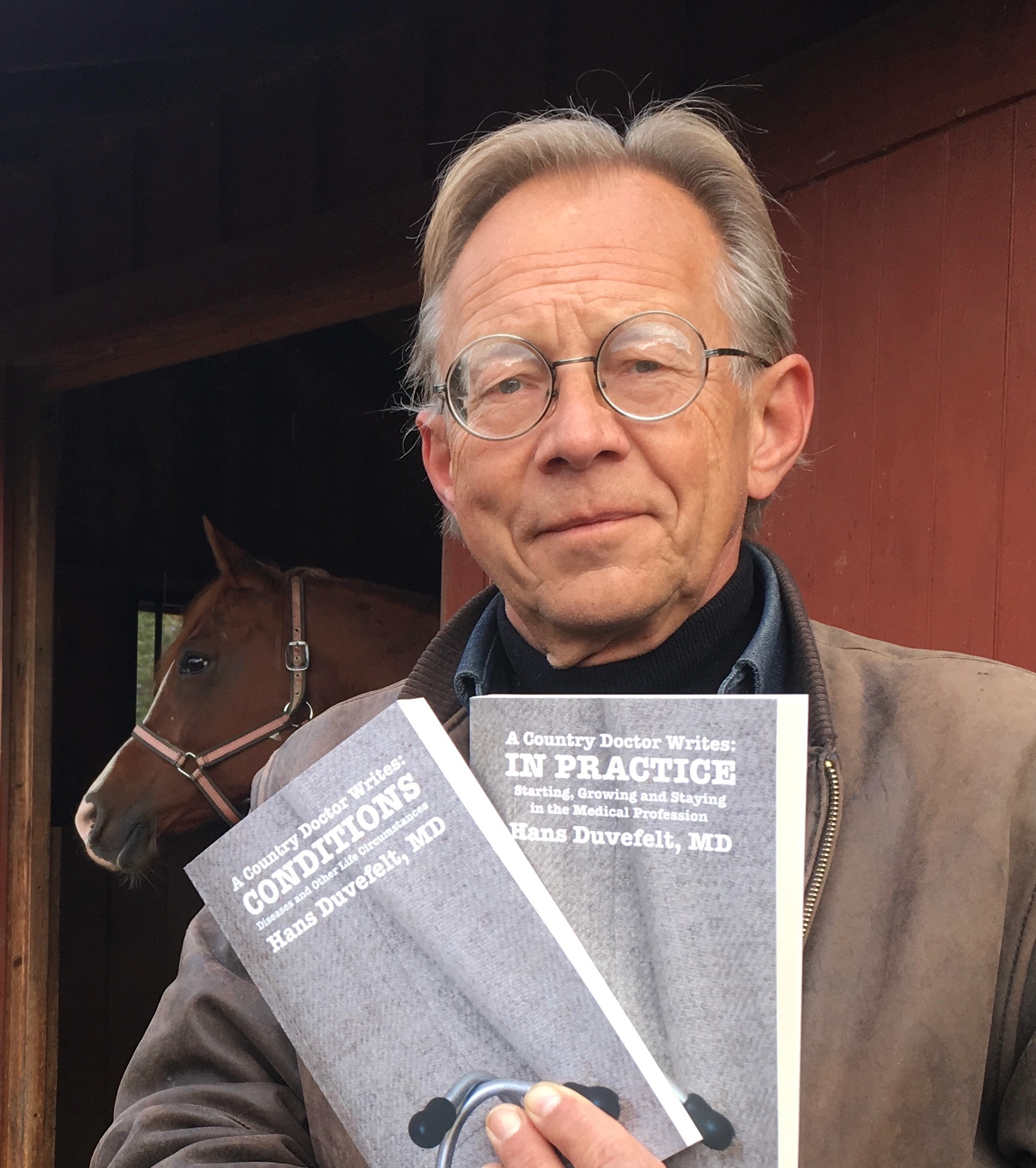
BOOKS BY HANS DUVEFELT, MD

CONDITIONS, Chapter 1: An Old, New Diagnosis

Top 25 Doctor Blogs Award

Doctor Blogs

Enter your email address to subscribe to this blog and receive notifications of new posts by email.

Mailbox

contact @ acountrydoctorwrites.com
Bookmark and Share
© A Country Doctor Writes, LLC 2008-2022 Unauthorized use and/or duplication of this material without express and written permission is strictly prohibited. Excerpts and links may be used, provided that full and clear credit is given.