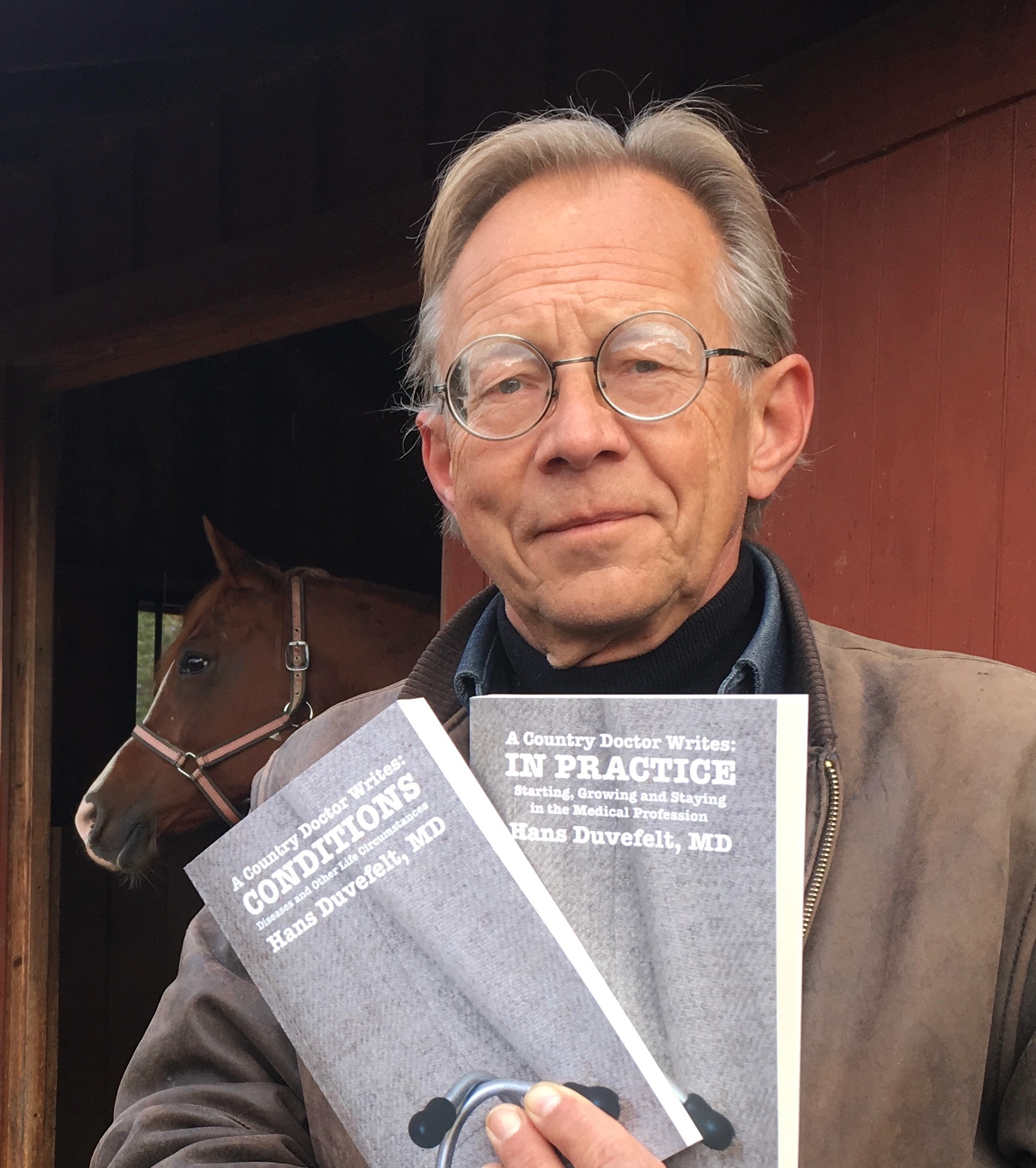
Between first being too busy and then catching something protracted that has felt just like Covid, I have finally regained enough energy for some future posts, still in title only or first paragraph only format – I don’t draft and edit. I put down a start and if I don’t finish it right away, I do it later in one fell swoop.
Here is my recent Facebook post:
Recovering slowly from a virus that drained all my batteries, I remembered a favorite poem from my youth: FEVER, by John Updike.
I have just brought back a good message from the land of 200 (degrees): God exists. I had severely doubted it before: but the bedposts spoke of it with utmost confidence, the threads in my blanket took it for granted, the tree outside the window dismissed all complaints, and I have not slept so justly for years. It is hard now to convey how emblematically appearances sat upon the membranes of my consciousness; but it is a truth long known that some secrets are hidden from health.
A blood pressure of 139/89 would be considered okay, but a reading of 140/90 on the last visit of the year gives the treating physician a failing grade, also called a “Care Gap” in the category of Controlling Blood Pressure. Never mind if that last appointment happened while the patient had a broken rib and was in pain. The same binary standard applies to hemoglobin A1c as to whether diabetes is controlled or not co The same binary standard applies to hemoglobin A1c as to whether diabetes is controlled or not compare that with the Fed, changing interest rates by a quarter of a point every so many months and making big news in the proces. Compare that with the Fed, changing interest rates by a quarter of a point every so many months and making big news in the process.
The practice of medicine is getting sillier and sillier the more we are held to “quality” measures. That is a substitute marker for outcomes. If you think about it, I could start a heavy duty blood pressure medication on my patient with a broken rib and reactive blood pressure from that and bring him back for a recheck before the end of the year and thus meet my quality parameters. In early January, when the rib fracture is no longer causing pain, the patient has an orthostatic blood pressure drop, falls to the ground, landing on cement and dies from a subdural hematoma. I would still be in good shape with my quality metrics.
The modern risk calculators that we use to assess cardiovascular risk in people with elevated cholesterol make it very plain that cardiovascular risk is a multifactorial calculation. Why we don’t have a similar view of blood pressure when we could use the cholesterol risk calculators to illustrate the difference between two different blood pressure numbers, whether with or without medication is, simply, ignorant.
In medicine today, not even gender is considered a binary metric. Why in the world are we then viewing cholesterol, blood pressure, or even blood sugar for that matter, more clearly defined than gender? If medical providers are too lazy to plug in blood pressure numbers into the cardiac risk calculators to determine the value of treating such blood pressures, perhaps AI can be of help doing the math for us?
The other day I had to handle an issue for another provider’s patient. In my conversation with the patient, I learned that they had gone through a relationship breakup and a major health crisis two months ago. One month later they had seen their PCP for a brief visit to recheck on a chronic problem. The note from that visit was full of details pertinent to that issue, but made no mention of the double crisis the patient had just gone through.
There are two forces behind situations like this. One is the time pressure in primary care practice and the other is the template driven documentation. So many EMRs have specific templates for specific problems. Most also let us providers create our own templates, which may not even have fill-in-the-blanks, but a whole normal visit that you can populate the chart with in just one click.
In today’s clinical documentation, the individuality of each patient tends to get lost. So much of the data in our office notes is structured and so much is boiler plate or copy and paste. The story is missing so much of the time.
Many if not most other “industries“ drill down on the uniqueness of their customers. Our social media feeds bring ads for things we have searched for on other websites, for example. Advertisers pay big money for such information so they can customize their approach to each of us. Medicine is the opposite: Doctors are encouraged or downright required to cover the same things in each office visit and to document it in the same, easily extractable, fashion. Narrative Medicine is a minority fringe, it seems. And this is in spite of everything we know about social determinants of health, genetics, epigenetics, mind-body medicine and psychoneuroimmunology.
My visit with this patient that I had never seen before lasted all of 10 minutes. You can learn a lot in such a short time. Why don’t we?
I do house calls in my practice, but I also do remote work with follow-ups done via telemedicine and sometimes even see new patients for wellness visits with a medical assistant at the patient’s home doing vital signs, etc. I also do a weekly telemedicine Suboxone clinic for my old practice in Bucksport.
Remote physician work was once unthinkable. In very few specialties like psychiatry, it has been around for a long time because of the scarcity of providers and, I suppose, because there was no expectation of doing any sort of physical exam. But it was really the pandemic that opened this way of practicing up for other specialties.
I just took a screenshot from a Google search for remote physician jobs. LinkedIn has more than 2,000 of them.
From once unthinkable to now almost mainstream, we are finally at the point where physicians are paid for cognitive work. This means we listen to the patient’s story, we evaluate the testing they have done, or that we order, and formulate a diagnostic and treatment plan based on that in collaboration with our patient. To be honest, I’m not so sure today’s doctors are all that diligent or skilled in performing physical exams. And even if we do, imaging and laboratory testing provide a better documentation than a physical exam if we ever end up in a medicolegal situation. This is, sadly, particularly true when so many medical providers use templates in their documentation.
Imagine being asked in court: “Can you really swear before this jury that you checked all those elements in the physical exam and still missed that dreadful diagnosis? Especially since all your office notes seem to have the same, normal, exam documented, word for word.”
I can see telemedicine continuing to expand along with an increased reliance on laboratory and imaging as more “objective” than old fashioned physical exams. Paired with things like remote monitoring technologies for heart failure patients, and nurse/medical assistant facilitated video visits, my prediction is that more and more of us will be working from home, mitigating many of the obstacles and disparities of rural living, such as gas prices and lack of reliable of transportation as well as local physician shortages.
We FaceTime or Messenger Video with friends and relatives, even with our loved ones. I do this with my American brother from my exchange student year every couple of weeks and with my lady friend almost every night. That does not take the place of time spent doing things together. But if we just want to talk, a video conversation is for most of us more satisfying and feels closer than a telephone call.
Since the pandemic and continuing now, one of the gastroenterology practices in Bangor has been very open to doing video consultations with new patients. In their specialty as in many others, the patient history provides 80% of the diagnosis. Their new patients have usually had a CT scan of their abdomen and sometimes even a local colonoscopy or upper endoscopy, so palpating their new patient’s abdomen is not usually necessary. If a procedure is necessary, it is almost never done at the initial consultation anyway, even if that is done in person, but will be scheduled later if it is needed.
Traditionally in medicine, procedures have paid much better than cognitive work. And the number of questions we asked and how many elements of our physical exam we documented helped determine our reimbursement. But for a long time, there has been a provision for charging for a visit where more than 50% was spent on counseling and education. As we move toward value-based care, clinical outcomes are mattering more than how exhaustive our investigation was.
The pandemic provided an opportunity to get paid for telemedicine and value based care does not incentivize us to start from scratch and turn every stone if we can tell right off the bat what ails our patient based on what has already been asked and documented.
Especially in remote and underserved areas like the one I practice in, it is such a blessing to be able to get a telemedicine consultation for a patient who can ill afford traveling hundreds of miles and perhaps staying overnight in a motel just to have a 30 minute consultation with a specialist.
I welcome seeing more of this for the benefit of my patients.
I just realized none of the posts show on an iPad or a computer, but they do show on an iPhone. WordPress is working on this. In the meantime, please visit my Substack.
Osler said “Listen to your patient, he is telling you the diagnosis”. Duvefelt says “Listen to your patient, he is telling you what kind of doctor he needs you to be”.