Archive Page 16

In Most Cases, “Normal” is Just a Statistic

Vitamin D is back in the news. It has been one of my pet peeves over the years. We know what the average levels are, but we still don’t know if low or high levels mean anything for people without osteoporosis. Most insurance companies don’t pay for screening and now the Endocrine Society has officially advised against screening people under 75 without osteoporosis for vitamin D deficiency.

Think about it, the average BMI in this country is around 30, which is our definition of obesity. So it is the statistical average, which in most instances is how we define “normal”, but is it “normal” or “desirable” to be obese?

Is Gallows Humor Ever Appropriate?

This piece is on my Substack today, paired with an essay on the same topic by Lilian White, MD who is in her first year of practice. We have a little series going called early and late career collaboration.

http://ACDW.Substack.com

On our way home from Friday’s housecalls I had to swerve for two dead ravens in the road. I don’t usually joke about death, dying or dead bodies, but suddenly found myself blurting out “two birds with one stone”. My assistant, who was a firefighter before entering the medical field, broke out in near-hysterical laughter.

“Gallows humor”, I said calmly.

“Exactly the word I was about to say”, she responded. “You don’t hear that word very often.”

Originally, the expression referred to when those convicted to public hanging at the gallows tried to be funny to relieve their own fear of dying. But now any joke about life or death situations can be called gallows humor.

We spent the last mile or two of our trip talking about how medical people and emergency workers seem to be able, or even have some sort of need, to make fun of situations that don’t seem funny to lay people.

In some ways, finding something comical in situations that involve death or disaster is a way of distancing ourselves from the tragedy of what we are witnessing. And at the same time, sharing a joke about it is a way for us to bond with other people who also must deal with tragedy on a regular basis in their work.

Of course, any public sharing of these macabre coping mechanisms of us life-or-death workers would be offensive or hurtful in most situations. But privately, between colleagues, I think it can be valuable in helping us carry on, no matter what.

As physicians or any other worker in this field of helping the sick and tending to the dying, we must live up to the expectations our patients have of our demeanor. Just like clergy, we have roles to play in people’s lives that are incompatible with lightheartedness or flippancy. This goes back thousands of years, to Hippocrates and beyond. Gallows humor is our secret little safety valve when the pressure of living up to these ancient standards threatens to be too high.

Maybe the best thing about making house calls is meeting the pets…

Why I Love Working for Galileo

Make the Most of Your Ignorance: Admit, Research, Report Back

Pretending to know more than you actually know is a deadly sin in medicine. We can’t know everything and even things we think we know may have changed since the last time we dealt with them. We are supposed to be lifelong learners, so I actually strive to show that to my patients quite often. Of course, a lot of what we do requires no double checking of the literature, but when dealing with things we run into less often, this is what I do:

For less common medications, I pull up my iPhone and check epocrates for dosing guidelines. I also then rattle off the common side effects straight from my phone. I use the interaction checker if I have any concerns, rather than wait for my EMR to stop me as I’m prescribing the new medication.

For treatment choices or diagnostic criteria, I mostly use UptoDate. As I pull it up on my laptop I usually say, “I pay $500 a year for this database out of Boston. It is constantly updated and very comprehensive. I want to make sure nothing has changed since the last time I treated this”.

Sometimes I use Google. I might then say, “I’m googling if there are any new articles on this from the leading medical journals or universities”.

If I’m planning to call a local specialist, I say that. Why wouldn’t I show that I have connections who are willing to give me advice?

In my new job, I have access to a network of specialists all over the country, who will give written recommendations within hours or less through the computer. I can’t imagine patients aren’t reassured by this backup system.

I have never found a patient upset, suspicious or alarmed that I sometimes need to check things in real time or leave a question unanswered until I have done my research. And when I later call them back with the information I needed, most people are very pleased. In those few cases where I thought I had a good plan and later call them back to say I’ve done more thinking and more research on the best way to address their problem, I have heard my patients show extra respect for taking my job and their situation seriously enough to do that.


I just realized none of the posts show on an iPad or a computer, but they do show on an iPhone. WordPress is working on this. In the meantime, please visit my Substack.


Osler said “Listen to your patient, he is telling you the diagnosis”. Duvefelt says “Listen to your patient, he is telling you what kind of doctor he needs you to be”.


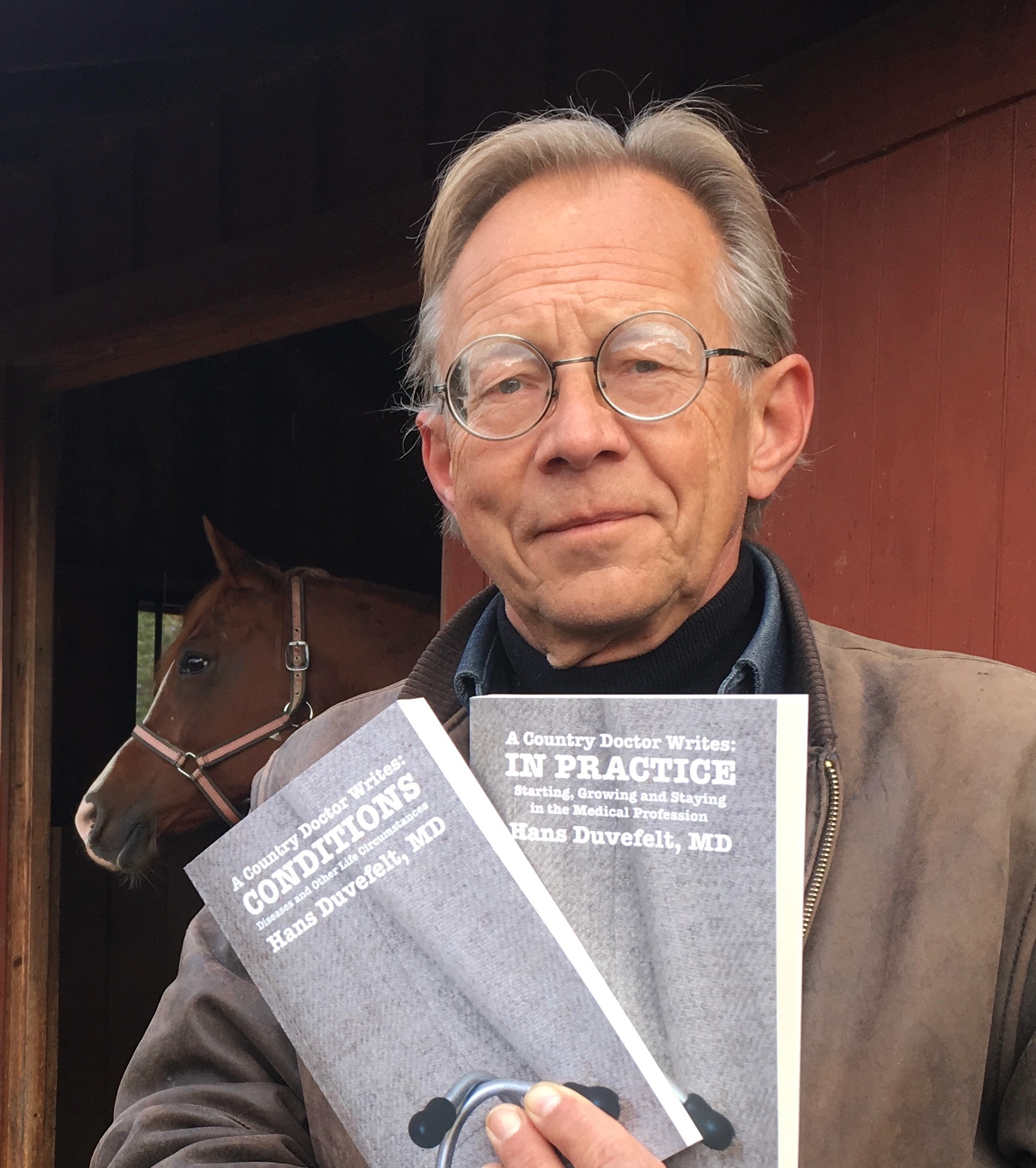
BOOKS BY HANS DUVEFELT, MD

CONDITIONS, Chapter 1: An Old, New Diagnosis

Top 25 Doctor Blogs Award

Doctor Blogs

Enter your email address to subscribe to this blog and receive notifications of new posts by email.

Mailbox

contact @ acountrydoctorwrites.com
Bookmark and Share
© A Country Doctor Writes, LLC 2008-2022 Unauthorized use and/or duplication of this material without express and written permission is strictly prohibited. Excerpts and links may be used, provided that full and clear credit is given.