Archive Page 153

It’s Time We Talk About What Healthcare Really Is: Public Versus Personal Health


The general debate about how healthcare should be organized, measured, evaluated and paid for is about as useful as arguing about whether all food should be served hot, cold or room temperature.

Healthcare can be so many things these days, that I’m not even sure we agree on the definition of healthcare. We certainly have seen disagreements on what we expect our insurance policies to cover. This is an especially thorny question as we in the United States spend twice as much as any other country, and yet are worse off than the other industrialized nations in infant mortality, life expectancy and chronic disease burden statistics.

OBESITY AND SMOKING ARE NOW QUALITY INDICATORS, BUT ARE THEY TRULY THE DOCTOR’S RESPONSIBILITY?

The lines have blurred between public and personal health, and there have even been a couple of role reversals between medicine as we were trained to view it and what we used to think of as public health. For example, ancient physicians like Hippocrates put great emphasis on nutrition advice in sickness and health, but during my lifetime the government started telling us how many glasses of water to drink and what nutrients are good and bad for us. This was when the beginning obesity epidemic was blamed on high fat intake several decades ago by someone in the government. Since then, fat consumption has decreased steadily while obesity rates have increased. In a clever reversal of its stance, the government has now lobbed the ball back in the physicians’ court, since the official strategy misfired so profoundly. And they have cleverly built in a punitive mandate to make sure they don’t get handed back the responsibility for the epidemic they fueled with their ignorance. How?

Medicare now demands that physicians document a follow-up/action plan for every single obese patient they see. Is that really a priority for the individual doctor-patient encounter? Especially since there are no truly effective medical treatments for obesity. It is best treated with diet (higher fat, lower carbohydrate) and exercise. Or is it perhaps something better handled in the public health arena again, this time with better science behind it? When there is talk of shortages of primary care doctors as the baby boomer generation enters their senior years, as we struggle with high hospital readmission rates, and as we wring our hands over lack of access in primary care and inappropriate emergency room utilization, should we turn sick patients away because we are busy counseling even our most unwilling patients one by one on the dangers of soft drinks and breakfast cereals?

Similarly, smoking has been viewed as a public health problem, but it has now become a yardstick in healthcare, too. Doctors will now fail their quality metrics for any diabetic patient that smokes, regardless of their blood sugar, cholesterol and blood pressure control. Is that a fair and realistic way to measure physician performance? Will it cause “noncompliant” diabetics to lose access to care? I worry that it will.

Even gun safety has been put on the physicians’ shoulders. The Maine Medicaid well child visit templates have gun safety as a prescribed topic to cover. What the political parties have failed at, we are now supposed to do as an add-on item in our fifteen minutes with our patients. Interestingly though, a 2011 Florida law, which was upheld in a legal challenge this year, specifically prohibits physicians from asking their patients about gun ownership. So why is healthcare defined differently at the opposite ends of US Route One?

ARE IMMUNIZATIONS HEALTHCARE OR PUBLIC HEALTH?

Obvious Public health activities such as immunizing against contagious diseases were traditionally done by doctors’ offices in this country. In Sweden, where I trained, physicians in primary care did not usually administer childhood vaccines. Instead, publicly funded nurse-run clinics handled immunizations and routine screenings of infants and young children.

The difference I see between immunizations given in a government run clinic and in a physician’s office is that physicians, by nature of their training, tend to be patient focused and sometimes will support their patients’ decisions about forgoing immunizations, for example some of the newer, less studied vaccines that have much less than 25 years of study (it took about that long to find out if post menopausal estrogen decreased heart attack risk as it had been speculated – it actually increased it).

Now national pharmacy chains are giving adult immunizations with forceful promotion and obvious profit motives but physicians, who in some cases are losing the revenue from giving the shots, are still required to spend their time keeping track of who got what shot.

THE DIFFERENCE BETWEEN PUBLIC AND PERSONAL HEALTH

Public health puts the individual second and societal health, finances or well-being first. Doctors, just as in the example about immunizations above, have traditionally had an obligation first to their own patients. The more we are expected to be public health officials, the more our relationship with each patient may be challenged. We are also getting sucked into a pseudo-accountability that is more political than scientific. Just like we are measured by how many of our heart disease patients are on beta blockers and how many diabetics are on ACE inhibitors, both of which are considerations with some controversy and many exceptions, our public health and common-sense recommendations are now measured in absurdum. Even when it comes to what we say behind closed exam room doors to patients who drink too much or exercise too little, we are being measured as if we are the only ones on the planet who can tell our patients these things.

By holding physicians accountable for many of the global ills of our society, from obesity to smoking, alcohol use, distracted driving and sedentary lifestyles, we have entered an environment where others are doing or being considered for the jobs we were trained to do: Pharmacists treating hypertension, nurses dosing blood thinners, Nurse Practitioners seeing our sick patients at Walmart or CVS clinics. This will be the topic of my next post in the series “It’s Time We Talk…”


And Then, What Happened?


In these virtual pages I have written about medical mysteries, the frustrations of today’s healthcare, and the human dramas we encounter in the practice of medicine.

Below are updates to three previous posts, one from each of these three categories: “The Great Imposter”, “Calling Mrs. Kafka”, and “Invisible Ties”. Readers who don't remember these posts may want to follow the links to catch up on the beginning of each story.


A TALE OF RED HERRINGS

The Great Imposter” ended in clinical uncertainty:

“And so I leave Norman Sprague in the competent hands of Dr. Brown, who returns from his vacation tomorrow. Norman’s lung nodules and lymphadenopathy still remain to be diagnosed, and he still may have gallbladder disease, but he also, again, has the original working diagnosis of herpes zoster, the great imposter.”

The other day I saw Dr. Brown walk Norman Sprague down the hall. Afterward, I asked whatever happened with his possible shingles, gallbladder pain, lung nodules and mediastinal lymph nodes.

“The PET CT looked pretty benign”, said my octogenarian colleague, “and nothing came of that pimple you saw on his back. He still has his gallbladder and Roger White is pretty sure it's sarcoidosis. Interesting, though, that the Lyrica samples you gave him when you thought it was shingles cut his pain at least in half, but the pain is on both sides of the midline…”

“I don't know why it's working, then”, I said.

“Neither do I, but I kept him on it. He's meeting with Roger next week to discuss treatment options, probably steroids.”

“Pretty sure, huh”, I muttered to myself.


A PYRRHIC VICTORY

In “Calling Mrs. Kafka”, I went to bat against the insurance company for Harriet Black. She really did have a terrible case of shingles, and Lyrica was the only thing that really helped her pain; the gabapentin and her regular pain medication had not been enough.

After my call to the surreal Mrs. Kafka in the Prior Authorization department, I asked Autumn to call Harriet and tell her the drug was approved. She was very grateful on the phone. Some time later she came in for her follow-up appointment.

“How’s your shingles pain”, I asked.

“Still pretty bad”, she answered.

“I thought the Lyrica was working pretty well”, I said, confused.

“I can't afford it. The copay is too high”, Harriet said, her voice trailing.

So much for getting a medication approved by the insurance company…


MOTHER AND CHILD

Four years ago, in “Invisible Ties”, I described how Kirk Donner, adopted at birth, went to the State Capital to look for his birth mother after he turned eighteen. He knew she had an unusual name, Suann:

“Kirk took the elevator to the fourth floor. He was alone. As the door slid open, he stepped forward and almost collided with a tall, dark-haired woman with designer jeans and a plain, white blouse. Her eyes met his as he stopped and apologized. They were large and kind. She flashed a smile as he swerved around her, embarrassed and eager to get to the registry.

He walked up to the receptionist and stated his errand with words he had practiced in his mind the whole trip.The clerk handed him a form and as he reached for a pen he saw a stack of similar forms in front of her. Reading the top one upside-down he saw the name: Suann Walker.”

Mother and child made contact soon after that day, and each found peace in knowing what had become of the other. Kirk met his half-sister, also raised by an adoptive family.

Suann and her fiancé attended Kirk’s college graduation in May, and this summer Kirk spent a lot of time at their house while he took a summer course in the southern part of the state.

“Finding her and learning what she is like has helped me understand myself better, it makes me feel more whole”, Kirk has told me.


Many of my vignettes on this blog end with unanswered questions or unstated uncertainties, just like any typical physician’s patient encounters. These updates moved the plot forward in just three cases, but even these are not the final installments in the history of each patient’s own journey. Medicine, even practiced over many years of physician-patient continuity, is but a glimpse into the lives of a few fellow humans.


A Rash of Rashes

This week I suddenly felt transported back to my earliest years in medicine back in Sweden. In the last few days I have seen almost a dozen children with rashes. We have a Hand, Foot and Mouth epidemic in our little town, hitting the second and fourth grade children hardest.

One eleven year old boy had looked like an early strep throat a few days ago, but he came back today with subtle red spots on the palms of his hands. He was in the room across the hall from his two-year old cousin, who had a full blown case of HFMD, the worst I have seen all week. His aunt had sore, itchy palms with no rash. I don’t know if it’s a sympathy reaction or if she is next to come down with it.

Mixed in with the rest of them was a two year old from out of town with a sketchy immunization history and a bad case of chickenpox, and a handful of children with colds and worried parents. One little boy with a runny nose had one single macular lesion on his thumb – too soon to tell whether he is coming down with Hand, Foot and Mouth disease or not.

Working acute care in Sweden, I saw a lot of rashes, and in those days we did not have all the immunizations we have now. I remember feeling pretty confident with my differential diagnosis of rashes – measles, German Measels, scarlet fever, things we don’t see much of anymore. Scarlet fever, associated with streptococcus infections, was common then but is rare these days. We also saw enough post-streptococcal nephritis that I routinely brought strep patients back for a urinalysis after their sore throat had resolved.

I remember the varied reactions among parents during the small epidemics I witnessed in those early days. Most parents took things in stride, expressing gratitude that their children got their “normal childhood diseases” over and done with. Some parents even sought out chickenpox cases in their neighborhoods and had chicken pox parties in order to have some control over when their children got the disease. I just read somewhere that the Swedes still aren’t immunizing children against chickenpox, apparently for cost reasons.

When I worked in student health here in the U.S. in the late 1980’s, we had a measles epidemic at the university. Because the students had been immunized as children, they tended to get milder and atypical forms of the disease. I remember being called in to see my colleagues’ cases all the time as the local expert on the rashes of “childhood diseases”.

Hand, Foot and Mouth disease was first described in New Zealand (or Australia by some accounts) in the 1950’s. I don’t remember running into it often back when I used to see measles and German measles. I remember just calling it a coxsackie virus rash. Recently I have read that the Swedes call the disease “höstblåsor”, or “autumn blisters”. I do remember seeing more “herpangina”, which looks the same and is also caused by a coxsackie virus, but is limited to the mouth.

There is no widely available vaccine against Hand, Foot and Mouth disease, and antiviral drugs are ineffective against it, but it tends to be a very benign illness. Some of the eleven viruses that can cause the disease are more aggressive, and in other parts of the world, for example Vietnam, the disease can more often be associated with neurological complications, from minor twitching to convulsions.

The way our society reacts to the mild form of the disease that we usually see is interesting. People worry about second graders missing a week of school – something I have a little trouble with. The economic burden of working parents missing work is a valid concern, but with so few “childhood diseases” left to contend with, a week of reading, watching movies or playing games at home isn’t the end of the world.

Our few remaining “childhood diseases” take the time they take to get through, and we have no shortcuts. They offer us an opportunity to understand that we can’t control everything in our lives.

Hand, Foot and Mouth disease usually only strikes once, so unlike the common cold, it has not become big business for purveyors of useless remedies, and unlike influenza, we have no big-ticket disease modifying drugs, so we are left to practice good home care, humility and the ancient art of just “being sick”.

America’s favorite mid-century pediatrician, Dr. Benjamin Spock, wrote the following about the “childhood diseases”:

“There are only two things a child will share willingly — communicable diseases and his mother’s age.”

Where is the Mind?

When I was a little boy, I had a tendency to walk around on tiptoes. People said I had my head in the clouds. Over the years, I have heard different theories on the pathological significance of my early ambulation habits, from language delays to autism to cerebral palsy and also theories of the spiritual qualities of toe-walkers.

I have long since stopped walking on tiptoes, and I never did have any language delays or serious motor difficulties, but I admit I have always had a tendency to keep my head in the clouds. Since reaching middle age, a few years ago now, I have done a fair amount of reading and thinking about the difference between spirit and soul, and I have worked hard on changing my center of gravity from my head to my heart.

Jungian psychology has resonated with my own intuition and perception of the deep-seated causes of my thoughts and my actions. I have come to believe in the power of archetypes in our way of relating to the people and the world around us, and I have started to challenge my intellect and my powers of reasoning as drivers of what has happened and continues to happen to me.

Just lately, I stumbled onto some writings about the Bön tradition, which predates Buddhism, and which pointed the way toward that belief system or understanding of the nature of man.

According to the Bön tradition, man has three parts: Body, located in the head; Speech, located in the throat; and Mind, located in the heart area.

This struck me as a typographical error at first; body in the head and mind in the heart – how could that be? But, the more I thought about it, the more direct the connection seemed; it is in the brain that any and all of my awareness of my body exists, and therefore, it is there that my body “exists” to me. Without my brain registering it, my feet can’t be cold, my stomach can’t feel empty and my knees could never ache.

Equating the body with the mind offers a new perspective on what we in Western medicine have been calling the mind-body connection. It could, even should, be called the brain-body connection. Because our own computing power is inseparable from the nerve impulses it registers and transmits from and to every organ of the body. And if the brain and body aren’t just connected, but actually one and the same, many disease paradigms suddenly must change – some just a little, and others quite fundamentally. Pain becomes the same as suffering, fibromyalgia could become depression in the body, colitis might become anxiety of the gut and psoriasis could become self-hatred.

What, then, is the mind, and what is it doing in the heart area? The heart is the location to which many cultures ascribe our deepest emotions, whatever selfless love we are capable of, and whatever connection we have with our Higher Power or with the Universe.

Before going any further, let me recapitulate what is known today about the heart’s abilities beyond pumping blood around:

There are 40,000 neurons in the heart; the heart not only receives neural stimulation from the brain (for example via the vagus nerve), but also transmits afferent impulses to the medulla oblongata and to the cortex; a transplanted heart, lacking a functioning vagus nerve, still has adequate independent pulse regulation; the heart creates a measurable electromagnetic power field that extends outside the body; the heart produces several hormones – atrial natriuretic factor (similar to Brain Natriuretic Peptide, a commonly tested marker of heart failure), noradrenaline (found in the brain and adrenal glands), dopamine (also found in the brain), oxytocin (released by the brain during childbirth, bonding with infants or lovers and during orgasm), afferent nerve fibers from the heart to the amygdala of the brain can stimulate autonomic responses to stress before any impulses reach the neocortex. Finally, healthy heart rhythm patterns have been linked to emotional well being, heightened intellectual abilities and better judgement.

The heart-mind is not an organ we use to design airplanes, do math or figure out how to get coconuts down from the trees; those are simple brain exercises.

The heart-mind may just be what connects us to what is infinite and eternal, our connection to everything that is not our body. Sometimes, our words, actions or our physical creations can seem to be what we call divinely inspired; then our minds control our bodies and our speech, but we are not the ultimate originators of our music, our poetry or our art. Something bigger is.

If the heart-mind, and thereby our connection to the collective mind of the Universe, is disrupted during heart surgery when the heart is chilled or bypassed by a heart-lung machine, we would suddenly understand the claims that 40% of patients experience significant depression even after relatively simple coronary bypass surgery.

The fact that we can measure the electromagnetic field of the heart beyond the physical boundaries of our bodies and the observation that people in close proximity can experience synchronization of their heart rhythms gives the heart more than symbolic significance in how we relate to our loved ones, mankind and the Universe.

All this is certainly something to ponder, even if it is just with my human brain, or what some Buddhists call the monkey-mind.

After I stopped walking on my tiptoes, I attended a Methodist Sunday School and I was later confirmed in the Lutheran state church of Sweden. In my studies of religion, I have learned that Buddhism isn’t an actual religion, but it does represent an ancient view of the Universe that science is now rediscovering.

A quote by Albert Einstein sums all this up:

“Science without religion is lame. Religion without science is blind.”

Cave! Ultracrepidarianism

“Sutor, ne ultra crepidam judicaret.”
(Shoemaker, not above the sandal judge – “stick to your last”.)

“Doctor, what do you think of alternative medicine”, a patient with Chronic Fatigue Syndrome asked me the other day. She was interested in doing something more for her severe fatigue. “Would acupuncture help me?”

I paused and, as I have done many times before, answered that my training and most of my clinical experience has been in Western, allopathic medicine. (Ironically, the word “allopathic” was first used as a derogatory term by the classically trained physician Samuel Hahnemann, who founded homeopathy after becoming disillusioned by medicine as it was practiced in his era.)

I don’t believe we allopaths have all the answers, and I have a personal interest and fascination with many other forms of healing, but I have set a standard for myself to only promote and recommend treatments that are consistent with my training, because I don’t have anywhere near the same expertise in the other forms of healing. Even within allopathic medicine I try to be really clear about what we know and what makes sense but still remains to be proven. For example, some cholesterol and blood pressure medications have been shown to decrease heart attack rates while others have not, so I make this distinction very clear to my patients.

I support every patient’s quest for health and health care that fits their belief system and temperament, and I can sometimes be a resource in understanding some of the claims made by practitioners of “alternative medicine”. But I don’t point patients in that direction unsolicited. In that sense, I very much live by the words of Hippocrates of Kos, the father of medicine, who set strict limits for physicians’ scope of practice. In the Hippocratic Oath he wrote:

“I will not cut for stone, even for patients in whom the disease is manifest; I will leave this operation to be performed by practitioners, specialists in this art.”

The cobbler analogy in the old adage “Shoemaker, stick by your last” has an interesting history and is of roughly the same vintage as the Hippocratic Oath:

The painter Apelles, also of Kos, who also lived in the 4th century B.C., liked to stand back and watch spectators’ reactions to his paintings. One day a shoemaker commented on the way Apelles had painted a sandal incorrectly. Hearing this, the famous painter introduced himself and thanked the shoemaker for pointing out his mistake. Emboldened by this, the shoemaker offered further suggestions for “improving” Apelles’ work. Legend has it that the artist, angry and annoyed, cut the shoemaker off with the words “Shoemaker, don’t judge above the sandal”, or “Sutor, ne ultra crepidam judicaret.”

This quote has given rise to the word ultracrepidarianism, which is something rampant in medicine and in today’s Western societies. Doctors often feel tempted to opine in matters beyond their formal training and experience, both in their exam rooms and in national media.

I have colleagues who prescribe red rice yeast, a “natural” statin instead of Lipitor or Crestor, and almost every doctor I know screens patients for vitamin D deficiency, which is a chemical abnormality that is still in search of clinical significance beyond that seen in osteoporosis. The hypotheses for this potential elixir of youth are tempting, but still not rigorously proven. For now, I cannot in good conscience recommend vitamin D with the same emphasis as blood pressure or diabetes control.

There should be only one standard in medicine when it comes to actively recommending treatments for our patients. But doctors are often tempted to stray from good, solid science because of personal hunches, a desire to be cutting edge, or from the temptation of creating “profit centers” in medical offices, selling supplements or delivering nontraditional services for cash.

But this is where I see my job as supporting my patients’ own desire to find ways to health they can believe in. My wife once had a very spunky elderly patient, Gloria, who for forty years had taken a special B vitamin she ordered from the AARP. As the woman aged she always swore by this vitamin as one of the things that preserved her vitality.

One day during a housecall, Emma noticed that Gloria wasn’t her usual, witty and vivacious self. Going through the woman’s medication bottles, Emma noticed that the bottle of vitamins was empty. Gloria confessed she had been too tired to order another bottle, even though she knew how the vitamins always helped her. Emma encouraged Gloria to order some more, and at the next housecall, Gloria was her old self again

There is a world of difference between physicians promoting unproven, “alternative” treatments and being intrigued by or simply supportive of our patients’ pursuit of them. And, strictly speaking, I feel even most vitamins fall into the latter category, short of taking in enough vitamin C to prevent scurvy.

P.S. Cave is a fairly universally (except in the USA) known word for caution, including but not limited to drug allergies. For example, pseudocholinesterase deficient patients, who cannot metabolize the muscle relaxant succinylcholine, may have the warning “Cave! Succinylcholine” in their charts.

“Cave! Ultracrepidarianism” is a warning to all health care professionals.

There may be future postings about medical pitfalls under the new category “Cave!”


I just realized none of the posts show on an iPad or a computer, but they do show on an iPhone. WordPress is working on this. In the meantime, please visit my Substack.


Osler said “Listen to your patient, he is telling you the diagnosis”. Duvefelt says “Listen to your patient, he is telling you what kind of doctor he needs you to be”.


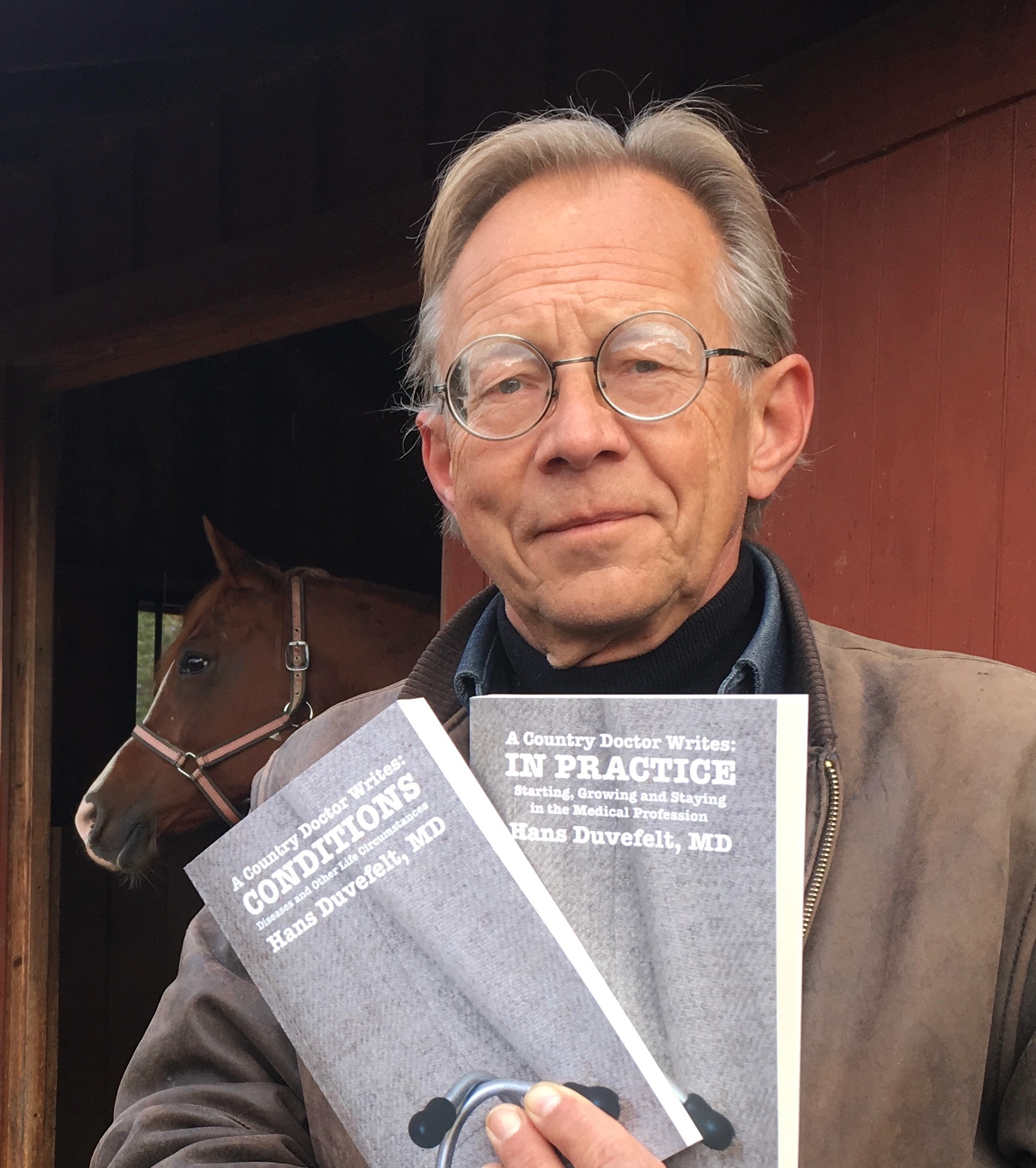
BOOKS BY HANS DUVEFELT, MD

CONDITIONS, Chapter 1: An Old, New Diagnosis

Top 25 Doctor Blogs Award

Doctor Blogs

Enter your email address to subscribe to this blog and receive notifications of new posts by email.

Mailbox

contact @ acountrydoctorwrites.com
Bookmark and Share
© A Country Doctor Writes, LLC 2008-2022 Unauthorized use and/or duplication of this material without express and written permission is strictly prohibited. Excerpts and links may be used, provided that full and clear credit is given.