Archive Page 15

Physician, Heal Thyself! An Early and Late Career Collaboration

Exchanging ideas with Dr. Lilian White about what each one of us might write on this topic, I ended up focusing very hard on the word HEAL. In Swedish, the word for physician is LÄKARE, which literally means HEALER. But the sad truth is that we treat a whole lot more than we heal. The way I understand healing is restoring natural and at least nearly perfect health. That may be the case with repairing a laceration or casting a fracture, but it hardly characterizes what we do when we prescribe medications for chronic health conditions, substances that mitigate symptoms but often cause secondary, unwanted, and sometimes downright dangerous side effects.

By now we know that there are just a few disease mechanisms that cause most of the chronic conditions affecting modern human beings. There is inflammation, which in large part is related to the foods we eat. Ultraprocessed foods and foods with too much sugar or unnatural additives are drivers of many such conditions. We also know that physical inactivity lies behind many conditions. Stress, screen time and sleep quality also threaten our health these days.

If these drivers of disease and ill health are recognized early enough, healing is possible, but sometimes all we can do as physicians is harm reduction. 

I believe the fundamental principle behind the phrase PHYSICIAN, HEAL THYSELF is that we need to be stewards of our own bodies and our health and demonstrate and share that ideal to our patients. I also, naturally, believe that by taking care of our own health, we can do more good for more people as we decrease our own risk of illness and burnout. Ignoring our own needs in order to maximize our output, productivity or whatever you choose to call it is ultimately wasteful. 

Now, I readily admit there were times when I put my work before my own health and there were times when I could have been more present for my family. There were the years when I worked 6 days a week, 40 hours in Bucksport and 20 in Aroostook County, 223 miles between my two houses, 4 hours when the weather allowed, much longer many times in the winter. Three times, I swerved around a moose that was standing still in the middle of I-95 as I was driving almost 80 miles an hour in the early morning or late evening hours during my self imposed commute. During those years and a few other times in my life I put my work so far ahead of my own health and wellness that I definitely didn’t live up to the adage of healing myself so that I would be likely to do more good for my patients in the long run. 

It is often said that physicians make the worst patients. I’m definitely in that category. There are two aspects of this, at least in my own case. One is that I’m pretty opinionated by virtue of my knowledge and experience. I know the back story to many of the things we now consider axiomatic, but that have changed more than once during my years in this profession (or should I use the word business – no, that’s another topic). The other is that, also in part because of my many years of doctoring, I have become more than a little fatalistic in my views on preventive medicine. What makes sense when you look at populations doesn’t always make sense for individuals. I sometimes say “I provide health care but I don’t partake in it”.

I have seen too many times that bad things, bad diseases, happen to people who do all the screenings and follow all the rules to try to stay healthy. 

Here’s a 2 year old article I happened to read tonight:

The Nordic-European Initiative on Colorectal Cancer (NordICC) was a large, multi center, randomized study that investigated the effects of population-based colonoscopy screening on the risks of colorectal cancer and related death at 10 years. It was published in 2022. Its conclusion was “The number needed to invite to undergo screening to prevent one case of colorectal cancer was 455 (95% CI 270 to 1429). The risk of death from any cause was 11.03% in the invited group and 11.04% in the usual-care group (risk ratio 0.99; 95% CI 0.96 to 1.04).” 

I wonder if this has anything to do with the statistic that a quarter of all polyps are missed during the average colonoscopy.

So what’s a skeptical, seasoned senior physician to do if he doesn’t like to partake too much in healthcare for himself? I have hypertension and there have been times when I refilled my own medication, but for a few years I asked one of my partners to refill them for me. Now I see a nurse practitioner I once helped train, who is in her own private Direct Primary Care (DPC) practice. She’s always respectful of my clinical suggestions. 

When Lilian and I collaborate, one of us usually gets to share their draft first, then the other shares theirs and then we publish our finished pieces more or less simultaneously. This time, she shared hers first. Because of that, I will tag on to her paragraph about moral injury, a concept closely linked, but perhaps not always synonymous with burnout. But my own healing journey has involved two things directly related my work:

First, in 2008, during a time when I felt a lot of pressure in my work, I started writing my blog about my experiences, feelings and reflections. Doing this helped me focus on what really mattered to me in my day to day and long term view of my work. I often slipped my personal experiences and reflections into my writing, too and the course corrections they inspired.

Second, when the computerized medical record started to more and more control my actions and monopolize my time, robbing me of quality time with my patients and time for my life outside of my work, I quit. I joined a practice with a different business model, not piecework, not Fee-For-Service but results driven. Not “get them in, get them out”, but “make’m better”, whether it’s a house call, video visit or phone call. Where I work now it doesn’t matter how it happens – as long as it does. 

So that’s how I try to preserve, protect or regain my own health: I eat healthy, do lots of manual labor on the farm, spend time with my dogs and my horses, enjoy healthy relationships with those I love, reflect and write about my role as a doctor, and view each one of my patients as more than a number, more than a Ka-Ching, but another human being I have the privilege of helping or guiding, for however how long.

Back When I Was a Resident Myself…

St Elsewhere, medical drama, first episode 15 months after I started my family medicine residency in Lewiston Maine. Tonight, I watched it again.

Inpatient Workups Would Reduce Patient Anxiety, Save Time, and Maybe Even Save Money

In 2017, I published a piece about the no longer common or even existing inpatient workup. I often think about how efficient it would be if we went back to doing them again. If we could do the necessary tests to diagnose or rule out cancer and other serious diseases in one or two days at a dedicated diagnostic center, healthcare would be a lot more efficient.

Not only would patients get their diagnosis quicker, but equipment like MRI and CT scanners could be used more efficiently – scheduled tighter- when patients are right there, already registered and on site. Both imaging and labwork could have more reflex testing – if the result of test A is x, then also run test B.

Compare this to today’s multiple steps, with wait times in between: First the patient has the less expensive ultrasound. Then the overworked primary care doctor, who is seeing patients all day long, eventually sees the result and orders a CT scan. Then there is the wait for a Prior Auth, then the wait for an appointment, followed by the same steps again before am MRCP reveals a pancreatic mass, suspicious for cancer. Then there is the referral to gastroenterology for tissue diagnosis via an ERCP.

Inpatient workups could virtually eliminate Prior Authorizations at the Primary Care level. The doctors overseeing such centers could have direct access to the insurance companies’ algorithms. The insurance companies could then eliminate many of the clerical staff that listens to or reads outpatient doctors pleading their cases for getting imaging tests approved, just like the primary care offices could get by with less clerical staff working the prior authorizations.

And just think about how much a system like this would reduce patient anxiety by shaving many weeks off the time to diagnosis. In some cases, this could also affect clinical outcomes by avoiding the inhumane bureaucratic delays we now have to deal with. I have seen too many times how patients end up in the emergency room with advancing symptoms while waiting for the imaging I ordered for them.

Deep Knowledge Needed for Expert Diagnosis and Treatment

In a world where a blood pressure of 140/90 is a failing grade and 139/89 is a winner, seasoned physicians sometimes get accused of not moving with the times. But, of course, we still remember the world we grew up, trained and practiced in – Medicine, as opposed to today’s Metamedicine, which is a parallel universe where data is king, regardless of just how valuable it is for individual patients. A one point difference in a numeric parameter could easily be compensated by non-quantifiable things like how good this patient’s diet is and how good their social support system is.

I have written many times about the different views of physicians as either professionals or skilled workers. So many things in medicine today can easily be done by skilled workers with less training than physicians. But, like it or not, I think there are two things that require professionals with their greater depth, gained through more years of training in a more scientific environment. The first one is making a correct diagnosis when unsorted patients present with a jumble of symptoms. The second is explaining their disease or condition and guiding patients through the process of choosing the treatment approach that best suits their own phenotypes, circumstances and preferences. You have to know your diseases well to be able to individualize treatment for a variety of real people with real differences, even though they have the same diagnosis.

Rapid and accurate diagnosis for patients who are sick and scared is not a priority we hear a lot about these days. The low hanging fruit of public health and preventive medicine is, like flu shots, blood pressure control and recommended screening tests. Fancy procedures and expensive pharmaceuticals are getting a lot of attention, but nailing a difficult diagnosis by really knowing your stuff is an almost a forgotten and neglected, certainly undervalued, art form. And I have a hunch why that is. You can’t do prospective, double blind research about it. It’s hard to measure and probably even hard to conceptualize for non-clinicians. It’s sometimes even hard to identify when care is fragmented without a centralized EHR.

Reverse White Coat Hypertension in a Patient with Anxiety: Treat the Blood Pressure or Treat the Anxiety?

The other day, I saw a woman who was interviewing me in order to decide whether to transfer her care to my practice. That happens now and then.This woman had the diagnoses of hypertension and of general anxiety, as well as a few other things that I didn’t think immediately related to the reason she was considering finding another doctor.

In some office visits with her various specialists and primary care doctor her blood pressure was as low as 118 but most of the time in the mid 120s and occasionally it hit 145. At home, she ranged from 140 to 200.

This is what we call reverse white coat hypertension. This woman had essentially normal readings in the office and almost always ran high at home. It is much less common than white coat hypertension where the medical office environment triggers an adrenaline rush that raises a patient’s blood pressure sometimes.

Her primary care doctor had tried her on many different blood pressure pills without much luck. Her psychiatrist had her on the maximum dose of venlafaxine plus a few other things. In addition to that, she is prescribed 14 tablets of clonazepam with instructions that it has to last her a whole month and not to call for an early refill.

Clonazepam is a benzodiazepine just like Valium or Xanax. The only real difference between the benzodiazepines is how fast they kick in and how long they stay in your system. For people who take them for anxiety in certain situations, Xanax is often used. It is viewed as more addictive because patients feel the relief when it starts to work and experience dread a few hours later when it starts to wear off. Most prescribers think it is good only for rare situations like when flying in an airplane or going to the dentist. Clonazepam on the other hand is slow to kick in and slow to wear off and most of us use it only for chronic anxiety when the usual preventative medication aren’t working. It is dosed once every 12 to 24 hours, so it seemed odd to me that an experienced psychiatrist would dole out 14 tablets a month to be used as needed for somebody with anxiety every single day.

She lives in a housing development where she hears her neighbors through the walls. She sleeps on the living room couch, where she can see the front door, and never uses her bed or even her bedroom for that matter. She worries about people breaking in and sometimes she doesn’t even know exactly what is making her feel anxious. She doesn’t know where she might feel safer or happier, so she feels stuck and paralyzed without even any vision of how or where her life could be better. She completely rejected my suggestion of considering a roommate, maybe even in a different place, living a little bit like in the old sitcom “Golden Girls”.

I know exactly what is going on here. They teach you in medical school that if you try several blood pressure medications without success, it is time to look for what’s driving this. It could be hormonal problem with the thyroid or the adrenal glands. It could be too much alcohol, narrowing of the kidney arteries and many other things. Or it could be stress and anxiety. In this case, it seemed obvious that the anxiety is the driver because this woman, who spends every day and every night alone, has better blood pressures when she is in the presence of another human being.

I know exactly what is going on here in another way. Doctors who work for big hospital systems are often bound by policies and guidelines or simply an unwritten bias within their organizations. Benzodiazepines are like opiates in the sense that they are potentially addictive drugs that may be appropriate for short-term use, but they both have a phenomenon called tachyphylaxis. What that means is that people often develop a tolerance to the medication and over time need more and more for the same effect that they had when they first seemed to benefit from it. For this reason, hospitals, group practices, medical boards and various watchdog are working hard to minimize unnecessary use of these drugs.

This patient’s primary care provider is part of the same big organization so they would also be under pressure to avoid continuous prescribing of benzodiazepines.

So what I did was tell this anxious woman to really talk seriously with her psychiatrist in her upcoming visit about how the venlafaxine is not preventing the anxiety, she feels stuck where she is in an environment where she doesn’t feel safe and the clonazepam gives her good relief on the days she takes it, but if she cannot have it every day, she needs her psychiatrist’s help in getting something else that reduces her anxiety. There are many options for this, but taking a long acting drug only some days and not at all on other days doesn’t sound like a good long-term solution to me.

In some ways, prescribing the long acting clonazepam to be taken when she feels like she needs it the most, essentially, would be like taking a blood pressure pill on days where she thinks her blood pressure might be going extra high. We hardly ever do that, so what’s different in this case?


I just realized none of the posts show on an iPad or a computer, but they do show on an iPhone. WordPress is working on this. In the meantime, please visit my Substack.


Osler said “Listen to your patient, he is telling you the diagnosis”. Duvefelt says “Listen to your patient, he is telling you what kind of doctor he needs you to be”.


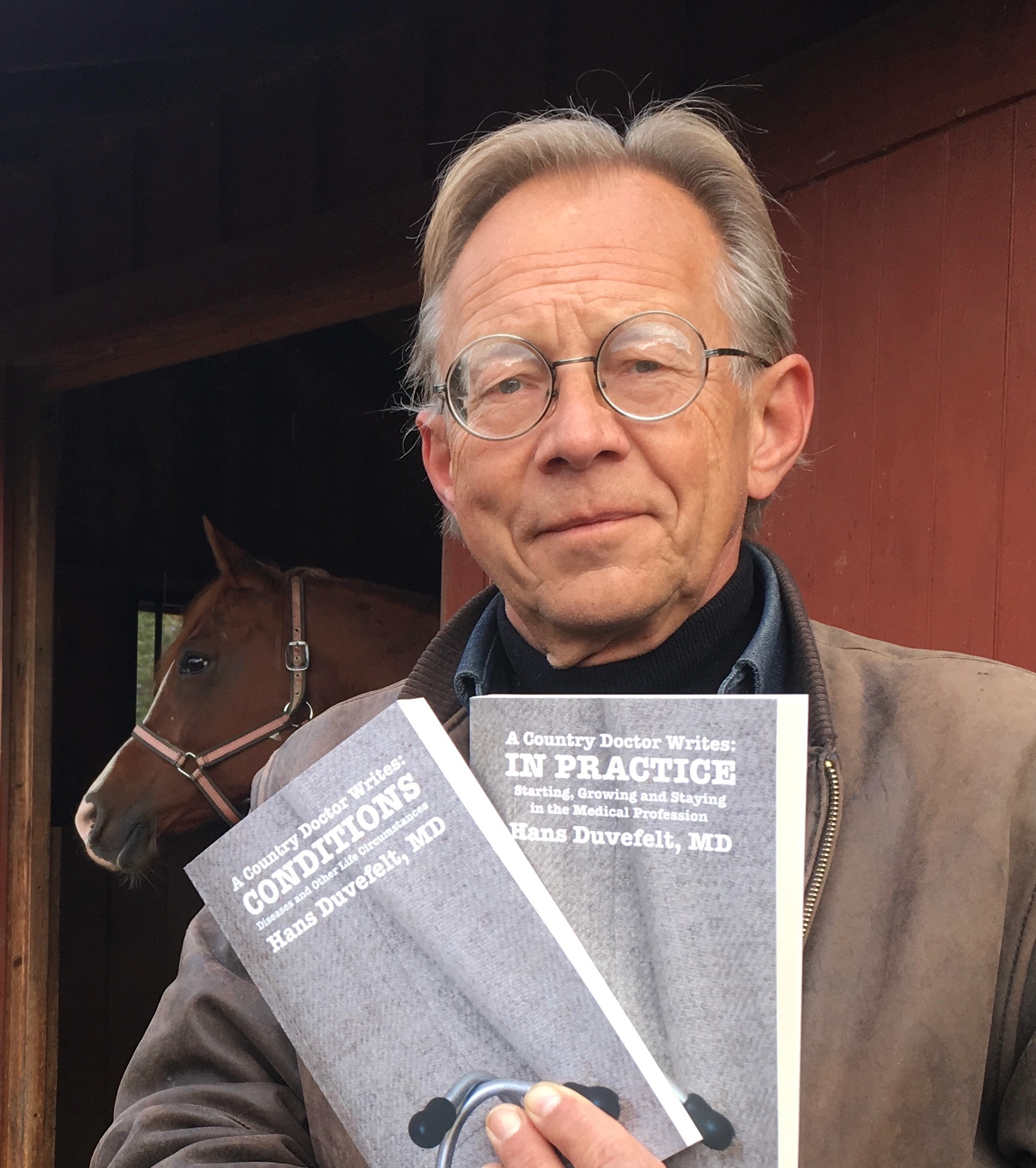
BOOKS BY HANS DUVEFELT, MD

CONDITIONS, Chapter 1: An Old, New Diagnosis

Top 25 Doctor Blogs Award

Doctor Blogs

Enter your email address to subscribe to this blog and receive notifications of new posts by email.

Mailbox

contact @ acountrydoctorwrites.com
Bookmark and Share
© A Country Doctor Writes, LLC 2008-2022 Unauthorized use and/or duplication of this material without express and written permission is strictly prohibited. Excerpts and links may be used, provided that full and clear credit is given.