Archive Page 144

Specialists in Diagnostics

Every primary care physician has had this experience: We refer a patient to a cardiologist, pulmonologist or gastroenterologist and get a note back that says our patient’s symptoms are not cardiac, pulmonary or GI related – “Not my department”, in essence.

Medical specialties are organized by organ or organ system, and not by symptom. This really leaves primary care doctors in the default role of being specialists in diagnostics. I often say to patients with poorly localized symptoms: “Once we know what body part is causing your symptoms, we can get help from a specialist in that organ system, but until then, it’s up to you and me to figure it out”.

Some years ago I took too long to properly diagnose an older woman’s shortness of breath. It had developed gradually over a period of about a year. She had a smoking history and a mild chronic cough. She was also a diabetic with high blood pressure. I ordered a chest X-ray, pulmonary function tests and an echocardiogram before I realized I hadn’t checked her blood count. She turned out to have iron deficiency anemia from a chronic gastritis. That is a lesson I will never forget.

In the fifteen minutes we have with each patient, we sometimes zero in too quickly on the most obvious symptoms in front of us. This is perhaps even more likely if our support staff documents the medical history in the electronic medical record before we even enter the room. I constantly remind myself to take the time to listen carefully to the patient’s own story, and to simply observe before I begin examining.

A few weeks ago I saw a woman in her forties with a history of mild asthma and stable depression. She showed up as a “triage” at the front desk and was hoisted into our “trauma room”, gasping for air. She had been to a walk-in clinic a few days before and was prescribed an antibiotic for a bronchitis but had become progressively more short of breath since then.

“I don’t know if I’m having a panic attack or what”, she said between deep, rapid breaths. “My hands are getting all tingly and I have this constant pressure in my chest.”

Her oxygen saturation was normal and her peak flow was better than the old values we had in her record. Her lungs were perfectly clear. Her heart rate was in the 120’s and her EKG was normal.

Working quickly and speaking slowly, trying to get her to relax, I checked her legs for swelling and calf tenderness and checked her skin temperature. Her hands were ice cold and very pale.

“Yes, you are hyperventilating”, I said. “That’s why your hands are tingling. I’ll cut you a deal. Let’s give you some oxygen, so you’ll be able to breathe a little slower.”

She felt better and her respiratory rate settled down. With the pressure in her chest, she needed to be transported to the hospital for further testing to rule out a heart attack or a pulmonary embolus.

I finished up my note and handed it to the ambulance attendants. I remember typing in “distal pallor” as one of my exam findings. In the back of my mind I wondered if this was another case of severe anemia presenting with shortness of breath. At the walk-in clinic she might just have been pigeon-holed as having a chest infection, because it seemed the easiest diagnosis.

A call from the hospital the next day shed light on her symptoms: She had normal troponins and a negative D-dimer, but she was indeed profoundly anemic with a hemoglobin of 6, half of what would be normal for her, and her periods had been irregular and unusually heavy for the last year. She had also been taking a lot of ibuprofen, but her gastroscopy showed only some mild gastritis. So the cause for her shortness of breath, ultimately, was gynecological – not the first thing we usually think of with that symptom, although any kind of anemia should be in the differential diagnosis.

A simple bedside observation had suggested she might be anemic.

We do need to manage many common chronic diseases in our role as primary care providers, and this is something that is becoming more and more complex with time. But our role as frontline diagnosticians is possibly under-appreciated and under-emphasized. We need to continually hone our diagnostic skills in order to serve our patients. Even in cases where we refer patients out, to the Emergency Room or to specialists, we need to actively consider the diagnostic process beyond where our involvement or responsibility ends, so that we can become better and better diagnosticians ourselves.

We have all kinds of tools these days for looking up treatments for even the most esoteric diseases, and once we have a general idea of the diagnosis, we can easily look up the specific criteria. The challenge is to make that initial broad assessment that points toward the ultimate, specific diagnosis. That is a skill not easily taught in medical school, because it involves gauging multiple probabilities simultaneously and sifting through countless extraneous details in patients’ medical histories, lab tests and exam findings. Only hands-on experience teaches us to do that, but only if we cultivate an inquisitive mindset and a personal investment in the diagnostic process.

In all the quality literature I read, little mention is made of the value of accurate diagnosis; are we focusing too much on simple housekeeping parameters, measuring only what is easy to measure? Looking at malpractice statistics, failures and delays in diagnosis make up the majority of claims in primary care. That would suggest that what patients value and expect most is to be correctly diagnosed. Perhaps we need to redefine quality in health care to begin with accurate diagnosis of what our patients present to us with, before getting too far into the metrics of blood sugars, blood pressures, prescribing ACE inhibitors, aspirin and beta blockers.

An Invitation

“I invite you to follow me on my journey”, she said with a voice that sounded proud, calm and courageous.

Her brain MRI had shown a large, inoperable glioblastoma. Her cheeks were already puffy from the steroids the neurosurgeon had prescribed to counteract brain swelling and seizure risk.

“I am not afraid of my cancer”, she continued. “It is now part of who I am. I even gave him a name, and he follows me wherever I go. There is no point in wishing it wasn’t so.” She chuckled a little and added, “I talk to him sometimes, and say things like ’so, what are we going to do today?’ I can tell he is there when my right hand refuses to cooperate and I am unable to dial on my cordless phone, and when I feel spasms coming on that make me drop my teacup or whatever I am holding in my hand.”

She spoke with a grace and a dignity that made me feel privileged to be in her presence. I have followed, intimately, the course of many incurable diseases in dozens of patients over the last thirty years, and a handful of these patients have etched themselves into my memory with their serenity and otherworldly radiance of faith and purpose. This was the first time a patient spoke of her disease as a journey, and used the words “I invite you to follow me”.

I felt I was on such a journey when I travelled back to Sweden and shared my father’s last days and death from Alzheimer’s disease a few years ago. But there was something very unusual and humbling to hear a patient with a new terminal diagnosis open her private world to let me, a stranger and only her new doctor, inside.

I sometimes spend too much time and energy, or “jing” as my wife says, thinking, talking and writing about how health care should be organized and delivered. But then, every once in a while, a few words, a look, a sigh or an outstretched hand from a fellow human being cuts through all the distractions of my work and reminds me of my own purpose, my own journey as a physician, a fortunate apostle of the ancient masters.

I started medical school forty-two years ago this month. I am grateful to begin another new year in medicine.

A Straight Face Test for Health Care: Would Patients Pay for This?

Health care in America is fracturing right down the middle, and doctors are going to have to figure out if or how long they can straddle the divide between what patients want and what the Government and Corporate America want them to have.

Up until this point, the momentum has been with the payers, Medicare and the insurance industry. But the more heavy-handed they become, the more inevitable the public backlash is becoming.

It will come down to this, a kind of “straight face test” for health care: Would patients pay for this?

The Annual Wellness visit, better named “Medicare’s Non-Physical” and some forms of “Population Management” are examples. Both are great ideas; an annual health review and planning session as well as doctors maintaining an overview of, and reaching out to, high risk groups of patients – in theory neither would be anything to argue with.

But the way it has to be done today, if we want to get paid, micromanaged from afar through bureaucratic edicts, is alienating the patients this was all intended to benefit.

Totalitarian Health Care is Doomed

I grew up and went to medical school in a socialist country. I admit Sweden had a kinder, gentler, soft-core socialism, but I also visited and followed the news about the Soviet Union, the Baltic states, East Germany and the former Czechoslovakia.

American health care, as manifested by Medicare and the big insurance companies, is more and more starting to look like my visit to the Soviet Union with my surgery class in 1977. The most striking example of disregard of individual customer preference I saw was at a very large restaurant near the Red Square. The sour-faced, haggard breakfast waitstaff told our group bluntly that we could all have either coffee or tea, but they could not accommodate individual orders for different beverages.

The “planned economy” of the Soviet Union collapsed, and I suspect its counterpart in American health care eventually will, too. I think our system will split in two: One system for what patients see value in, and would pay for, and another system, which the politicians want them to have, but which most people would have nothing to do with if they had any say in where their healthcare dollars go.

Two dichotomies are driving this inevitable split down the middle of our healthcare system: First, the improbable marriage of public health and medical care; and, second, the opposing ideals of standardization and individualization.

Public Health vs Medical Care

It is insanely inefficient to mandate that highly trained physicians, with an “opportunity cost” of $7-10 per minute in primary care, and multiples of that in many procedural specialties, carry forth the nation’s public health agenda with their patients one by one during their office visits. Medicare’s requirement that we document an intervention for every patient we see with a Body Mass Index over 30 is a glaring example of that. Having our nurses or other staff members do that isn’t much better. Our teams have a lot of tasks and routines to maintain proficiency in, and since obesity affects a large proportion of our society, it would be better addressed on a national, cultural and political level. It suddenly became our job, it seems, as health care professionals, because whoever had the ball before us failed at fixing the problem. But soft drinks and breakfast cereals are made by big, powerful corporations, and our Government lacks the guts to reign them in. So, someone thought, let the docs spin their wheels for a while; they don’t have enough to do.

A healthcare system designed for setting fractures, treating pneumonias and removing appendixes is ill suited for treating societal ills. Quite frankly, it doesn’t pass the straight face test: Ask citizens if they want their health insurance premiums (or out-of pocket costs in a Direct Primary Care model) to cover à la carte anti-obesity campaigns or if that should be included in State and Federal budgets. I know what the answer will be.

The difference here isn’t subtle: If public health is financed through workers’ insurance premiums, its cost is more evenly spread, and thus affects middle and lower income people more than if it comes out of corporate (think Pepsi, Coke, General Mills and Ocean Spray) and progressive personal income taxes.

Standardization vs Individualization

There is a rapidly growing interest in personalized health care in America today among patients and health care entrepreneurs. Genetic profiling is now used in choosing which medications to prescribe, for example.

At the same time, payers are tying reimbursement to doctors’ adherence to blanket recommendations (read “Evidence Based” treatments) derived from large population studies that were designed to find lowest common denominators: In general, for example, low dose aspirin, beta blockers, lower blood pressures and blood sugars are helpful, but we are now seeing that there are more and more subgroups of patients who don’t have the expected benefits from any given “Evidence Based” intervention. In some cases, people are harmed by them. As long as Medicare and the insurance companies hold the purse strings – actually, dole our own money back to us according to their standards – the welfare of a few is routinely sacrificed for the benefit of the many.

Again, applying the straight face test, patients wouldn’t want to pay us for delivering care to them that was designed or chosen to help someone else, just so we could show off high compliance rates. If doctors are held in too tight a grip of uniformity by the conventional insurers, patients in this new era of deepened insight into the variation of disease expression will take their money to providers and insurers who will respect their preferences.

A Moral Compass

The straight face test has to be our moral compass as we work our way through our daily allotment of twenty-odd patient encounters with fifteen minutes to spend as wisely as humanly possible.

People can vote their politicians out of office, they can form cost sharing cooperatives or sign up for Direct Primary Care. But we, physicians, need to make sure we don’t forget who ultimately are our customers. Even without politicians and insurance conglomerates there will always be doctors and patients. May we never lose our trust in each other.

The Interview

Today I met a man who wanted to interview me before transferring his records.

He was about my age and seemed polite and pleasant enough. He told me his doctor of a dozen years had started to taper him off his long term narcotics after he reported some of them missing because of theft. He used to take the equivalent of about 1,200 mg of morphine per day for his back pain. Our office classifies anything over 120 mg of morphine as a high risk dose.

He left that practice and transferred his care to a hospital run clinic across his home town. His next doctor at first prescribed him the medications, and then quickly begun tapering him off them. The story was a little vague as to exactly why.

He then landed in the hospital for something unrelated, and the report from that admission was available on our state’s medical information sharing website. He told the hospitalist that he was on the high dose that actually two doctors had already tapered him off. The hospital doctor called his new primary care doctor to clarify things and was told the patient had failed a urine drug test because it contained a pain killer he was supposed to have run out of months before. He told me he wasn’t trying to deceive the hospital, he just thought they wanted to know what he used to be on before things changed. He also told me he had kept a few of the discontinued pills on hand, and had used them when his main medicine was being tapered.

The man said he had been off his narcotic pain killers for a few weeks now. He drove himself the 25 miles to our clinic, and he walked the long way from the parking lot to my corner office. He sat in a relaxed position in the office chair across from me, but he told me that he had suffered a big loss of quality of life when he lost access to his narcotic prescription.

After he was done telling me about what it felt like to be tapered off his pain medications, and as a by-the-way, he also told me he needed to get back on the amphetamine he had been on for his attention deficit disorder.

I listened carefully and told him with my most gravelly and serious voice that I didn’t think any doctor would prescribe the kinds of doses he used to be on, and that he did seem to function without them – at least to a degree. I told him that his best bet was probably to talk with the doctor he had known for twelve years. I told him that particular practice has a committee that reviews the care of their difficult pain patients, and he could ask for their involvement. I offered to take care of his other medical needs if he wanted me to, but that there was not enough trust between us for me to just give him narcotics again because of the history he provided me with.

He thanked me politely, rose from his chair, offered a firm goodbye handshake and walked slowly down the hall back to the reception area.

All I Want For Christmas: Seven Things I Wish My EMR Could Do

Dear Santa,

I’ve been a very good doctor all year. I have checked all my boxes and aced all my Meaningful Use requirements. This year, I’m not asking you for anything fancy. I just thought you might be able to instill some kindness and good will into the people who designed the user interface of my EMR. Maybe, with your help, they would come to see how a few minor tweaks could make the practice of medicine safer and more efficient, and my day a lot more enjoyable than it already is:

1) I wish I could see a routine laboratory panel, like a CBC or a CMP, in one view without scrolling inside a miniature window. That would save time and help me not miss abnormal results.

2) I wish the patient’s next appointment date was displayed next to any incoming report I have to review. That would help me decide if I need to contact the patient about the results or if I’m seeing them soon enough that I can talk about the report then.

3) I wish I could split my computer screen so I could see an X-ray or consultation report or a hospital discharge summary at the same time as I type or dictate the narrative of my office note. That would help me quote them correctly.

4) I wish, when I open a patient’s actual visit note for today, the place where I do my documentation, that I could automatically see at least the beginning of the latest of every category of information we have received – latest labs, X-rays, outside reports and phone calls. It takes too much time to go searching in the places for each category separately just in case there might be something recent to catch up on in the visit.

5) I wish my EMR would know that prn medications, such as nitroglycerin, are not meant to be used for only a limited time, like 30 or 90 days, and would agree to e-prescribe them without a “duration”. If I could do that, they would not disappear from the medication list all the time.

6) I wish my EMR would automatically display the patient’s kidney function and allergies next to where I pick what medications to prescribe. That would make prescribing quicker and safer.

7) I wish my EMR wouldn’t alert me to drug warnings and interactions that are too obvious to need reminders for. I mean, any doctor would know that adding a second diabetes pill can cause low blood sugar (that’s why we do it) and that combining two drugs that can cause fatigue may cause even more fatigue! More intelligent warnings would be taken more seriously; now my trackball finger is automatically poised to close the “warning” pop-up, because I’m expecting it to be irrelevant.

I’m sure if I tried, I could think of an even ten wishes, or maybe even twelve – one for each day of Christmas. But these seven things illustrate the underlying, fundamental wish I have: that my EMR will evolve to be more user friendly. I wish, now that the basic functionalities of EMRs are in place, that somebody comes back to people like me and asks how to take this thing to the next level.


I just realized none of the posts show on an iPad or a computer, but they do show on an iPhone. WordPress is working on this. In the meantime, please visit my Substack.


Osler said “Listen to your patient, he is telling you the diagnosis”. Duvefelt says “Listen to your patient, he is telling you what kind of doctor he needs you to be”.


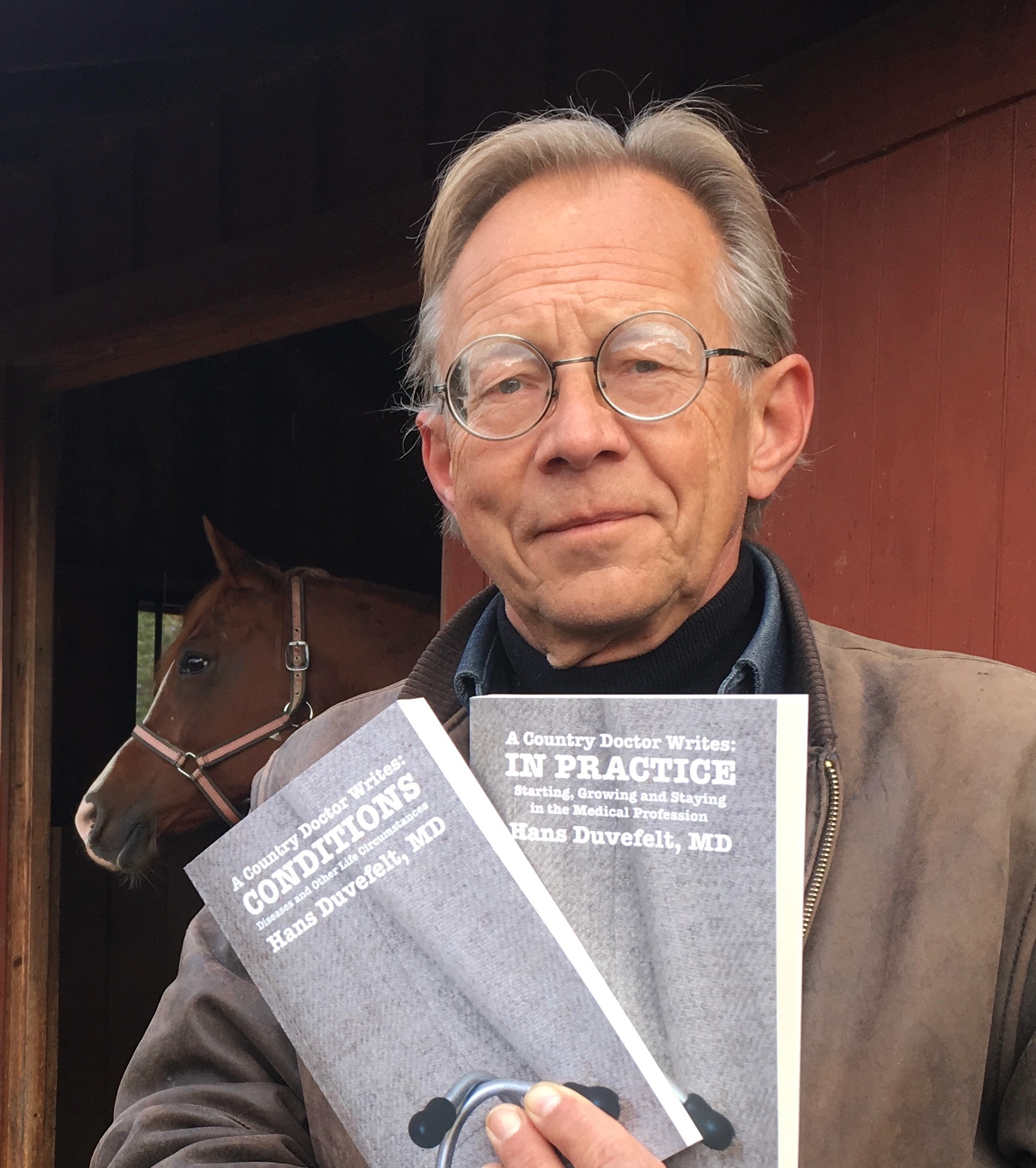
BOOKS BY HANS DUVEFELT, MD

CONDITIONS, Chapter 1: An Old, New Diagnosis

Top 25 Doctor Blogs Award

Doctor Blogs

Enter your email address to subscribe to this blog and receive notifications of new posts by email.

Mailbox

contact @ acountrydoctorwrites.com
Bookmark and Share
© A Country Doctor Writes, LLC 2008-2022 Unauthorized use and/or duplication of this material without express and written permission is strictly prohibited. Excerpts and links may be used, provided that full and clear credit is given.