Archive Page 143

Don’t Squeeze, Tie, Slap or Bite the Hand that Feeds You

Dear Health Care Business Leader,

I am writing to you in a spirit of cooperation, because the way health care works today, it is too complex a business to manage “on the side” while also taking care of patients. And I hope you don’t have any illusions about medicine being so simple that non-physicians like yourself can manage patients’ health care without trained professionals who understand medical science and can adapt the science and “guidelines” of medicine to individual patients with multiple interwoven problems with disease presentations that seldom match their textbook descriptions.

We need each other, at least under the current “system”. So I ask you to view us as allies, because we actually do the work that ultimately pays your wage or your profit, and is the basis for your own performance metrics. We are in this together, like it or not, so let me ask that you don’t do some of the things that several of your colleagues are doing:

Don’t squeeze us too hard.

When you do, the quality of our work, the health of those we serve, is in jeopardy. Instead of just imposing productivity targets, quality thresholds or pay-for performance schemes, listen to what we need in order to keep our patients healthy. Invite us to the table; we actually know a lot about how to work smarter, faster and better, so don’t be afraid of our participation. If we feel squeezed and abused, you will get perfunctory performance, but if you partner with us, we can, together, make patient care much better.

Don’t tie our hands.

I know you mean well, but when you pick or design tools and workflows for us to use, you often make it harder for us to do the work that patients need us to do well.

Don’t give us EMRs that cut our productivity in half, when computers have streamlined work in other sectors; don’t make assumptions about how doctors think and how we process information. For example, let me read CT scan reports and other test results, without scrolling, right when I see my patient in follow-up, import them into today’s office note, and “sign off” on them right then and there, not after my office hours when I should be spending time with my family. And, also, when I am in today’s patient note, let me see all recent results, consultations, calls and refills WITHOUT clicking on several “tabs” that may not have any results under them. Data is meaningless without context, and a good computer system should enhance the context behind the data.

Don’t slap our hands.

Doctors are highly motivated individuals, who generally work harder than anyone asks them to. If we don’t seem to do what you want us to do, it is either because we think you are asking us to do the wrong thing or because you haven’t given us the tools to do the right thing. We don’t need to be prodded along like cattle, and we don’t respond to being slapped.

Don’t bite.

Don’t inflict pain and don’t threaten us with it. Our first inclination will likely be to take care of our patients and ignore you, but we will ultimately respond if threatened or attacked enough. You may think of health care entrepreneurs from the business community as introducers of disruptive change, but consider the possibility that physicians, if pushed too far, could be the ultimate disruptive force in health care.

A Day of Real Doctoring

Back in my first year of blogging, I wrote a post, titled “A Day Without a Diagnosis“, about the way we now spend most of our time “managing” chronic diseases, some of which weren’t even considered diseases when I went to medical school.

That’s not how all my days go nowadays: A week ago I had a day of some very real doctoring.

My first patient of the day was a woman in her mid thirties. She told me she had been suffering from hives almost every day for two years. She was taking a once a day antihistamine, loratadine, faithfully and sometimes also some diphenhydramine when the itching got too bad. She had seen a dermatologist and an allergist early on with no resolution.

She also had problem with chronic abdominal cramps and diarrhea. That had also started about two years ago. She had already tries lactose and gluten free diets without relief.

Her hives seemed to erupt when she felt warm, and in her work, she was often exposed to temperature variations. At home, she slept in an upstairs bedroom with poor heating, and wore flannel pajamas under a down comforter. Her hives were terrible at night, but after sleeping on the couch in the living room for a couple of nights, she thought her hives had diminished.

I explained that she has cholinergic urticaria, triggered by heat. I e-prescribed famotidine, 40 mg twice daily and advised her to continue her loratadine every morning, but to also take cetirizine at night and to avoid bundling up at night, which she had already discovered to be helpful. She listened attentively to my mini-lecture on histamine 1 and histamine 2 receptors, their blockers and the overlap between them.

When I moved on to tell her that it sounded like she had irritable bowel syndrome, she seemed to think that was interesting, but when I got to my recommendation of taking Metamucil or a similar psyllium powder to help regulate her bowels, she seemed a little skeptical. “I thought that was for old people”, she said, I explained my rationale, and she said she’d give it a try.

My second patient of the day was a young man who had come to establish care two weeks before. In that first visit it became evident that he was bothered by a high pulse rate of several years’ duration, performance anxiety, elevated blood pressure and erectile dysfunction. His thyroid test had come back normal, and his outside blood pressure readings were all elevated.

I told him I felt a beta blocker would help all four of his problems. I shared with him that in the past, when he was just a baby, we used to choose blood pressure medications according to the overall clinical appearance of each patient, but that in recent years we had been encouraged to choose the same initial medications for all hypertensive patients, based on outcomes data in large groups of patients. I shared that with today’s new DNA profiling aiding in medication selection, we seem to be right back were we were thirty years ago, and that I thought the less common first choice, metoprolol, would fit his clinical presentation better than lisinopril or hydrochlorothiazide.

The same day I saw an elderly woman with terrible pain in her shoulders and thigh pain with walking. She also had carpal tunnel syndrome in both hands. She had seen a general orthopedic surgeon twice, and had some temporary relief after a cortisone shot to her most arthritic shoulder, but her symptoms came back in full force.

I knew in my bones she had polymyalgia rheumatica. I prescribed 10 mg of prednisone twice daily and ordered lab work including a sedimentation rate. Later that day it came back at 96, almost pathognomatic for PMR.

Today I saw all three of them back in follow-up.

The young woman was beaming. “I can’t believe it. Two years of hives every day, and in two minutes you tell me what I have and what to do about it. I haven’t had a single hive in ten days!”

“Great”, I said, “and how’s your gut?”

“Like clockwork, and no cramps. I’m amazed.”

“It’s very gratifying when simple remedies work so well”, I said.

“Well, I am certainly grateful”, she proclaimed as I renewed her prescriptions for a year.

My blood pressure patient had a pulse rate well under 100 and his blood pressure was almost down in the normal range. He could feel how the medicine helped him deal with stressful situations, and, he smiled, his girlfriend sent me her thanks.

My elderly PMR patient had regained all her movement in her better shoulder and had gone shopping in the Mall over the weekend. Her son suggested she might have had a touch of mania on her steroids, but she seemed mellow enough today.

As I wrapped up my work for the day, I thought about the reasons I wanted to be a doctor ever since I was four years old. I always wanted to help sick people feel better and I have come to find great satisfaction in the teaching aspect of medicine.

But not every patient that takes a seat in my exam room is looking for me to do either of those things. Some don’t really want to be there, and some come in hopes that I will fix them without any effort on their part.

The times I can make a diagnosis that brings relief to a fellow traveler are precious, and some days I am blessed with many such opportunities.

From Learned Professionals to Skilled Workers: The Dangerous De-professionalization of Medicine

Physicians today are increasingly viewed and treated as skilled workers instead of professionals. The difference is fundamental, and lies at the root of today’s epidemic of physician burnout.

Historically, there have been three Learned Professions: Law, Medicine and Theology. These were occupations associated with extensive learning, regulation by associations of their peers, and adherence to strong ethical principles, providing objective counsel and service for others.

Learned Professionals have, over many centuries, worked independently in applying their knowledge of Law, Theology or Medicine to the unique situations presented by those who seek their services. They have done this work with a significant freedom that has been balanced by their commitment to the fundamentals of their disciplines and responsibility to their professional corps. They have answered to their clients, their profession and to the legal system of their countries, perhaps with the exception of where the Church has defied or resisted Government.

Skilled workers are different from Learned Professionals in that they, although their work may be highly complex, don’t independently interpret the theories behind what they do, but instead follow strict protocols and orders from supervisors. Examples of skilled workers are nuclear reactor operators, commercial jet pilots and Certified Public Accountants. No matter how much skill we require from nuclear reactor operators, for example, everybody sleeps better at night if they always follow their protocols and we assume that there are protocols for every imaginable scenario.

This is how many people, and particularly those who are now in roles of administration and finance in Government and the healthcare “industry”, have come to view Medicine; they think it is too important a job to trust individual providers to do well in without lots of supervision and protocols even more detailed than those in the nuclear or airline industries.

A few, narrow, specialties in Medicine and probably also in Law and Theology, might lend themselves to closer comparison with running a nuclear plant or flying passenger jets, but the definition of the Learned Professions is that they deal with not only complexity of but also with the uncertainty caused by the infinite human variation in expression of their science.

The narrower areas of Medicine, like joint replacement surgery, have tempted many to compare Medicine with manufacturing, for example. But even joint replacement surgery requires a level of judgement that goes far beyond the manufacturing paradigm, beginning with making the assessment, in collaboration with the patient, whether joint replacement is even indicated and safe for the individual in the first place.

The management of everyday conditions like diabetes, hypertension, depression and abdominal pain requires solid scientific knowledge, yet also involves high degrees of uncertainty and complex decision-making with infinite variables to consider. In other words, to think these conditions can safely be managed by protocols is naive; “guidelines” in Medicine are only broad brush strokes of the general principles we follow or at least consider, but would be detrimental to countless patients if actually followed as if they were protocols.

The argument has been made that Medical Science has grown so exponentially that individual doctors can never stay informed enough to make independent judgments about patient care. Logic dictates that this explosion requires even more independent judgments, because it is simply not possible to develop “protocols” for everything. Anyone can see that a patient with four or five conditions will have issues where what is done for one condition has a negative impact on another, for example. We face this issue in almost every patient encounter.

The other day, I had to prescribe an antibiotic for a patient with a serious blood clotting problem. The antibiotic I thought of using could interfere with my patient’s blood thinner, and the ones that don’t interfere are less effective. There are no protocols for that.

The same day I talked with a student about the risk of serotonin syndrome when you co-administer certain medications. For example, modern antidepressants and common migraine medications could theoretically cause this syndrome. My student had read it in a textbook and our computerized databases warn us every time that prescribing them both may not be a good idea. The literature reports this interaction to be rare enough that major headache societies support using the combination with common sense precautions when both medications are indicated. Making that judgment in individual cases requires knowledge of the drugs, understanding of the patient’s condition, and awareness of the current literature, because textbooks quickly become outdated.

I also talked with my student about the new study that suggests that more aggressive blood pressure targets for treatment of hypertension than the JNC 8 “guideline” are associated with lower rates of cardiovascular events. Which number should one strive for – in a high risk middle aged patient, and in a frail, elderly, patient?

This is why Medicine should still be classified as a Learned Profession. And this is why doctors must hone and honor their scientific knowledge and critical thinking. And this is also why patients, who can get any isolated piece of fact they would ever want from the Internet, still need us as trusted guides, whose understanding of Medicine runs deeper than sound bytes, blog posts, news flashes – and “guidelines”.

35 Years of Burnout

One of the most prominent definitions describes burnout “as a syndrome of emotional exhaustion, depersonalization, and reduced personal accomplishment that can occur among individuals who work with people in some capacity“. (Maslach, Jackson & Leiter, 1996)

In 1974, the year I started medical school back in Sweden, the German-born American psychologist Herbert Freudenberger published a journal article titled “Staff burn-out”. In it, he wrote about the physical and emotional symptoms of burnout, and he described how cognition, judgment and emotions are affected.

In 1980, while I was working in Sweden’s socialized health care system, Freudenberger wrote his book “Burn Out: The High Cost of High Achievement. What it is and how to survive it”.

In 1981, the year I landed on these shores, Christine Maslach published “The measurement of experienced burnout”, with the Maslach Burnout Inventory, which seems to be the standard tool for quantifying this condition, which was first associated with high stress positions in the service sector. It was seen as related to serving the needs of very needy or complex clients with limited resources at one’s disposal.

Early literature on burnout among physicians focused on physicians in pediatric intensive care units, and later on emergency physicians. Today, burnout is discussed in every specialty. It is described as an epidemic that is threatening the continued contribution to our health care system by half of all practicing physicians.

I never heard much about burnout as a resident, young family doctor or even in my early middle age. Now, there is even an ICD-10 diagnostic code for burnout – Z73.0!

The other day, I listened to a podcast by Richard Swenson, MD. He makes the argument that burnout is linked to having too little margin in life. As I listened and tried to imagine which doctors I knew who may have risked burnout from lack of margin, I could only think of a half dozen private practice doctors I knew when I was a resident. The margin theory seems to me to apply mostly to Marcus Welby’s generation of physicians, who did what they loved to do, and although they were in nearly full control of their day, they allowed their professional sense of duty to infringe on their margins, in Swenson’s words, to stretch their physical and perhaps sometimes also their emotional energy to or even beyond their limit.

I believe today’s epidemic of physician burnout is often unrelated to our margins, but in many cases the result of not being in quite the right position or career situation:

I have written before about the “counterintuitive concept of burnout skills” – the “talents” we possess that often draw us into vicious cycles of self-sacrificing heroics to overcome the unfixable limitations of our individual jobs or of the healthcare systems we work within.

In that context, the antidote to burnout is developing and using the talents that bring us the greatest personal satisfaction. When we use those talents, we become energized, and our work becomes fulfilling and rewarding.

In medicine, that switch to what energizes us might be focusing more on mentoring or education, developing a niche of deeper knowledge and greater expertise in an area that we can feel passionate about, or perhaps serving a special needs population of patients, like deaf, immigrant or mentally challenged patients.

But, sadly, burnout in medicine today is increasingly caused by the relentless shift in the demands of physicians’ time, attention and and energy away from serving patients to also, and with no extra time alotted, fulfilling an increasing number of official mandates.

This dichotomy between what we trained for, treating the sick, and what we never imagined doing, inputting data for only remotely patient-centered purposes, is making physicians feel powerless, and that is the driver of today’s epidemic of burnout.

This burnout is different from the other two kinds in that it is unrelated to individual choices or character traits. It is not a “condition” among physicians as much as it is a consequence of the “working conditions” in today’s American health care. It is a direct consequence of what I call the de-professionalization of medicine.

With every passing year, it drives employed physicians in greater and greater numbers toward a desire to quit medicine altogether. Short of becoming self-employed entrepreneurs in their mid- or late career, they see no escape from the shift in emphasis away from patient-focused and to toward data-driven care. All practices, except cash-only ones, must devote increasing resources to collecting data and documenting compliance with mechanistic actions that often seem irrelevant to patients, who all have their own priorities for their fifteen minutes with their doctor.

The solution to, or cure of, physician burnout is obvious and easy, but not on anyone’s political agenda.

A Really Bad Bruise

Theodore Black woke up two weeks ago with a massive bruise from the left side of his chest to his lower abdomen. He ended up admitted to the intensive care unit and wasn’t discharged from the hospital until today.

“Cough and rash”, was his chief complaint in my clinic schedule that morning. I had an emergency room report from Lakeside Hospital, near where he had spent a week at a conference. Two days before I saw him, he had gone to Lakeside’s ER with a nasty cough and pain across his lower chest and upper abdomen, radiating all the way around his mid-back like a vice. They got a normal chest X-ray, and a normal complete blood count and chemistry profile, so they sent him out with prescriptions for pain pills and some cough medicine.

“I’ve still got this really bad cough, and the pain hasn’t let up”, he started, “and when I woke up this morning, I had this rash…”

He lifted his shirt and exposed a massive bruise running along the left side of his body from the level of his nipple to his hip.

My mind raced into action as I listened to his heart and lungs, palpated his lymph nodes, examined his abdomen by inspection, auscultation, palpation and percussion. His breath sounds were slightly diminished at the base of his left lung, the bruised area was dense and extremely tender. His abdomen wasn’t very tender, except under the bruise, but he had some flank dullness on the right. He hurt too much on the left side to let me percuss him there, and he was unable to roll over on his left side to allow me to check if the right-sided dullness to percussion shifted with a chance in position.

His blood pressure was a little lower than usual, but his pulse was low – which was to be expected with the beta blocker he takes for his blood pressure.

I couldn’t remember the eponym for what he had, but I knew he had massive internal bleeding somewhere. In the back of my mind I thought I remembered retroperitoneal bleeding from coagulopathy or cancer, necrotizing pancreatitis or possibly intraabdominal bleeding.

I ordered a fingerstick prothrombin time, which came back normal at 1.0 and a CBC and a chemistry profile which I knew would be ready in just a few minutes with our new chemisty analyzer. I told him I’d be back as soon as the labs were done.

Back in the office I googled “flank ecchymoses” and saw the eponym I had forgotten, Grey Turner’s Sign. Everything I remembered or just instinctively knew about it matched the monograph I found.

His CBC came back first, and his hematocrit had dropped from 40 at Lakeside to 27 – definitely a massive bleeding. I went back in his room and told him that I not only wanted him to go to the hospital but that I didn’t want him going all the way there in a private car, but in the ambulance. Just as Autumn was calling the emergency dispatch number, Ted’s chemistries came back, with the lowest sodium level I have ever seen, 116 mg/deciliter. It had been 140 two days earlier.

I have seldom seen symptomatic hyponatremia, and the correlation between sodium levels in the brain and in peripheral blood isn’t very predictable, but the literature suggests that people with sodium levels as low as Ted’s are likely to be obtunded or having seizures. He seemed quite normal in that regard. Still, it made me feel good about my decision to recommend that he should go to the hospital via ambulance.

Ted had a chest CT angiogram, showing a modest amount of blood in his left chest cavity, but there was no bleeding or any other abnormality in his abdomen or pelvis on those scans. His pancreas and kidneys looked just fine.

They slowly corrected his sodium deficiency and watched him carefully, but he didn’t lose any more blood and he had no seizures or any other neurological symptoms.

In the end, after his long and likely very expensive hospital stay, he was discharged for the second time on pain pills and strong cough medicine.

The final diagnosis was “Hyponatremia secondary to volume loss from left hemothorax and extensive ecchymoses from severe cough”.

I had expected to hear bad news any day from the hospital, but my first and possibly only sighting of Grey Turner’s Sign turned out to be very benign. My colleagues were aware of my initial observations and this afternoon I walked around and told them how things had turned out.

“I’m sure someone will write that case up and publish it”, Dr. Brown said, probably referring to one of the major medical journals.

“Definitely”, I answered. I never did get around to telling Dr. Brown that I am writing this blog.

So, if The New England Journal of Medicine runs a piece on hyponatremia due to severe internal hemorrhage from coughing, you read it here first.


I just realized none of the posts show on an iPad or a computer, but they do show on an iPhone. WordPress is working on this. In the meantime, please visit my Substack.


Osler said “Listen to your patient, he is telling you the diagnosis”. Duvefelt says “Listen to your patient, he is telling you what kind of doctor he needs you to be”.


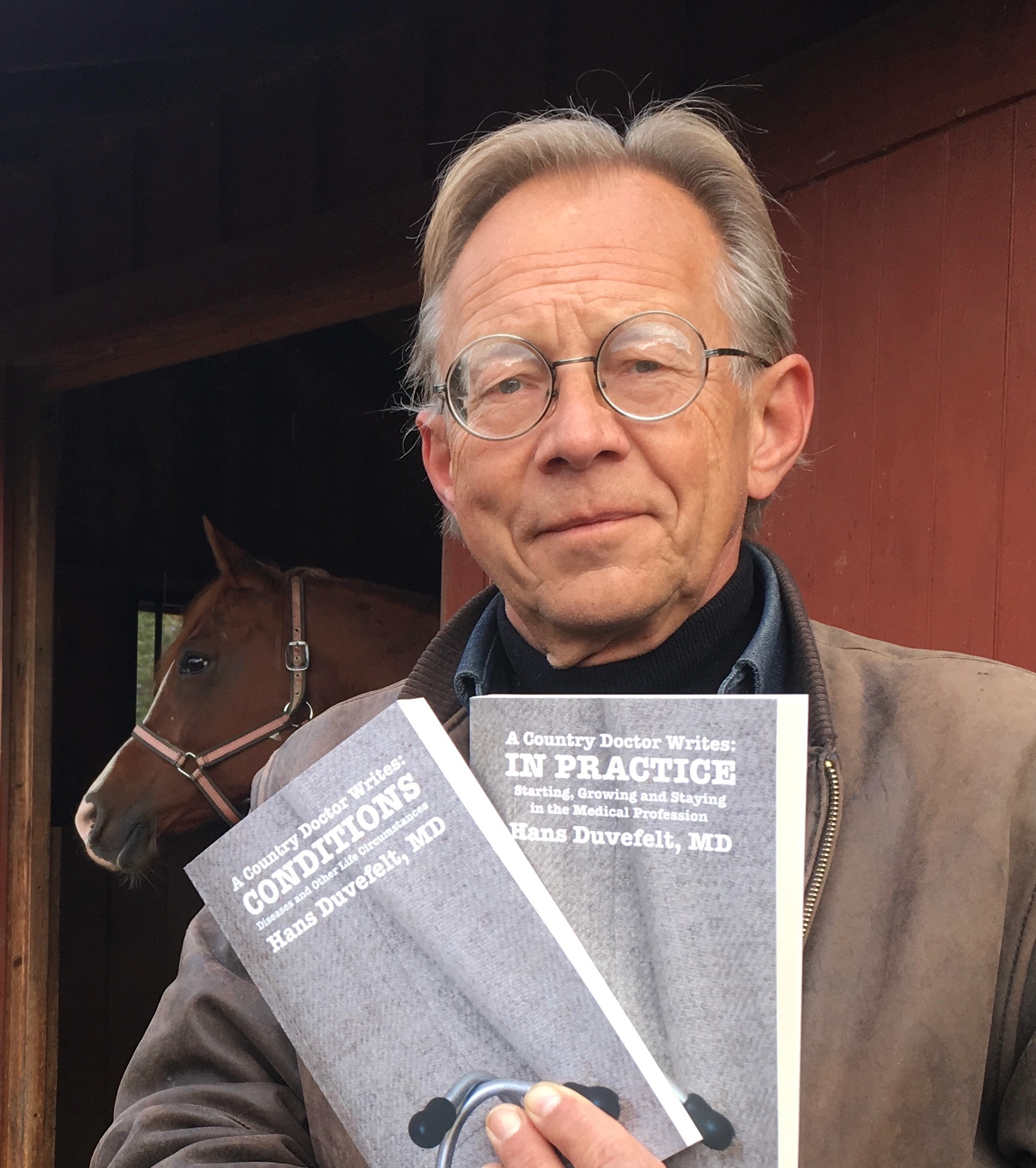
BOOKS BY HANS DUVEFELT, MD

CONDITIONS, Chapter 1: An Old, New Diagnosis

Top 25 Doctor Blogs Award

Doctor Blogs

Enter your email address to subscribe to this blog and receive notifications of new posts by email.

Mailbox

contact @ acountrydoctorwrites.com
Bookmark and Share
© A Country Doctor Writes, LLC 2008-2022 Unauthorized use and/or duplication of this material without express and written permission is strictly prohibited. Excerpts and links may be used, provided that full and clear credit is given.