Archive Page 121

Facial Recognition in My Own Practice?

After a Harvard Endocrinology course several years ago, I walked out into the weak afternoon spring sunshine and crossed the street to the Boston Public Garden. Among the multitude of faces of the other flaneurs I was certain I saw scores of people suffering from endocrine diseases – probably undiagnosed, I thought to myself:

I saw tall men with big jaws, typical of acromegaly; stout women with skinny extremities and flushed, puffy cheeks so typical of Cushing’s syndrome; hirsute, heavy set younger women sure to have polycystic ovary syndrome; long-legged beardless men, who seemed classic for Klinefelter’s; and other people I suspected to have Graves’ disease, Turner syndrome, hyperaldosteronism, Addison’s disease, and, oh, so many other obvious endocrinopathies.

Then back home, as the months and years passed, and as the never ending presentations of Chief Complaints continued, my internal search for and classification of possible endocrine diagnoses began to take second place in my hierarchy of what I needed to do.

Yes, Ellen W. does look like she might have Cushing but she has so many issues that it feels a little esoteric to bring this up, too, when her diabetes and mood are out of control, her mother is dying and her husband is still unemployed and her insurance isn’t paying for any of her medicines.

And even if Doreen Fish has primary hyperaldosteronism, she’s already on spironolactone for her low potassium and her blood pressure is okay; a CT scan would cost her so much out of pocket, never mind surgery, and what are the odds she has surgical disease – an adenoma and not just adrenal hyperplasia?

But then I read the news and I get curious again:

Artificial Intelligence and facial recognition are being used to diagnose or screen for genetic syndromes like DiGeorge and Williams; people are claiming to have identified facial features linked to autism spectrum disorders; psychiatry and general practice colleagues are sending out cheek swabs to help them prescribe psychiatric medications where I am “just” going by experience and intuition; and patients themselves are now looking into their own genetic profiles.

Shouldn’t I try to be more precise in this era of “precision medicine”? Definitely, with all the extra, mandated, ingredients in the primary care visit – screening for depression and alcohol use, clicking off BMI management and tobacco cessation counseling (not just doing them) – it is easy to slip away from just looking at your patients carefully into just glancing at them while also paying attention to the computer screen.

It takes some effort to consistently really look away from the computer, to clear your mind of all its distracting requirements, and to just observe the person in front of you – as if you just walked out of an Endocrinology lecture and looked at the faces of strangers, wondering:

What makes you look the way you look? Do you have a syndrome that guides your health and your appearance? Wouldn’t you, and your doctor, benefit from knowing that?

The Case For Professional, Not Just Personal, Resilience

Medicine Today is Full of Distractions. The secret Behind Resilience is Rising Above Them.

-Yours Truly

The answer to physician burnout is purported to be Resilience Training. That’s like glorifying the natural ability of frogs to tolerate gradually heating and boiling water.

Unfortunately, healthcare today has some toxic ingredients, and physician burnout is directly related to them. Some forms of resilience training I have been exposed to are no more than mental escapes away from medicine, such as art, music and personal relationships.

Those types of activities may in some way, for some people, balance the toxicity that has infiltrated our workplaces, but they don’t change the fact that every day as a practicing physician could be hazardous to one’s mental, or even physical, health.

It’s fine to have a rich and rewarding life outside of medicine, but that doesn’t negate the fact that medicine could and should be a rewarding career and calling in and of itself, too.

There is a different kind of resiliency that should be promoted and cultivated. That is the professional resiliency that comes from embracing the true, timeless and archetypal role of the physician. Every time we make someone feel better, every time we comfort or instill hope, every time we empower a fellow human being to take steps toward a better life, we need to, humbly, celebrate our accomplishment.

Yes, we get points for also clicking the box about what counseling was provided; yes, we get points if we printed the hokey patient education page from the EMR; yes, we need to submit our superbill right away and we’re supposed to finish our documentation within 72 hours. Most of the time I get those things done, even if it is in my barn-office at 5 am or by the fireplace with a glass of wine when everyone else is asleep, but, you know what – I have a job that matters, and I’d rather be doing this than anything else.

And I’m a constant, pesky reminderer about the need to automate some of those mundane clerical task.

Keeping the focus on what really matters is a form of professional resilience. That, ultimately, means more than personal resilience, because the latter could result in some of us leaving our careers because we don’t see the value in what we are asked to do.

Administrators and insurers want a lot from us, but if we don’t listen to and communicate effectively and in a healing manner with our patients, there will be nothing for the big guys to micromanage.

We are the doctors. Let us not forget that.

Bread and Butter Medicine

Of all my patient visits since I came back from my CME trip to Boston, the one that lingers in my mind as I do my farm chores on a sunny day off in mid-May is the young woman I had first met on a bitterly cold evening in February. Her face had been covered with acne, small pustules and red papules, so many of them that they almost touched each other. She had tried every over the counter preparation she could get her hands on to no avail.

I saw her again the other day, beaming, smiling and exuding optimism and confidence. Her face was just about clear and she told me she had just posted a closeup photograph, with NO MAKEUP, on Facebook. She pulled her smartphone from her jeans pocket and showed me.

She is graduating this weekend, and she is ready for her adult life to begin, comfortable in her own skin, as we say in America.

“When I first came to see you, I thought you’d prescribe some other cream that wouldn’t work. But the doxycycline is really working. You remember, at first I got sick to my stomach on my morning dose, but you told me to eat something with it and it worked. Now I’m only taking it at night with supper and look at me!”

A common generic medicine, some common sense advice about skin care, some tinkering with how and when to take the medication, and a young person feels better about herself and ready for summer vacation and a big move out of state in the fall. Not like diagnosing a pheochromocytoma or Fanconis syndrome, but in primary care, even the small victories are important. Every patient deserves to get better if it is at all possible.

Upselling in Medicine: Would You Like a Pap Smear with that Ankle Brace, Ma’am?

For many years, I’ve held a brief huddle with my team every morning to make sure we are ready for the day: Anybody with complex problems coming in today? Anybody who’s been in the ER? How is Mrs. Jones’ husband over at the nursing home, is she worried about his condition? Where can we squeeze in more add-on’s?

Now other people have tried to hijack the word “huddle” for a completely different purpose. They want to use it to slow us down instead of helping get us get through the avalanche of issues we’re already expecting. In my other office they call it pre-visit planning. It’s not about having the MRI result available or the recent ER note, but more about who is behind on some aspect of their health maintenance and (unsuspectingly) expecting just a sore throat visit, but consistently avoiding their diabetes followup visits?

My veterinarian colleagues handle this differently. They just send a post card at random times, or hand me a paper, usually part of my exit statement, as I recall, that says which critter is due for what. But in that case I’m already safely close to the door and nobody is expecting me to act on it in that instant.

In human medicine, our quality ratings, and soon our paycheck, will depend on how effectively we convince patients to get caught up on their proscribed health maintenance.

In the retail world, they call that upselling. When I stop at a 24 hour gas station and buy some coffee for my long trip between my two offices, they always ask if I want some donuts or chips with that, maybe a banana or whatever. Same thing at the hardware store, if I buy a flashlight, they ask if I need spare batteries, and so on.

How fair is that to our patients?

I remember seeing a video about the hijacked kind of huddle, where the doctor and medical assistant almost gleefully talk about how to convince a noncompliant female patient to have her overdue Pap smear when she is only expecting something much less involved.

And all the while we are supposed to be patient centered and respect each patient’s own agenda. Too bad not everyone else has to…

Progress in Weekly Increments

I’m prescribing Suboxone again, not in a half empty strip mall in town, where I filled in for a number of years, but in my own office.

My clinic received a grant that helped us hire an additional social worker, a part time medical assistant with recovery experience and a part time substance abuse counselor.

For a couple of months now I have met once a week with each one of a dozen patients with widely different stories and circumstances. Unlike the last time I worked with opioid addicted patients, I am not just one of several prescribers rotating through the clinic. I am the only doctor for this, our first group.

I have followed this group of a dozen fellow human beings every single week through the cold of winter and the snowstorms outside and through the outer and inner tumult of their own lives. Our encounters are brief, pulling each member out from a group session to review how the Suboxone is changing their bodies and their lives, check the rapid drug screen results and send the electronic prescriptions to the pharmacy.

In those brief encounters, I get deep glimpses into the many lives that are starting to move away from the brink: A young woman has moved out of an abusive relationship. A young man has made a plea bargain with the District Attorney. A heroin addict is enjoying her children without the Department of Health and Human Services watching her every move. A depressed young man smiled at me for the first time two weeks ago, and someone else has stopped drinking.

Other participants have transferred in from other clinics. One was already my patient, but I couldn’t prescribe Suboxone for him without the full structure of a substance abuse program. He has a visible career in our community, and he is like a mentor or older brother to those that have just started on their own road to recovery.

My last tour of duty in substance abuse care was all individual appointments; this time, I hear everyone saying that the group is more effective in bringing out honesty and accountability in its members than one or two clinicians have been able to do before.

In my previous setting, I had to be careful not to assume the role of primary care provider and give detailed advice or prescriptions for general medical matters. Here, in my own office, I can adjust antidepressants, prescribe for insomnia and restless legs as I would any time filling in for one of my colleagues. In the same way, the staff counselor who attends the group can give advice and refer seamlessly to clients’ individual therapists here.

This time for me, the care for opioid addiction is integrated with both the provision of primary care and behavioral health. This is as it should be. It requires a certain structure and a certain level of expertise, but it is by now a basic kind of care for a very common chronic condition with, if untreated, potentially devastating consequences.

Last time I wrote about treating opioid addiction, “I don’t hate coming here”. This time, I feel good about having helped bring this service home, under our own roof, in our own community.


I just realized none of the posts show on an iPad or a computer, but they do show on an iPhone. WordPress is working on this. In the meantime, please visit my Substack.


Osler said “Listen to your patient, he is telling you the diagnosis”. Duvefelt says “Listen to your patient, he is telling you what kind of doctor he needs you to be”.


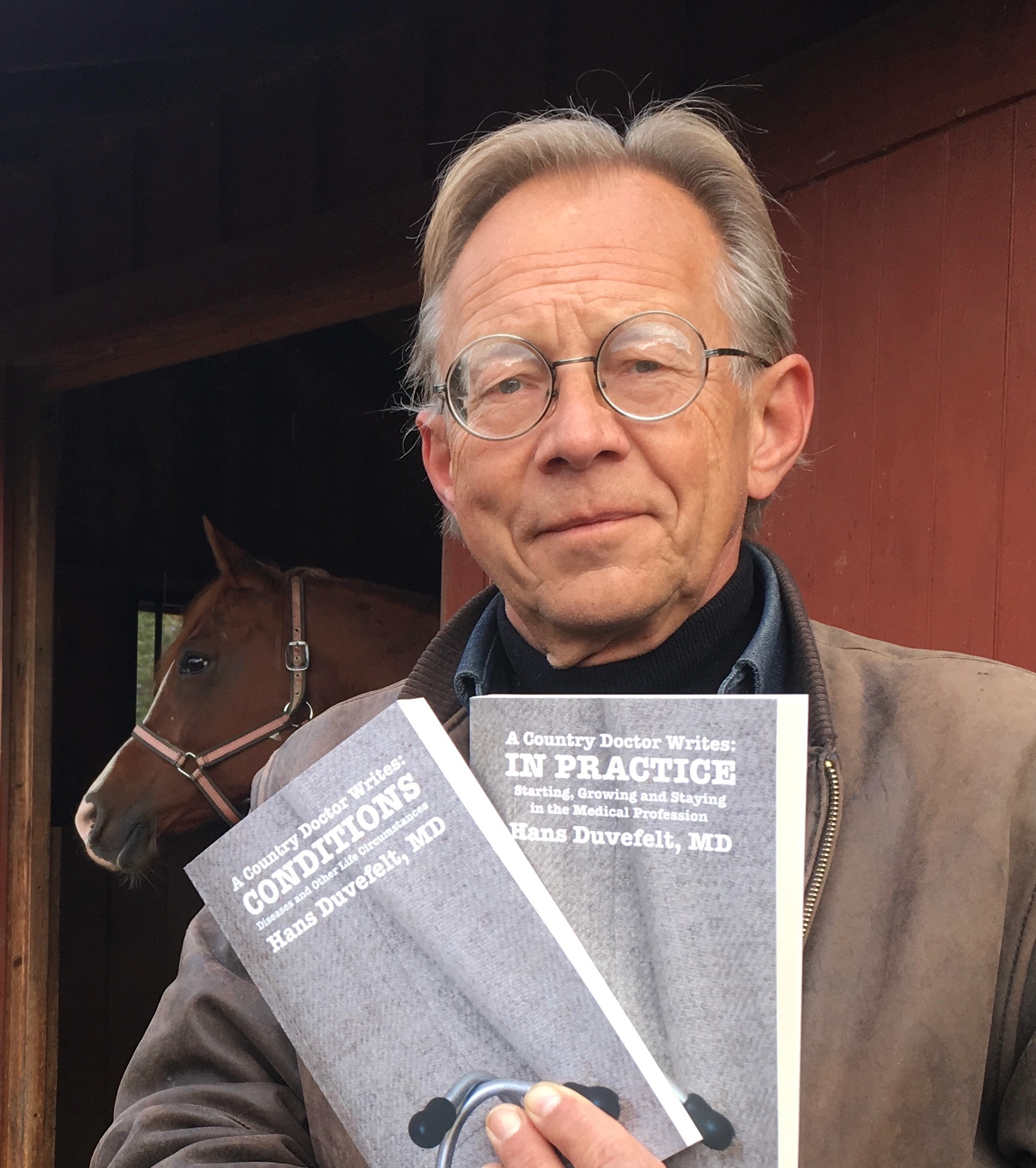
BOOKS BY HANS DUVEFELT, MD

CONDITIONS, Chapter 1: An Old, New Diagnosis

Top 25 Doctor Blogs Award

Doctor Blogs

Enter your email address to subscribe to this blog and receive notifications of new posts by email.

Mailbox

contact @ acountrydoctorwrites.com
Bookmark and Share
© A Country Doctor Writes, LLC 2008-2022 Unauthorized use and/or duplication of this material without express and written permission is strictly prohibited. Excerpts and links may be used, provided that full and clear credit is given.