Archive Page 115

When the Patient Can’t Tell You

Today I had a followup appointment with a young adult male with severe intellectual disabilities. He is barely verbal. Several weeks ago his caregiver told me that this young man often pointed to his chest and would say “hurt” or “heart”, they weren’t sure which. He also seemed to have gotten pickier about his food, and would literally pick at the food on his plate as if examining it. His appetite was definitely down, but he hadn’t lost any weight yet.

Jimmy is young and slender, not a smoker, and has no cardiovascular disease in his family, so I prescribed him omeprazole.

“So, how’s Jimmy doing”, I asked.

“He doesn’t bang his chest and say hurt anymore, and he finishes anything we put in front of him” was the answer. “And you know what, I didn’t say anything last time, but he’s been kind of grouchy lately, but that’s all gone, too. He’s like the kid I first met years ago, always in a good mood.”

“It’s humbling”, I reflected, “to care for someone who can’t tell you very much about how they feel. I’m glad you were so observant.”

(A brief aside about the Metamedicine aspects of this case: My first prescription for omeprazole was for thirty days and it had one refill. Jimmy’s caregiver said Mainecare wouldn’t honor the refill because chronic medications must be prescribed for 90 days, so he bought the omeprazole over the counter. I shrugged and told him that after sixty days a prior authorization is needed. So, even a “correct” 90 day refill would not have gone through. So we switched to famotidine and if that doesn’t work, we’ll apply for a Prior Authorization for the omeprazole.)

My visit with Jimmy made me think, again, about the importance of the medical history. Even an observer’s report is better than any number of tests.

Even people with normal intellectual functioning can be hard to diagnose because of ther inability to describe what they feel. I have written before about alexithymia, the inability to recognize and describe one’s feelings. These are the people who, when asked to describe their symptoms, start telling you what other people said about how they looked or how they acted. I had seen many people who were like that, but had never heard of the word that populated my Google search when I typed in my observations in the search window.

Primary Care, and perhaps even more Pediatrics can be like veterinary medicine: the patient doesn’t always TELL you his symptoms. Sometimes he shows you, and sometimes others report their observations to you, but it is your responsibility to make sense of it all and come up with a diagnosis.

You Are What You Eat – Revisited

“Patients often chuckle when I tell them I am a recovering vegetarian. As a child I was pretty squeamish about things like chicken drumsticks, spare ribs and other anatomically identifiable foods. In my teens I decided the only rational way to handle my qualms was to be a vegetarian.

Decades later, and somewhat overweight, I decided to go back to being a picky eater instead of a strict vegetarian. Thus I increased the protein content of my diet and lost fifteen pounds. Reading Barry Sears (“The Zone”) and Atkins helped me understand what had happened to me.”

This is the beginning of a post I wrote exactly ten years ago. Today the notion that we are what we eat is even truer than it was back then.

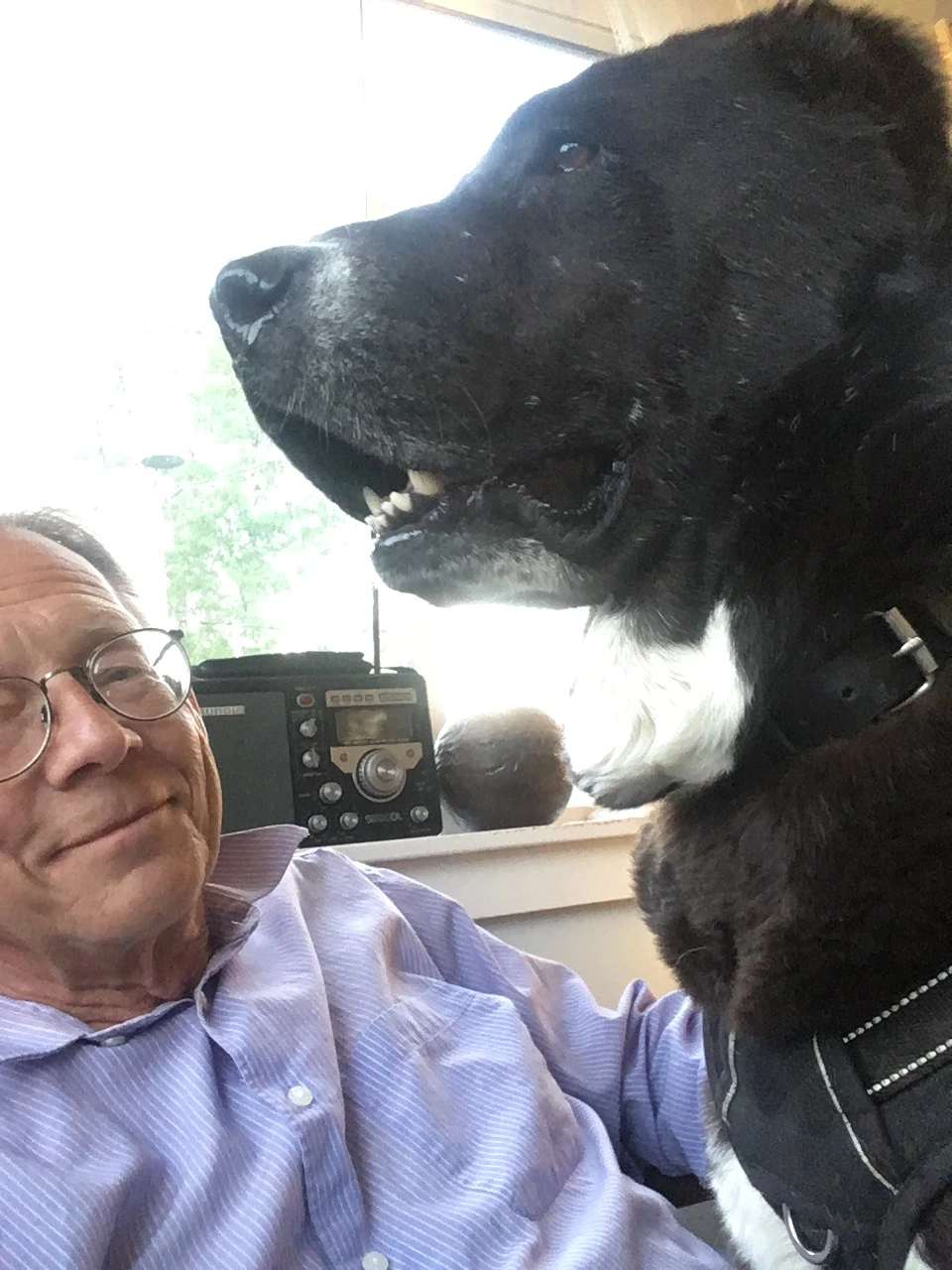
In that post I describe our jet black German Shepherd puppy, raised on organic meat. I am pleased to report that he is just as magnificent today, graying just a little bit, like his “Pappa”.

But the idea that our food determines who we are goes much deeper than the quality of our nutrition. Today we know so much more about how the bacteria in our bodies, particularly our intestinal flora, our biome, determines our mood, appetite and many other aspects of our identity.

When food makes us obese, our excess fat in itself can cause disease, writes Manzel:

“White adipose tissue (WAT) is not an inert tissue devoted solely to energy storage but is now regarded an “endocrine organ” releasing a plethora of pro-inflammatory mediators such as TNF-α, IL-6, leptin, resistin, and C-reactive protein. These “adipokines” account for a chronic low-grade systemic inflammation in obese subjects. Of note, these chronic inflammatory signals can have a profound impact on CD4+ T cell populations.”

National Geographic published a succinct article in 2016, which includes the following:

“The modern rise in obesity, allergies, asthma, rheumatoid arthritis, Type I diabetes, multiple sclerosis, irritable bowel syndrome, cirrhosis of the liver, cardiovascular disease, and anxiety attacks – perhaps even autism – may be related to the bacterial populations in our guts.

The root of all evil here may be a leaky epithelium. The epithelium, the all-important lining of the digestive tract, ordinarily acts as a barrier between the teeming bacterial world of the gut and the rest of the body. Resident bacteria ordinarily keep epithelial cells healthy by providing them with short-chain fatty acids and other nutritive factors. In the absence of the appropriate nurturing bacteria, however, the starved epithelium breaks down, allowing bacteria and toxic bacterial byproducts to enter the bloodstream. This sends a signal to the immune system, alerting it to the presence of invaders, which can lead to persistent inflammation and eventually, a host of chronic diseases.”

Even out appetite, for too much food, or the wrong kind of food, appears to be influenced by bacteria. There is now increasing evidence that not only dietary preferences but also eating disorders are linked to gut bacteria: Prevotella thrive on carbohydrates and Bacteroides prefer protein and animal fat.

One article I came across spells out something I have noticed about the association between bowel and psychiatric symptoms: 40-60% of patients with functional bowel symptoms also have psychiatric symptoms and, looking at it the other way, 50% of psychiatric patients have irritable bowel syndrome. And SSRIs like Prozac (fluoxetine) are now first line drugs for IBS.

What we call the gut-brain axis isn’t just a chemical/hormonal and neurotransmitter communication between our intestines and our brain; our gut bacteria also have their voice in this chatter and homeostasis. They outnumber our own cells and they contain 1000 times as much DNA, so they might even dominate the “conversation”. Most of that DNA is influenced by, and also influences, what we eat. So the old saying is proving itself to be very, very true, indeed.

These are two great scientific articles on this topic:

https://www.ncbi.nlm.nih.gov/pmc/articles/PMC5490581/

https://www.ncbi.nlm.nih.gov/pmc/articles/PMC3554020/

Be the Doctor Each Patient Needs

Doctors need to be true to themselves but at the same time they must be chameleons.

A doctor fills certain roles in the lives and stories of patients. It is a two-way relationship that looks different to each person we serve throughout every workday and even in the most casual interactions we have.

Some patients need us to take charge for a while because they’re exhausted, others need us to listen quietly while they vent or process something out loud.

Some patients need reassurance and empathy, others thirst for detailed information. Some patients thrive on viewing us as equals and friends, yet others need some distance because what they need to share with us is something they couldn’t even tell their best friend – only a priest, rabbi or doctor without the familiarity of a friend.

I may be naturally analytical, intuitive, reserved or outgoing, but I must get a sense of my patient and the situation he or she is in and understand how I can fit into that situation.

This is not acting or being dishonest. I don’t dress the same way for a day in the office as I do for a day in the barnyard or a night at Chateau Frontenac. Neither do I conduct myself the same way in every situation in my life. It would be selfish and inconsiderate of me to act exactly the same way with every patient – “take it or leave it”.

I work at being chatty and cheerful, but that is no more dishonest than practicing another language. I may know the perfect word for something in Swedish but that doesn’t do my English speaking patient any good.

The roles we play in people’s lives are necessary for them in those moments, in their personal journey. Many people need someone in an archetypal role to carry them to the next level or the next chapter in their lives by saying or doing something they cannot do themselves.

Doctors are performers, not only when we perform procedures, but also when we deliver a diagnosis or some guidance. This is the premise of an audiobook I listened to a while ago during my commute between my two clinics: Dr. Bob Baker, retired physician and an accomplished magician, draws parallels between the two professions in “The Performance of Medicine”.

I have done a lot more thinking lately about these two P-words: The Practice of Medicine and The Performance of Medicine. Both words, both concepts, point out that what we do in this job is much bigger than we ourselves are, something that transcends time and place. We have to continually work at it and it takes place in the energy field of two people in a therapeutic encounter.

Quoting Dr. Baker: “The magic of medicine begins with the doctor/patient connection.”

That connection requires us to be what we Swedes call “lyhörd”. There is no single word I know of in the English language that conveys the same notion. Literally, it means “of keen hearing”. Google Translate suggests three words: responsive, keen and sharp.

Osler said “Listen to your patient, he is telling you the diagnosis”. Duvefelt says “Listen to your patient, he is telling you what kind of doctor he needs you to be”.

Fundamentals of Medicine: Diagnosis and Guidance (Not Just Treatment)

Non-clinicians skip over some of the most necessary underpinnings of Doctoring and speak too much about housekeeping issues: Blood Pressure targets, aspirin use, mass screenings, immunization rates and so on.

People without medical degrees could do those things. But there are steps that must be taken before we worry about the measurables. These are the essence of being a physician, what people ask for when they come to see us. Most people don’t come in and say “I need you to regulate my blood pressure” or “Help me lower my cholesterol”. They come in saying “I don’t feel good” or “Help me stay healthy”.

DIAGNOSIS

More than anything, people come to us to find out what’s wrong with them. They come with rashes, aches, fevers, coughs, “bunches” (the Maine word for lumps and bumps on their bodies) and concerns like fatigue, which could be a symptom of almost anything.

In that scenario, not to be melodramatic, making a correct diagnosis could be a matter of life or death, or at least wasteful spending of thousands of dollars and valuable time.

We don’t get enough credit by outside observers, like health care administrators, insurers and “consumers” for the value of our diagnostic acumen. It is the first fundamental of health care. Different diseases have different treatments and the success of medical care hinges on treating the right diagnosis.

A trivial example is a patient I heard of just recently with sudden agitation and high blood pressure presenting to the emergency room. Many hours and many tests after arrival – blood tests, EKG, CT scans and so on, he turned out to have urinary obstruction. A Foley catheter relieved the obstruction and cured his high blood pressure as well as his agitation.

A young woman came to see me a few days before graduation for a mild rash on her legs. Not only was she about to graduate; she was also planning a long trip afterward. The bloodwork I ordered STAT on our first encounter showed that she had acute leukemia. She was allowed a temporary leave from the cancer clinic to attend the ceremonies and then went back to continue her treatment. Today, she is the proud mother of a soon-to-graduate teenager. What if I, as she later said, had glanced casually at her skin and sent her off on a faraway trip with a prescription for a cream?

GUIDANCE

“Treatment”, the second part of the traditional duad, is too simplistic a notion, only useful for lancing boils and prescribing penicillin for strep throat. Most diseases are multifaceted and most patients have several health and disease considerations. Most diseases are also chronic, even ones we thought of as rapidly terminal earlier in our own lifetime, like HIV and an increasing number of cancers.

The physician’s role is not a knee jerk intervention, it is informing and educating the patient and helping each patient choose a plan of action that is right for them.

Primary Care does what Google can’t, it applies knowledge of the patient and of the relative importance of medical facts and factoids and offers guidance in the sense of ranking options.

Even when the treatment requires specialized care we have a role as guides. We help patients choose specialists depending on each patient’s particular medical problems and personal preferences – referral to a particular subspecialty and to a take-charge doctor or a collaborative one, for example.

As guides, we follow patients along on their journey, sometimes actively by showing what to do, sometimes only watching from a distance, ready to intervene if they stumble. We don’t just prescribe, we anticipate – we warn patients and their families of things that may come up at the next turn. It takes experience and expertise do that well, not just handing out mass produced information to meet “meaningful use” mandates.

Sometimes our Guide role requires us to talk about a different journey – not one back to health and function, but one of decline and death. We must be comfortable with that role as well as the cheerleader’s.

The almost pastoral duty we have is to instill and preserve hope. Although this is often for a cure involving certain obstacles or challenges, sometimes the hope we can offer is only the hope of feeling better and sometimes it is just of relief from suffering.

We live in an era of tweets, sound bites and intellectual shortcuts. Medicine doesn’t fit into that kind of mindset very often. Contrary to what some outsiders think, ours is a deeply cognitive profession of careful consideration and deeply personal counsel.

“Treatment” is simply a misnomer for what we do. Even when there is no cure, there is care.

Dear [CEO]: The Letter I Gave My Boss This Week

I was behind on my charting, as were several of my colleagues. My boss asked me for ideas how to fix this problem. This is what I wrote:

A better day for medical providers:

1) Encounter Productivity Achieved

2) Charts done on time

3) Inboxes Cleared.

Those are the three basic tasks of a medical provider, yet most medical organizations only schedule providers for one of them, the patient visits, and somehow expect that by pure magic, superhuman willpower or personal sacrifice, the other two things will get done, and continually act surprised when that doesn’t happen.

Our clinic has recently heard from two departing providers that the non-patient visit work was a significant source of personal frustration.

Here is my suggestion for better efficiency and less professional stress with less risk for burnout:

1) Adopt a 20-40 minute grid.

2) Keep encounters at 15 or 30 minutes

3) Separate patient and computer time

In a 20 minute slot, the first 15 minutes are for the face to face visit and the remaining 5 are for charting. It is important not to suggest to the patient that the entire time slot is for face to face work, because that creates an untenable backlog for the provider.

In a 40 minute slot, 30 minutes are for face to face and 10 for documentation and ordering.

DETAILS:

A) Schedule ONE, TWO or THREE very special 40 minute slots per day (30 minutes for the patient and 10 for the provider), for very complex visits. There needs to be an understanding/protocol for which patients get these visits.

B) Schedule FIFTEEN, SEVENTEEN or NINETEEN 20 minute slots (15 minutes for the patient and 5 for the provider). If occasionally a patient requires the full 20 minutes, there is opportunity to postpone the documentation until the one hour block of desk time.

TOTAL 18, 19 or 20 patients/7 hours of face to face time depending on provider target.

FORMULA: (15×20)+(3×40)=420 Minutes

(17×20)+(2×40)=420 Minutes

(19×20)+(1×40)=420 Minutes

(For a 10 hour shift, 9 hours could contain 19x20min + 4x40min = 23 encounters.)

C) Schedule ONE HOUR of desk time (in the case of an eight hour day) so inboxes can be cleared daily. This would also be an opportunity to communicate with outside providers during their normal business hours.

A SCHEDULE LIKE THIS WOULD CREATE AND REINFORCE GOOD HABITS AND GOOD TIME MANAGEMENT. The hour devoted to provider “desk time” would also allow medical assistants a predictable opportunity to concentrate on tasks that require some uninterrupted time.

P.S. This was my 500th pst on A Country Doctor Writes.


I just realized none of the posts show on an iPad or a computer, but they do show on an iPhone. WordPress is working on this. In the meantime, please visit my Substack.


Osler said “Listen to your patient, he is telling you the diagnosis”. Duvefelt says “Listen to your patient, he is telling you what kind of doctor he needs you to be”.


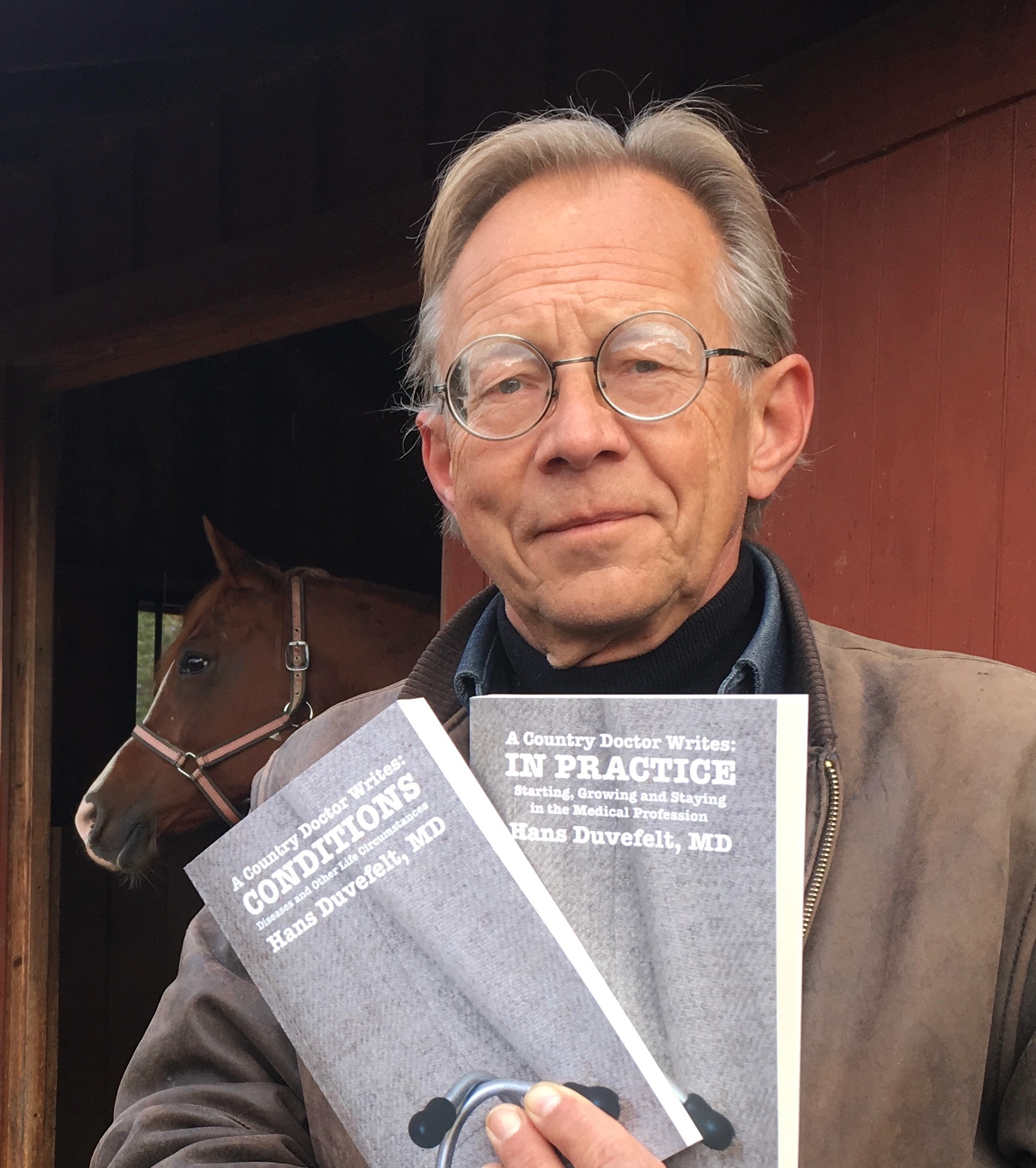
BOOKS BY HANS DUVEFELT, MD

CONDITIONS, Chapter 1: An Old, New Diagnosis

Top 25 Doctor Blogs Award

Doctor Blogs

Enter your email address to subscribe to this blog and receive notifications of new posts by email.

Mailbox

contact @ acountrydoctorwrites.com
Bookmark and Share
© A Country Doctor Writes, LLC 2008-2022 Unauthorized use and/or duplication of this material without express and written permission is strictly prohibited. Excerpts and links may be used, provided that full and clear credit is given.