Archive Page 10

The Virtue of Diligence in the Practice of Medicine

“Steady, earnest, and energetic effort : devoted and painstaking work and application to accomplish an undertaking”

Another virtue that made my list, coming here in my restored alphabetical order, is Diligence. The dictionary suggests this to be something practiced over time and, at least in my mind, it conjures up the notion of a one-on-one relationship between doctor and patient.

Of course, we are no longer on call 24/7 and hospital medicine is often not part of a primary care doctor’s clinical duties anymore. But even if other clinicians step in now and then, we still have the longitudinal responsibility of carrying out the treatment plan and of pursuing loose ends. We may even be the only ones to recognize that loose ends even exist in a case.

Two side notes here about the word diligence: These days I mostly hear this d-word preceded by another d-word in the expression “due diligence” in legal terminology. I may be prejudiced, but when I hear that term, it gives me the flavor of a mandated process, sometimes a cursory one, certainly not something that goes on for the length of time a doctor may follow a patient with a chronic condition and/or a medication treatment that requires indefinite monitoring for complications.

The other meaning of this word was one I have known since I was a little boy in Sweden, but never realized existed in English too – I assumed it was French because of the way it is pronounced in Swedish. The dictionary phonetic and even its audio clip sounds totally French. This meaning of the word is stagecoach. The –gence ending of the word diligence in this case is pronounced like the beginning of Champs-Élysées.

Anyway, in the medical context, diligence, to me, implies steadfast, ongoing attention to detail, not losing track and not giving up, not being complacent. Our culture has a short attention span and what doctor hasn’t seen that patients often drift away from their treatment plans. It is our job to touch on the elements of our treatment plans when we see our patients in follow-up.

I also think diligence is the way we act on our curiosity. Instead of idly wondering about what our patient experiences for symptoms or manifests in their test results, we need to look it up, as I did in my post about Curiosity the other day.

This reminds me of a case I saw many years ago, a seemingly simple case of a woman with a yeast infection. She turned out to have glucose in her urine all the time but never an elevated blood sugar. This was before Farxiga or Jardiance came on the market, causing this to happen both in non-diabetics and to a greater degree than normally expected in diabetics. I tried, without success, to get the nephrology clinic to evaluate my patient, whom I only saw once as an urgent care case and could have treated for her yeast and put her out of my mind. But my curiosity made me at least try to pursue it.

Here’s that story:

One More Question
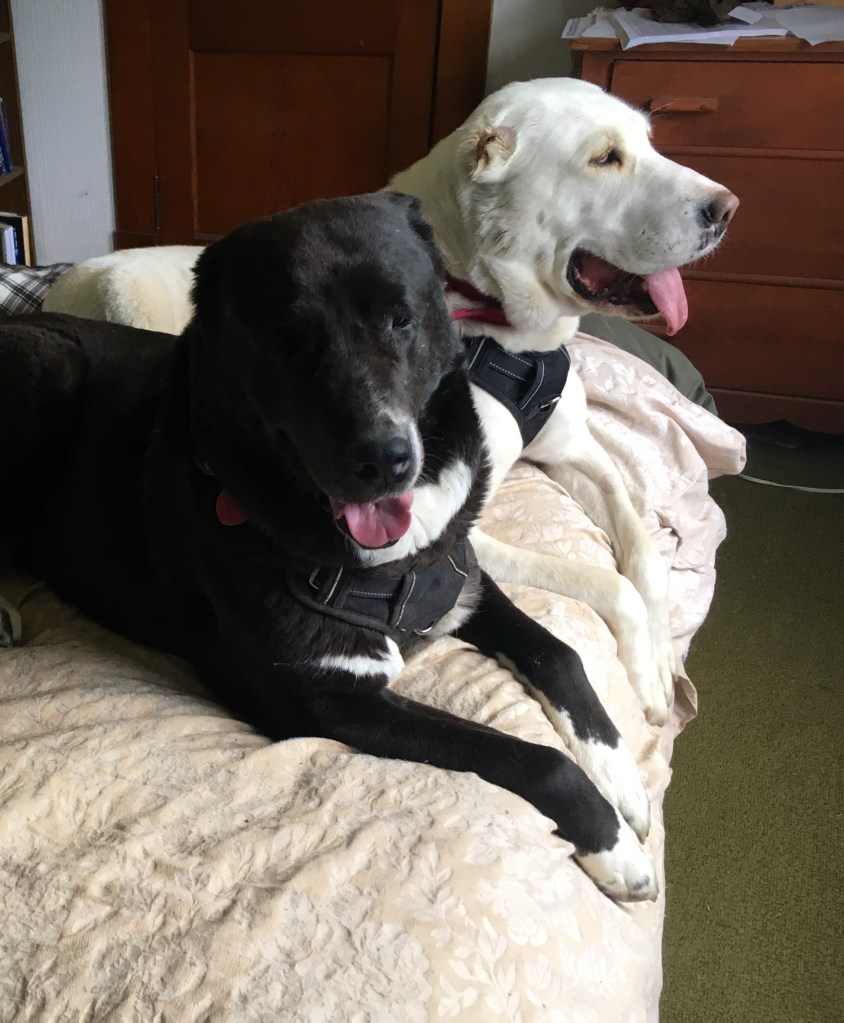
Another Side of Yours Truly

I’ve started to put all my new material both here and on my Substack. So no need for faithful readers of medical themed posts to migrate. But Substack more or less automatically created a personal platform, which I’ve started to play with just recently. Here is my latest post there, about my two very large, very rare rescue dogs:

https://hansduvefeltmd.substack.com/p/my-snugglebutt-wolf-crusher-alabai

The Virtue of Curiosity in the Practice of Medicine

Part of a series

So, here are my top three virtues to cultivate, so far: ARTISTRY, described here;  BREVITY, described here and now the “C” word, CURIOSITY.

In medicine, we need to be sleuths. We are looking for clues in the subjective history of a case, in sometimes seemingly random findings on exam or in our test results. And we are looking for distant factoids from our training or literature references on cases similar to the one in front of us. Even in seemingly straightforward cases, there could be red herrings, things that make our mind go in a logical direction, but are irrelevant, almost as if Mother Nature was trying to trick us. 

If you do almost the same thing day in and day out, you risk becoming complacent. And if you run into things you don’t know, you might not have the energy to find out, especially on a busy clinic day and you may not have enough curiosity to look it up when things quiet down.

But curiosity that makes you dig a little deeper is often very energizing. It raises your dopamine just the way a mystery movie or a new adventure can do. The opportunities to expand your mind, learn something new and become energized are all around us.

Here is something I wrote in 2019, titled Curiosity, Antidote to Burnout.

Curiosity, Antidote to Burnout

Virtues I Strive to Cultivate as a Physician

Part of a series

The ancient Greeks had five core virtues and the Bible has seven. I don’t know that there is an official number of virtues among the medical community, but I recently started thinking that I need to give more thought to the ones I would like to consciously consider and strive to cultivate.

Somehow I ended up writing first about Brevity as a virtue. Perhaps that is an unusual choice, but certainly not a new one. Shakespeare’s “virtue is the soul of wit” in Hamlet stopped me in my tracks as a doctor today, increasingly frustrated with the logorrhea (a real word, think diarrhea of words) of computerized medical records with their defensive documentation and copious copy-and-pasting.

As I contemplated what my personal list of virtues would look like, I realized my first few choices started with some of the first letters of the alphabet.

So here, catching up to what then should have been the first installment in my series, comes my reflection on Artistry in Doctoring:

Artistry is not a word you commonly hear attributed to primary care medicine, perhaps more to procedural things like cosmetic surgery. But, going back to the dictionary, here as a direct quote from Merriam-Webster:

1
: artistic quality of effect or workmanship
the artistry of his novel
2
: artistic ability
the artistry of the violinist
a lawyer’s artistry in persuading juries

I think most people recognize literature and music as art forms, but may not immediately think of a lawyer’s art of persuasion as real art. I insist that it is, and I also insist that a doctor taking a medical history, arriving at an accurate diagnosis, formulating an individualized treatment plan, explaining complicated healthy and pathological processes and motivating patients to change their habits or behaviors for better outcomes absolutely requires artistry. And I absolutely disagree with the notion that those things can be protocolized to such a degree that individual practitioners’ way of doing them don’t make a very significant difference in the effectiveness of their effort.

Seriously, if we use the word artisan in the context of baking bread (and if I ever buy bread instead of baking my own, that’s what I want), when no loaf looks exactly like the others, that is recognizing the craft and the individualization of even the most basic things that leave room for personal effort and expression. To continue this analogy just one step further, medicine is not always cookie cutter, or at least it shouldn’t be!

https://www.merriam-webster.com/dictionary/logorrhea

If Brevity is the Soul of Wit, Why are Clinical Office Notes So Lengthy?

Part of a series

It is ironic that the Shakespeare passage in Hamlet that contains the immortal six words “brevity is the soul of wit“, is quite a rambling piece of writing. But his statement, if not his framing of it, has struck a cord with many writers who came after him.

I have been impressed that the majority of the small number of specialist and hospital reports I get on my Maine patients from Mass General and other Boston ivory tower practices are so brief and to the point, while many local discharge summaries are both lengthy and stilted and also very difficult to find the essential information in. Some hospital systems put the Assessment and Plan right on top, but you have to go hunting for the Subjective and Objective. Those charts also belabor the malpractice defense functionality of rattling through which differential diagnoses seemed unlikely.

I’m far from convinced that AI generated clinical notes could even come close to the succinct reports I get from Boston. I have not yet tried using AI for my own notes, but read on, I have a different suggestion.

I hear horror stories about how chitchat about a fishing trip often ends up in the social history of a patient.

Transcription does not require anywhere near the muscle of full-fledged AI office note generating software. But I’m thinking that could be enough:

Imagine office notes that really only contain the important information, the medical corollary to Who, What, Where and How, and each office note had a supplemental file, namely a transcript of the entire conversation for anybody who needs to dig deeper.

The amount of time it takes to find the essential information in the average office note or discharge summary I read is outrageous. Things actually get missed because of all the fluff.

The Greeks had four virtues and the Bible has seven. I think I just started a series on which are the virtues in the practice of Medicine.

Stay tuned.

P.S. Here’s another piece about brevity, in terms of the now nearly extinct “brief office visit”:

Brief is Good


I just realized none of the posts show on an iPad or a computer, but they do show on an iPhone. WordPress is working on this. In the meantime, please visit my Substack.


Osler said “Listen to your patient, he is telling you the diagnosis”. Duvefelt says “Listen to your patient, he is telling you what kind of doctor he needs you to be”.


BOOKS BY HANS DUVEFELT, MD

CONDITIONS, Chapter 1: An Old, New Diagnosis

Top 25 Doctor Blogs Award

Doctor Blogs

Enter your email address to subscribe to this blog and receive notifications of new posts by email.

Mailbox

contact @ acountrydoctorwrites.com
Bookmark and Share
© A Country Doctor Writes, LLC 2008-2022 Unauthorized use and/or duplication of this material without express and written permission is strictly prohibited. Excerpts and links may be used, provided that full and clear credit is given.


