 Several news media (I first saw it on BBC’s website) recently published the picture of an insect, invaded by a fungus, compelled to climb high, then killed off only to become a means for airborne spread of fungal spores.
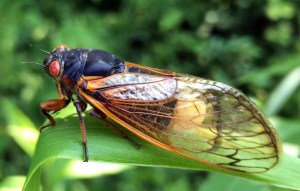 I had also read in The New York Times about how massospora live inside cicadas and spread between them like an STD and stimulate mating behaviors to promote its spread, even though the cicadas become grotesquely altered by the fungus (see the yellow fungal “plug” in its rear). This behavior is caused by the release of Psilocybin, a mind altering controlled substance that eases depression and anxiety in cancer patients, and cathinone, a powerful stimulant.
Interesting that one life form can alter another’s behavior, but does anything like this apply to mammals, or humans? Certainly – maybe not for fungi, but definitely other parasitic (or symbiotic) organisms and viruses. Just consider the behaviors caused by rabies infection:
This seemingly improbable concept that specific microbes influence the behavior and neurological function of their hosts had, in fact, already been established. One prime example of “microbial mind control” is the development of aggression and hydrophobia in mammals infected with the rabies virus (Driver, 2014). Another well-known example of behavior modification occurs by Toxoplasma gondii, which alters the host rodents’ fear response. Infected rodents lose their defensive behavior in the presence of feline predators, and instead actually become sexually attracted to feline odors (House et al., 2011). This results in infected rodents being preyed upon more readily by cats, and allows Toxoplasma to continue its lifecycle in the feline host (House et al., 2011). Further, a variety of parasitic microbes are capable of altering the locomotive behavior and environmental preferences of their hosts to the benefit of the microbe. For instance, the Spinochordodes tellinii parasite causes infected grasshopper hosts to not only jump more frequently, but also seek an aquatic environment where the parasite emerges to mate and produce eggs (Biron et al., 2005). Temperature preference of the host can even be altered, such as observed during infection of stickleback fish by Schistocephalus solidus, which changes the hosts’ preference from cooler waters to warmer waters where the parasite can grow more readily (Macnab and Barber, 2012). Other microbes can even alter host behavior to seek higher elevations, believed to allow the infected host to be noticed more easily by predators or to eventually fall and disperse onto susceptible hosts below (Maitland, 1994). More coercively still, microbes can influence the social behavior of their hosts, causing insects, such as ants, to become more or less social to the benefit of the parasite (Hughes, 2005). In fact, the sexually transmitted virus IIV-6/CrIV causes its cricket host (Gryllus texensis) to increase its desire to mate, causing its rate of mating to be significantly elevated and allowing for transmission between individual hosts (Adamo et al., 2014).
— Read on www.ncbi.nlm.nih.gov/pmc/articles/PMC4442490/
There is, of course, now more and more interest in the role our microbiome plays in seemingly every aspect of our lives – from mood to metabolism to immunity. The more I read about this, the more humblingly (is that a word?) fascinated I become.
The well referenced review article quoted above illustrates several already known ways our microbiome affects us, and I highly recommend reading it. I’ll zero in on how our behaviors are influenced, leaving cancer, allergies and other aspects of their influence for another post. Here are some highlights:
Germ Feee (GF) mice tend to be anxious and socially impaired. These behaviors normalize when normal gut flora is introduced.
GF mice have an increased permeability of the blood brain barrier both during fetal development and in adulthood. Some strains of clostridium and bacteroides and also the short chain fatty acid butyrate can restore normal blood brain barrier function.
Probiotics (L. Helveticus and B.longum) caused decreased self reported anxiety and decreased urine cortisol levels in humans.
Microbiota metabolize fermentable complex carbohydrate/fiber into short chain fatty acids (SCFAs) such as acetate, butyrate and propionate, which cross the blood brain barrier. Acetate influences the hypothalamus’ regulation of glutamate, glutamine and GABA. It also increases anorectic neuropeptide, which suppresses appetite.
Probiotics from fermented dairy do not alter the composition of gut microbiome, but they alter the transcriptional state and metabolic activity of the microbiota.
Autism spectrum disorder (ASD) patients have an increased incidence of constipation, increased intestinal permeability and altered intestinal microbiome. Mice with ASD like behaviors have a similar overrepresentation of gastrointestinal abnormalities. Introduction of B. fragilis has normalized intestinal permeability and reduced stereotypical behaviors, communication deficits and anxiety behaviors.
“It is becoming increasingly recognized that other psychiatric and neurological illnesses are also often co-morbid with gastrointestinal (GI) pathology (Vandvik et al., 2004), including schizophrenia, neurodegenerative diseases and depression.“
“The enteric nervous system (ENS) is directly connected to the central nervous system (CNS) through the vagus nerve, providing a direct neurochemical pathway for microbial-promoted signaling in the GI tract to be propagated to the brain on mood and behavior, including depression, anxiety, social behavior, and mate choice.“
Bifidiobacterium infantis can normalize depression-like behavior in mice to a degree similar to the antidepressant citalopram.
Finally, I got the impression in medical school that the vagus nerve was unidirectional. Now I understand that it is very much bidirectional, as quoted above. Here is a quote from another article I ran into about that:
The bidirectional communication between the brain and the gastrointestinal tract, the so-called “brain–gut axis,” is based on a complex system, including the vagus nerve, but also sympathetic (e.g., via the prevertebral ganglia), endocrine, immune, and humoral links as well as the influence of gut microbiota in order to regulate gastrointestinal homeostasis and to connect emotional and cognitive areas of the brain with gut functions (1). The ENS produces more than 30 neurotransmitters and has more neurons than the spine. Hormones and peptides that the ENS releases into the blood circulation cross the blood–brain barrier (e.g., ghrelin) and can act synergistically with the vagus nerve, for example to regulate food intake and appetite (2). The brain–gut axis is becoming increasingly important as a therapeutic target for gastrointestinal and psychiatric disorders, such as inflammatory bowel disease (IBD) (3), depression (4), and posttraumatic stress disorder (PTSD) (5). The gut is an important control center of the immune system and the vagus nerve has immunomodulatory properties (6). As a result, this nerve plays important roles in the relationship between the gut, the brain, and inflammation. There are new treatment options for modulating the brain–gut axis, for example, vagus nerve stimulation (VNS) and meditation techniques. These treatments have been shown to be beneficial in mood and anxiety disorders (7–9), but also in other conditions associated with increased inflammation (10). In particular, gut-directed hypnotherapy was shown to be effective in both, irritable bowel syndrome and IBD (11, 12). Finally, the vagus nerve also represents an important link between nutrition and psychiatric, neurological and inflammatory diseases.
— Read on www.frontiersin.org/articles/10.3389/fpsyt.2018.00044/full