Archive for the 'Progress Notes' Category


Atherosclerosis and Nonstick Frying Pans: Newfangled Medications or Time Tested Lifestyle?

Some people have high cholesterol but not much atherosclerosis. We think of their arteries as having nonstick surfaces. We know inflammation can predispose to plaque formation and plaque rupture, which is the trigger of most heart attacks.

We know statin drugs can prevent and reverse plaque buildup, and make existing plaque sturdier and less likely to rupture. These drugs lower blood levels of inflammatory substances. Most doctors focus on their cholesterol lowering properties but they do many other things that may in fact be more important than lowering levels of bad LDL cholesterol.

We also know there are populations where even old people have very little heart disease and very little plaque buildup. Diet and physical activity seem to be a bigger cause of this than genetics. When members of such populations move and adopt the habits of a different culture, their heart disease risk changes in the direction of the disease levels of their new culture.

This is just like using a frying pan:

A new Teflon pan bought around the time I was born may have worked as well as mother’s well seasoned frying pan, but the non stick chemical, polytetrafluoroethylene, has been shown to have carcinogenic, hormone disrupting and pro-inflammatory effects. We all know that the nonstick surface of a Teflon pan isn’t indestructible. It ultimately chips and we have ended up eating Teflon but also some of the not-so-healthy chemicals that are used in Teflon manufacturing, which can cause environmental damage as well as whatever they do to our bodies.

The chemicals in nonstick pans have changed recently, but they have not proven themselves to have long term safety, because only time will tell us about that, so we are all asked to be guinea pigs.

The cast iron pan from the same era is still serving me well, which brings me to what I wish we accepted as a universal truth in medicine:

Pills, even if they show good results in clinical trials, are chemical shortcuts, and usually in the long run less safe and effective than natural, lifestyle based strategies that don’t involve putting man-made chemicals into our bodies.

Some people have advanced disease and radical, desperate measures are indicated. Others can’t or won’t adopt healthy lifestyles and I agree that pills are probably better than nothing in that case.

But for primary prevention, what to say to a very healthy 66 year old male with a ten year cardiovascular risk of 9.6%, which is actually the best case scenario, it’s hard for me to believe he should be on “moderate to high dose statin treatment”, which is the current guideline.

So what are the natural ways to prevent or reverse atherosclerosis?

Olive oil consumption alone reduces cardiovascular risk by 25%

A Mediterranean diet reduces heart attack and stroke risk by 50%

And, this just in last week: People who train for and finish a marathon, even at their own pace, show decreased stiffness of their aortas, seemingly reversing four years of “normal” age related change.

If our 9.6% risk male were four years younger in terms of his total cardiovascular risk after starting to exercise, he would be at 6.9%; that’s a 28% improvement.

Statistics like these really make you think a little harder about why our focus is so much on drugs for primary prevention of cardiovascular disease.

I think three forces are at play:

1) The time difference between prescribing a lifestyle intervention and a pharmaceutical one in a fifteen minute office visit.

2) The power of the pharmaceutical companies over clinical research and publication and also over guideline creation.

3) Americans’ desire for quick fixes and overconfidence in numbers like LDL levels.

I can work on #1 and #3, but as a simple country doctor, I can’t do anything about #2.

But two out of three is enough to keep me trying to do my best.

My Favorite Visit: “25 Minutes with More than 50% Spent on Counseling and Education”

I only applied to one medical school. Maybe that was hubris, but I didn’t think so at the time. Then, in a moment of sudden insecurity, I asked myself, “what if I don’t get accepted?”

During the six months between my military service and the beginning of classes at Uppsala University I worked as a substitute teacher in my home town, teaching second to eleventh grade depending on where there was a teacher out on sick leave. I loved it, the lower and higher grades the most, ninth grade the least.

I love explaining things and reducing seemingly complicated matters to easily understood fundamentals – things like good fats and bad fats, comparing the human body to cars or household appliances, simplifying drug math by using dollar bills, twenties or coins for comparison, and so on.

When that thought of not getting into medical school struck, I knew in my heart that the thing I was put on this planet for was to help people understand and do better – whether as a doctor or in some other teaching capacity. I could of course resign myself to reapplying to Uppsala until I got in or consider the almost-as-good (there is a longstanding Swedish rivalry here) Karolinska Institute in Stockholm.

I think it was useful for me to have that insight, especially since I had the vision from early childhood, reinforced by parents, teachers and everyone else, that I was going to be a doctor. It was like I couldn’t really explain why until I thought “what if I couldn’t be a doctor?”

It became clear to me that my desire for a career in medicine was because it would allow me to teach, coach, explain, motivate and guide fellow humans in medical matters. I never fantasized about heroic procedures or brilliant diagnostic victories – I have since understood they are usually a little too infrequent to sustain a doctor week after month after year.

“Helping people” is often cited as a motivator for becoming a physician, but I don’t think that is precise enough. “Repairing their body parts”, “comforting them and relieving their suffering” or “helping them understand their options” are more likely to translate into professional satisfaction.

In today’s medical practice environment, there are plenty of opportunities to do what I enjoy the most, and I receive plenty of positive feedback for doing it. My favorite compliment is probably “Nobody has ever explained it like that before”.

I have no sympathy for the mechanistic notion of being reimbursed depending on how many body systems were queried in the Review Of Systems or clicked off in the Physical Exam. I mean, the template for a urinary tract infection visit in one EMR includes a notation that the pupils are round, reactive to light and accommodation. How silly is that?

For at least Medicare patients, I can comfortably and in good conscience charge a 99214 for simply sitting down and explaining diseases, testing strategies and treatment options for what ails my patient. I can explain how to lose a pound a week without feeling hungry or the real reasons people get heart attacks or how moderate chronic hypertension compares with not upshifting to fifth gear on the highway.

I could talk about things like that all day long, and I do, and I get paid for it.

Medicine is fascinating, and sharing the medical knowledge that is relevant for everyone who walks through my door makes every day rewarding; it is what has kept me satisfied and stimulated ever since I started classes at Uppsala University 46 years ago this month (I was accepted) – a timespan that is almost hard to comprehend.

I love my job.

Medical Records in Primary Care: Keeping the Story of Phone Calls and Medication Changes with Less than Perfect Tools

I need the right information at the right time (and in a place that makes sense to me) to make safe medical decisions.

Here’s another Metamedicine story:

In learning my third EMR, I am again a little disappointed. I am again, still, finding it hard to document and retrieve the thread of my patient’s life and disease story. I think many EMRs were created for episodic, rather than continued medical care.

One thing that can make working with an EMR difficult is finding the chronology in office visits (seen for sore throat and started on an antibiotic), phone calls (starting to feel itchy, is it an allergic reaction?) and outside reports (emergency room visit for anaphylactic reaction).

I have never understood the logic of storing phone calls in a separate portion of the EMR, the way some systems do. In one of my systems, calls were listed separately by date without “headlines” like “?allergic reaction” in the case above.

In my new system, which I’m still learning, they seem to be stored in a bigger bucket for all kinds of “tasks” (refills, phone calls, orders and referrals made during office visits etc.)

Both these systems seem to give me the option of creating, in a more or less cumbersome way, “non-billable encounters” to document things like phone calls and ER visits, in chronological order, in the same part of the record as the office notes. That may be what IT people disparagingly call “workarounds”, but listen, I need the right information at the right time (and in a place that makes sense to me) to make safe medical decisions.

Another challenge is understanding the medication list.

According to the workflow in one system I used, medication reconciliation done at check-in appeared in the last section of the note, so that on top it would say that the hypothetical sore throat patient above, when I see him in followup, would still be on penicillin, and just below that reported to be violently allergic to it and at the bottom of the note, penicillin would be discontinued as part of the Plan.

In the system I am now trying to get used to, medication reconciliation is displayed on top, for example a hypertensive patient is on lisinopril.

He tells me he has developed a dry cough, so I decide to stop the medicine and mark him as intolerant due to an “ACE cough”. I mark this and the intolerance shows up just under the medication list that still has lisinopril in it.

Then, as I discontinue the drug, two strange things happen:

First, the drug disappears from the already reconciled list on top of the note. Second, the fact that I just discontinued the medication does not automatically appear in my note, the way it would have in the other systems I know.

I would have to freetext that I stopped the medicine in a note where the drug is already missing from the medication list. That would seem very confusing to the reader.

It looks like I have the option of discontinuing the drug as of a different date (tomorrow), but I would still have to freetext that I am stopping it. I’ll be playing with that in order to keep it in the check-in medication list, since the patient was still on it when he walked through the door. In that case my action will be documented, although with more effort on my part, and the medication will be gone from subsequent office notes.

This is another “workaround” I may have to use. Sorry IT folks but, again, I need the right information at the right time (and in a place that makes sense to me) to make safe medical decisions and keep my patient’s story straight. I am trying my best to be the keeper of that story.

Asinine, Backasswards Colonoscopy Insurance Rules Make Patients Decline Medically Necessary Testing

I’ve had several telephone calls in the last two weeks from a 40-year-old woman with abdominal pain and changed bowel habits. She obviously needs a colonoscopy, which is what I told her when I saw her.

If she needed an MRI to rule out a brain tumor I think she would accept that there would be co-pays or deductibles, because the seriousness of our concern for her symptoms would make her want the testing.

But because in the inscrutable wisdom of the Obama Affordable Care Act, it was decided that screening colonoscopies done on people with no symptoms whatsoever are a freebie, whereas colonoscopies done when patients have symptoms of colon cancer are subject to severe financial penalties.

So, because there’s so much talk about free screening colonoscopies, patients who have symptoms and need a diagnostic colonoscopy are often frustrated, confused and downright angry that they have to pay out-of-pocket to get what other people get for free when they don’t even represent a high risk for life-threatening disease.

But, a free screening colonoscopy turns into an expensive diagnostic one if it shows you have a polyp and the doctor does a biopsy – that’s how the law was written. If that polyp turns out to be benign, or hyperplastic, there is no increased cancer risk associated with it, but you still have to pay your part of a diagnostic colonoscopy bill because they found something.

For those who don’t know:

A “precancerous“ adenomatous polyp has only a 2% risk of actually turning into a cancer. So screening colonoscopies, while they make some sense on the population level, are less obviously a statistically good deal for the majority of people who have them if you consider the out of pocket cost when something is found.

Cologuard, the noninvasive screening test, sounds like a good deal but a positive test result represents no disease at all 50% of the time and non-cancerous conditions about 45% of the time. And if you have a positive Cologuard, the subsequent colonoscopy is technically definitely a diagnostic colonoscopy subject to all the financial penalties people are so upset about.

So, my 40-year-old woman with colon cancer until proven otherwise keeps calling me, saying she won’t have the colonoscopy unless I can make sure it’s billed as a screening colonoscopy.

Well, traditional guidelines have been to start screening at age 50, and now there is a movement to start screening at age 45 because colon cancer is seen in many younger people now. You can also qualify for a screening colonoscopy 10 years before a first-degree relative developed colon cancer.

Those are the rules. I didn’t make them up. Somebody working for Obama did.

In the area where I practice, there are no gastroenterologists. General surgeons are the ones who do colonoscopies. And unlike big city gastroenterologists (Bangor, Maine) our local surgeons meet with the patients first to take their history and establish the need for and classification of the colonoscopy.

We have urged my patient to at least go and talk with the surgeon. That will not cost $5,000 but will hopefully make her understand her situation better.

This is what I call Metamedicine. I know what my patient needs, but how do I get her there? What are all the bureaucratic and financial obstacles standing between me and my patient on one hand, and what we both agree she needs to have done on the other?

Ad Usum Proprium: Physician, Treat Thyself!

Doctors predictably get themselves into trouble when they prescribe controlled substances for themselves.

In an earlier era that was a common practice, partly perhaps because doctors were solo practitioners far apart from each other, and perhaps also because doctors were thought to be able to handle the conflict of interest of being their own providers.

The Latin “Sig” “Ad Usum Proprium” means “for personal use”, but it is often confused with “as directed”. In the EMRs I have seen, that is not in the drop down choices for electronic prescriptions.

These days any self prescribing is discouraged, but I think we should promote some kinds of it: I think doctors should treat themselves more often when it comes to diet and exercise prescriptions.

We are witnessing an epic shift in the health of our nation. Overall life expectancy and healthy life expectancy are decreasing in my generation, the baby boomer cohort.

This deterioration of our nation’s health status is fueled in part by the food and snack industry and the comfort and convenience concepts of the postindustrial sedentary American lifestyle.

The misinformation about what constitutes healthy living, in particular when it comes to food choices, is colossal, and few people have the insight and wherewithal to navigate through this. This is where well educated health professionals may offer a glimmer of hope for a shift for the rest of the population.

I think healthcare providers need to use all the influence we have left in the fight against junk food and physical inactivity, not only in what we say but also what we do.

We need to speak out against consumption of high fructose corn syrup, boxed breakfast cereals and instant oatmeal, snack crackers, pretzels, Pringles, Cheetos, Little Debbies, Twinkies, Pop Tarts, breakfast bars, milkshakes, chicken nuggets, French Fries and a whole host of restaurant and fast food favorite meals.

The list goes on, and the literature is out there. As I used to tell my mother when I was a picky young eater who didn’t like complicated dishes: “I want straight food” (Jag vill ha rak mat). It is almost axiomatic that food that is prepared with minimal processing and without unnatural ingredients is the healthiest and probably best suited choice given our genetic makeup.

Are we talking enough about this with our patients? Do we buy into the fact that such conversations can make more difference in our patients’ health than our medication prescriptions? And to what degree are we really paying attention to this in our personal lives? Are we walking the walk, not just talking the talk?

Resources:

High Fructose Corn Syrup exposes humans to unnatural quantities of fructose:

https://www.healthline.com/nutrition/why-high-fructose-corn-syrup-is-bad

Palm oil’s health risks are a bit controversial but environmental impact of its production is clearly negative:

https://www.who.int/bulletin/volumes/97/2/18-220434/en/

Mounting evidence against ultraprocessed foods:

New evidence links ultra-processed foods with a range of health risks

https://www.health.harvard.edu/blog/what-are-ultra-processed-foods-and-are-they-bad-for-our-health-2020010918605

Worry about breakfast cereals:

https://www.healthline.com/nutrition/are-breakfast-cereals-healthy

https://www.eatthis.com/worst-breakfast-cereals/


I just realized none of the posts show on an iPad or a computer, but they do show on an iPhone. WordPress is working on this. In the meantime, please visit my Substack.


Osler said “Listen to your patient, he is telling you the diagnosis”. Duvefelt says “Listen to your patient, he is telling you what kind of doctor he needs you to be”.


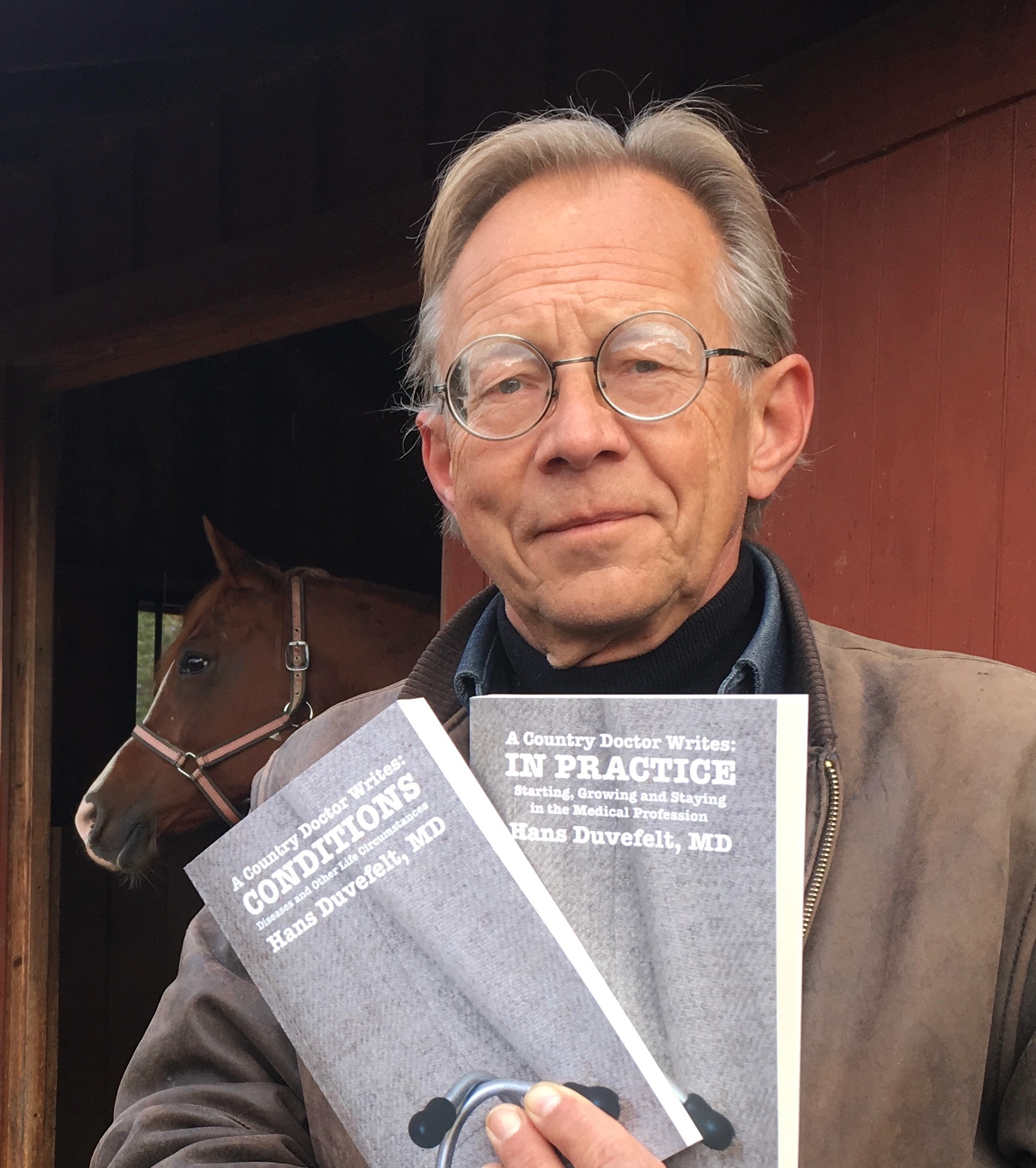
BOOKS BY HANS DUVEFELT, MD

CONDITIONS, Chapter 1: An Old, New Diagnosis

Top 25 Doctor Blogs Award

Doctor Blogs

Enter your email address to subscribe to this blog and receive notifications of new posts by email.

Mailbox

contact @ acountrydoctorwrites.com
Bookmark and Share
© A Country Doctor Writes, LLC 2008-2022 Unauthorized use and/or duplication of this material without express and written permission is strictly prohibited. Excerpts and links may be used, provided that full and clear credit is given.