Archive for the 'Progress Notes' Category


This is Not Health Care

We use the word health rather loosely in America today. Especially the expression health care, whether you spell that as one word or two, is almost an oxymoron.

Health is not simply the absence of disease, even less the pharmaceutical management of disease. The healthcare “industry” is not the major portion of our GNP that it is because there is a lot of health out there, but the opposite. What consumes so much money and generates so much profit is, of course, sick care. The sicker people are, the more money is spent and earned in this market segment. It is a spiral, and a vicious one.

Health is a naturally occurring phenomenon, a state of perfection. Modern life has corrupted many natural, self-healing biological mechanisms and upended the natural order of things in our bodies – just the way it has altered our environment.

Our bodies are pretty ingenious in their ability to heal. When I crushed my finger in my garage door a few years ago, my disfigured fingertip, bisected nail and contused nail bed slowly regained their original shape, almost like a lizard grows a new tail. Yet in an opposite scenario, a person with scleroderma can lose their fingertip to gangrene without physical injury because of what we call autoimmunity – instead of self healing, our bodies can engage in self destruction. My fingertip could heal perfectly but some people’s skin or stomach ulcers fail to do so.

We intuitively seem to have accepted that, most of the time, nature takes care of itself if we don’t mess with it. And when temperatures rise, forests burn or species go extinct, we are quick to assume our industrial or agricultural processes are the cause.

Yet, we have this head-in-the-sand view of disease that it is a random occurrence, the sudden manifestation of ancient and rare genetic glitches or I don’t know what. The real answer is that much of it is a consequence of what we eat and otherwise expose our bodies to – how we produce and refine food, how we alter its natural properties and how we over- or under-consume basic nutrients.

Functional Medicine asks and answers many of these questions and promises to be the future of medicine. I believe in this, but I also believe that the sick-care industrial complex is powerful enough to severely slow down this revolution. I also believe the food industry will double down its efforts to continue misleading the public.

Functional Medicine cannot charge MRI scale fees for telling people to simply follow an ancestral diet, so corporate medicine will never fully embrace it.

Functional Medicine, I believe, will grow slowly and steadily as a counterculture and somewhat of a cottage industry. But then, once it gains enough momentum, maybe the “industry” will want to pay some homage to it in order to stave off the revolution that could lead to its own demise.

I fully expect corporate medicine and the pharmaceutical industry to offer healthy sounding shortcuts, like healthy eating in pill form and fecal transplants for exorbitant fees when the natural ways seem too time consuming or boring. But I seriously doubt that we will see decreased sick care spending in the next 100 years.

But I do think a growing portion of Americans will lessen their faith in traditional “health care” and live more consciously, experience better health and alter some of the disease statistics that have seemed to worsen so much just during my 40 years in practice: diabetes, obesity, heart disease and many cancers.

The Art of Triage: What’s the Worst Thing This Could Be?

Last week I became involved in two situations of pain between the eyes that seemed to potentially be presentations of very serious medical conditions.

Autumn took a call from her sister late on Friday afternoon. Her sister had been tested for Covid the day before and told Autumn she instantly felt a severe pain between her eyes and developed a nosebleed as soon as the nasal swabbing was completed. The nosebleed stopped, but the burning pain at the bridge of her nose had continued in spite of over the counter pain medications and the passage of 24 hours.

It was obvious that whoever did the nasal swab was under the impression that human nasal passages run upward at the same angle as the nasal bone and not horizontally. It was obvious that this had caused pain and a nosebleed. But the amount of pain seemed dramatic. I don’t know Autumn’s sister very well, but she never seemed melodramatic to me. I asked to talk to her myself.

“Do you have a nasal discharge from that nostril?” I asked.

“Yes”, she answered. “Constant.”

“Is it clear?”

“Yes.”

All I could think of was a cerebrospinal fluid leak. This can happen with nasal trauma, I knew, and a quick Internet search even turned up a case of this happening from a nasal swab for the coronavirus.

“You’ve got to go to the ER, and you need a CT scan”, I told her. Autumn told her she’d meet her there. I asked her to keep me posted. By 8 pm the scan was done and reported negative by the NightOwl radiologist, working in a different time zone. Autumn texted to me that the ER doctor called it a contusion. I wasn’t sure exactly what that was supposed to mean – a contusion of what, exactly. But I had done what I could and did not feel I overreacted by telling her to go to the ER.

The very next day I saw a young man with a pain between his eyes that got worse when he leaned forward. He also had decreased libido and mild erectile dysfunction, all for about two weeks. He had no nasal discharge, no visual disturbance and nothing abnormal on ENT or neurological exam.

My thoughts went to a pituitary tumor or a brain abscess from a sinus infection, but perhaps he was just feeling under the weather from an ordinary sinusitis. On a Saturday with no option for a same day CT except if I sent him to the ER, I prescribed a strong antibiotic and cautioned him to seek care if anything got worse or if all three symptoms didn’t clear after a few days of the antibiotic. After all, I told myself, his symptoms had been stable for some time and a few days would probably not alter the course of events.

Whether we take a phone call or see a patient in the office without any availability of diagnostic tests, sometimes all we do is triage and best guessing.

I slept soundly both Friday and Saturday night.

As the old adage goes: Medicine is a science of uncertainty and an art of probability.

The General Public is Meant to be Deceived: The American Food Conspiracy

Everybody knows how to operate smartphones and understands complex modern phenomena, but many Americans are frighteningly ignorant about basic human nutrition.

I am convinced this is the result of a powerful conspiracy, fueled by the (junk) food industry. Here are just a few examples:

Milk has been advertised as a healthy beverage. It is not. No other species consumes milk beyond infancy. Milk based products like ice cream and yogurt are on top of that often sweetened beyond their natural properties.

Fruit juices make it possible to consume the calories of half a dozen pieces of fruit faster than eating just one. Naturally tart juices, like cranberry, are sweetened the same way as soft drinks (high fructose corn syrup), and therefore no healthier than Coca Cola.

Things made from flour—like bread, crackers, boxed and instant cereal, pasta and snacks like pretzels or chips other than plain potato chips—raise blood glucose levels faster than eating table sugar: The breakdown of flour starts in our mouths because of enzymes in our saliva while sucrose doesn’t break down until it reaches our small intestine.

Sugary foods, even candy like Twizzlers, are advertised as “fat free”, which is a relic from the days when fat was believed to be bad for you. Many fats, like those in olive oil, salmon, tree nuts and avocado are extremely healthful.

Another example of tangential descriptions is when flour based snacks are promoted as “baked, not fried”. Flour is bad, no matter what you do with it and, in fact, the presence of fat slows down the blood glucose rise from highly processed carbohydrates.

Serving size is still used to deceive people. A small bag of chips may seem to have a modest amount of calories until you realize it is supposed to be two servings. Fortunately, some packaging now states how many calories are in the whole package. Serving size should be abandoned, since it has no basis in what people really eat.

Artificial sweeteners are still promoted as if they are a way to consume fewer calories. Unfortunately we now know that they often alter our intestinal flora which in turn can release hormones that make us hungrier and craving sugar even more.

Additives are often promoted as healthy, from probiotics to vitamins to extra protein. There is little evidence to support this.

Words like “all natural” are often used in food advertising, but mean nothing in terms of whether they are good for you or not. Poisonous plants, like hemlock, are natural but that doesn’t mean we should eat them.

So many people have trouble understanding the three types of calorie containing foods that exist: protein, fat and carbohydrates. That’s where I often have to start. And sometimes, when I ask people “walk me through your day, tell me what you eat”, I end up pointing out “it’s all carbs”.

This kind of basic information should be kindergarten stuff, not adult education.

The Art of Tinkering: The Man With Cold Fingers

Recently I solved a medical dilemma by changing the medication that seemed to have nothing to do with my patient’s problem.

Ethan Blake is a thin-boned, soft-spoken man with atrial fibrillation and a history of high blood pressure. He lives alone and prefers to shovel his own driveway. He also loves to walk his springer spaniel in the woods behind his house. He is in great physical shape.

At his routine followup early last month, he lamented how his fingers were always cold and painful when he goes outside in the winter.

He takes a blood thinner because of his atrial fibrillation and metoprolol to control his heart rate. He has also been on lisinopril for blood pressure since before he developed his arrhythmia.

We know that some people get cold extremities because of an underlying autoimmune condition. We then call his problem Raynaud’s syndrome. When it is an isolated phenomenon, we call it just that – Raynaud’s phenomenon.

His metoprolol could cause cold fingers all by itself, or it was at least likely to aggravate Ethan’s symptom because it constricts blood vessels. A different rate controlling medication, the calcium channel blocker diltiazem, does not constrict blood vessels but would not in itself do much to improve Raynaud’s phenomenon. The calcium channel blocker nifedipine is routinely used in Raynaud’s but does little for heart rate and could drop his blood pressure too much in combination with his other medications.

Switching from metoprolol to diltiazem could be tricky. Theoretically, during the transition, his heart could either start racing or slow down too much. You would have to do it gradually, because stopping metoprolol suddenly could cause a rebound surge in heart rate, like if you were to release the emergency brake on a moving car while flooring the gas pedal.

It seemed like a tricky situation.

I looked at Ethan’s historical vital signs. He has lost weight slowly over the last few years and his blood pressure lately has been on the low side, often 110/60.

A thought struck me: What if I had him back off on his lisinopril to get a blood pressure in the 130s? Would that increase the perfusion of blood to his long, thin fingers? Then I wouldn’t have to fuss with a switch from metoprolol to diltiazem or the addition of nifedipine.

I explained my theory. He was eager to try it.

Over the month of December, Ethan tapered his lisinopril from 40 to 10 mg while he kept track of his blood pressure. When I saw him the other day, his fingers were warm and he told me they felt quite all right outside most of the time. His blood pressure was 134/68.

We decided he could try stopping lisinopril completely and let me know what happened.

I wasn’t sure when we started out that my plan would work. It seemed a bit tangential to just let his blood pressure rise a bit when the seemingly obvious problem was constricted blood vessels. But as an amateur plumber I also knew that the main water pressure and the pipe size can conspire to cause poor flow in the faucet.

Quality in Healthcare: Cultural Competence, Diagnostic Accuracy or Patronizing Insensitivity?

I sometimes tell patients “I work for the government”, but sometimes I say the opposite, “I work for you”.

Herein lies a dichotomy that is eating away at primary care in this country, like a slow growing cancer. I suspect everybody is aware of it, but it seems nobody has the inclination to deal with it.

2020 exposed how differently Americans view and prioritize things like personal freedom and public safety. We have also seen how vastly different perceptions of reality suddenly exist about what constitutes medical facts. Alternative facts and fake news are suddenly household concepts.

For years, American healthcare has paid lip service to ethnic and cultural sensitivity, as long as minority opinions or practices don’t clash too badly with the holy cows of western society. We tolerate circumcision in men, but not genital mutilation in women, for example. But we don’t even pay lip service to the majority’s right to direct their own healthcare.

Some people want to be screened for everything and some don’t. How heavy-handed should the healthcare system or individual providers be? If you buy a car and never bring it in for routine maintenance, isn’t that your personal choice, your personal freedom? Why should healthcare be completely different?

In bread and butter primary care, we are squeezed every day between patients’ requests for healthcare and the American quasi-religious medical quality dogma. The possibly well-meaning principles were set forth by CMS, the Center for Medicare and Medicaid Services, and turned into business opportunities for private health insurers and the many middlemen of the healthcare industry.

We disagree on whether mask wearing decreases the spread of the coronavirus and whether, even if it does, you can legally mandate it.

Yet medical providers have been routinely measured and financially rewarded for things like recommending aspirin use in middle aged people until it turned out that was faulty science. We have been mandated to do all kinds of things that have nothing to do with why people come to see us, because Uncle Sam (in the broadest sense of America’s paternalistic healthcare system) knows best what people need.

A patient smokes, feels depressed, has an elevated blood pressure and hasn’t had a screening colonoscopy. They also have this gnawing pain in the belly that six months later will turn out to be an inoperable pancreatic cancer. I can get 4 quality brownie points for clicking EMR boxes for smoking cessation counseling, scoring degree of depression and suggesting a behavioral health referral, advising salt and alcohol restriction and arranging for a blood pressure followup as well as referring my patient for a screening colonoscopy.

But there are no quality parameters or incentives for paying attention to this patient’s main concern, “Chief Complaint”, for making an early and correct diagnosis and saving the patient’s life.

Medical providers are disincentivized from listening to their patients because the screening opportunities have become the dominating purpose of primary care in the eyes of those in power.

People with new symptoms may have long waits to see their primary care providers, who are overburdened with screening and housekeeping duties. Doctors went to medical school, residencies and fellowships to learn how to diagnose and treat disease. We were never selected for or trained for the bookkeeping duties that are becoming the bulk of our work.

So much of what we do could be done by others, even digitally and remotely. It’s a new year in a shaken-up healthcare system in a shaken-up nation. It’s time to think about what we really need doctors to do.


I just realized none of the posts show on an iPad or a computer, but they do show on an iPhone. WordPress is working on this. In the meantime, please visit my Substack.


Osler said “Listen to your patient, he is telling you the diagnosis”. Duvefelt says “Listen to your patient, he is telling you what kind of doctor he needs you to be”.


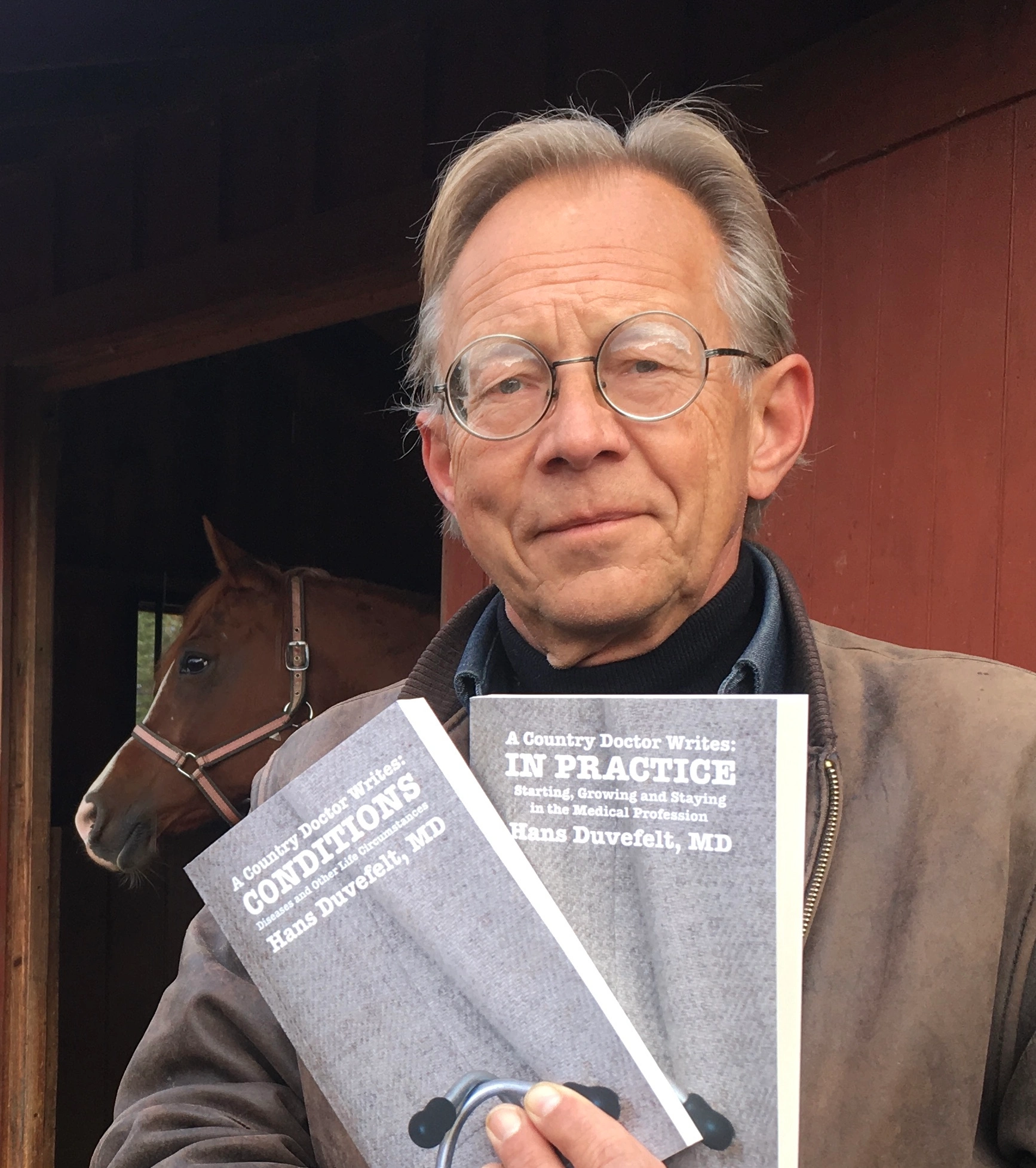
BOOKS BY HANS DUVEFELT, MD

CONDITIONS, Chapter 1: An Old, New Diagnosis

Top 25 Doctor Blogs Award

Doctor Blogs

Enter your email address to subscribe to this blog and receive notifications of new posts by email.

Mailbox

contact @ acountrydoctorwrites.com
Bookmark and Share
© A Country Doctor Writes, LLC 2008-2022 Unauthorized use and/or duplication of this material without express and written permission is strictly prohibited. Excerpts and links may be used, provided that full and clear credit is given.