Archive for the 'Progress Notes' Category


The Art of Asking: What Else is Going on?

Walter Brown’s blood sugars were out of control. Ellen Meek had put on 15 lbs. Diane Meserve’s blood pressure was suddenly 30 points higher than ever before.

In Walter’s case, he turned out to have an acute thyroiditis that caused many other symptoms that came to light during our standard Review of Systems.

Ellen, it turned out, was pretty sure her husband was having an affair with one of his coworkers. And, since this wasn’t the first time, she was secretly working on a plan to move out and file for divorce. She admitted she’d always had a tendency to stress eat.

Diane’s daughter had just announced that she was pregnant by a man she wasn’t sure wanted to be around in the long run.

How do we know whether a patient’s subjective symptoms, laboratory values or even their vital signs are caused by their known medical conditions, a new disease or their state of mind?

We are often tempted to proceed down familiar tracks and tackle seemingly straightforward problems with medications: More insulin would take care of Walter’s blood sugar. Ellen could use a couple of months of phentermine. Diane needed a higher dose of lisinopril or perhaps some hydrochlorothiazide.

As Sherlock Holmes said, “there is nothing more deceptive than an obvious fact”.

There are all kinds of algorithms and guidelines that are supposed to inform clinicians in situations like these, but I wonder how often they are helpful and how often they might actually cause harm.

Medicine is part physiology and part psychology. Are we giving both aspects of our craft the attention they deserve? And, of course, do we make choices and treatment decisions according to probability or by time available to stay on time in our clinic schedules?

Asking “what else is going on” can open up the dreaded, proverbial floodgates, can of worms or Pandora’s box. We don’t have all these cliches in our language for nothing.

Do we avoid asking the questions that will reveal the real answers we need in order to help our patients, or do we dare to?
Driverless Cars or Keyboardless EMRs? Which Do We Need Most?

I love cars and dislike computers.

My car takes me where I need to go, but it also gives me pleasure along the way. I have had it for just about ten years now and I have driven it almost 300,000 miles. It feels like an extension of me. Everything about it is just perfect for the way I drive and the things I need to do with it. From the sumptuously cavernous interior to the rugged all wheel drive features and the studded Finnish snow tires, it takes me pretty much anywhere, anytime. Why anyone would want to travel in a car without the sublime pleasure of driving it is beyond my comprehension.

My computers, on the other hand, are things I avoid whenever I can. My work laptop is an awkward Windows machine. Need I say more? Whatever it does happens stiltedly and unintuitively behind layers of barriers and firewalls that make me sign in again and again until I get to a pathetically clumsy EMR.

My MacBook Pro is slimmer and slicker but it gives me no pleasure to use it, I’m sorry to say.

Every word I have written and published – about as many words as I have miles on my car – has been put down on the virtual keyboard of my iPad. It feels more like an extension of my brain. I use it in bed, by the fireplace, in the barn or on the lawn. I can even talk into it without a microphone or any special software. I touch the screen and magic happens: Apps open, fonts and colors change and the world is at my fingertips, wherever I am.

The work I do remotely for my downstate clinic happens on my iPad and iPhone. That EMR works totally smoothly on my portable devices; the app is so much more modern and intuitive than the computer version.

Some people derive pleasure from the computer itself. I cringe when I have to use it. But driving is a sensual experience, whether it is my commute through the north woods or weekend drive along the Aroostook River through Fort Fairfield to Tractor Supply in Presque Isle. Shifting the manumatic 7-speed transmission with the steering wheel paddles so as not leaning on the brakes, accelerating gently through each curve for better traction, I am one with my machine.

I derive no pleasure from the process of getting my thoughts from my brain to the medical record. I just want it over and done. So if this Country Doctor had to choose between the future prospects of a driverless car or a driverless, keyboardless EMR, he wouldn’t hesitate for a split second.

(Written on my iPad)

Playing Poker With the Devil: “Prior Authorizations” are Paralyzing Patients and Burning out Providers

The faxes keep coming in, sometimes several at a time. “Your (Medicare) patient has received a temporary supply, but the drug you prescribed is not on our formulary or the dose is exceeding our limits.”

Well, which is it? Nine times out of ten, the fax doesn’t say. They don’t explain what their dosage limits are. And if it isn’t a covered drug, the covered alternatives are usually not listed.

So the insurance company is hoping for one of a few possible reactions to their fax: The patient gives up, the doctor tries but fails in getting approval, or the doctor doesn’t even try. In either case, the insurance company doesn’t pay for the drug, keeps their premium and pays their CEO a bigger bonus.

First problem: This may be in regards to a medication that costs less than a medium sized pizza. And the pharmacy generally doesn’t even bother telling the patient what the cash price is.

Second problem: A primary care physician’s time is worth $7 per minute (we need to generate $300-400/hour). We could spend half an hour or all day on a prior authorization and there is absolutely zero reimbursement for it.

In my opinion it is unconscionable for an insurer to say a drug isn’t covered without listing the covered alternatives. They are truly making us play a game where only they know the rules – and I have seen some of them change the rules mid-game.

EMRs sometimes have functional formulary checkers built in, but they don’t always work (I’m talking about you, Greenway – again).

There are too many insurance companies for a provider to separately check their websites before prescribing.

There is an app called Epocrates that has some formularies built in. I have it set to Mainecare, the Maine version of Medicaid. But far from all insurers are included. Whether this is Epocrates’ fault or the insurers, I don’t know. All I know is I’m playing prescriber without knowing the rules of the game.

It is a pathetic state of affairs. The technology is out there but it isn’t in the interest of the for profit insurance companies to use it.

This alone is a reason to consider a one payer system: Mainecare publishes their formulary with real time updates and shares it with Epocrates. Their step care rules are easy to understand for both prescribers and patients.

Prior Authorization requirements are mostly meant to save insurers money, but sometimes they are efforts to control provider behavior. But we have the medical license and bear the liability burden when we prescribe. And the insurance companies don’t seem to have any legal risk when they refuse to honor our prescriptions and leave patients without treatment.

This situation is pure evil. I don’t think my analogy of playing poker with the devil is exaggerated at all. It is provider harassment and customer abuse.

“I Don’t Cook” is an American Epidemic (But A Country Doctor Cooks)

Some patients announce it very proudly, others with downturned eyes: There are a lot of people out there who don’t know how to, or simply choose not to, prepare meals for themselves or their families.

This is a serious health problem. And it is a confusing one. Because there are so many easy ways to get a meal on the table very quickly.

I have many non-cooking patients who don’t even buy frozen dinners they can pop in the oven or microwave, but instead buy pizza, drive-through burgers or subway sandwiches.

A sandwich is not a meal. It is a snack at best.

The reasons not to cook seem to fall into three categories:

1) It takes too long

2) It’s too hard

3) It’s too much work to cook for just one person

I love spending an entire day making Swedish Christmas food for my children and grandchildren. But most of the time I do some weekend cooking for the coming week and spend very little time on weeknights preparing my dinner. Most weeknights I don’t even use the stove, just my little toaster oven.

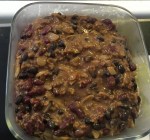
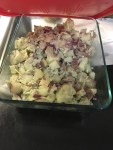
Weekend cooking might be a batch of vegetarian chili, a cheesy potato salad or a barley risotto.

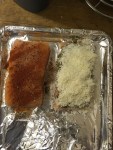
Last night I bought two salmon fillets, placed both on the foil covered tray for my toaster oven and spiced them up in two different ways for two meals: Salt, pepper and streaks of paprika (to simulate grill lines) on one and salt, pepper, pesto and a layer of Parmesan on the other. I turned the toaster oven to broil for 13 minutes and by the time my Caesar salad was done (from bagged hearts of romaine, bottled dressing, store bought croutons and some more Parmesan), the salmon was done.

It takes more skill to drive to McDonald’s for a fish burger.

In the frozen fish section of my supermarket they have Gorton’s haddock in sauce – two for around $6. Plop one in the toaster oven at 350 degrees and set for 30 minutes.

Do something else, and come back to eat. And, one of my tricks is making a wild rice pilaf from a package that yields two or even three servings. I then put one of those servings in a Pyrex dish on top of the toaster oven with foil over. By the time my fish is done, the rice is warm, too. (The same method works for warming up the cheesy potato salad while my store bought frozen Swedish meatballs thaw on “broil” for ten minutes.)

How hard is that?

The S-Word (Social) Suddenly Has a Place In American Medicine

Many Americans have had a negative feeling about the word “social” because of their fears of too much government control, as in socialized medicine or even socialism.

As a Swede with a more neutral sense of the word, although I never identified with the socialist political party, I startled when the pandemic brought us the concept of social distancing. That felt like a complete oxymoron. How could keeping a six foot distance to other human beings be a social act?

But, of course, keeping your distance out of consideration for others is a socially responsible and appropriate thing to do. My ears were just not used to hearing the S-word in English.

Swedes don’t use the expression “socialized medicine”, because health care is viewed as a human right and people don’t imagine that a private system could provide care for all of society—notice the similarity between the words society, social and socialism. So they think it is a no-brainer that health care needs to be a service provided by the government for everyone. There is simply no concept of “desocialized” health care, or whatever you would call health care that was entirely privately run.

Socialmedicin, in Sweden, is a broader field than what Americans call Public Health. Its focus on the socioeconomic determinants of health is more obvious than what I usually hear in this country. Other “social” words in the Swedish welfare state vocabulary (and my mother tongue has a visually powerful custom of making one word out of two, as in healthcare versus health care) are:

Socialarbetare (social worker), Socialvård (welfare in its broadest sense) Socialnämnd (Social Board that oversees the welfare of minors, like DHHS here), Socialstyrelsen (National Board of Health and Welfare) Socialfall (Social case, as in the legitimate admission diagnosis “causa socialis” when I worked in Sweden and someone wasn’t safe at home and the hospital was their only option).

The pandemic has brought us one giant leap forward in our understanding that biochemical and sociopolitical factors can converge to cause disease and that both sets of factors are equally necessary to save us from it.

Rudolf Virchow, the father of modern pathology, is also considered the father of social medicine. Interestingly, pathology and social medicine have diverged since his lifetime and medicine has strayed far from his vision. In this century, the American Physician Paul Farmer and others are trying to bring these models together:

Because of contact with patients, physicians readily appreciate that large-scale social forces—racism, gender inequality, poverty, political violence and war, and sometimes the very policies that address them—often determine who falls ill and who has access to care. For practitioners of public health, the social determinants of disease are even harder to disregard.

The holy grail of modern medicine remains the search for a molecular basis of disease. While the practical yield of such circumscribed inquiry has been enormous, exclusive focus on molecular-level phenomena has contributed to the increasing “desocialization” of scientific inquiry: a tendency to ask only biological questions about what are in fact biosocial phenomena.

The time is more than ripe for us here in America to pay more serious attention to the biosocial and biopsychosocial determinants of health and disease.


I just realized none of the posts show on an iPad or a computer, but they do show on an iPhone. WordPress is working on this. In the meantime, please visit my Substack.


Osler said “Listen to your patient, he is telling you the diagnosis”. Duvefelt says “Listen to your patient, he is telling you what kind of doctor he needs you to be”.


BOOKS BY HANS DUVEFELT, MD

CONDITIONS, Chapter 1: An Old, New Diagnosis

Top 25 Doctor Blogs Award

Doctor Blogs

Enter your email address to subscribe to this blog and receive notifications of new posts by email.

Mailbox

contact @ acountrydoctorwrites.com
Bookmark and Share
© A Country Doctor Writes, LLC 2008-2022 Unauthorized use and/or duplication of this material without express and written permission is strictly prohibited. Excerpts and links may be used, provided that full and clear credit is given.