Archive for the 'Progress Notes' Category


A Country Doctor Practices Bibliotherapy: Books by Prescription

Books, or even just book titles, can help us see things differently and feel differently about ourselves. I often recommend Jungian psychologist Robert A Johnson’s little book He to men who in any way struggle to understand themselves. And long before I read Shadow Syndromes, the mere title of the book cemented some clinical insights I had been intuiting but only skirting around for years.

Reading my Stockholm morning paper this snowy January weekend, I came across an article on bibliotherapy. The word hit me with a jolt. According to Wikipedia, it was coined by Samuel McChord Crothers in an August 1916 Atlantic Monthly article, but the medicinal use of books goes back centuries if you consider the use of religious texts and at least to the 1850’s for other literature in the United States.

Apparently, both therapists and librarians, perhaps more in Great Britain than here, offer bibliotherapy. Libraries sometimes offer group sessions focusing on books about topics like overcoming anxiety.

Without having such a technical word for it, I actually was able to help a young man make huge progress with his anxiety by recommending Eckhart Tolle’s The Power of Now, a book that I myself had only skimmed a couple of years ago. I actually didn’t read it; I listened to the audiobook, sitting in my camping lounge chair in the horse paddock against the south wall of the barn. There were horse related interruptions that made me miss parts of the book. But I got the essence of it and it rang very true to me. As I have alluded many times, being with horses has taught me many things. Perhaps most of all, it has taught me not to think about other things when I am with my large, fast, strong and high strung Arabians. Only now matters with them. Being aware and in tune with them is how to be safe and how to influence their actions without the use of any kind of force.

Jeremy is an articulate young man who seems comfortable in any situation, but he gradually revealed to me that he is plagued by severe anxiety and constant ruminations, catastrophic thinking and self doubt. The more he talks, he explained, the more that means he is feeling anxious. He has a lot of regrets and guilt about the past and even more worries about the future.

The short answer to what he needed to do is well summarized by Karen Salmansohn: “No amount of regret can change the past. No amount of anxiety can change the future.”

Eckhart Tolle’s book, especially the audiobook, is a bit like an outdrawn meditation guide. Only the now matters, because only the now exists. I found a YouTube video that explains very succinctly what he means, and may be a good and quick (16 minute) introduction for anyone who is unsure if Tolle’s thinking is for them.

Jeremy read the book and emerged almost as a new man. He still needs to remind himself now and then to get out of his thinking mind and be fully present in the moment, but his outlook on his situation has changed profoundly.

Always Looking for Zebras

In everyday clinical practice, we see mostly ordinary things. But our job description requires us to always at least consider the unusual. It takes judgement and experience to navigate between being efficient and not missing something rare or dangerous.

This past week, I have seen a couple of patients that made me dig a little deeper into their symptoms.

One man came in with a six month history of skin rashes. He seemed to have several kinds. Some were isolated little papules on a red background. He said he had had that kind now and then for many years. Some were scaly blotches with bumpy edges and some were red patches with little craters within them.

A few of the lesions reminded me of dermatitis herpetiformis, so I asked “have you had any trouble with your bowels lately?”

“Well, yes, they’ve been real loose.” He seemed surprised by my question.

“How many times a day?” I asked.

“At least three or four”, he answered.

I minimized the EMR and googled images of dermatitis herpetiformis, which is usually seen with celiac disease, but sometimes without full blown bowel disease. He agreed that some of the pictures looked a bit familiar. I ordered a celiac panel. If that is negative, I’ll do a skin biopsy, but none of the lesions I saw were quite classic, so maybe I’ll do a couple of them.

Another patient with longstanding anxiety disorder had a very elevated blood pressure, which I had never seen in her before. She told me she has seen numbers from 120 to 180.

“Why have you been checking your blood pressure to begin with?” I asked.

“Because I break into a sweat and feel dizzy sometimes”, she explained.

Here we go again, I thought to myself. Another instance to look for a pheochromocytoma. Most of the time when we look for this rare cause of spells with high blood pressure, we don’t find it, but you have to look.

We must be careful not to zero in too quickly on the presenting complaint. That is like wearing blinders, like the horses pulling the Amish buggies down the road from me. But at the same time we can’t scan the horizon so much that we become scattered and paranoid.

The Art of Asking: What Else is Going on?

The App That Helps Me Be a More Patient Centered Physician

One of the most rewarding things I do in my clinic happens on my iPhone.

When I sit down with a middle aged patient to talk about their cardiovascular risk, I open the risk calculator created by the American Heart Association and the American College of Cardiology. I talk my way through as I enter the parameters – age, blood pressure, lipid numbers, smoking history and so on. Then I write down their ten year risk on a piece of paper next to the “ideal” risk for a person that age, for example 8% risk versus ideal 3%.

I explain that statin drugs may lower anybody’s risk by 30-50%, which is more important to consider the higher their risk is, because half of almost nothing is almost nothing.

I also write down the opposite numbers: 92% chance that nothing bad will happen versus 97%. That number, to most patients, seems less dramatic than “almost tripled risk” in the first set of numbers.

Next, I fast forward a few years. Both my patient and Mr. or Ms. Perfect are then older and have a greater risk. I can then also show what the risk would be if they had quit smoking, controlled their blood pressure or developed diabetes during that time.

I write down the new risk numbers with notations of the hypothetical new blood pressure and so on. And inevitably I also end up pointing out that the guideline that accompanies the calculator would have just about every 65 year old, even Mr./Ms. Perfect, take statin drugs. I always get the same incredulous reaction to that one.

Next, I mention the Hale study, which showed that older patients who follow a Mediterranean diet have 50% less cardiovascular disease than people who eat a more typical Western diet. But, of course, maybe the diet choices are also linked to other lifestyle factors.

Lastly, I mention that this calculator does not take family history into consideration.

The conversation this little app generates is, in a way, what medicine today is all about. We have lots of data, but the Art of Medicine is figuring out if and how the statistics apply to an individual patient. And, of course, laying out the options so our patients see them clearly and can decide for themselves.

(For more on lipid guidelines, statins and the Mediterranean diet, check out the video below. More videos at A COUNTRY DOCTOR TALKS.)

The Misunderstood Medicinal Use of Yogurt

There is a deep rooted belief that eating yogurt decreases the risk of vaginal yeast infections from taking broad spectrum antibiotics. This is not an effective strategy. Antibiotics are absorbed through the intestinal tract and are distributed throughout our bodies through the bloodstream. They kill unfriendly bacteria but unfortunately also friendly bacteria, like the normal vaginal flora.

The magic of yogurt is that it contains bacteria that are very similar to the bacteria that normally live in the vagina and keep its environment a little acidic, which deters yeast from growing.

But if anybody thinks yogurt bacteria are absorbed in the intestinal canal and transported throughout or bodies via the bloodstream to the vagina, they are wrong. Such a scenario would basically amount to sepsis, blood poisoning.

However, a little dab of yogurt inside the vagina is the simple, practical way of letting the vaginal flora’s cousins “house sit” until a woman’s own friendly bacteria have a chance to recover from the antibiotic treatment they were subjected to because of a urinary infection or whatever else her medical provider prescribed it for.

That’s how it really works.

I Heard About Chilblains in British Television Shows, Not in Medical School

Today I saw a woman with a painful toe. She said another doctor used to give her mupirocin, an antibiotic cream, for this recurring painful redness and swelling in one toe she believe suffered a frostbite years ago.

I looked at the toe. The skin was intact, but there was redness, tenderness and a little swelling. I didn’t think topical antibiotics would help that.

“Did the cream work?“ I asked.

“I don’t know, it went away in about a week most of the time but sometimes the toes next to it started to bother also“, she said.

I was sure her flareups resolved on their own and not because of the antibiotic cream she used. It just kept her busy while she waited them out.

Frostbite, recurring pain, inflammation. I have never been shown or diagnosed a case of chilblains before, but the word and the basic concept was in the back of my mind. I remember British people speaking about them. Lately, I have also read that Covid-19 can trigger chilblains.

As I often do, I minimized the EMR on my screen and did a search, this time on up-to-date. I showed her the pictures of toes with chilblains and she agreed with me that they looked like hers and the description of all the symptoms rang a bell with her, too.

The choice seems to be between powerful topical steroids for inflammation or systemic medications including nifedipine, which increases blood flow to cold fingers and toes but could also lower blood pressure. That side effect would be something she could ill afford.

We agreed on a strong topical steroid in ointment form for better penetration and she will let me know how it works for her.

One of the sources I looked up claims that 10% of Brits will experience chilblains in their lifetime. Sweden is colder than Great Britain but perhaps not as damp. I wonder why nobody bothered to tell me about this condition.


I just realized none of the posts show on an iPad or a computer, but they do show on an iPhone. WordPress is working on this. In the meantime, please visit my Substack.


Osler said “Listen to your patient, he is telling you the diagnosis”. Duvefelt says “Listen to your patient, he is telling you what kind of doctor he needs you to be”.


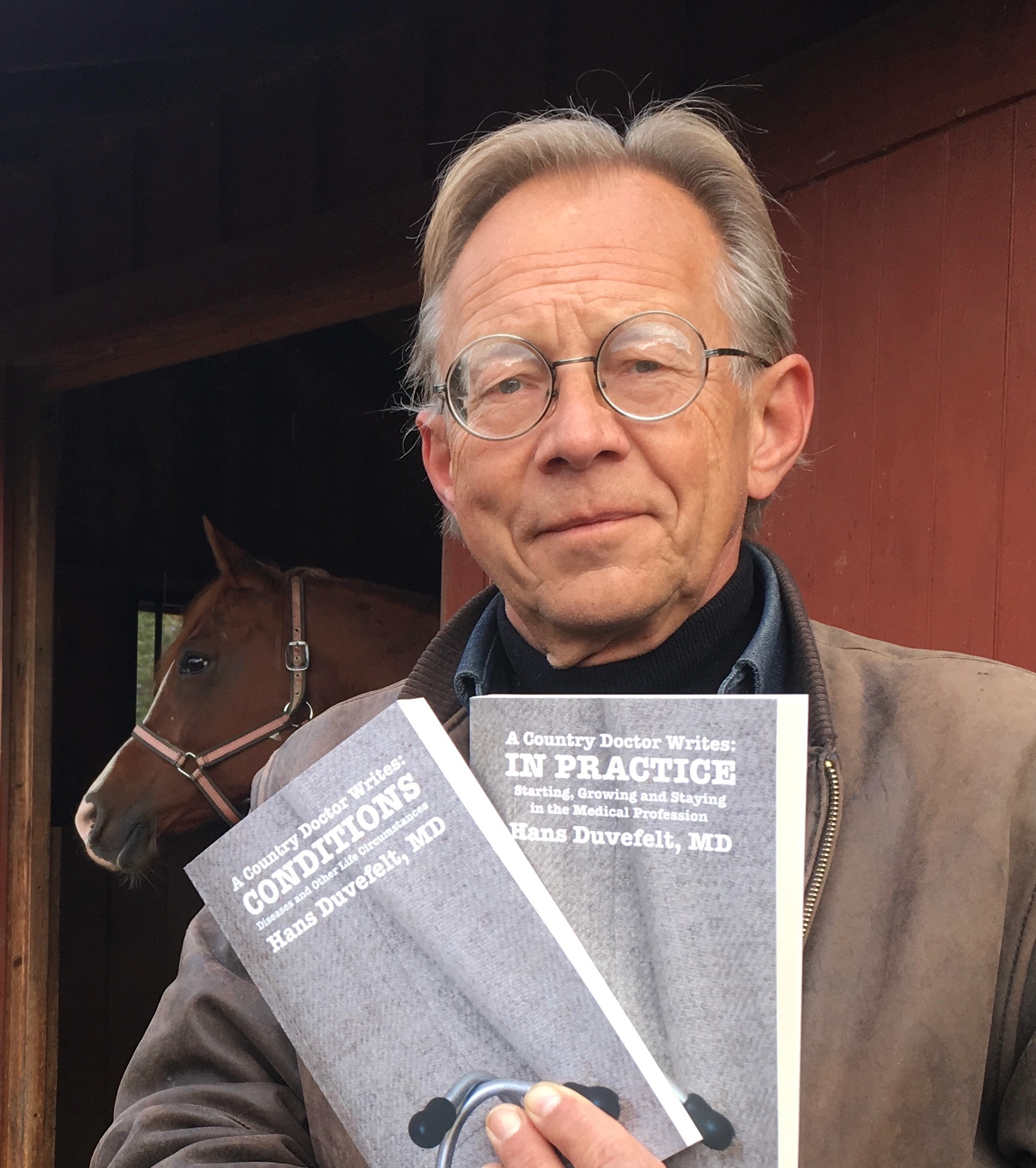
BOOKS BY HANS DUVEFELT, MD

CONDITIONS, Chapter 1: An Old, New Diagnosis

Top 25 Doctor Blogs Award

Doctor Blogs

Enter your email address to subscribe to this blog and receive notifications of new posts by email.

Mailbox

contact @ acountrydoctorwrites.com
Bookmark and Share
© A Country Doctor Writes, LLC 2008-2022 Unauthorized use and/or duplication of this material without express and written permission is strictly prohibited. Excerpts and links may be used, provided that full and clear credit is given.