Archive for the 'Progress Notes' Category


A Country Doctor Writes is Now Also on Substack

https://acdw.substack.com/

There’s an alternative blog/essay/newsletter platform out there called Substack, where writers post their work and have the option to ask for monthly or yearly subscription fees. The participating writers are categorized by topic. My writing is in the category “Health & Wellness” and also in “Literature” (perhaps a pretentious word for personal essays). This creates the possibility that people interested in medical topics would find me more easily on that large platform than on my own little website in one small corner of the Internet.

I am mostly interested in growing my readership. I make good money as a physician. The format I am honing for my Substack blog/newsletter is a little bit like the now retired A Country Doctor Reads. What feels logical and comfortable to me is a three part post/newsletter format with a mention/quote and link to an outside article, my personal/practice experience (similar to a column I used to read early in my career, called “Diary from a week in practice”), and something I have written on the topic in one of my previous almost 1,000 blog posts.

People may choose to support me but I don’t need the money unless/until I’m unable to continue working at the pace I currently maintain. But I will be 70 this summer so I’m obviously thinking that I may be able to write longer than I can practice medicine.

Because of the format I am developing, I think this will be an opportunity for the most regular and loyal readers of this blog to see behind the curtain, what made me write a certain piece – the backstory, if you will.

And readers of my Substack pieces may click the link and visit this blog/website, which I have nurtured since 2008.

There is a free app to download, a free sign-in and I’m not requiring anybody to pay a penny at this point for reading my stuff. I just love to write about what I do.

What Healthcare Needs Today is Professional Grandmothers to Offload Burned-Out Doctors by Delivering Common Sense Advice that Medical Assistants aren’t Allowed to Give.

(I briefly considered not writing this post and letting the headline speak for itself. But, you know me, I couldn’t resist elaborating a little bit.)

We are drowning in calls for treatment or advice. Many are too nonspecific to make any sense at all, like “can you send something in for a headache”. I mean, there are subspecialist doctors who ONLY treat headaches, and somebody wants me to treat theirs with no information whatsoever.

And many calls are about things most adults should know the answer to, if they had learned anything from their mothers and grandmothers growing up. But the way the world works today, families don’t usually support each other the way they used to.

And in today’s healthcare climate, barely even registered nurses are allowed to give general, commonsensical advice because of liability concerns.

If we can’t hire wise and experienced grandmothers, maybe Artificial intelligence could be of some use here???

Dear Patient, If You Have to Treat a Cold, Know This:

Americans hate being sick. There are too many cold medicines out there to remember by name. But there are really only a handful of different drug classes to consider.

In order to choose any one of them, be clear about what you want to accomplish. It’s actually very simple.

1) Make my cold go away faster: Zink, echinacea, visualization/manifesting, sauna, prayer (may be mostly placebo effect ).

2) Stop my nose from running (including post nasal drip): You’ll want the crud to leave your body as soon as possible, so turning off the drain pipe that your nose has become can increase the risk of stagnant mucous in your sinuses becoming secondarily infected. But intermittent use of a decongestant (pills like pseudoephedrine, diphenhydramine or nasal sprays like Afrin) can help you look healthier than you are for an important Zoom meeting.

3) Make my nose run and relieve the pressure in my sinuses: Lots of fluids, room humidifier/vaporizer, shower steam, nasal steroid spray, guaifenesin (Mucinex) or even nasal lavage (Nettipot), but I personally have reservations about that one.

4) Stop my dry cough: Cough suppressants like dextrometorphan or codeine, humidifier/vaporizer, asthma inhaler if you have one.

5) Help me raise that thick, sticky phlegm: Fluids, humidifier/vaporizer, guaifenesin (Mucinex). Don’t try to suppress a productive cough. Just like with a runny nose, get the crud out of your body!

6) Headache/body aches/fever: Acetaminophen (Tylenol), ibuprofen, naproxen. But be aware that a low grade fever actually helps us clear cold viruses faster.

7) Knowing when to get medical help: Worsening symptoms, a second wave of fever; shortness of breath, wheezing, chest pain, severe sinus pain, clouding of the mind…the list goes on. Most people have had colds before. Is this one just like the others or the worst ever in some way?

8) Lastly: We used to think green phlegm meant bacterial rather than viral infection. But we now know viruses often cause up to three weeks of wet cough or nasal discharge. And be aware that we have antivirals for influenza and Covid, but not for the common cold viruses. (Sadly, we can send people to the moon, but we can’t cure the common cold.)

The Unreasonable Burden of Specialty Level Diagnostic Specificity in Primary Care

As a primary care physician, it helps me to know if my patient has had their appendix, gallbladder uterus or ovaries removed. I can then reasonably eliminate problems with those organs from my differential diagnosis if my patient comes in with sudden abdominal pain.

Maybe esoteric research will someday look for the incidence of Alzheimer’s disease in people with open versus laparoscopic gallbladder surgery. But, honestly, I don’t care as much about that as I care about efficiently diagnosing the problem at hand.

I am not terribly concerned about whether they had their gallbladder or appendix removed laparoscopically or through an open procedure and as long as the uterus and ovaries are gone it doesn’t usually matter to me if the procedure was abdominal or vaginal.

And, how much does it matter to doctors in the trenches exactly which weight loss surgery our patient had many years ago? The general followup considerations at our level of care are roughly the same.

And don’t get me going on macular degeneration. I don’t need to know if it’s wet or dry or any of its other classifications. All I need to know is that my patient has some form of it and needs to see their eye doctor periodically.

My own EMR displays my chosen diagnosis in words, not as the beancounters’ ICD-10 code. And many of the specialist notes I get have the same setup. So, if the eye doctor notes I get don’t have the code, why do mine need the specificity it implies?

Appendectomy is a very basic surgical history item that does not involve billing, but a crucial factor in making a differential diagnosis. I shouldn’t have to hesitate entering it into a new patient’s chart because I forgot to check how big the scar is.

The specifics of an active diagnosis is very soon going to hit our pocketbooks, or at least that of our employers. A diabetic without complications is worth less to our employers than one with a complication. But only the eye doctor knows exactly which complication they have.

In a future post/diatribe, I will write about HCC Coding, aka “Make your patients look as sick as possible so you get more play money now and real cash tomorrow”.

Stay tuned.

Record Breaker!

My blog just set all my previous records: Over 9,000 visits and the most views in one day of a single blog post. This one is striking a chord with my colleagues:


I just realized none of the posts show on an iPad or a computer, but they do show on an iPhone. WordPress is working on this. In the meantime, please visit my Substack.


Osler said “Listen to your patient, he is telling you the diagnosis”. Duvefelt says “Listen to your patient, he is telling you what kind of doctor he needs you to be”.


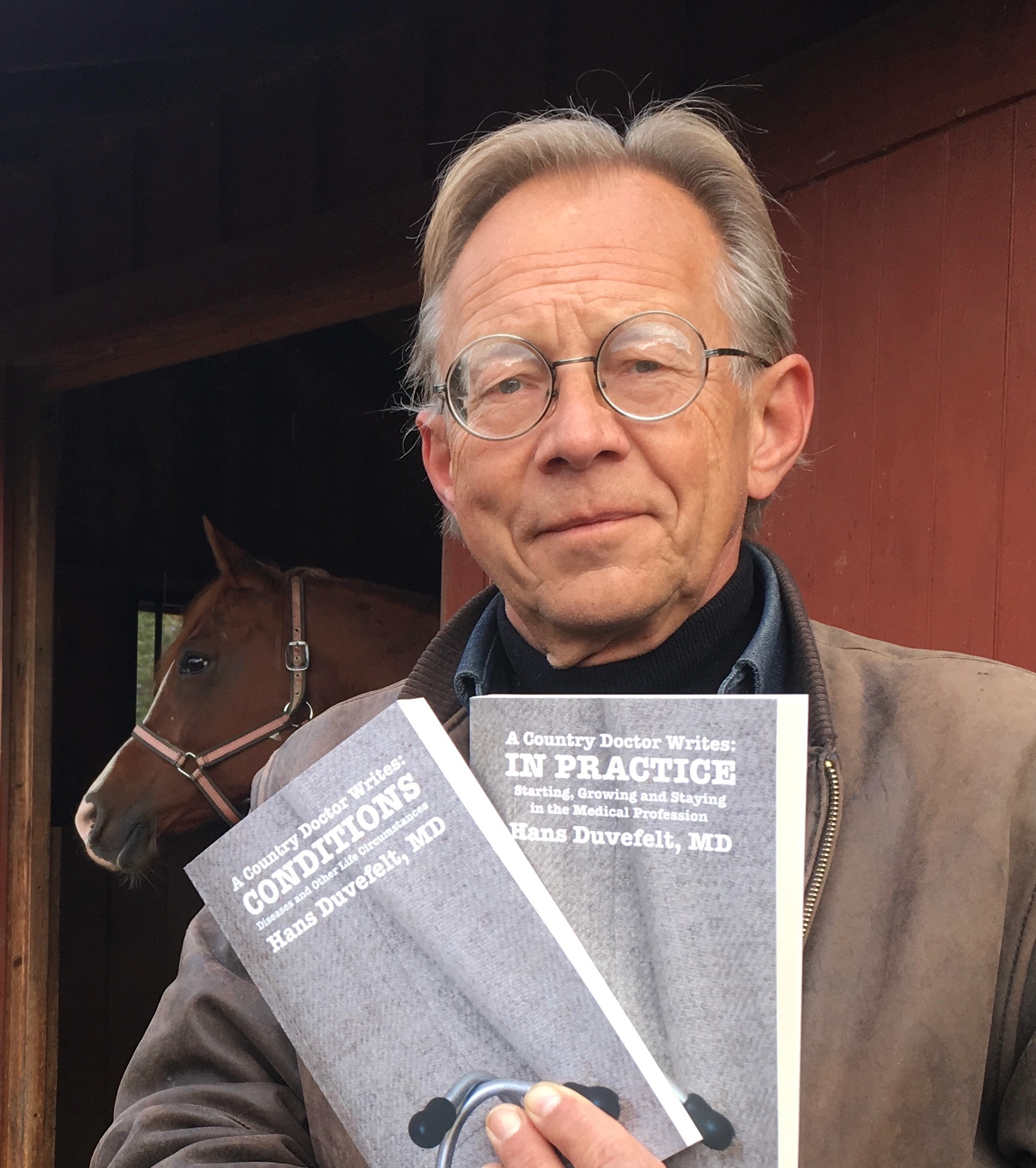
BOOKS BY HANS DUVEFELT, MD

CONDITIONS, Chapter 1: An Old, New Diagnosis

Top 25 Doctor Blogs Award

Doctor Blogs

Enter your email address to subscribe to this blog and receive notifications of new posts by email.

Mailbox

contact @ acountrydoctorwrites.com
Bookmark and Share
© A Country Doctor Writes, LLC 2008-2022 Unauthorized use and/or duplication of this material without express and written permission is strictly prohibited. Excerpts and links may be used, provided that full and clear credit is given.