Another Early and Late Career Collaboration with Lilian White, MD
A diagnosis is something very powerful. It can unlock a cure or clinch a death sentence. It can give you protection and benefits or it can exclude you from your chosen career.
Because healthcare is so much about public health, prevention and chronic disease management these days, diagnostic acumen is an underestimated skill in my opinion.
Diagnosis is the foundation of sick care, the oldest iteration of the practice of medicine. Half a century ago, many specialties involved more diagnosis than treatment. Neurology seemed to have very little in the way of treatment to offer back then, for example.
When I was a first year medical student, our university hospital didn’t yet have a CT scanner; the brain CT was introduced in Sweden the following year. The full body scanner came to Sweden in my third year.
So a thorough clinical history and bedside physical examination were the fundamental tools in the diagnostic process. I learned lung auscultation from a couple of old pulmonologists with experience evaluating tuberculosis patients. They were experts at percussion, the almost forgotten technique of listening to the sound created by tapping on the chest wall. People said they could draw a picture that predicted what a patient’s chest X-ray would look like.
We certainly have better imaging capabilities now, but so many diseases don’t show up in pictures. Take movement disorders, headaches, even chronic belly pain. Symptom history and simple observation and examination have not become obsolete.
In our everyday practice, we see diagnoses play many different roles for us as medical providers, for our patients and for the organizations we work within as well as for insurance companies and ultimately Uncle Sam.
A DIAGNOSIS CAN OPEN DOORS
A patient of mine with chronic respiratory failure on oxygen 24/7 was bothered by thick sticky phlegm. Maximum doses of guaifenesin did not help her raise much of it. I wanted to try an old nebulized medication called acetylcysteine. It required a prior authorization. The diagnosis I assumed would qualify her was chronic respiratory failure with hypoxemia, J96.11. The prior authorization was denied. I managed to find a list of diagnoses that would cover this medication. It turned out that the much less ominous ICD 10 code for unspecified emphysema, J43.9, got it approved.
I think this is a fairly random ruling by Medicare. But little things like that fill our days. Knowing what diagnosis covers what in terms of qualifying for a test or treatment is part of a bigger phenomenon that I call metamedicine. Another example of metamedicine is that even though heart failure can typically cause shortness of breath and/or swelling of the legs, Medicare pays for the blood test BNP that we use to diagnose and quantify heart failure only if there is shortness of breath; leg swelling will not cover it.
A DIAGNOSIS BRINGS MONEY TO PROVIDERS AND INSURANCE COMPANIES
Because so much chronic care is managed and measured, it has become increasingly important to predict how costly each diagnosis is per year. This requires a degree of specificity when choosing the ICD 10 diagnostic codes. The more severe ones give you more “points“. And Medicare does not retain the codes over time. Each year they need to see a claim with active condition codes in order to predict their expenses. And now more and more they pay providers either directly or by making them earn or not earn bonuses if the cost to care for a patient is higher or lower than anticipated.
A diagnosis of depression with no indication of it being severe gives you no brownie points and no extra money in your pocket. Diabetes with complications is more profitable than diabetes without complications. And if we don’t assume that a person‘s mild to moderate chronic kidney disease is actually secondary to their diabetes, we lose an opportunity to score.
A DIAGNOSIS CAN SAVE YOUR LIFE OR MAKE YOU MISERABLE
Low-dose CT lung cancer screening and mammograms are examples of screening tests that may prevent getting a diagnosis too late for any hope of cure. Screening for Alzheimer’s disease isn’t likely to open doors to any radical and successful treatment. Some people might modify their disease trajectory by lifestyle changes, but how many of us would want to live the rest of our lives with the knowledge that we will come down with a disease like that? The benefit of prostate cancer screening has been debated for decades and one thing I learned in my training that still seems to hold true is that you may have to treat around 35 men for prostate cancer to actually save one life. The downside of treatment side effects, and also knowing that you have a cancer, even if most people don’t die from it, is something we may not be able to predict the effect of when we decide whether to screen or not.
A DIAGNOSIS CAN ELIMINATE THE SUFFERING OF UNCERTAINTY
For most clinicians, it can seem obvious that an annoying symptom that has lasted for decades is quite likely something harmless. That’s not how all patients see it. So many times I have found that an appropriate diagnosis or explanation of why they feel what they feel helps people stop worrying. As a primary care provider, we have to live with ambiguity and uncertainty, but that’s not how all human beings are made up. The closer we can come to a reasonable medical explanation of a symptom, the more we can help our patients get on with their lives and help themselves navigate their symptoms by developing an understanding of what makes them feel better or worse.
DIAGNOSTICIAN MAY BE AN EMERGING NICHE SPECIALTY
One of the greatest compliments I ever had, actually more than once, was “he is a brilliant diagnostician”. Maybe AI can help clinicians with less training make more accurate diagnoses as technology moves forward. But, now there is talk of making American medical school three years instead of four, even before medical AI is completely ready for prime time.
My Swedish medical school training was 5 1/2 years. After that, I did a two year rotating internship and then a three year family practice residency in this country. I have been a board certified family doctor for 41 years. I do love a medical mystery and have to confess that following treatment algorithms for chronic diseases all day long can be pretty boring. So at this stage of my career, it would be nice to be the in-house diagnostician who helps point patients care in the right direction. Maybe with an increasing percentage of primary care providers having shorter and increasingly even online training, diagnostic physician will become a new niche specialty?
Read Lilian White’s essay here:


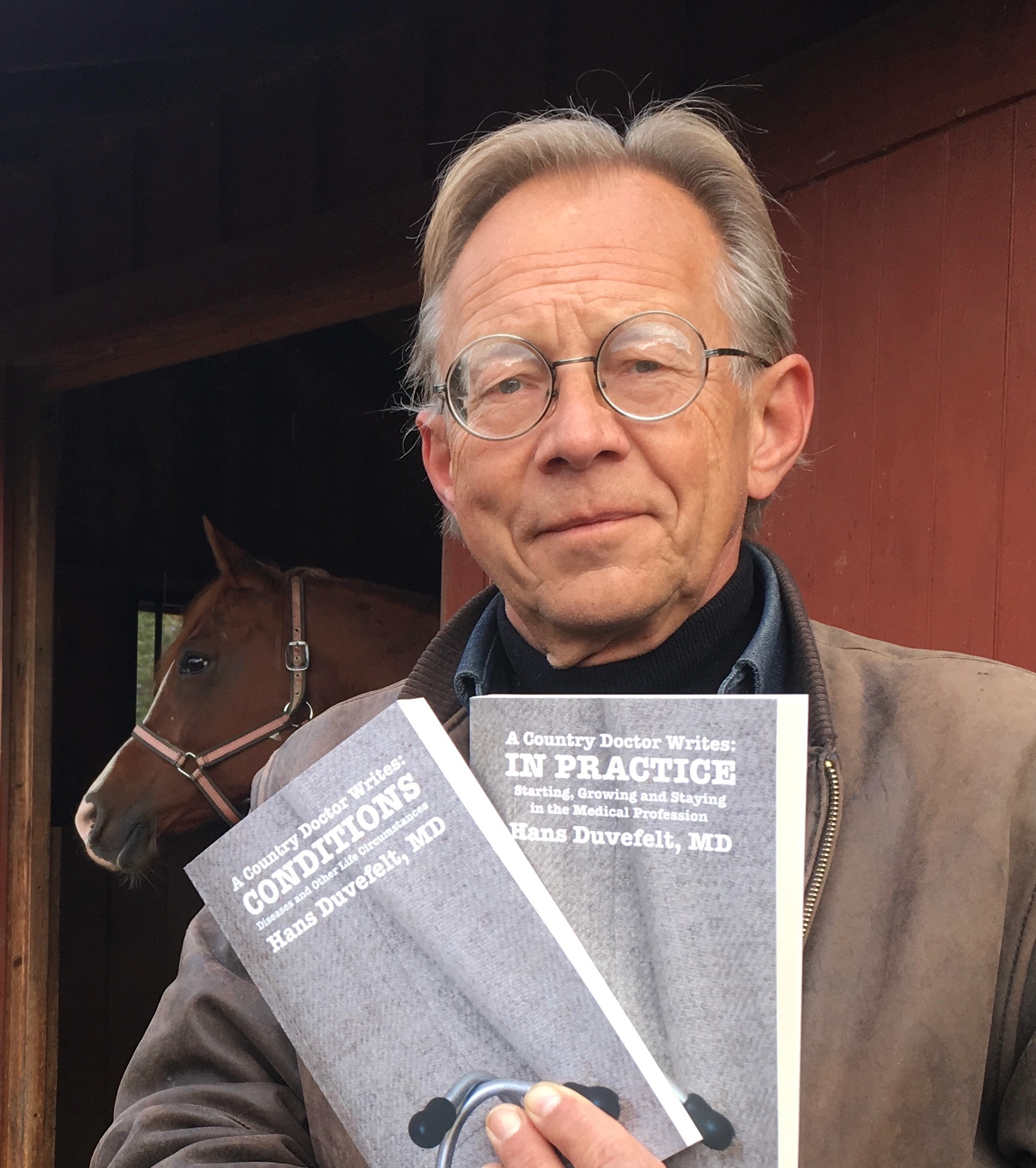







 A Country Doctor Writes:
