Archive for the 'Progress Notes' Category


“You Don’t Know Me!”

Maria had seen my partner for a few years before switching to me last year. I was struck by her unusual accent and her ability to figure things out. 

On our second visit she told me in broken English that she was sure her blood pressure medication was making her sick. She had even been to the emergency room once with severe swelling of her tongue.

Maria didn’t know the word for what she had – angioedema caused by the enalapril she had been taking for many years – but she knew she had to stop the medication.

It took us a few visits to find a suitable alternative. I was hopeful I had finally got it right.

As I entered her exam room for today’s follow-up she smiled at me and said hello. I asked how she was doing as I sat down across from her with her chart in my lap. Her eyes turned dark and her smile dissolved.

“You don’t know me”, she said sternly.

Taken aback at first, I checked her facial expression again; it was serious, but not angry.

“I only know what you have told me and what’s in here”, I said, pointing to her chart.

She scoffed: “Other doctors’ words about me.”

“I’ll tell you something about me. I had five children, many have problems. My son is in prison, one daughter is on drugs, another won’t let me see my grandchildren and my husband is long gone”, she blurted out as she leaned forward in her chair.

“My mother had nine children, me the oldest”, she continued. “I only got five years of school. My mother, she needed me to take care of the babies, then I worked in a shoe factory. I teach myself English watching TV.”

I sat quietly as she spoke.

“My father was a drunk and my husband too. They both beat me. I always worked hard and my life was always hard. I say that’s why I have high blood pressure.”

In the silence that followed, her eyes met mine and they brightened a little again. I put her chart aside unopened and placed the blood pressure cuff around her arm.

A Cancelled Appointment

The call from one of the big city radiologists came out of the blue. A patient of mine at one of the boarding homes had seen a surgeon about an abnormal mammogram and a stereotactic biopsy was recommended. As the primary physician, I was the one who had to order the test. I was in the middle of something when I got called to the phone for Dr. Dinsmeyer’s call.

“This patient, Suzanne Brown, referred for a stereotactic biopsy…”, the radiologist began, “… I looked at the films and I don’t think she needs one. This is benign. I’d like to cancel the procedure.”

I explained that I was just the middleman, and had ordered the test based on the surgeon’s recommendation. The whole exchange didn’t take two minutes, and I went back to what I was doing, feeling terrible about Suzanne travelling to the city for nothing. She doesn’t get around all that easily in her wheelchair.

Yesterday at the boarding home as I began my rounds, I found out that Suzanne was on her way to the city for her breast biopsy.

My heart sank. I had thought Suzanne was at the breast clinic when Dr. Dinsmeyer called. If the appointment wasn’t until yesterday, did the breast clinic assume I would contact the boarding home about the cancellation?

Just then the breast clinic called. “We have a Suzanne Brown here, but her procedure has been cancelled.”

“Let me talk to her”, I said. Very carefully, I explained to Suzanne what had happened when Dr. Dinsmeyer called me. I apologized for the confusion and her inconvenience, adding that she did get some good news after all from a full-time breast radiologist about her mammogram findings.

She seemed okay with that, and I was left more with my own concerns about how errors in communication like this might be avoided in the future.

Today I had most of the afternoon blocked off for one of my least favorite things to do as a doctor, a deposition in a case where a patient of mine is suing another community member for injuries from a car accident a year and a half ago. Two city lawyers and a court stenographer were scheduled to grill me for three hours in our combined lunch and conference room.

I waited and waited, wondering if the attorneys had underestimated how long it takes to drive down here from the city on winter roads. Twenty minutes into our scheduled appointment, Autumn called my patient’s attorney’s office to see if they were delayed.

“It’s been cancelled”, she announced after a brief phone call, “last week – they just forgot to tell us!”

A Terminal Case

When 87-year old Hildegard Mott was discharged from the hospital for the last time she was given less than six months to live. Her aortic stenosis was severe enough to cause chest pain at the slightest exertion, yet if she took nitroglycerin she invariably passed out. Sometimes she would pass out even without taking nitro.

She was given a prescription for liquid morphine to take if her chest pain became unbearable and Hospice nurses started to visit her a couple of times a week in her modest but spotless trailer in the Rainbow Hills trailer park just outside town.

The hardest part about coming home was that Sumner, her husband, friend and soul mate, wasn’t there. He had died from a stroke just before Hildegard ended up in the hospital. 

My house calls were special for both of us. She treated me like a son and never failed to tell me about her Scandinavian grandparents. Her own two sons live far away and I live an ocean away from my own mother. She told me of her symptoms and her worries. She knew her remaining days were limited; I had to certify a number less than the cutoff for Hospice services. Ironically, it was the hospitalists’ idea to sign her up for Hospice, but I ended up certifying her prognosis.

She often spoke of Sumner in present tense. “I know he is here”, she often said. “He comforts me when I am sad and calms me when my anxiety builds up. He helps me remember where I put things.”

She seemed to hold her own as far as her symptoms went, but her days were long and her nights were lonely.

“I don’t know why I am still alive”, she would say. “If God wants me, I’d be happy to go.”

“He must still have plans for you here”, was my usual reply.

Many months went by and Hildegard had very little chest pain. She almost never took morphine and she seemed to know exactly how to pace herself. She always looked for the bright spots in everything that happened and lived her life in one-day increments.

Hospice finally terminated her case and she saw fewer interruptions in her solitude. She was weaker, there was no question about that, even though the more dramatic manifestations of her condition were less noticeable. She decided to look for placement in a nursing home.

That was four years ago. Hildegard settled in quickly at Leisure Ledges, and I visited her there now and then. Her favorite visits were the ones when I brought samplings of traditional Swedish foods. She always had visitors in her room because of her positive demeanor and kind interest in others.

Last Saturday night, almost five years after the hospital doctors pronounced her terminal, 92-year old Hildegard died in her sleep.

Noah’s Journey

John and Elizabeth Tuttle had only one son. Noah was born with pneumonia and he didn’t look like other babies. His nose was thin and his ears were pointed. He was very small and he didn’t cry the way other babies do.

Noah never learned to speak in full sentences and he never grew up to find his own way in the world. He stays at home with his mother and father and spends most of his time playing quietly with his toy animal collection, his sticker books and his View Master 3-D pictures. He always seems happy and always has hugs and kisses for his parents.

A few years ago he developed pancreatitis and had to stay in the hospital for almost two weeks. He cried for his parents, who, both in their eighties, were too exhausted to stay with him in the hospital all the time.

I visited Noah on the surgical ward during that time, and I can still vividly see the image of the small, elderly-looking man with a plush zebra in bed with him, his hands without wrinkles or calluses, his face without beard growth and his eyes so deep and sad.

“You my doctor!” He smiled when he recognized me.

“How are you feeling, Noah?” I asked.

“Noah’s sick” was all he said.

“You’ll be okay soon; you’ll be home soon”, I promised.

John Tuttle is a soft-spoken man with a thick Yankee accent, who never wastes his words. He hates to take pills, and he is on several. He should be on more because his blood pressure is still too high. He blames it on stress and I agree that his plate is full. Once, about a year ago, he spoke to me of his biggest fear:

“I worry about Elizabeth’s heart and I worry about Noah. What will happen to him after we’re gone? I hate to think of him in an institution. He’s always been with us.”

A few months ago Noah suddenly gained weight. His legs swelled and he became short of breath. His chest x-ray showed only a mild enlargement of his heart, but his echocardiogram showed a severe weakness of his heart muscle and a critical aortic stenosis. The main valve of his heart was closing and choking his entire circulation.

After a few days in the hospital he was breathing comfortably again, but he was homesick and cried when his parents weren’t there.

There had been no warning. There was no heart murmur. Noah had always lived a very sedentary life. His aortic valve had calcified without causing the usual symptoms until he became short of breath just playing in his room.

The chief of cardiology, Dr. Thomas Wentworth, said that an aortic valve replacement could be done, but because Noah’s heart was so weak there was little hope that it would recover. It was not likely his symptoms would go away by just replacing the valve.

I met with John and Elizabeth shortly thereafter. They had made up their minds not to put Noah through open-heart surgery with such an uncertain outcome. They wanted us to manage Noah’s heart failure with medications.

Noah is out of the hospital. He takes several new medications and is breathing comfortably. Noah talks about not liking the hospital. He stays at home with his mother and father and spends most of his time playing quietly with his toy animal collection, his sticker books and his View Master 3-D pictures. He always seems happy and always has hugs and kisses for his parents. 

John and Elizabeth wonder quietly whose journey will end first.

The Jig Is Up

Jeremy Jones’ back surgery didn’t seem to have done much for his pain. He came to me on long-acting narcotics and generous doses of short-acting painkillers to take as needed.

His spine surgeon had nothing more to offer, and it was up to me to prescribe and monitor his medications.

Last month he produced the right number of pills for his random pill count. He didn’t seem surprised when Autumn, my nurse, called him in for a pill count; it is part of the narcotic contract he signed when he first came to our office.

Some doctors don’t accept new patients with pain issues, even if they are in dire need of care for diabetes and other medical problems. Our office doesn’t discriminate like that, but we try to be firm and fair in our enforcement of the office’s narcotics policy.

The random urine drug screens sometimes reveal that a patient isn’t taking the pain medicines we prescribe. The “street value” of these drugs is ten dollars per pill and up.

Other times we find medications not prescribed by us or illegal substances like cocaine – all reasons to stop prescribing pain medications or to discharge the patient from our practice.

Jeremy’s first random urine drug screen didn’t happen.

“I just went before I left the house”, he explained. Several cups of water and an hour later it was almost closing time.

“We’ll catch you another time”, I said casually, not realizing how prophetic that sounded until after I had said it.

Several weeks went by. Then, last week, Jeremy had a morning appointment.

“Let’s have you do that urine drug screen today”, I insisted.

“Oh, I just went while I was waiting to see you. I couldn’t hold it”, Jeremy explained.

“No problem”, I reassured him. “We’ve got all day.”

“But I have an appointment with Dr. Anderson over at the hospital in an hour.”

A quick call confirmed this was true.

“No problem”, I told Jeremy. “I’ll write you a lab order and you can just go to the hospital lab after your appointment with Dr. Anderson. After all, that’s where your sample would be going anyway.”

“Great, I’ll just stop in there, then”, Jeremy smiled nervously.

“Fine”, I said.

I got busy and a couple of days went by. Then Dr. Anderson’s report from Jeremy’s appointment arrived. That reminded me – I had not seen Jeremy’s urine drug screen yet.

Two minutes later I knew that there was no record of a urine sample on Jeremy Jones at the hospital.

I reached over to the keyboard and started typing: 

Dear Jeremy…


I just realized none of the posts show on an iPad or a computer, but they do show on an iPhone. WordPress is working on this. In the meantime, please visit my Substack.


Osler said “Listen to your patient, he is telling you the diagnosis”. Duvefelt says “Listen to your patient, he is telling you what kind of doctor he needs you to be”.


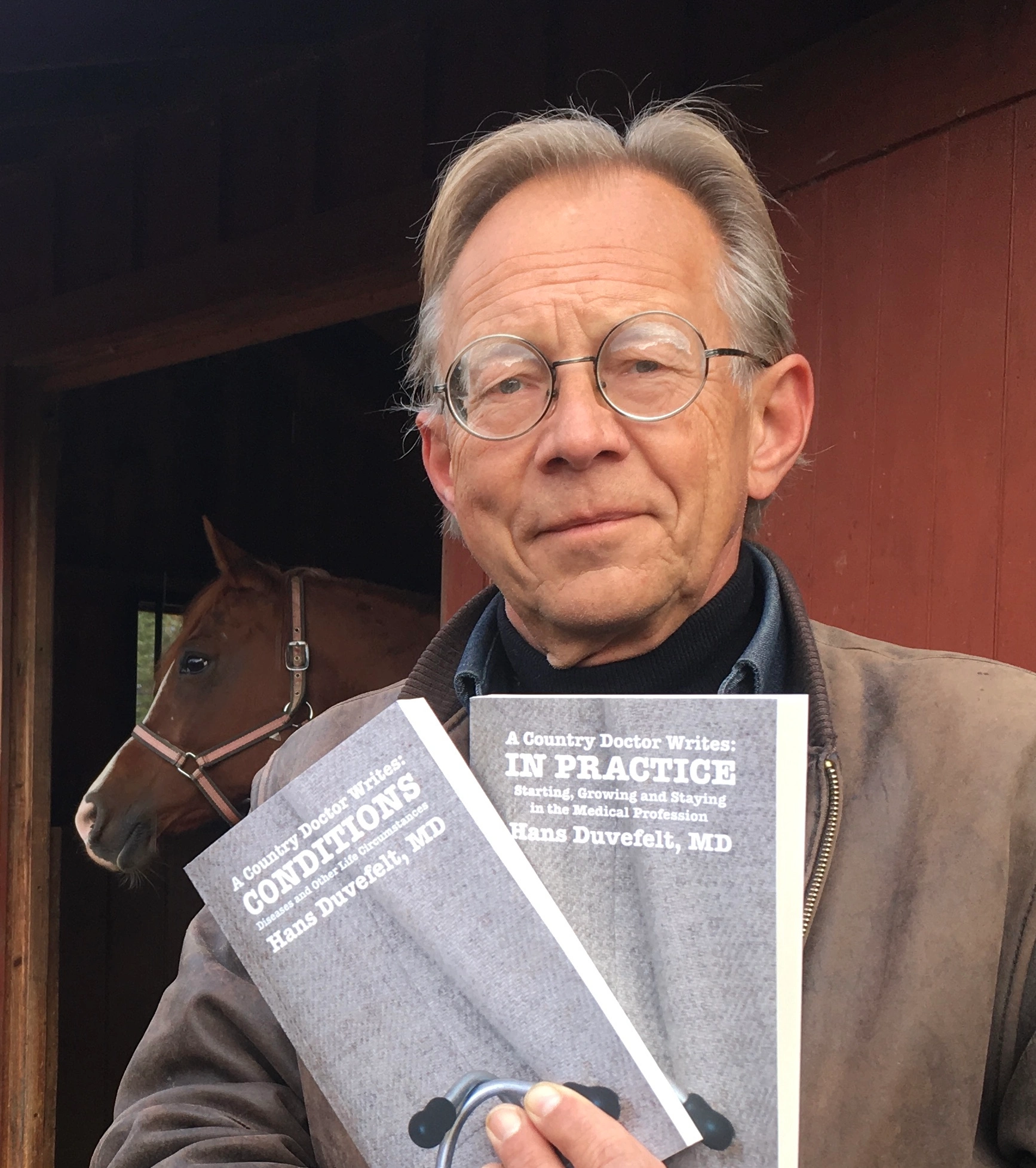
BOOKS BY HANS DUVEFELT, MD

CONDITIONS, Chapter 1: An Old, New Diagnosis

Top 25 Doctor Blogs Award

Doctor Blogs

Enter your email address to subscribe to this blog and receive notifications of new posts by email.

Mailbox

contact @ acountrydoctorwrites.com
Bookmark and Share
© A Country Doctor Writes, LLC 2008-2022 Unauthorized use and/or duplication of this material without express and written permission is strictly prohibited. Excerpts and links may be used, provided that full and clear credit is given.