Archive for the 'Progress Notes' Category


Signed, Harvey Cushing

A couple of birthdays ago, my wife wanted to buy me a book by or about William Osler. She had watched and listened as I read from his book on the history of medicine and as I searched online for quotes by him.

We had both heard of Harvey Cushing’s biography of Osler. On one of the larger online booksellers’ websites, she found the only available set at the time of this two-volume work, and ordered it.

A week or so before my birthday, I was on the phone with her during my lunch break when she opened the package. Of course, I didn’t know what she was doing. All I heard was the rustling of paper and then her words:

“Oh, my gosh!”

On July 18, I said the same thing when I opened volume one. There, on the first page, was a flowing inscription in brownish-black fountain pen ink, signed “Harvey Cushing”. The books were not sold with this fact stated, and would have fetched thousands of dollars if they had been.

This biography of the father of American medicine, written and signed by the father of modern neurosurgery, is a source of inspiration I often return to. It provided most of the phrases I used in my 2011 post “A Christmas Message to All Physicians from Sir William Osler”.

Osler, our continent’s foremost internist, may be many physician’s imaginary mentor, but Cushing was quite a man himself, and was America’s most renowned surgeon. He introduced blood pressure recording to the United States, for example. He became a professor at age 32, pioneered brain research and neurosurgery, described the disease we now call Cushing’s Disease, wrote 14 books, only 9 of which were about surgery, and earned honorary degrees in literature, science and the arts. After reaching the mandatory retirement age of surgeons in Massachusetts, 63, he continued to teach and also worked extensively as a military surgeon.

Thomas P. Duffy, in a 2005 article entitled “The Osler-Cushing Covenant”, writes about the two men:

“In 1900 William Osler established a friendship with Harvey Cushing that encompassed the personal and professional aspects of their lives for over two decades. Their shared participation in the covenant of medicine shaped an intense friendship and mentoring relationship that profited both individuals immeasurably. The choice of Cushing as the recipient of Osler’s mentoring had its origins in their rearing, avocations, and in the way of life that they shared. In Cushing, Osler identified a surrogate son who joined with him in defining the course of medicine and surgery over the next century.”

Osler, twenty years older than Cushing, opened his home to Cushing, as he had done to many other students, but with Cushing, the friendship also included Cushing’s young wife and their children, who knew William and Grace Osler as Aunt and Uncle.

In a twist of fate, Osler’s own son, Revere, born around the time Osler and Cushing first met, was critically wounded at age 21 in World War I, and was taken to a field hospital where the surgeon on duty was Harvey Cushing. Revere’s life could not be saved, and every year on the anniversary of his death, Osler wrote to Cushing, expressing his relief that his son had died in Cushing’s presence.

At Osler’s funeral, Cushing delivered a eulogy, in which he referred to Osler as his “spiritual father”. Osler’s widow then asked him to write her husband’s biography, a task that took him four years to complete. The 1,400 page book earned him a Pulitzer Prize in 1926.

Two quotes by Harvey Cushing speak of his own compassion and optimism:

“A physician is obligated to consider more than a diseased organ, more even than the whole man – he must view the man in his world.”

“The capacity of man himself is only revealed when, under stress and responsibility, he breaks through his educational shell, and he may then be a splendid surprise to himself no less than to this teachers.”

Of Osler, his mentor and father figure, Harvey Cushing writes:

“He advanced the science of medicine, he enriched literature and the humanities; yet individually he had greater power. He became a friend of all he met – he knew the workings of the human heart metaphorically as well as physically. He joyed with the joys and wept with the sorrows of the humblest of those who were proud to be his pupils. He stooped to lift them up to the place of his royal friendship, and the magic touchstone of his generous personality helped many a desponder in the rugged paths of life. He achieved many honors and many dignities, but the proudest of all was his unwritten title, the Young Man’s Friend.”

Words of a son; signed, Harvey Cushing.

Twenty Questions

Adrian Bell didn’t look dehydrated, but his diarrhea had come and gone for a week and a half when I saw him a few weeks ago.

“Is anyone else sick with the same thing?” I asked, beginning my usual line of questioning.

“No”, answered Eleanor, his wife.

“Have you had any water to drink from a new or unknown source, or have you traveled away from home?”

“No”, both answered in unison.

“Any new foods that only you ate or that you don’t normally eat? Are you a big milk drinker?” I added, thinking about secondary lactose intolerance.

Still, negative answers.

“Any chills, fever, belly pain…” my questioning continued.

Nothing.

“Have you had any antibiotics prescribed by any other doctor?” I asked, because we have had a flurry of Clostridium Difficile infections in our community, which is something we didn’t have to worry about years ago. We had three cases recently at the nursing home, where Eleanor volunteers.

Still, “no”.

“Anything else going on, even if it seems unrelated?” I finished my questioning as I motioned for Adrian to get up on the exam table.

“I have had some joint pains”, he answered.

After an unremarkable physical exam, I ordered some lab tests, including inflammatory markers, a stool culture and C. Difficile test. I gave dietary instructions and we set up a follow-up appointment for a few days later.

At his follow-up visit, everything was the same and all the tests were normal. I sighed internally.

“Do you think it may be Beaver Fever?” Adrian and Eleanor both leaned towards me. “We’ve heard of an awful lot of people downstate who’ve had that.”

“I haven’t seen a case of giardiasis around here in years. How do you think you may have gotten that?”

“Well, two weeks before this started, I fell in a beaver pond in the woods in back of our property. I was checking out an old four wheeler trail….”

“Fell in a beaver pond…” I kicked myself for not having ordered a test for ova and parasites, but, of course, they can be unreliable.

“I think we’ve got to put you on some medication and do another stool test”, I said, thinking to myself that I now have one more question for future diarrhea assessments.

Medicine is like twenty questions sometimes. If you don’t ask the right questions, you don’t get the right answers.

When the Doctor is the Treatment

“To prevent disease, relieve suffering and to heal the sick – this is our work”        

                                                                                          William Osler

“The function of meditation practice is to heal and transform”        

                                                                                         Thich Nhat Hanh

I am not a terribly outgoing person, but more than occasionally in my day as a rural physician, there are expressions of joy and gratitude, hugs and pats on shoulders, moist eyes, failing voices and pensive moments of shared silence. I am never good at small talk in social situations in general, but in the exam room, I always seem to know what to say, no matter what the situation is.

It is as if my role as a doctor gives me the courage and inspiration to “be” the healing presence my patient needs in that moment. It is not an act, but more like being carried by a force that hones my senses and guides my efforts.

Medicine involves archetypal relationships, as there have been sick persons and healers through all of human history. Physicians embody an apostolic profession, with knowledge and wisdom passed on between generations of physicians since Hippocrates’ era.

In our lifetime, these aspects of medicine have been forgotten, ignored or disputed by many, but today’s neurobiology has brought them back into the discussion of what physicians are to their patients.

Eric Cassell, in his book “The Nature of Suffering and the Goals of Medicine”, tells the story of an asthmatic physician, whose disease was out of control until a wise physician treated him as a patient instead of a colleague:

“A physician I know told me about the treatment for his asthma. He was taken care of by a wonderful chest physician whose skills he had seen demonstrated many times before and since. He was on high doses of prednisone (a cortisone like drug) and other medications for many months but he could not seem to get off the drugs without getting sick again. He would meet his doctor in the hospital corridor and ask what to do next. The doctor-patient did what was suggested but to no avail. His own knowledge of asthma was not inconsiderable but that was no help either. He told me that he could not get his friend and colleague to treat him like a patient. Finally, desperate, he went to another doctor whose specialty was asthma. The new physician promptly made my informant into a patient. He told him what to do (what he said seemed the same as what had been previously tried) and scheduled office visits frequently and regularly, and within six months my friend was off all medication. What was the difference? It was not the medications or their schedule – they were the same (at least at the start). The difference, I believe, was that the second physician made him become a patient. Once that happened, the new doctor was able to begin “pulling strings” inside his doctor-patient’s body. No one knows how this comes about or how the physician is able to have an influence on the patient’s illness apart from explicit medical or surgical treatments, but this is the process involved. Current research is increasingly revealing the influence of thinking on immunity and other body functions, so there should be little surprise that doctors are also able to affect the patient’s physiological process. No one doubts that doctors have an influence on their patients’ mental processes – we are of a piece, and affecting one part alters the whole.”

The first physician gave competent clinical advice, but the patient was not helped. The second physician embraced the role and responsibility of the healer. He created, or entered, the space (metaphysical, meditational, Divine, Reiki – or quantum physical if you will) where healing is possible.

Hippocrates said these words 2,500 years ago, and modern science is now realizing the truth and wisdom behind them:

“Natural forces within us are the true healers of disease.”

All we do is facilitate.

A Country Doctor Acquitted

A Family Physician in the northernmost part of the United States was acquitted last week of charges stemming from years of guideline insubordination.

Interviewed this weekend by members of the local press while he was cleaning the stall of his favorite horse, the silver-haired doctor declined making comparisons between the manure he was shoveling and the now-abandoned numeric cholesterol guidelines, and would not comment on his former accusers’ fall from their pedestals. He made no reference to “Cholesterol Guidelines and the Bachelor with Platform Shoes”, the very first post on his anonymous blog, “A Country Doctor Writes”.

Instead, he turned philosophical.

“I remember the first cholesterol medication, Atromid”, he said. “It lowered cholesterol but still increased the risk of death by almost 50%. We should all have paid attention to that when it was taken off the market more than ten years ago. You could have satisfied the requirement to reach specific lipid targets with a dangerous drug like that, but not have helped a single patient by prescribing it. Right now, almost the same thing is happening with drugs like Zetia, Tricor and niacin”

Opening a bag of clean pine shavings for the stall floor, the Swedish-born physician continued:

“Health care has changed from a profession to an industry, and the founding principles for physicians, like ’First, do no harm’, have lost their central place.”

“In Sweden”, he continued, “the oldest laws regulating the practice of medicine state that it is the physician’s duty to practice in accordance with ’science and time-tested experience’. Cholesterol treatment is a good example of a practice that drifted into the realm of speculation instead of staying on firm scientific ground. Instead of waiting for outcomes data such as heart attack rates, doctors were more or less willingly jumping on the bandwagon, prescribing unproven and sometimes unsafe medications because pseudoscience extrapolated from surrogate endpoints like LDL and CRP levels.”

“So what did you do when that was the guideline you were working under”, asked one of the reporters.

“I told my patients what the science told us and what the guidelines recommended, and I had the patient make an informed decision, which is pretty much what our new marching orders are.”

“So, you are pleased with the new guidelines?”

The bespectacled sixty-year old physician sighed.

“I am relieved and saddened at the same time”, he answered. “I am relieved we aren’t told to do things that have no basis in science, but I am sad that there has to be guidelines that essentially say ’help the patient understand what we know about heart disease prevention and help them make an informed decision’ – I mean, do we really need a guideline for something as basic as that? Isn’t that the way we are supposed to work anyway?”

He hesitated, then added: “Sometimes clinical guidelines remind me of overly basic consumer information. There is a Swedish joke about one of their neighboring countries. Supposedly glass bottles there are inscribed on the bottom with the words Open at Other End. But of course Norwegians aren’t really that silly, and doctors aren’t either. We’re supposed to be critically thinking professionals, aren’t we?”

With that, he hoisted the last bags of horse manure over his shoulders and brought them down to the dumpster to be hauled off the property. “Fly and odor control – keep the manure away from the barn”, he explained.

On the side of the green four cubic yard dumpster was a warning sign: Do not play on or in.

“I guess everybody has guidelines these days” were his parting words to the reporters before he walked off with a spring in his step and disappeared behind the door of his little red farmhouse.

Hippocrates’ First Aphorism

“Life is short, and Art long; the crisis fleeting; experience perilous, and decision difficult. The physician must not only be prepared to do what is right himself, but also to make the patient, the attendants, and the externals cooperate.”

Hippocrates was a wise man. In an era where the causes of most diseases, even the functions of many organs, were unknown, he made detailed and astute observations that allowed him to become a master of prognosis.

His first aphorism is not often quoted in its entirety. When I first read it, I was struck by especially the last two words, “externals cooperate”. It makes me think that perhaps doctoring a few thousand years ago might have been a lot like today. We aren’t the first physicians to deal with demands beyond those of the clinical circumstances, the patient and his or her family.

I can only imagine who the externals were in Hippocrates’ time, but I am thoroughly familiar with who they are today: They are insurance company doctors and executives, pharmacy benefit managers and others, who say yes or no to our diagnostic and treatment plans. They are the ghosts in the exam room when patients and doctors try to make plans together.

The phrase “experience perilous” seems to imply that the gaining of experience is fraught with danger, but an alternate interpretation is that relying only on one’s own experience can be misleading. Hippocrates often emphasized the need to apply the known science to the practice of medicine.

The central point is that it takes time and effort to learn the art of medicine, which is sometimes glossed over in our fast moving society.

The volume of known science has obviously multiplied since Hippocrates’ time, and we can each know only a small fraction of it. But with all the available information now instantly searchable, we can become dangerous to our patients if we apply things without knowing them well through education and experience.

So, in the spirit of Hippocrates:

The artful practice of medicine requires understanding of the science, technical mastery of the craft, and wisdom

           and

Facts can be learned by anyone; experience is earned through years of practice; wisdom is granted to us only if our hearts and minds are open, in our practice of medicine, and in our lives.


I just realized none of the posts show on an iPad or a computer, but they do show on an iPhone. WordPress is working on this. In the meantime, please visit my Substack.


Osler said “Listen to your patient, he is telling you the diagnosis”. Duvefelt says “Listen to your patient, he is telling you what kind of doctor he needs you to be”.


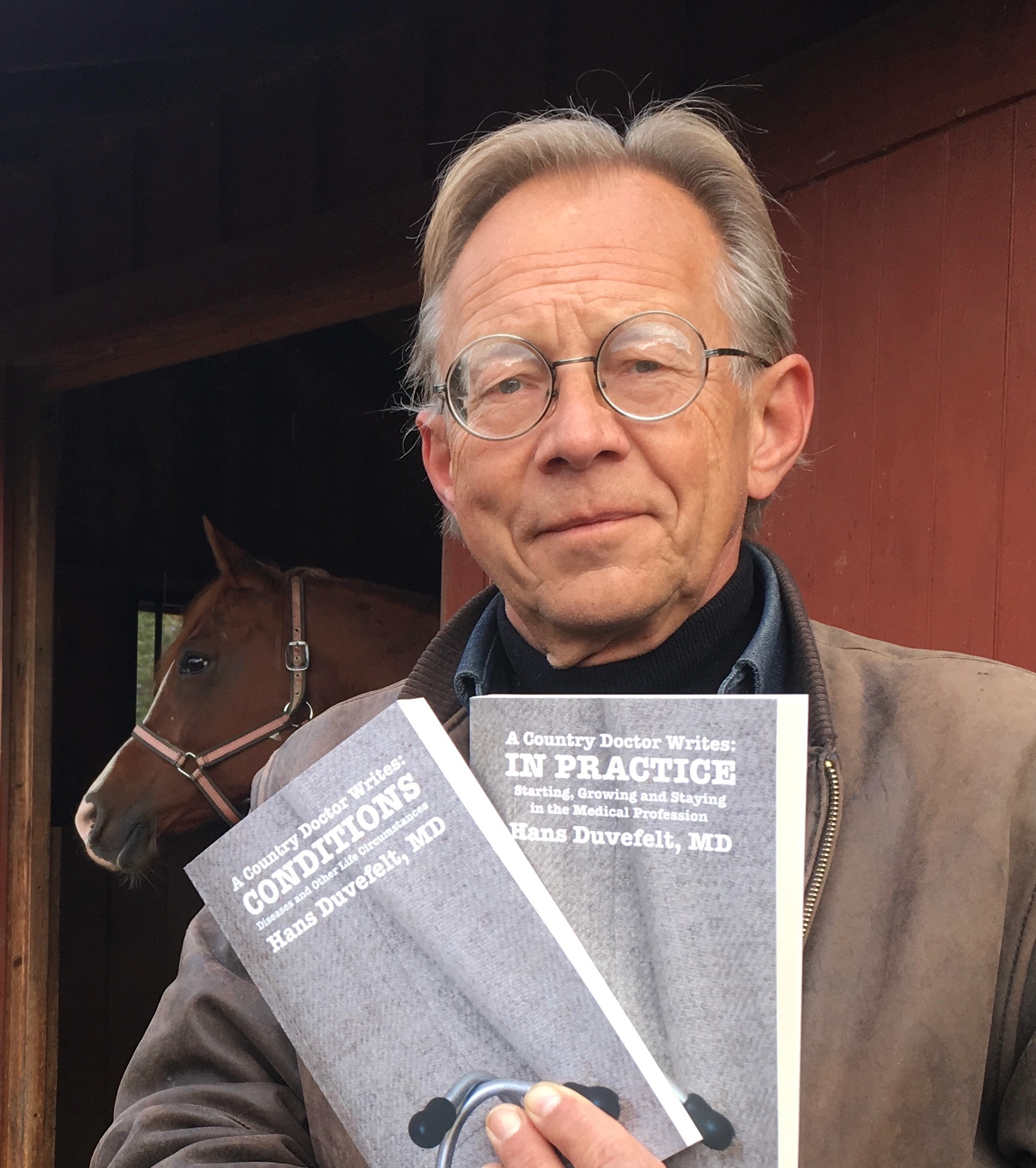
BOOKS BY HANS DUVEFELT, MD

CONDITIONS, Chapter 1: An Old, New Diagnosis

Top 25 Doctor Blogs Award

Doctor Blogs

Enter your email address to subscribe to this blog and receive notifications of new posts by email.

Mailbox

contact @ acountrydoctorwrites.com
Bookmark and Share
© A Country Doctor Writes, LLC 2008-2022 Unauthorized use and/or duplication of this material without express and written permission is strictly prohibited. Excerpts and links may be used, provided that full and clear credit is given.