Archive for the 'Progress Notes' Category


Demonic Dreams and Irreversible Psychosis from Commonly Prescribed Big Gun Medications

My patient, a rugged sixty year old with massively muscular forearms, gray chest hair at the V of his denim shirt, and a voice that suggested years of liquor and unfiltered cigarettes, lowered his voice and leaned forward.

“I’m not usually scared of anything, but for three nights now, ever since I started taking the Levaquin for this pneumonia, I have had the most horrific nightmares. I can’t even talk about them, that’s how terrifying they are. I have never been so scared in my life. You’ve got to get me on a different antibiotic, or I would rather let the pneumonia run its course.”

I had never heard of such a side effect from this commonly used broad spectrum antibiotic, but a quick search on my iPhone yielded a long list of references to this phenomenon.

I agreed that he should stop his antibiotic, and prescribed a combination of two others that would be an appropriate treatment for him. I cautioned him to let us know if he started to feel worse on the new medications.

That night I did some research. It turns out levofloxacin and several other quinolone antibiotics can affect GABA receptors.

“CNS effects of quinolones correlate with its binding to the receptors for γ-amino butyric acid (GABA) in the brain. GABA is an inhibitory neurotransmitter of brain. Quinolones prevent normal binding of GABA with their receptors. So it increases CNS stimulation.[4] There are reports on quinolones directly activating N-methyl-d-aspartate (NMDA) and adenosine receptors. Thus, under specific conditions of sufficient CNS penetration, associated with antagonism of inhibitory pathways (GABA) and stimulation of excitatory pathways (NMDA, adenosine), observable CNS symptoms are manifested. This mechanism explains the pathogenesis of the acute anxiety and insomnia in the above cases with levofloxacin therapy.[5,6] These mechanisms are even correlating with non-dopaminergic pathways of psychosis. It is even possible that the above-said cases might have progressed on to psychosis.”

https://www.ncbi.nlm.nih.gov/pmc/articles/PMC3410005/

I thought back on another medication that I had seen cause bizarre and horrific psychological effects. The Swedish made antipsychotic quetiapine, or Seroquel, has caused frightening demonic visions and auditory hallucinations in a few patients I have encountered. While it seems unfortunate that an antipsychotic, often used off label for benign things like insomnia, can cause psychiatric symptoms, it isn’t totally unimaginable that when we try to chemically manipulate the mind, things can go wrong. I wondered if others had noticed the same side effect and if there was a known mechanism behind it.

It didn’t take long before I found that Seroquel can cause an upregulation of dopamine receptors and that, if treatment isn’t stopped, irreversible psychosis can develop with long term use.

“Theoretical model illustrating the ability of chronic treatment with antipsychotic medication to induce dopamine supersensitivity. It is proposed that with chronic antipsychotic treatment (synapse on the right), there are increases in the numbers of dopamine D2 receptors (D2) and D2 receptors in a high-affinity state for dopamine (D2High) in the striatum, without significant changes in presynaptic dopamine release, synthesis, or reuptake. In turn, the D2 receptor upregulation enhances D2-mediated dopamine signaling, shown by the red arrows, thus producing a state of supersensitivity to dopamine agonist stimulation. The functional consequences of this dopamine supersensitivity would include antipsychotic treatment failure, supersensitivity-related psychosis, and movement disorders.”

https://www.karger.com/Article/FullText/477313

I was, as so often in my work, again humbled by the double edged power of the medications we prescribe for our patients, and by the tremendous responsibility we have of choosing the right medicine for the right purpose. I was reminded of the difference in mentality I observed when I first moved from Sweden to this country:

There, if the first treatment I chose didn’t work, it was nothing to be ashamed about. It simply justified using the “bigger guns”.

Here, if my first, and safest, treatment choice doesn’t work, it is a “treatment failure”. We are constantly tempted to prescribe the strongest medicine, which is often the most dangerous one.

My Triple Aim of Medication Assisted Treatment for Opioid Addicted Patients

My second foray into Suboxone treatment has evolved in a way I had not expected, but I think I have stumbled onto something profound:

Almost six months into our in-house clinic’s existence, I have found myself prescribing and adjusting treatment for about half of my MAT patients for co-occurring anxiety, depression, bipolar disease and ADHD as well as restless leg syndrome, asthma and various infectious diseases.

Years ago, working in a mental health clinic, we had strict rules to defer everything to each patient’s primary care provider that wasn’t strictly related to Suboxone treatment. One problem was that many of our patients there didn’t have a medical home or had difficulty accessing services. Another problem was that primary care providers unfamiliar with opioid addiction treatment were uncomfortable prescribing almost anything to patients on Suboxone.

This time around, the majority of my patients come to our clinic for all of their health care, or decide after being in our program to establish as primary care patients. I am the PCP for a good portion, and as the Medical Director for my clinic I not only have access to their medical records, but I am thoroughly familiar with my primary care colleagues’ preferences, practice styles and personal clinical strengths and weaknesses. That allows me to know when it works best to steer patients toward separate appointments for, say, their anxiety, and when it works better to establish a treatment plan right then and there as they become increasingly stable on their Suboxone.

Being involved in our group sessions, seeing clients on a weekly basis, even if briefly sometimes, and sharing impressions in post-group debriefings with my substance abuse counselor, Behavioral Health Director and our dedicated MAT coordinator has given me a profound insight into the personalities and circumstances of my Suboxone patients. The sheer depth of my insight from our comprehensive approach has allowed me to initiate life changing medication treatments for a large handful of patients beyond merely Suboxone.

Through a new grant we will soon also have a case manager, who will help our patients navigate their way back into mainstream society.

It’s funny: I had pictured Suboxone treatment as a carve-out niche in my practice, but it has become the most comprehensive, integrated thing that I do.

Doctors and CEOs Need Time to Think

I’ve always likened the job of a primary care physician to that of a Chief Executive Officer of a small business. Family doctors manage the “business” of delivering and coordinating care for more than a thousand patients at an average cost, in the United States, of $8,500 per year – an $8-$12 million business. Because the actions or inactions of the PCP impact the need for, and cost of, specialist and hospital care “downstream” from the primary care office, I think of this as “our” business.

Because of this, I subscribe to the Harvard Business Review. I figure doctors must have some degree of common business sense. And in my medical education, the slant of the business education I got was mostly relevant in the context of Socialized Medicine. I think that is helpful and useful in my practice in a medically underserved area, but there’s more to primary care than serving the underserved on a national level.

Reading the article “How CEOs Manage Time” in the current issue of HBR, I was struck by how light the “grueling” schedule of an American CEO is compared to that of an ordinary family practitioner: 9.7 hours of work each weekday and 3.9 hours on each weekend day.

I was also intrigued by the statistic that 61% of CEOs’ time is spent face to face and 24% on electronic communication. Only an unspecified fraction of 15% is spent on reading written reports.

Undocumented as far as both CEOs and physicians, as far as I know, is how much time we spend researching and thinking. A pullout quote rings true for doctors as well:

I do think it is crucial for primary care doctors to consider the value of their time in a businesslike manner. I know our employers do, but I suspect there is much confusion and disagreement about how to make the best use of our time. In simpler times, doctors just saw patients and brought in professional fees commensurate with their efforts.

But in today’s climate, where outcomes data is starting to determine office revenue and where the health of casual or infrequent visitors to our offices affects our bottom line, we need to claim the value of our time – and I feel strongly that we must leverage our knowledge for the biggest possible impact within our organizations and for our patient populations.

That impact will be less and less determined by line worker type activities such as traditional face to face office visits, and more and more by how we guide and coordinate more and more aspects of our enrolled patients’ health care.

We have added layers of staff to do this coordination work, but in many cases physicians have been peripheral, remaining too heavily involved in the traditional physician activities and not lending their medical common sense and “street smarts” to what could easily become a bloated and disconnected layer of bureaucracy.

Just like a CEO can be the originator and spokesperson for a corporate philosophy while making sure there are middle managers who can reinforce the message on a daily basis, we must be able to shape the overarching medical philosophy and the clinical pathways within our organizations. By doing that, we can more safely delegate tasks while also constantly overseeing and officially promoting and supporting the work that is done by care managers, health educators, nurses and medical assistants.

But just like CEOs, we can’t be spending all our time in meetings, face to face encounters and answering electronic messages. We need some time to research, consider and create. And the more our routine tasks spill over into nights and weekends, the less chance there is that we can think creatively and leapfrog our organizations into the next level of healthcare delivery.

Saturday Clinic

I volunteered to work Saturdays. And to do walk-ins. And to take all comers, not just our patients.

It has been an interesting journey.

Some clinics put their newest, least experienced clinicians on the very front line of doing urgent care. Here, it’s the opposite. I’ve got 39 years under my belt and I see everything from sore throats to people who left the emergency room in the middle of a workup because their anxiety kept them from waiting for their CT scan to rule out a blood clot in their lungs.

The waiting room fills up, and it’s just me and a medical assistant.

It’s refreshing and rewarding to see things that can be fixed in a matter of minutes: embedded ticks, corneal foreign bodies, pieces of hearing aids deep inside ear canals, bursitis cases and nursemaid’s elbows.

My very first paychecks as a doctor came from weekend stints back in Sweden while I was still in medical school. At least back then, they had a system where senior medical students could be given temporary privileges as locum tenens physicians with minimal supervision. I worked weekends, Friday night to Monday morning, seeing patients that weren’t sick enough to need the full resources of the emergency room in a hospital about an hour away from my medical school.

Already then, I thrived on not knowing what challenge was next up. Whatever it is, I’ll do my best, I figured. And at that point, the resources of the emergency room were right down the hall.

Here, the emergency room is 20 miles away, but the ambulance is only a couple of miles away and I’m not the stand-in EMT the way it was when I first came here.

Primary Care is turning into a specialty of chronic care and public health. Some of the chronic care we do is really what internal medicine specialists used to do before they all wanted to subspecialize or go into hospital medicine. And much of the acute care we trained for is now being done by emergency and urgent care physicians as well as PAs and Nurse Practitioners.

And Public Health is a very different thing from what doctors of my generation trained for. I still feel it is better suited for nurses than doctors. I didn’t attend medical school for 5 1/2 years and do two residencies just to blindly follow rules; I trained to know when rules and guidelines do and don’t apply.

Doctors are trained to identify the exceptions from the rule, which is a useful skill on the front lines. Which migraine is really a brain tumor? Which asthma attack is a foreign body in the trachea? Which rash is a sign of leukemia?

I worked hard today, but I don’t feel drained; I feel energized, because I cured a few people, and closed a few cases. Chronic care with no acutes wears on you. The extra work I do may seem like a burden to some, but I find it rejuvenating. It brings a healthy balance to my work week.

Self-Driving Cars are Like Most EMRs

Drivers are distracted klutzes and computers could obviously do better. Self driving cars will make all of us safer on he road.

Doctors have spotty knowledge and keep illegible records. EMRs with decision support will improve the quality of healthcare.

The parallels are obvious. And so far the outcomes are disappointing on both fronts of our new war against human error.

I remember vividly flunking my first driving test in Sweden. It was early fall in 1972. I was in a baby blue Volvo with a long, wiggly stick shift on the floor. My examiner had a set of pedals on the passenger side of the car. At first I did well, starting the car on a hill and easing up the clutch with my left foot while depressing and then slowly releasing the brake pedal with my right forefoot and at the same time giving the car gas with my right heel.

I stopped appropriately for some pedestrians at a crosswalk and kept a safe distance from the other cars on the road.

A few minutes later, the instructor said “turn left here”. I did. That was the end of the test. He used his pedals. It was a one way street.

Three times this spring, driving in the dark between my two clinics, I have successfully swerved, at 75 miles (121 km) per hour, to avoid hitting a moose standing in the middle of the highway. Would a self driving car have done as well or better? Maybe, maybe not.

Every day I get red pop up warnings that the diabetic medication I am about to prescribe can cause low blood sugars. I would hope it might.

Almost daily I read 7 page emergency room reports that fail to mention the diagnosis or the treatment. Or maybe it’s there and I just don’t have enough time in my 15 minute visit to find it.

For a couple of years one of my clinics kept failing some basic quality measures because our hasty orientation to our EMR (there was a deadline for the incentive monies to purchase EMRs) resulted in us putting critical information in the wrong “results” box. When our scores improved, it had nothing to do with doing better for our patients, only clicking the right box to get credit for what we had been doing for decades before.

Our country has a naive and childish fascination with novelties. We worship disrupting technologies and undervalue continuous quality improvement, which was the mantra of the industrial era. It seems so old fashioned today, when everything seems to evolve at warp speed.

But the disasters of these new technologies should make us slow down and examine our motives. Change for the sake of change is not a virtue.

I know from my everyday painful experiences that EMRs often lack the most basic functionalities doctors want and need. Seeing a lab result without also seeing if the patient is scheduled to come back soon, or their phone number in case they need a call about their results, is plainly speaking a stupid interface design.

I know most EMRs weren’t created by doctors working in 15 minute appointments. I wonder who designed the software for self driving cars…


I just realized none of the posts show on an iPad or a computer, but they do show on an iPhone. WordPress is working on this. In the meantime, please visit my Substack.


Osler said “Listen to your patient, he is telling you the diagnosis”. Duvefelt says “Listen to your patient, he is telling you what kind of doctor he needs you to be”.


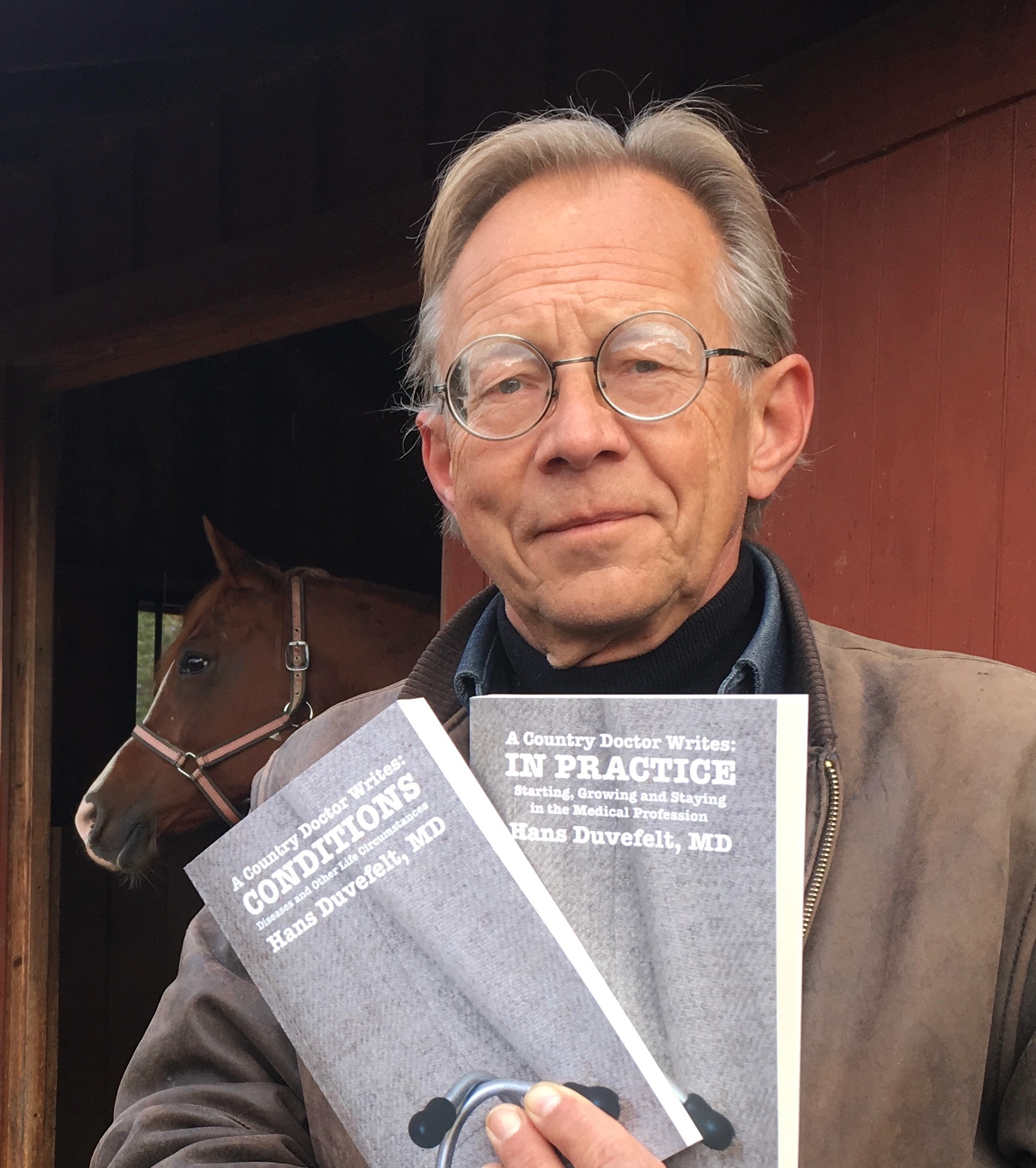
BOOKS BY HANS DUVEFELT, MD

CONDITIONS, Chapter 1: An Old, New Diagnosis

Top 25 Doctor Blogs Award

Doctor Blogs

Enter your email address to subscribe to this blog and receive notifications of new posts by email.

Mailbox

contact @ acountrydoctorwrites.com
Bookmark and Share
© A Country Doctor Writes, LLC 2008-2022 Unauthorized use and/or duplication of this material without express and written permission is strictly prohibited. Excerpts and links may be used, provided that full and clear credit is given.