Archive for the 'A Country Doctor Reads' Category


A Country Doctor Reads: August 10, 2019 – High Blood Pressure is High Blood Pressure, No Matter Where or When

I learned in medical school (1974-79) that white coat hypertension was not clinically important and should not be treated. Somewhere along the line I was also told that people with little variability in their blood pressure fared less well than people whose blood pressure varied according to their circumstances.

As late as 2008, articles were pointing out that awareness of these phenomena could avoid misdiagnosis and unnecessary treatment.

White coat hypertension is an important clinical problem given its potential to result in misdiagnosis and possibly inappropriate drug treatment. Although ambulatory and home BP measurements are more accurate and predictive of target organ damage, physicians’ office measurements continue to be the criterion standard. That being the case, the sources of measurement error that occur in the office setting remain an impediment to the accurate diagnosis and treatment of hypertension. Data from several studies show that who takes the BP and how it is taken (ie, by a person or an automated device) have a substantial effect on the measurement.24 Our findings indicate that measurements taken by physicians appear to exacerbate the white coat effect more than other means. We suggest that one way of addressing this problem is to modify the method by which BP is measured in the office setting given the wide availability of reliable and validated automated BP monitors that are suitable for both office and home use. Similarly, home BP monitoring has been shown to predict target organ damage as well as (or better than) ambulatory monitoring25 and, thus, is superior in this regard to traditional office measurements. Thus, BP taken by an automatic device, while the patient is alone in the physician’s office, may provide the best means of avoiding a hypertension misdiagnosis.
— Read on jamanetwork.com/journals/jamainternalmedicine/fullarticle/773457

In June of this year, the Annals of Internal Medicine published a widely cited paper that demonstrated that people with white coat hypertension (WCH or WCHT) have up to twice the death rate of people who don’t have it.

“Untreated WCH, but not treated WCE, is associated with an increased risk for cardiovascular events and all-cause mortality. Out-of-office BP monitoring is critical in the diagnosis and management of hypertension.

— Read on www.acc.org/latest-in-cardiology/journal-scans/2019/06/24/13/01/cardiovascular-events-and-mortality-in-wch

An old article I found explains that white coat elevations can be transient or sustained and can happen in people with or without hypertension. So what the Annals authors mean by “treated WCE” confuses me. If a white coat elevation is sustained, isn’t that the same as white coat hypertension?

White coat hypertension (WCHT) and white coat effect (WCE) are often thought to be of the same entity. They are in fact different conditions which carry distinctive definitions and prognostic significance. WCHT is diagnosed when office blood pressure (OBP) is ≥140/90 mmHg on at least 3 occasions, while the average daytime or 24-hour blood pressure is <135/85 mmHg. It is common with 15% prevalence in the general population and may account for over 30% of individuals in whom hypertension is diagnosed. Although individuals with WCHT were reported to have a better cardiovascular (CV) prognosis when compared to those with sustained hypertension and masked hypertension; they were also shown to have a greater prevalence of target organ damage (TOD) and metabolic abnormalities than that of normotensive subjects. In contrast, WCE is defined as the transient elevation of OBP induced by the alerting response to a doctor or a nurse. WCE can occur in both normotensive and hypertensive
— Read on www.ncbi.nlm.nih.gov/pmc/articles/PMC4170363/

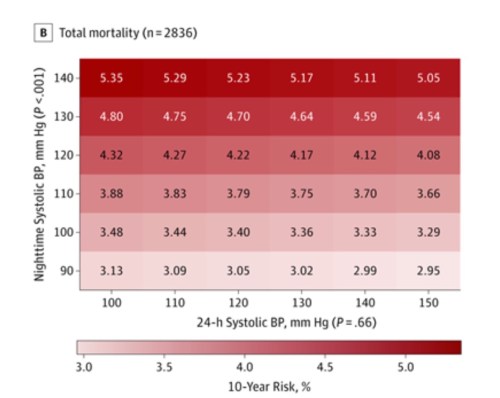
Nevertheless, the most recent piece published on this topic reveals that not only 24 hour measures of blood pressure determine outcomes, but nighttime blood pressure does to the same degree.

“In this population-based cohort study, higher 24-hour and nighttime BP were significantly associated with greater risks of death and a composite cardiovascular outcome, even after adjusting for other office-based or ambulatory blood pressure measurements.

— Read on jamanetwork.com/journals/jama/fullarticle/2740719

So, with the possible exception of brief elevations from pain or trauma (I think and hope that still holds true), I guess if we see it, we treat it.

And my clinic just got some ambulatory Blood Pressure monitors…
A Country Doctor Reads: July 28, 2019

Where Have All The Young Docs Gone? – NEJM

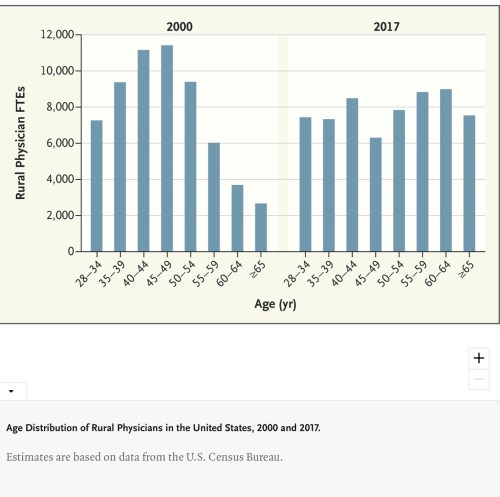
The New England Journal of Medicine published a sobering piece about the rapid changes in age distribution among rural physicians. They also point out that the aging and chronic disease burden of the US rural population is expected to increase demand for rural medical providers.

“Maintaining physician supply in rural areas has important equity implications, given that, as compared with more urban populations, rural residents are likely to be older and poorer, are more commonly uninsured, and have lower life expectancy.

The article by Skinner et al makes a few suggestions about what to do to forestall what they describe as an evolving crisis, from loan repayment to hiring more Nurse Practitioners.

I think these types of strategies are unlikely to reverse what is a bigger trend in our society. As a 66 year old physician moving back to Caribou, Maine, I see the challenges of my community all around me: A more than half empty shopping mall in Presque Isle, the closing of a 100 employee customer service call center in Caribou, the empty store fronts lining Main Street in Van Buren. It isn’t just the physician work force that is changing, de demographics of rural America are changing.

It’s strange in a way, when our world is increasingly well connected and distances appear to mean less and less (if only my Internet connection were better and less expensive…) why being physically located in an urban area is so attractive.

In rural New England people don’t need to lock their cars or their houses, they don’t have to stand in line, sit in traffic or feel crowded by the noise around them. But they do need jobs that pay a decent wage. That’s the problem here. Fix the economy (if you can) and the health disparities will diminish.

As the number of younger physicians entering rural practice has declined, the rural physician workforce has grayed. By 2017, more than half of rural physicians were at least 50 years old, and more than a quarter were at least 60. In contrast, the number of urban physicians under 50 grew 12% from 2000 to 2017, and in 2017 only 39% of urban physicians were 50 years of age or older and only 18% were at least 60.
— Read on www.nejm.org/doi/full/10.1056/NEJMp1900808

————–

Switch

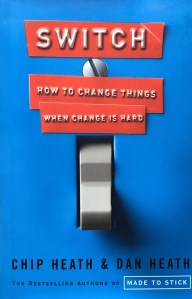
Moving into my new home office I constantly run into books I bought and read years ago but have thought little of since. One book I haven’t read since I first bought it but often keep referring to is “Switch” by Chip and Dan Heath. Subtitled “How to change things when change is hard”, the book has given me a lot to think about as a doctor, whose job often involves trying to cause my patients to change for the purpose of achieving better health.

The three steps to consider when asking someone, even yourself, to change are described, metaphorically as:

1.) Direct the rider. This is what we doctors usually try to do when we tell our patients to eat less, exercise more or take their pills every day.

2.) Motivate the elephant. This is harder, because it involves addressing the subconscious, which cares very little about things like logic or what’s best for us.

3.) Shape the path. If we make it easier somehow to do the “right” thing than the “wrong” thing, people are more likely to do it.

The book has illustrations from all walks of life, from health care to teaching to sales. And, after all, practicing medicine is part teaching and part sales, too.

The central idea for me is how necessary it is to understand and communicate with the elephant, the Heath brothers metaphor for our subconscious. I guess moving our subconscious is not only like riding an elephant, but also a lot like moving horses into a new environment.

I can’t just tell these guys what I would like them to do, I have to find ways to motivate them that are natural for them, that they might want to do in some fashion anyway.

The notion of shaping the path is something I also keep coming back to. So many times we hear that people just aren’t doing what they’re supposed to do, when in fact we are being asked to do things that seem awkward, silly or even impossible.

The recent Boeing crashes due to a software redesign that may have looked good on paper but didn’t make any sense to airline pilots comes to mind.

Similarly, in my world, the “work flows” of modern EMRs may look all right to a computer programmer, but make little sense to health care personnel.

So often in our culture, people are blamed for things that are systems problems and not people problems at all.

SWITCH feels as up to date today as it did the first time I read it.

A Country Doctor Reads: July 21, 2019 – Big Data

Big Data and the Patient in Front of Us

In recent weeks I’ve come across some articles in the “lay press” about Big Data that contained a couple of eminently quotable statements about BIG DATA.

First, let me present a brief patient vignette:

This physician in his 60’s was taking low dose aspirin because that, the data showed, would decrease his heart attack risk. He was in compliance with current recommendations, at least one of them.

After several nosebleeds, this physician stopped the aspirin. He was now out of compliance but free from his inconvenient apparent complication of treatment.

During the past year, the ASPREE study showed that aspirin would only benefit our hero if he had heart disease, which he doesn’t appear to have. He is now in compliance, doing what the Big Data is suggesting he ought to do.

Now, the two newspaper quotes that started me down this road of thinking:

1) “Data that doesn’t yield insight is just trivia.”
2) “Stories move data from the head to the heart.”

DATA WITH OR WITHOUT INSIGHT

An article in The Wall Street Journal describes how employers mine data from their employees activities, on their computers (sites visited, emails answered and so on), in their vehicles (speed, routes etc.) and on the phone (with whom, length of call etc.), but as one UPS representative pointed out, all that data isn’t worth anything if it doesn’t help you understand what’s going on:

“UPS confirmed it uses advanced analytics to sift through data in ways that help it better serve customers and drive efficiency. “Data that doesn’t yield insight is just trivia,” a spokesman says.”

https://www.wsj.com/articles/three-hours-of-work-a-day-youre-not-fooling-anyone-11563528611

STORIES MAKE DATA MEANINGFUL

The New York Times ran an article about “mystery shoppers” in healthcare facilities and how their work, which includes personal observations gathered while posing as patients and subsequent interviews with real patients in hospitals and clinics can make sense of otherwise confusing data:

Hospital leaders pore over reams of data. They review financial spreadsheets, patient satisfaction surveys and clinical outcome data. Secret shopper studies don’t replace that information. Rather, they attempt to give the data context.

“Stories move data from the head to the heart,” said Kristin Baird, president and chief executive of the Baird Group, a Wisconsin-based company that performs secret shopper and other consulting services for health care organizations. She has seen how patient stories that exemplify otherwise confusing trends in the data can influence health care executives powerfully.”

https://www.nytimes.com/2019/07/16/well/live/secret-shopper-hospital.html?smprod=nytcore-ipad&smid=nytcore-ipad-share

This reading made me curious. As a simple country doctor, I wanted to know what we really understand about Data in Medicine.

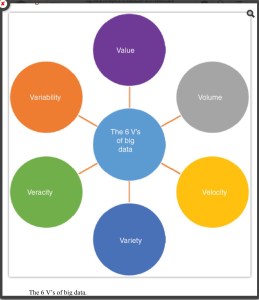
THE 6 V’S OF BIG DATA: Volume, Velocity, Variety, Veracity, Variability and Value

I found a 2018 article by Ristevski and Chen in the Journal of Integrative Bioinformatics that nicely illustrates the many facets of what people lump together as Big Data.

Seeing the succinct summary of the meaning of these six V-words immediately helped me feel I have a better grasp and comfort level thinking about how to approach the data that is constantly bombarding me as a physician.

“The volume of health and medical data is expected to raise intensely in the years ahead, usually measured in terabytes, petabytes even yottabytes. Volume refers to the amount of data, while velocity refers to data in motion as well as and to the speed and frequency of data creation, processing and analysis. Complexity and heterogeneity of multiple datasets, which can be structured, semi-structured and unstructured, refer to the variety. Veracity referrers to the data quality, relevance, uncertainty, reliability and predictive value, while variability regards about consistency of the data over time. The value of the big data refers to their coherent analysis, which should be valuable to the patients and clinicians.”

https://www.ncbi.nlm.nih.gov/pmc/articles/PMC6340124/

I will repeat and italicize the last sentence in this article:

“The value of the big data refers to their coherent analysis, which should be valuable to the patients and clinicians.”

So, how do we know how to apply all this Big Data, how do we make it relevant for the patient in front of us?

Harvard T.H. Chan School of Public Health posted this piece by Lisa D. Ellis on their website, describing a program called Measurement, Design, and Analysis Methods for Health Outcomes Research.

“Since diabetes patients act and respond differently to treatment due to many reasons, health care providers often cannot advise patients as to how they might respond given their personal characteristics simply because they do not have the required information,” Simonson points out.

The reason this crucial information is lacking is that “typically, no one clinical study can separate out the results by all the patient characteristics that might affect treatment,” Testa offers. “In addition, clinical drug trials do not typically measure how patients feel or how satisfied they are with their assigned treatment,” she says, adding, “In most clinical trials, the ‘true voice’ of the patient is usually silent.” To better capture this important component, Testa, Simonson, and their colleagues are pooling existing databases of diabetes patients with information gathered online and through social media.

https://www.hsph.harvard.edu/ecpe/value-of-health-outcomes-research/

Here, again, I will repeat and italicize the most salient sentence of my search result:

“In most clinical trials, the ‘true voice’ of the patient is usually silent.”

Not to get too heavily Jungian, but referring back to my recent writings about the Grail Legend and “Whom does the Grail Serve”, the obvious question here is “Whom does the Big Data serve?”

Primary care providers are perhaps the Parsifals of medical mythology.

“Central to the legend is that a simple man, a fool, needs to ask the simple question “whom does the Grail serve” in order for the wounded Fisher King to be healed. But Parsifal, who is such a person, heeded his mother’s advise “don’t ask too many questions” and missed his opportunity.”

https://acountrydoctorwrites.blog/2019/07/08/the-stages-of-a-mans-life/

A Country Doctor Reads: July 12, 2019

Basch Unbound—The House of God and Fiction as Resistance at 40 | Humanities | JAMA | JAMA Network

The 1978 novel The House of God is a fictional account based on the internship experience of Samuel Shem (Stephen Bergman) at Beth Israel Hospital in 1973-1974.

I am more appalled now than in 1973 by our national politics, by the way house staff are forced to spend much of their time at computers, by the fact that patients have no idea that electronic health records are designed to optimize billing and insurance payments rather than their care, and by the way nonphysician executives at the top of hospital systems, having never been trained in patient care, dictate the terms of the profession.

Chekhov described the best of writers as those who convey “life as it should be in addition to life as it is.”3 The impulse to resist, reform, and create a view of life as it should be still inspires my writing and has carried me through everything I’ve done. I’m trying to hand that fight over now to the younger generation, in my teaching at NYU Med, in public speaking, and in a forthcoming new sequel to House called Man’s 4th Best Hospital.4 I talk to anyone who will listen about the electronic health record and the takeover of medicine by money and the opportunities that exist to resist it.

“We doctors are the workers, I tell them. Without us, there’s no health care.

We have power and can shape the fate of medicine.

My generation is almost gone, we’re out the door, so this is your fight now, your life.

What will you do with it?”

— Read on https://jamanetwork.com/journals/jama/fullarticle/2738069

A Country Doctor Reads: July 6, 2019

Time and the Choice to Listen

This week, again, I ran into a couple of articles about the inordinate amount of time doctors spend on charting and reading chart notes. Each of my reads made the point that it is better to listen to the patient.

When you find yourself in a position of rendering a second opinion, do you read through old notes and test reports or do you put all that aside and listen to the patient tell their story from the beginning?

Osler himself said “Listen to your patient, he is telling you the diagnosis”.

Raphael Rush, MD, has a thoughtful essay in The New England Journal of Medicine, titled “Taking Note”:

I turned my chair away from the computer and angled toward her. My stethoscope weighed on my neck and I removed it, along with my smudged glasses, which forced me to lean in. I picked up a pen and some paper, ready to transcribe whatever she said.

After a moment, she took off her jacket and settled into her chair, resting her coffee cup down on my desk. She seemed to relax. I confirmed her name and date of birth, and then we began.

“I have a lot of records from your other doctors,” I said. “We’ll review those together in a bit. But I want to hear your story again, in your own words, if that’s OK. From the beginning.”

http://www.nejm.org/doi/full/10.1056/NEJMp1816537

JAMA Network Open featured a piece this spring by Pieterse and colleagues titled “Shared Decision Making and the Importance of Time”

Clinical encounters, although uncommon in the lives of many patients, offer a place and time for clinicians to gather insight into what matters to each patient and for patients and clinicians to co-create care that fits each patient’s situation. Time during encounters is usually set by the schedule, which is the result of algorithms that prioritize meeting the demand for access to available clinicians over offering enough time for unhurried consultations. The completion of recommended tasks and of clinical and administrative documentation further taxes the time in consultations. Clinicians often feel hurried and interrupt the conversation with a patient, on average, within 11 seconds.4 When lacking time, clinicians may present information with a complexity or tempo that may easily overwhelm the attention of patients who are ill and worried. Information is then lost on patients, and time is wasted. Clinicians may not allow for a silent pause and miss key patient disclosures or questions.

Conversely, wresting unhurried visits from a system that overbooks clinicians occurs by accident, such as, for example, when a patient does not show up for a visit, or requires a conspiracy between patients and clinicians to lengthen the visit and spend the necessary time together. The resulting delay may offend other patients who are waiting and frustrate the staff who will have to stay late at work.

https://jamanetwork.com/journals/jama/fullarticle/2731737

And in my own archives I have a piece from 2017, titled “Did You Read My Chart?” about a woman with a chronic problem I saw one busy Saturday (No, I did not read it):

“Did You Read My Chart?”


I just realized none of the posts show on an iPad or a computer, but they do show on an iPhone. WordPress is working on this. In the meantime, please visit my Substack.


Osler said “Listen to your patient, he is telling you the diagnosis”. Duvefelt says “Listen to your patient, he is telling you what kind of doctor he needs you to be”.


BOOKS BY HANS DUVEFELT, MD

CONDITIONS, Chapter 1: An Old, New Diagnosis

Top 25 Doctor Blogs Award

Doctor Blogs

Enter your email address to subscribe to this blog and receive notifications of new posts by email.

Mailbox

contact @ acountrydoctorwrites.com
Bookmark and Share
© A Country Doctor Writes, LLC 2008-2022 Unauthorized use and/or duplication of this material without express and written permission is strictly prohibited. Excerpts and links may be used, provided that full and clear credit is given.