Archive for the 'A Country Doctor Reads' Category


The Polyvagal Theory: The Science Behind Therapeutic Relationships, Stress Related Illness and Long Term Effects of Trauma

The vagus nerve runs from our brain to our gut and along the way it connects with our heart. We used to think of it as a one-way signaling, but 80% of the activity in the vagus nerve travels the other way – from our gut to our brain.

As many times before, I read an article in The New York Times that made me dig deeper into a medical subject, this time the vagus nerve, and the term “Polyvagal Theory” got me going.

We now understand that there are three levels of activity in this system, and that each one of them can influence our bodily functions, our emotions and even our perception of reality.

This deeper understanding of the vagus nerve has been named the Polyvagal Theory.

The three functions of the vagus nerve represent three different stages in evolution and the newest one, involving our conscious mind, can’t necessarily override the older two.

The oldest part of the system regulates our intestinal functions and has the ability to decrease our heart rate to the point of unconsciousness and our brain function to the point of shutdown or, in psychological terms, dissociation – playing dead, if you will.

The middle aged system can raise pulse and blood pressure and is the carrier of our famous flight or fight responses.

The newest vagus function is involved with social connections and whatever conscious regulation of the influences of the other two systems we are capable of.

Dr. Stephen Porges explains this in his books, articles and videos:

The fight or flight response is well studied and well accepted and I think most of us understand fairly well how it works. What I find the most fascinating aspects of the vagal system are the other two.

The shutdown ability of the oldest part of the system appears to explain a lot of the late effects of trauma, including dissociation and some cases of irritable bowel syndrome, for example. These conditions are associated with heart rate variability differences resulting from altered vagus nerve signaling by this system.

The younger system of social regulation was one I hadn’t really heard of and it suddenly made me understand therapeutic relationships not only in a social context like mother and child, friends or loved ones but also clinical ones, in a way that I had only intuited up until this point. This part of the vagal system is involved with control of our facial expressions, intonation of voice, gestures and all kinds of emotions involved in human contact.

Our ability to interpret things like facial expressions and intonation is dependent on whether we feel threatened in any way, and the polyvagal theory includes something called neuroception. Dr. Porges writes:

“Neuroception is proposed as a ‘reflexive’ mechanism capable of instantaneously shifting physiological state. Neuroception is a plausible mechanism mediating both the expression and the disruption of positive social behavior, emotion regulation, and visceral homeostasis.”

Neuroception can make us misread facial expressions and impair our ability for social engagement, both aspects of the newer vagal system. It can trigger panic attacks with heart palpitations and impulses to flee when the middle aged system is activated. It can also make us faint or mess our pants if we are paralyzed with fear due to activation of the oldest vagal pathways.

Our social regulation happens on many levels, and has its foundation in mother-child bonding. The so-called social neuropeptides, oxytocin and vasopressin are present in the same anatomical areas that are involved in vagal stimulation. The vagus nerve also regulates cytokine activity, involved in immune reactions.

Dr. Porges points out that humans have an inherent but limited ability for self regulation of emotions and their bodily correlates, although we can learn more of that even as adults through yoga or meditation and by exposing ourselves to soothing music for example. The foundation of human emotional regulation however is interpersonal relationships.

He writes:

“In order to co-regulate with another person, we need certain social engagement behaviors to feel safe with that person. Engagement turns off defenses. There are 3 behaviors: Facial expressions, gestures and prosodic vocalizations (intonation of voice the higher more soothing the voice the more safer perceived). Eye gaze can be seen as a threat at times for some trauma clients but prosody of voice is more of a stronger behavior for eliciting safety. Therapists can be mindful of all three behaviors in their therapy sessions with clients. Humans need others because regulators of physiology are embedded in relationships.”

This brings me back to what I wrote earlier this month in a post titled “Ten Building Blocks of Therapeutic Relationships”:

“It is well known by now that a physician’s demeanor influences the clinical response patients have to any prescribed treatment. We also know that even when nothing is prescribed, a physician’s careful listening, examination and reassurance about the normalcy of common symptoms and experiences can decrease patients’ suffering in the broadest sense of the word.”

Sounds positively vagal, now that I know a little more…

If Nothing Else Works, Try a Horse

Equine assisted therapy keeps coming up for me. I hear about people who provide it and I know people who are curious about it. Last weekend I read a piece in The Wall Street Journal about it that had some quotable things in it.

After reading it, I did some more research, and found a few interesting connections. For example, Hippocrates, the father of medicine, whose name (I never reflected on it) literally means Horse Power(!) described the health benefits of horseback riding two millennia ago in a work called “Natural Exercise”.

Horse therapy today encompasses both riding and being in the presence of horses, including grooming them, without necessarily riding them. Riders with physical disabilities can sometimes do as well or better than most other riders, for example the Danish dressage rider Lis Hartel, who won a silver medal in the 1952 Helsinki Olympic Games in spite of partial leg paralysis from polio, which prevented her from mounting her horse unassisted. Since then there have been many studies on the benefits of horseback riding on balance, coordination and muscle control for patients with neuromuscular diseases.

There is also more and more research published on what being with or riding horses can do for psychiatric conditions, from veterans with PTSD to depression to substance abuse.

Meggan Hill-McQueeney, featured in the WSJ article, runs an Equine Assisted Therapy program. She had a profound first experience with therapeutic riding:

M, a life­long eques­trian, first wit­nessed the heal­ing power of horses while work­ing af­ter col­lege on a ranch in Col­orado, where she was teach­ing peo­ple to ride. A fam­ily had brought their 4-year-old son, a boy with Down syn­drome who was un­com­mu­nica­tive. Some­thing about the horse cap­ti­vated him. Sit­ting in the sad­dle, he signed “horse”—the first word he had ever com­mu­ni­cated. His mother started cry­ing, which prompted his first spo­ken word too: “Mama.”

Horses, being prey animals, are exquisitely sensitive to their environment and their survival depends on fleeing from predators. They can sense the intentions of animals and humans around them. They are said to be able to smell adrenaline and they can “read” the intentions of predator animals and save their energy if such animals are only passing through without intentions of attack. They can synchronize their heart rates with the humans who care for them.

I know from my own experience with rescued Arabians, who as a breed have a reputation of being easily excited, that they help me be calm and unhurried around them. It is almost as if they provide me with biofeedback and reflect back to me what my own degree of tension might be. And not just because an edgy 1000 lb animal could inadvertently hurt me, but because I so much enjoy their unfrightened peacefulness and kindness, I automatically correct my own frame of mind in their presence.

As Meggan Hill-McQueeney puts it:

“When you’re near a horse, you have to prac­tice the art of keep­ing your en­ergy in a good spot. To trust them, they have to trust you. Help­ing the horse rec­i­p­ro­cates to help­ing the per­son. It’s just so nat­ural, but it ends up chang­ing you.”

Her focus is helping veterans and her mission is to prevent suicides. The article concludes:

This year, BraveHearts will see more than 1,000 veterans, and Ms. Hill-McQueeney longs to reach even more. “Is it unconventional? Innovative? Does it help?” she asks. Her answer to all those questions is “yes.” “We’ve got an epidemic of veteran suicide in this country,” she says. “If nothing else works, try a horse.”

Revisiting the Concept of Burnout Skills

I looked at a free book chapter from Harvard Businesses Review today and saw a striking graph illustrating what we’re up against in primary care today and I remembered a post I wrote eight years ago about burnout skills.

Some things we do, some challenges we overcome, energize us or even feed our souls because of how they resonate with our true selves. Think of mastering something like a challenging hobby. We feel how each success or step forward gives us more energy.

Other things we do are more like rescuing a situation that was starting to fall apart and making a heroic effort to set things right. That might feed our ego, but not really our soul, and it can exhaust us if we do this more than once in a very great while.

In medicine these days, we seem to do more rescuing difficult situations than mastering an art that inspires and rewards us: The very skills that make us good at our jobs can be the ones that make us burn out.

Doctors are so good at solving problems and handling emergencies that we often fall into a trap of doing more and more of that just because we are able to, even though it’s not always the right thing to do – even though it costs us energy and consumes a little bit of life force every time we do it. And it’s not always the case that we are asked to do this. We are pretty good at putting ourselves in such situations because of what we call our work ethic.

The Harvard Business Review piece listed four pitfalls and described two types of leaders, which in our case would be clinical leaders: Leader A and Leader B.

Dr. B is a walking recipe for burnout and Dr. A may be the one whose job feeds his soul, at least to some degree (you still have to like people and medicine):

These four pitfalls run through the minds and daily realities of primary care doctors constantly, I dare say:

Just do more: The future reimbursement model is said to be based on value, loosely speaking. But clinics’ quarterly cash flow is largely determined by patient volume. Doctors have patient quotas, and any quality related incentives or requirements are typically tacked on top of the productivity targets without much infrastructure or time set aside for figuring out how to reach those targets in any kind of systematic way.

Just do it now: We certainly are operating in a constant state of emergency to at least some degree. Particularly the addition of quality targets is done in a not very proactive fashion, but much more reactive, with short term “fixes” that tend to be disjointed, as if we are all trying to make improvements to a moving vehicle while also trying to keep an eye on the road.

Just do it myself: Oh, yes, we have all heard about every staff member practicing to the top of their license, but everyone seems so busy, so how many times a day do we think “It’ll take me longer to get this done if I delegate it to someone else, I’ll have to tell them I need this done, how to do it and then – will I trust that it actually got done?”

Just do it later: Sometimes now is the right time, and sometimes later is the right time. But who decides? Physicians tend to put what the HBR calls “value add” work on the back burner, because changing how we work requires detaching from the short sighted thinking of getting through the piecework of the day. We don’t take enough time to think about what we’re doing and why.

Burnout happens when you work hard without seeing real alignment between your efforts and your goals and values, if you get right down to it. I have read and written much lengthier definitions, but the graph in this article made me shorten mine.

We Have Lost Track of the Natural History of Disease

You almost never hear about diseases having a beginning and an end anymore. It is as if all diseases are viewed as either acutely life threatening or inevitably chronic and requiring lifelong treatment.

Voltaire is credited with saying “The art of medicine consists in amusing the patient while nature cures the disease”. There is a lot of truth to that.

Some of the most common acute infections we treat in primary care, for example, are actually self limited, resolving on their own in the vast majority of cases. This is the case with strep throat, ear infections, many cases of “walking pneumonia” and even uncomplicated urinary tract infections.

Untreated strep throat, for example, very rarely becomes acutely life threatening. The reason we always prescribe antibiotics is to prevent late complications like rheumatic fever and glomerolunephritis, a kidney injury that was so common even with treatment when I trained that we always checked the urine after treating someone for strep. Now we hardly ever see this problem anymore, as if the strains of streptococcus have changed or evolved. Antibiotics can also help prevent peritonsillar abscess formation, which is quite rare.

Some diseases that we now think of as chronic and always requiring treatment are of course the lifestyle related ones like type 2 diabetes, hypertension and gastroesophageal reflux. We all know they can often be reversed in motivated people through changes in habits. So often these days, though, we prescribe medications early on, because it requires less effort on our part than counseling and monitoring change of patients’ daily habits.

Psychiatric diseases that we think of as obviously chronic include anxiety, depression and bipolar disease and even schizophrenia. But that is not always the case, and in some cases we may actually be turning transient diseases into chronic ones by the very treatments we prescribe for them.

Again going back to my Swedish medical education, I was taught that there were two kinds of depression; reactive where there was an identifiable external trigger like a major life event or endogenous where no trigger could be found. We Swedes only treated the latter form, whereas in the United States even the reactive form that we knew to usually be transient was treated with antidepressants – back then usually the tricyclic amitriptylene.

The American thinking was apparently that reactive depression could become chronic if left untreated, but many studies have now suggested that the opposite is true.

Several disturbing examples of this phenomenon are illustrated by author and journalist Roger Whitaker. His work, including his bestseller “Mad in America”, plowing through the scientific literature and contrasting that with pharmaceutical marketing and common psychiatric prescribing practices, is quite thought provoking:

A 1983 paper he quotes said this:

“Without antidepressant therapy, episodes of clinical depression last from 2 months to several years, with an average of around 5 to 6 months. One-third of the patients recover within a year; probably one out of four untreated episodes may last more than 2 years….Age and culture seem to influence the course of depression. In addition to the classified clinical depressions, there is a considerable prevalence in the general population of depressive symptomatology and dysphoric states, apparently related to genetic factors, age, and stress. Little is known about the course and indications for treatment of these latter conditions, which should be the target for more systematic study and research in the ever widening fields of the phenomenology and therapy of depression.”

Whitaker points out the shockingly disappointing results of some of the studies done on treating depression or not. He points out that the modern antidepressants, the selective serotonin reuptake inhibitors (SSRIs) were shown to increase levels of available serotonin at synapses, and the assumption was made that depressed patients had a deficit of serotonin, but this was actually never proven. He goes on to make the case that treatment with SSRIs may instead cause permanent changes in brain chemistry that induce chronic depression.

He quotes many leading academics who openly question the serotonin theory as a cause of depression.

Ironically, in our daily work, we are mandated (by our Federal payers) to screen for and offer treatment for depression – and SSRIs are the first line treatment. This brings us to the fundamental principles of medicine and “First, Do No Harm”. We should always ask ourselves these two questions:

What happens if I do nothing? and What’s the worst complication the treatment could cause? What does the literature say? Maybe we should take a closer look.

Are we in the same situation as the physicians who started wondering if bloodletting was really such a good idea. But it seemed like a frightening proposition to withhold what might be a patient’s only hope. Now we know that bloodletting actually made things worse.

In the case of SSRIs I certainly don’t know what’s what, but I do know that in this country at this point in time we are very quick to prescribe them, and I do know that we are not at all talking about the natural history of depression. I also know of an awful lot of patients who have had difficulty coming off SSRIs, so I do know they cause powerful, long lasting changes in how our brains work.

Sickle Cell Disease and Phenylketonuria (PKU): You May Have the Genes, But Your Diet Determines Your Symptoms

Sickle cell trait is much more common among Africans in Africa than among African-Americans. But sickle cell anemia is more common here. How can that be?

The answer is very simple – EPIGENETICS, specifically your diet.

Not all people with sickle cell trait from both parents get sickle cell anemia. An environmental link had long been suspected and has been known for almost 90 years. I was unaware of it, having grown up and trained in Sweden and working in Maine, two corners of the world with almost no sickle cell anemia cases.

The reason for this difference is that the typical African diet includes cassava and African yam, foods with significant amounts of thiocyanate. Americans with sickle cell trait don’t typically eat these foods, and that’s why they develop symptoms more often.

In 1932 potassium thiocyanate (KSCN) was used to resolve sickle cell crisis. My reading suggest that this method never did become standard care, and was hardly mentioned at all until 50 years later, when it still didn’t become an accepted strategy. Potassium thiocyanate binds through a process called carbamylation to the site of error on the sickle hemoglobin molecule inside the red blood cell and corrects it. The shape and lifespan of the red blood cell are normalized by this reaction.

A 1986 article that tells the story from 1932 even proposed viewing sickle cell anemia as a thiocyanate deficiency anemia affecting people only if they are homozygous for sickle cell trait, rather than a genetically determined disease.

UptoDate mentions hydroxyuria treatment, which can be very toxic, but makes no mention of dietary modification of sickle cell disease at all.

This is an example of EPIGENETICS, factors that affect how our genes (GENOTYPE) may or may not cause disease or other visible attributes (PHENOTYPE). People who are homozygous for the sickle cell trait and still don’t get the disease because they eat cassava have the genotype but not the phenotype, if you will.

But it gets even more interesting. While sickle cells are more resistant to the malaria parasite, and cassava eating normalizes the shape and behavior of the red blood cell, this does not increase susceptibility to malaria. This is because cassava provides phytochemicals that weaken the plasmodium falciparum. This is an example of what has been called Human Plant Parasite Coevolution. This is explained in a talk by anthropologist Fatima Jackson. I highly recommend watching it.

So, as the saying goes, we are what we eat, or more accurately, what we eat determines or influences the environment of our genes and their tendency to manifest (express) their potential OR NOT.

All this came to my attention somewhat randomly, and I found it shocking that this isn’t more widely known. This knowledge puts Sickle Cell Disease in the same category as PKU, a genetic disease we routinely screen for and prevent by modifying the diet of patients with the PKU genotype. Having had two patients with this disease, born before routine testing started, I am particularly struck by the fact that this old discovery hasn’t become common knowledge 87 years after it was first published.

So there it is, PKU (or sickle cell) genotype causes the disease (phenotype) only if the genes are in a certain environment (epigenetics), for example with regards to diet.


I just realized none of the posts show on an iPad or a computer, but they do show on an iPhone. WordPress is working on this. In the meantime, please visit my Substack.


Osler said “Listen to your patient, he is telling you the diagnosis”. Duvefelt says “Listen to your patient, he is telling you what kind of doctor he needs you to be”.


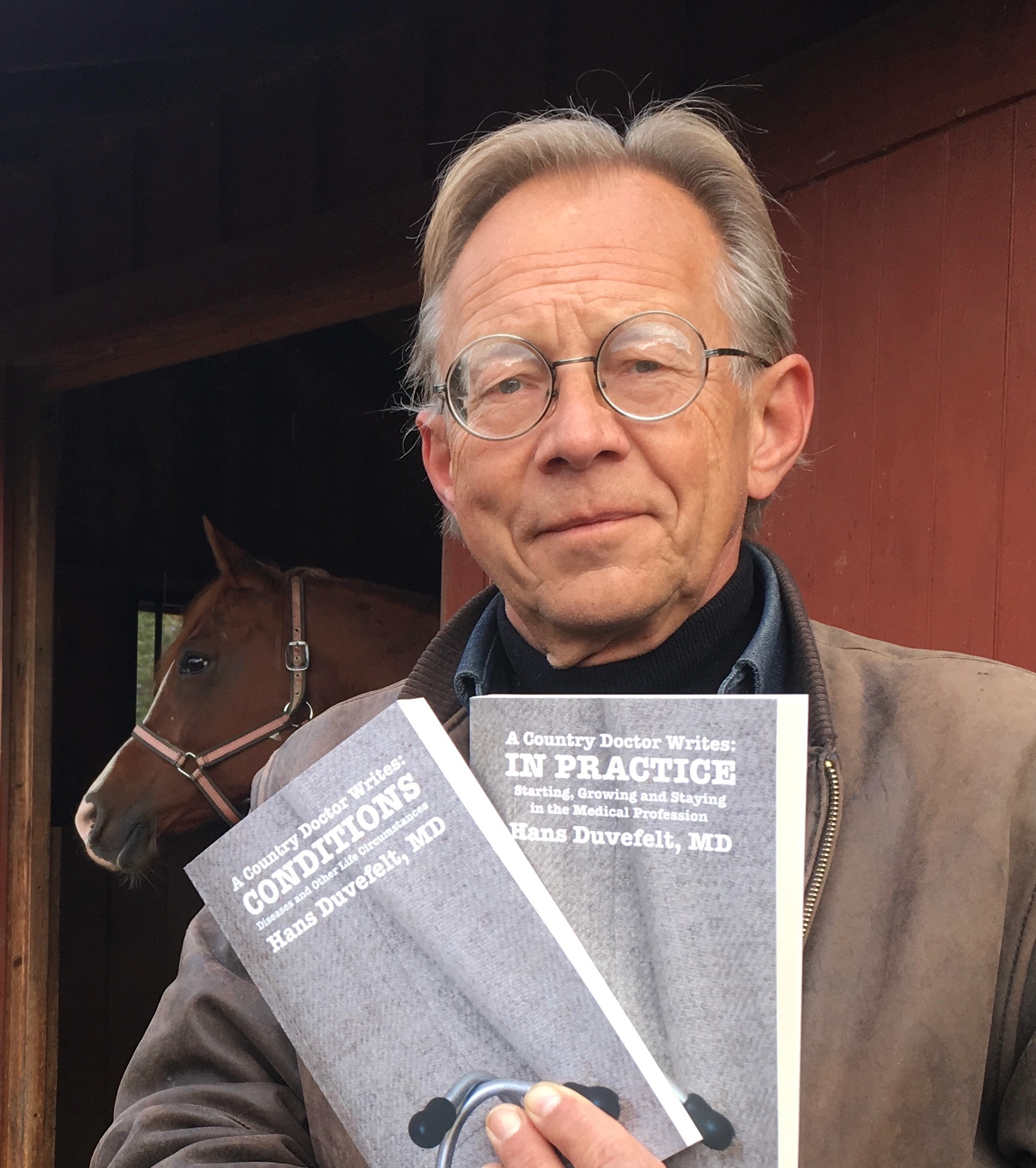
BOOKS BY HANS DUVEFELT, MD

CONDITIONS, Chapter 1: An Old, New Diagnosis

Top 25 Doctor Blogs Award

Doctor Blogs

Enter your email address to subscribe to this blog and receive notifications of new posts by email.

Mailbox

contact @ acountrydoctorwrites.com
Bookmark and Share
© A Country Doctor Writes, LLC 2008-2022 Unauthorized use and/or duplication of this material without express and written permission is strictly prohibited. Excerpts and links may be used, provided that full and clear credit is given.