Archive Page 85


A Country Doctor Reads: Why Walking Matters – The Wall Street Journal

With the snow finally mostly gone here in northern Maine, I walked the perimeter of the horse pasture to inspect the fence this weekend. Down by the barn I felt warm in just my long sleeved shirt, but at the higher elevation there was a slight chill in the air. I quickened my steps and felt invigorated and inspired, thinking about my spring projects. It was my first walk in months, beyond just between the different outbuildings “down on the farm”.

Later that day, I came across a WSJ article about the health benefits and chemistry involved in this very basic but sometimes neglected human activity. It was an obvious reminder of how our bodies are made to do certain things, and how mostly sitting and hardly any walking isn’t good for us.

What we prob­a­bly don’t re­al­ize is that walk­ing can be a kind of a be­hav­ioral pre­ven­tive against de­pres­sion. It ben­e­fits us on many lev­els, phys­i­cal and psy­cho­log­i­cal. Walk­ing helps to pro­duce pro­tein mol­e­cules in mus­cle and brain that help re­pair wear and tear. These mus­cle and brain mol­e­cules—myokines and neu­rotrophic fac­tors, re­spec­tively—have been in­ten­sively stud­ied in re­cent years for their health ef­fects. We are dis­cov­er­ing that they act al­most as a kind of fer­til­izer that as­sists in the growth of cells and reg­u­la­tion of metabolism. They also re­duce cer­tain types of in­flam­ma­tion.

Ex­per­i­ments by the psy­chol­o­gists Mar­ily Opezzo and Daniel Schwartz of Stan­ford Uni­ver­sity have shown that walk­ing boosts cre­ativ­ity. They asked peo­ple to quickly come up with al­ter­na­tive uses for com­mon ob­jects, such as a pen. They found that peo­ple whom they got to walk be­fore com­ing up with al­ter­na­tive uses came up with al­most twice as many novel ideas as those who re­mained seated.

www.wsj.com/articles/why-walking-mattersnow-more-than-ever-11587182460

From other readings, I understand Aristotle did some of his best thinking and teaching while walking, and he founded the peripatetic school, which literally means walking around, in part because he was not a citizen of Athens and couldn’t own property there and instead used public places like the Lyceum for his teaching.

Other famous thinkers who practiced walking for creativity and inspiration are said to include Einstein, Asimov, Beethoven, Freud, Faulkner, Kafka, Hobbs, Descartes, Tolstoy, Hawthorne, Tchaikovsky, Darwin and Dickens, writes Rob Howard on Medium.

So, beyond the physical benefits of walking, we must not ignore its creative and spiritual benefits.
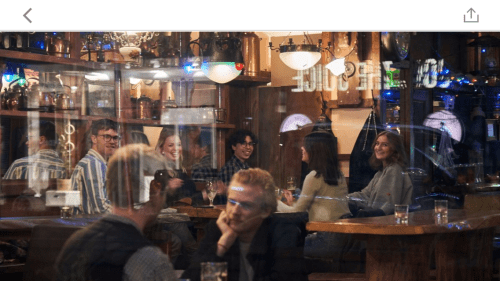
My Patients with Anxiety and PTSD are Handling Covid-19 Better than Most

Over the last few weeks I have noticed that some of the worst worriers in my practice and many people with an emotional trauma history are actually becoming more focused on what they reasonably can and need to do during this pandemic and not spending much time thinking about seemingly far off what-if scenarios involving countless undefined other threats to our existence.

This reminds me of how I lost my fear of walking through the woods after dark going from my grandparents farm to our camp when I was a near-adolescent. One time I had a much younger and very frightened cousin with me and from that time on, I have felt no fear or anxiety myself on that walk.

Seeing the fear outside myself, I first somehow didn’t feel like I was alone with it and then, the more I saw it in my cousin, the less I felt it myself. I felt myself grew into the adult, protective role that was required of me to take on during that late evening walk.

Adrenaline flowing through our bodies can make us have a panic attack, but it can also give us the strength to lift a heavy object impinging a loved one or the courage to scare off a bear or mountain lion. Adrenaline needs a purpose, or it will paralyze us.

I wonder if other clinicians also have seen patients with a history of anxiety actually handling their condition better during this pandemic.

Will the Covid-Induced Telemedicine Scramble Change Primary Care Forever?

After my posts on telemedicine were published recently, (this one on Manly Wellness before the pandemic and this one after it erupted, on A Country Doctor Writes, then reblogged on The Healthcare Blog, KevinMD and many others), I have been asked about my views on telemedicine’s role in the future of primary care.

Things have changed quickly, and a bit chaotically, and there is a lot of experimentation happening right now in practices I work or speak with.

Before thinking about telemedicine in Primary Care, we need to agree on some sort of definition of primary care, because there are so many functions and services we lump together under that term.

Minor Illnesses

Many people think of primary care mostly as treating minor, episodic illnesses like colds, rashes, minor sprains and the like. This is an area that has attracted a lot of interest because it is easy money for the providers, since the visits tend to be quick and straightforward and such televisits are also attractive for the insurance companies if they can keep insured patients out of the emergency room. With the technical limitations of video quality and objective data such as heart rate and rhythm, I think this is an absolute growth area for telemedicine. However, with all the other forms but mostly here, fragmentation of care could become a complicated problem. To put it bluntly, if we still expect a medical professional or a health care organization to keep an eye on reports from various sources, such as hospital specialists, walk-in clinics or independent telemedicine providers, they are going to want to get paid for it.

Chronic Disease Management

In actuality, the bulk of the work we do in primary care is manage chronic diseases like diabetes, hypertension, heart disease, obesity, lipid problems, depression, fibromyalgia, asthma and COPD. Many of those conditions are well-suited for telemedicine, at least in between more in-depth periodic hands-on assessments, but a significant portion of patients who suffer from these chronic diseases either lack computer/Internet access or have difficulty using the technology. I still think this is a growth area for telemedicine and in the broadest sense this is really a science-based ”life coaching” in many cases. Here, a good data repository and continuity in the relationship between patient and provider are essential.

Referrals

Another function of primary care is making sure that patients who believe they need specialty care in fact do, and to facilitate appropriate referrals. So many people don’t know what specialty does what, and this division of labor varies even between counties within a state. A patient who needs allergy testing in northern Maine who asks for a referral could travel 200 miles to see an allergist or 20 to see an otolaryngologist who also does that. And where is a podiatrist a more appropriate referral than an orthopedic surgeon? Sometimes you need to physically examine the patient to know where to refer, but not always.

Public Health

Another area where telemedicine, in my opinion, has an obvious role is public health – one of my pet peeves as far as things that shouldn’t be the doctor’s responsibility. Once patients are set up for telemedicine, other people besides the medical providers can be involved: The practice can send health reminder messages via patient portals, provide screening and followups, patient education with nurses and other practice staff or even contracted off-site niche resources. Right now (here I go again…) primary care visits are bogged down with mandated public health issues that fit poorly in typical fifteen minute office visits.

Payment Reform – Don’t Revert

It is hard to imagine that we would return to the belief that in person visits will be the only way doctors deserve to get paid for what we do. I think the last several weeks have established in the public mind that medicine isn’t so different from other service industries that we shouldn’t use the available technology for the benefit and convenience of our customers.

Covid-19 is Bringing Out the Worst Dishonesty in Some Patients

Most healthcare organizations try very hard to control the flow of patients through their facilities to minimize risk to staff and fellow patients and many are moving more or less completely to telemedicine.

Triage protocols like ours generally say something like this:

A) If you have what feels like a bad cold or bronchitis, stay home and take care of yourself, because most cases really don’t require antibiotics or professional medical care.

B) If you think you have been exposed to coronavirus but don’t feel all that bad, stay home and take care of yourself, because there is no treatment and there aren’t enough test kits right now to test you just for your own curiosity.

C) If you have severe symptoms but are not in distress or think you ONLY MIGHT need to be hospitalized, please call and we will direct you there our to designated clinic area at a specific time so you can be evaluated and tested.

D) If you have serious trouble breathing and feel like you absolutely will need help breathing and need an ambulance, ONLY then call 911.

Still, we have people in category C who call and deny their high fever plus recent travel to a high risk area plus severe symptoms until they are all the way inside the clinic, having exposed staff and fellow patients because there isn’t enough personal protective equipment to use for every staff member for every patient encounter in a state with one million people and only 250 cases so far.

At our stage in the pandemic, we need patients to be honest with us, so we can direct clinic flow and allocate our resources in a responsible manner.

A Country Doctor Reads: Why Sweden isn’t Restricting Personal Freedom During the Covid-19 Pandemic – Svenska Dagbladet

I read in the news media that my native Sweden is not restricting personal freedoms the way other countries are. I just recently happened to subscribe to Svenska Dagbladet, one of the big Stockholm newspapers. Here is what they quote historian Lars Trägårdh saying about why:


“First, there is a deeper trust in public institutions in Sweden than in other countries. It is not blind injunctions that make us obedient citizens but faith in expert authorities who in turn trust their citizens. It is a matter of mutual trust.

Therefore, Swedish authorities believe that it is enough to make recommendations such as staying inside if you feel ill and avoid large crowds. “Use your brains“…. Classic Swedish freedom and responsibility in other words. May also be called common knowledge, common sense or sense of duty.

Secondly, the Swedish exception can be explained by the ban on ministerial rule. This is a deeply rooted rule that goes back to the 17th century when the foundation was laid for the Swedish state apparatus. This means that Sweden is governed by expert authorities and not the government. Politicians who want to show muscles in tough times should keep their paws away from apolitical institutions whose decisions are based on skill and expertise.

This is very deeply rooted in Sweden. Elsewhere in the world where they don’t have this strict rule, many politicians now take the opportunity to prove themselves as strong leaders and impose harsh prohibitions especially if it is an election year. “

https://www.svd.se/historiker-coronafester-ger-inga-pluspoang-har


I just realized none of the posts show on an iPad or a computer, but they do show on an iPhone. WordPress is working on this. In the meantime, please visit my Substack.


Osler said “Listen to your patient, he is telling you the diagnosis”. Duvefelt says “Listen to your patient, he is telling you what kind of doctor he needs you to be”.


BOOKS BY HANS DUVEFELT, MD

CONDITIONS, Chapter 1: An Old, New Diagnosis

Top 25 Doctor Blogs Award

Doctor Blogs

Enter your email address to subscribe to this blog and receive notifications of new posts by email.

Mailbox

contact @ acountrydoctorwrites.com
Bookmark and Share
© A Country Doctor Writes, LLC 2008-2022 Unauthorized use and/or duplication of this material without express and written permission is strictly prohibited. Excerpts and links may be used, provided that full and clear credit is given.

